In 1845 the Franklin Expedition left in search of the Northwest Passage, but instead of finding a short cut to Asia, the voyage turned into a total balls-up disaster. Franklin and his men were lost and there were several follow-up/rescue expeditions that went in search of Franklin.
I usually devote about 25 mins of my Canadian history survey course to the Franklin Expedition. It’s an important but understudied bit of Canadian history and a damn good story to tell as well. The students seem interested in this type of story.
When I heard that Parks Canada would be searching for the remains of HMS Erebus and HMS Terror I was happy because I reasoned that even the search crews don’t find anything, their search will probably generated video material I can show in lecture.
Last week, the Canadian history blog ActiveHistory.ca had an interesting post by Teresa Iacobelli about the 2010 Franklin search. See here. The BBC also did a very thorough story on the 2010 Parks Canada search that totally puts CBC to shame. At that time this blog post was written, it was not known whether this summer’s search would produce any positive results.
The Honourable Jim Prentice, the Minister of the Environment, has taken a strong interest in the search. In late July, he flew to the region to inspect the work of the archaelogists in person. See image below and statement on Parks Canada website.

Recent Photo of Jim Prentice
Today’s Globe and Mail reports that Parks Canada archeologists found the remains of HMS Investigator on July 25 in Mercy Bay’s Aulavik National Park. Parks Canada has released an image of the wreck.
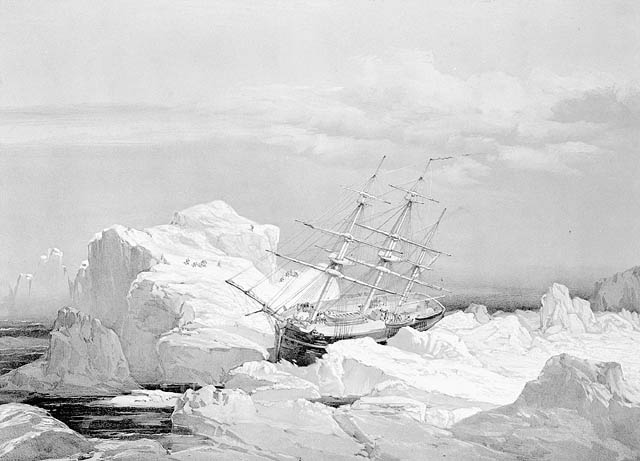
HMS Investigator, which was one of the ships that was sent out by the Admiralty to find Franklin, was destroyed by ice near Baffin Island. See image below. Most of the crew survived, however, and Captain Robert McClure was able to publish an account of his voyage, which you can download in PDF and other formats here.

- HMS Investigator “investigates” several metres of solid ice

Robert McClure, Captain of HMS Investigator. Nice mittens.
I’m an historian, not an archeologist, so I am speaking outside of my area of expertise here. However, it seems to me that finding Investigator would be relatively easy to do, since its captain survived and published a detailed description of its sinking. Finding HMS Erebus will be much harder. It remains to be seen whether Parks Canada will discover anything else before the summer exploration season closes in a few weeks.
Archeological expeditions are very expensive, especially in the Far North. Archival research is relatively cheap. From a value-for-taxpayer standpoint, it seems to me that giving research contracts to historians, archivists, and librarians might be a more cost-effective way of adding to our stock of knowledge about Franklin and 19th century arctic exploration more generally.


 The Past Speaks
Leave a comment