Thinking Historically About Mark Carney’s Davos Comments Global Public Goods
Much of the global commentariat has been talking about Canadian Prime Minister Mark Carney’s recent speech in Davos. There is a great deal of chatter about this speech (see historian Adam Tooze’s analysis here), which ably blended some economic reasoning with historical references to Vaclav Havel and even to Thucydides, a writer whose ideas continue to influence serious thinkers in Washington and beyond (see what I have written about the influential concept of the Thucydides Paradox).
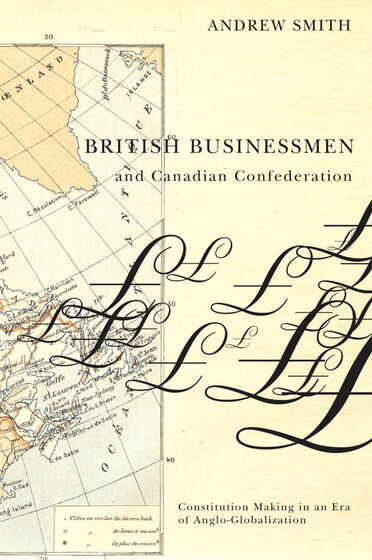
I don’t agree with everything said in the speech, particularly his insinuation that global supply chains have made us more, rather than less, vulnerable to supply interruptions. (This issue was debated during Covid and I remain convinced that globalized supply chains reduce our vulnerability). However, I’m struck by the fact that Carney spoke about the provision of global “public goods” in his speech. I’ve spent much of my academic career, which dates back to the time when Bush and Blair were in power, thinking about empire, hegemony, and business particularly in the three great and generally benevolent countries of the North Atlantic Triangle: Britain, America, and Canada. The title of the book that came out of my PhD thesis was: British Businessmen and Canadian Confederation Constitution Making in an Era of Anglo-Globalization. My schtick has been long been to take some basic concepts from economics e.g., global public goods, some public choice theory, etc and then apply them in fairly old-fashioned historical research on the development of political institutions, constitutions, and what Douglass North called “the rules of the game.”
Economists use simple examples to make profound points. One of the first things you learn in Econ 101 is that public goods are hard for markets to provide. Think of a street lamp on a city corner. Once lit, it brightens the block for everyone. You cannot easily exclude people from its light, and one person’s use doesn’t diminish another’s. Because no vendor can easily charge effectively for its light, the private market undersupplies street lighting; free riding depresses revenue below what would be socially efficient.
Public goods contrast with the other familiar categories. Private goods are rival and excludable: my coffee and your coffee are gone once consumed, and the café can lock the door and charge. Club goods are non-rival up to some capacity and excludable: a gym membership gives you access, and the owner can keep non-members out. Common pool resources are non-excludable but rival: one fisher’s catch depletes the fish stock available to all. Each category has a different incentive problem and therefore a different institutional response. Street lighting gets funded by local taxation; fisheries require quotas or property rights; clubs use membership rules.
When we scale the lens up from a city to the globe, the same underlying logic persists but the problems get harder. There is no global Leviathan with a tax base and coercive authority. As there isn’t a one-world government, there is no “city hall” to collect the equivalent of property taxes and to provide the global equivalent of street lights. The goods we call global public goods—stable sea lanes, predictable finance, eradication of disease, coherent standards for telecommunications infrastructure, and, potentially in the future, the deflection of dangerous asteroids, are non-excludable across borders and non-rival in use, but no sovereign exists to fund and enforce them. The result is a global collective action problem: individually rational choices aggregate to an outcome that is suboptimal for all.
How, then, do such goods get provided? Part of the answer lies in a tradition of scholarship known as hegemonic stability theory, which traces its intellectual lineage to the historical work of Charles Kindleberger. In his study of the interwar world economy, which was written in the 1970s, Kindleberger argued that the collapse of the global order in the 1930s was not accidental but the predictable outcome when Britain, the world’s former hegemon/global police man could no longer bear the costs of international responsibility and the United States would not yet step in. In Kindleberger’s telling, stability in the international economy requires a leader with both capacity and a stake in the system willing to underwrite key public goods. That leader may not be benevolent but it is beneficent as it has a vested interest in a safe and prosperous world.
Later scholars, most prominently Robert Keohane, formalised this insight into what came to be called hegemonic stability theory. The emphasis is not on altruism; rather, it is on incentives and capabilities. A dominant power, by virtue of its size and reach, internalises more of the benefits of a stable, open system than its weaker partners and is often in a position to bear the upfront costs and enforcement actions required to sustain that system. This logic explains why, in different periods, an incumbent hegemon undertook functions that others would gladly free ride on: because the hegemon’s own welfare was tied to the stability of the system as a whole.
Looking at history, this pattern is striking. In the nineteenth century, the Royal Navy suppressed piracy across the major sea lanes of commerce, from the Caribbean to the Straits of Malacca. British cruisers patrolled the Atlantic and Indian Oceans, not because the pirate problem was only a British concern but because Britain’s own economy, and, by extension, global trade, depended on relatively secure shipping routes. Over decades, this naval presence dramatically reduced the incidence of piracy; only when British capacity waned and geopolitical priorities shifted did piracy reappear in earnest in some regions.
A century later, with British naval hegemony eclipsed and the United States ascendant, another hegemonic provider emerged. In the late twentieth and early twenty-first centuries, the U.S. Navy led international coalitions to suppress Somali piracy in the Gulf of Aden and off the Horn of Africa. These engagements were often under United Nations mandates, but the material capacity, persistent presence, intelligence, and coordination, came largely from a single dominant navy. Like the Royal Navy before it, the U.S. contribution did not eliminate piracy everywhere, but it dramatically reduced attacks on commercial shipping when sustained presence was maintained.
Another historically significant case was the British effort to suppress the trans-Atlantic slave trade in the nineteenth century. After abolishing the trade within its own empire, Britain utilised its Royal Navy to interdict slavers on the West African coast and beyond. This was not fully successful in eliminating slavery in every nook and cranny of the quarter of the world that was notionally British, and it was unevenly enforced, but it was a case where dominant capacity and naval reach constrained a private-good-like behaviour with wide externalities. In a similar vein, during the Cold War the United States undertook a global security commitment against Soviet expansion and aligned threats. In that case, the post-1945 hegemon saved the world from a different type of slavery (Communism). Whether one views that commitment as virtue or interest (as Anglican Christian, I’m against all forms of slavery, whether they involve cotton harvesting or Stalinism), it had the effect of providing a kind of collective public good that smaller states, even working in concert, could not have provided for themselves.
Where hegemons have been willing to act, globalisation and cooperation have expanded. Kindleberger was particularly interested in how cooperation broke down in the 1930s. With Britain exhausted after the First World War and the United States unwilling to shoulder leadership in the face of isolationist politics, the interwar system was left without a stabilising centre. Trade barriers rose, currency conflicts proliferated, and the global economy fractured. Deglobalization was a symptom of the underlying collective action failure: without a powerful state willing to underwrite the public goods of openness and order, the incentives of individual states led them to close markets and hoard liquidity.
Some global public goods, however, have been provided not by a single hegemon but through multilateral cooperation when the technology of provision made it feasible. The eradication of smallpox through the World Health Organization involved coordination and sustained effort from many countries. Remarkably, this feat was achieved at a time when the hegemony of the United States was being challenged by a near-peer adversary, the Soviet Union. Technical standards for post, telegraphy, and later the Internet were developed through international bodies negotiating compatibility rules that reduced transaction costs and uncertainty. Meteorological data sharing and tsunami warning systems operate through common reporting and reciprocal access to information. Even the Montreal Protocol of 1987, which successfully phased out ozone-depleting substances, succeeded through negotiated schedules, monitoring, and reciprocal incentives rather than through the unilateral enforcement of any one state. That great environmental achievement was possible due a conjunction of factors: it wasn’t all that expensive to replace CFCs in fridges with something better for the ozone layer and the agreement was implemented at a time when the US was really at the peak of its relative power, during the unipolar moment after the end of the Cold War.
But all global public goods are not alike. Some require large upfront investments; some depend on enforcement capacity; some can be delivered by one good actor and other need all actors meeting a minimum standard. Here it is useful to distinguish between two dimensions of global public goods:
First, whether their provision in practice depends on the existence of dominant state with exceptional capabilities, and
Second, the nature of their production function:
2a) best-shot goods, where one major provider can largely determine success, and
2b) weakest-link goods, where failure by even a single actor undermines the whole.
An example of a best-shot public good is from the movie Deep Impact, where a crew in the US-government owned Space Shuttle provide a global public good: they deflect the asteroid that is heading to earth. All of the other countries were basically free-riders in that film. (Seriously folks, let’s spend more on asteroid monitoring). Weakest-link global public good provision would require every country to suppress the outbreak of new contagious diseases, Ebola style. If just one failed state fails to do that and someone with say Super-Ebola gets on a plane, it doesn’t matter if most countries have done a good job of preventing outbreaks within their borders.
The following 2×2 matrix shows how I think about these issues.
| Best-shot | Weakest-link | |
| Hegemon-necessary global public goods | Acute crisis liquidity & backstops: a credible balance sheet (e.g., U.S. dollar swap lines serving as global backstops) can stabilise expectations system-wide. Only institutions based in Washington DC (the IMF, the Treasury) can do this because on the US has the financial firepower. | Maritime security in contested or poorly policed corridors: deterrence fails if even one strategic route is effectively unpatrolled; a dominant navy’s presence mitigates this. Think of the Horn of Africa, which threatened important trade routes. Just one weak-link country (Somalia) endangered trade between Europe and Asia—luckily we had a US-led naval alliance to take out those guys. |
| Hegemon-unnecessary global public goods | Ozone layer protection: feasible substitutes, mutual monitoring, and incentives made multilateral provision practical, but even in this case US dominance probably helped to get CFCs out of the world’s fridges | Routine disease surveillance and reporting: the system’s performance hinges on minimum capacity everywhere, not dominance somewhere. This could probably continue without the US |
This matrix reflect my viewpoint that not all global public goods require a hegemon to provide it. Many can be and have been provided through institutions, reciprocal arrangements, and clubs, especially when the technical problem does not hinge on coercive capacity or large unrecouped upfront costs.
All that being said, the implications for a world in which a dominant power no longer plays the role of beneficent hegemon are stark. (Let’s assume for a moment that Carney is right and that there has been profound rupture and the end of the beneficent hegemony of the US). As structural incentives shift, the supply of hegemon-dependent goods will tend to shrink. Institutions are not magic machines; they operate within a world of incentives and capabilities.
Global public goods likely to continue to be provided post-hegemony
- Technical and interoperability standards
- Postal, aviation, and telecommunications coordination
- Meteorological and early-warning systems
- Routine public health surveillance and cooperative disease control
Global public goods likely to go away without hegemonic capacity
- Comprehensive crisis liquidity backstops
- Persistent maritime security in strategically vital but contested waters
- Coercive suppression of transnational threats requiring sustained physical presence (think of rooting al-Qaeda out of the mountains of Afghanistan)
- Enforcement-intensive global mitigation efforts for environmental problems
For smaller advanced states such as the United Kingdom and Canada, the political-economic landscape has changed. For both of these countries, one policy implication is that climate change policy should pivot from mitigation to adaptation. Climate mitigation is a weakest-link, multilateral public good that depends on nearly universal cooperation. For our sacrifices to cut CO2 emissions to actually produce a reduction in the rate at which mean global temperature goes up, virtually every country on the planet has to pursue the same carbon-tax style policies. Maybe if Rwanda and a couple of other countries cheat and don’t introduce the same carbon tax rate as Canada and the UK, it won’t matter but if there are more than a few free-rider nations, then it becomes pointless for the governments of countries like Canada and the UK to tax their citizens to reduce their nation’s CO2 emissions. I suppose that once it became clear that the world’s most populous states (China, India, US, Indonesia) were not prepared to accept significant costs for mitigation, continued unilateral mitigation efforts by middle powers would yield little systemic effect. Maybe if the US had elected Al Gore in 2000 and the US had then used the unipolar moment to coerce all countries into adopting a uniform global carbon tax, we could have really avoided global warming. In light of Carney’s Davos speech, it seems to me logical for countries like Canada and the UK to reallocate their climate policy budget to climate change adaptation.
For the UK, a world without US hegemony strengthens the case for re-joining the EU, especially if the EU reforms its policies. It also strengthens the case for efforts to make the country more self-sufficient in food: submarine warfare in two world wars taught British food consumers about the downsides of relying on distant continents for their calories. That means adjusting agricultural policies so we aren’t doing such things like paying farmers to allow fields to revert to nature. You can do that in a world in which there is one big navy to keep global supply chains moving. Some luxuries are no longer wisely affordable.
For 150 years, Canadians have had to think about the pros and cons of their unique status in the global hegemonic system: Canadians have never been actual citizens of the global hegemon, represented in its ruling legislature. Yes, there were individual Canadians in the imperial parliament in 1910 and some of them later rose to Cabinet rank, but they weren’t representing Canadian constituencies. Perhaps the world would have been a better place if Imperial Federation had been implemented, but the idea of a federal parliament for the whole British Empire wasn’t every tried. However, Canadians have been close enough to each of the successive global hegemons to influence its policy and lend their strength to the hegemon’s work. Canadian-born officers helped to rule India. Canadian-born speechwriters worked in the Bush administration and most of their West Wing colleagues weren’t really aware the guy they were talking to wasn’t U.S. born or even U.S. citizens. Canadians now need to reflect on the pros and cons of continuing with their unique status on the North American continent which deprives them of any participation in such decision-making forums as the electoral college of the United States and Congress.
Other implications doubtless flow from the matrix I’ve created but I will discuss them in a future blog post. I will conclude by saying that the point of studying history is not to romanticise past hegemons but to see clearly the conditions under which cooperation is easier and when it is fraying—and then design institutions that fit the world as it is, not as we wish it to.


 The Past Speaks
Leave a comment