My Teaching This Week

8 01 2010

Classes at this university resumed on 4 January.

On Monday, I met the students in my post-Confederation Canadian history survey course. Actually, many of them were in the pre-Confederation course before Christmas, but there were also some new faces in the lecture hall. My lecture on Monday mainly dealt with administrative issues, reviewing the course outline. The lecture on Wednesday was on Canadian political history from 1867 to 1878. I got to talk about the Pacific Scandal and the origins of the National Policy.

Honours Seminar

The students in my fourth-year seminar on British North America presented their research proposals to the class this week. Each student spoke for five minutes about their proposed essay topic. They also submitted written essay topic proposals and working bibliographies.

I’m really excited about the research projects. Some high quality essays are going to emerge from this seminar! The students’ research proposals show that they are interested in a diverse range of historical subjects. The most popular topic was the Fenian Raids. Undergraduates are always drawn to the Fenian Raids because they involved bloodshed. Moreover, one of my colleagues, the department specialist in military history, also teaches about Irish history, and our students are exposed to lots of information about the Irish nationalism. I think that may also have been a factor directing the attention of so many students to the Fenians. One student is looking at the 1868 assassination of T.D. McGee.

Fenian Raid Volunteers, Montreal, 1866

Someone else is looking at the impact of mineral development in the 1840s and 1850s on the Natives living north of Lakes Huron and Superior. His powerpoint presentation for class included a very cool photo of the mines on Silver Islet, a speck of land in Lake Superior that was developed in the pre-Confederation period.

One girl will be writing her essay on public executions in Canada in the 1860s. She is trying to find out why the Macdonald government ended public executions in 1870. She has found some excellent primary sources online, including a document in Macdonald’s handwriting. Abortion and the changes to Canada’s abortion law made in the 1840s is something one female student will be writing about. She has found some good primary sources. Another student, who hails from the town of Stratford, is examining the impact of railway construction in the 1850s on her hometown. She accessed some materials in a local archive over the Christmas break. A student of South Asian heritage has announced that his essay will be on Canadian reactions to the Indian Mutiny in 1857, which a great topic, especially since Canadians formed a regiment to help put down the rising. I’m also looking forward to reading the essay on Sir John A. Macdonald’s role in the negotiation of the Treaty of Washington.

Today, I met my graduate course. This is the first graduate-level course I have ever taught. Four of our MA students are in the class.   The course is structured around the records of a company named Montreal Telegraph, which was the dominant provider of telegraphy in central Canada in the 1850s and 1860s. Luckily for our purposes, its records were preserved in pristine condition in the national archives in Ottawa. Students in most graduate level courses focus on writing a research essay.

Telegram Carried by the Montreal Telegraph Company. This telegram was coded and carried military information regarding the Fenian Raids.

In this class, the students will be doing something very different, namely a group project related to the history of this company that will involve creating a website. This website, which shall explain the history of the company, will be left online for two years. The group project is designed to teach the students about the use of primary sources and new methods of presenting historical knowledge that go beyond the traditional essay. I am a great believer in teaching students digital humanities skills (e.g., how to create website and then promote it, how to register a domain name, etc). This course should advance this educational agenda. The other goals of the course are to teach the students about 19th century Canadian history, the social impact of the telecommunications revolution in nineteenth-century North America, and to introduce students to the vast literature on business history. I should mention that in addition to being a history of 19th century North America, I’m also a member of the Business History Conference.

The website on Montreal Telegraph will go live in April, at the end of the term. I shall keep blog readers posted.


Janet Ecker on Making Canada a Global Financial Centre

8 01 2010

In this interview, Janet Ecker discusses how to make Toronto a global financial sector. On a related note, readers may be interested in my earlier post on the need for a national securities regulator in Canada.


Gerriets on Craig’s Backwoods Consumers

7 01 2010

EH.NET BOOK REVIEW
Published January 2010

Béatrice Craig, _Backwoods Consumers and Homespun Capitalists: The Rise of a Market Culture in Eastern Canada_. Toronto: University of Toronto Press, 2009. ix + 349 pp. $75 (cloth), ISBN: 974-0-8020-9317-2.

Reviewed for EH.NET by Marilyn Gerriets, Department of Economics, St. Francis Xavier University.

_Backwoods Consumers_ is an excellent contribution to the literature exploring the social and economic structure of early settlements in North America.  Craig studies the Madawaska region (in northwestern New Brunswick and northeastern Maine) from early settlement by Acadians and Canadiens in the late eighteenth century up to the last quarter of the nineteenth century.  The book’s primary theme is the evolution of the relationship between rural people and markets.

Madawaksa

The theme is developed within the context of two literatures, the largely Canadian literature first dominated by the staples thesis and now exploring local exchange, and the largely American literature tracing the rise of market exchange and capitalism in early settlements.  Her detailed description of the early process of settlement provides an excellent contribution to these literatures.  The wealth and variety of source material enriches the study.

Madawaska was not as isolated as its location might suggest; settlers had connections through correspondence and travel that kept them aware of external market opportunities and of opportunities to settle elsewhere.  Early settlers were drawn to the region by opportunities in the fur trade and on the excellent agricultural land along the Saint John River.  Preference to live with people of their own culture also led Acadians to move to the area and Catholics from nearby parts of Quebec were comfortable to join them.   Fur and wheat were the first goods exported from the region and from the earliest days settlers showed no reluctance to engage in market exchange.  When rust and midges made wheat production impractical, farmers shifted to fodder crops for the timber shanty market.  Fortunately, timber exports became viable in time to alleviate the difficulties caused by declining wheat production.  Timber production created immigration, but an agricultural community was already well established before it began.

Local production of goods for local consumption was important.  Sawmills built to produce lumber for export disappeared as soon as the timber industry declined, while custom saw mills providing boards for local construction persisted.  Along with grist, carding and fulling mills, the custom mills provided a focal point for the emergence of villages.  Craig’s sources enable her to determine that the charter families, the Acadians and Quebecois who first settled the region, invested in these mills.  They carefully sought out land with water power when they acquired farm land, apparently recognizing the value of an opportunity to exploit water power with a mill.

Squaring Timber in Madawaska

Craig traces changes in patterns of consumption as well as in patterns of production.  Initially, general store purchases were confined to inputs to production such as tools or cotton warps used in the weaving of homespun.  By the early 1860’s new consumption patterns had emerged.  Rather than acquiring a cotton gown “for ever,” less durable items in the current style were desired.  Young men purchased red flannel for shirts and black silk neckerchiefs. Tea, oil lamps and chamber pots became important household items.  The “world of goods” had clearly emerged by the 1860’s.

While her work clearly supports more recent Canadian research that stresses the importance of local exchange, Craig argues that the staples trades were important to the growth of the region.  Timber workers’ families provided good markets for a wide variety of agricultural goods.  Access to the shanty market for fodder was very important to settlers’ standard of living when surpluses of wheat could no longer be produced.  The timber industry helped to provide the income that permitted the growth of consumption.

Prof. Craig

Craig’s pragmatism and common sense enables her to provide an accurate description of markets and of commercialization in Madawaska.  Settlers eagerly engaged in market exchange from the first days of settlement; both store owners and farmers preferred payment in cash to payment in goods.  Craig argues that Madawaskan residents did not enter markets to resist change, as others have argued, but they entered the market in order to become “individualistic consumers.”  The issue of the emergence of market exchange and of capitalism has been a contentious in the American literature.  Craig argues that much of the contention has arisen from misconstruing definitions.  She carefully sets out her own definitions of a capitalist and of capitalism, drawing on Fernand Braudel.  I found no definition of capital, and she appears to equate financial assets with capital, an equivalence offensive to any economist.  This economist finds Braudel’s definitions peculiar, and would prefer reliance on standard economics for a definition of capital, Karl Marx for a definition of capitalism and Karl Polanyi for discussion of the emergence of market institutions.

Better definitions might enable her to see more deeply into the extent and the limits of capitalism in Madawaska.  Nonetheless she has done very well describing changes in the role of markets.  In particular, she discusses how in the early days of settlement, patronage and government favoritism were important to securing access to farm land, access to locations for inns or trading posts and to government appointments.  By the end of the period, political and economic activity had become more separate.  To use Polanyi’s term, the economy was becoming disembeded from society at large.

The book is very rich and addresses many additional topics.  Readers have good reason to pursue her discussion of the homespun textile industry, the divisions of Madawaskan society into groups defined by religion and date of settlement and the impact of the dispute over and the creation of a border between Maine and New Brunswick.  The study is unique in its linking of individuals and families to the evolution of the economy and society. Craig has done an excellent job of examining the economic and social history of a neglected region.

Marilyn Gerriets, an economic historian and a professor in the Department of Economics at St. Francis Xavier University, Nova Scotia, is interested in the origins of differences in the paths of development of the Maritimes and Central Canada. She has written about agricultural resources and settlement, tariffs and trade and coal mining in Nova Scotia.

Copyright (c) 2010 by EH.Net. All rights reserved. This work may be copied for non-profit educational uses if proper credit is given to the author and the list.


Text of the 1866 Annexation Bill

6 01 2010

In 1866, Republican Congressman Nathaniel P. Banks introduced a bill providing for the incorporation of British North America into the United States. For more on this bill and Banks’s motives, see Joe Patterson Smith, “American Republican Leadership and the Movement for the Annexation of Canada in the Eighteen-Sixties”, Report of the Annual Meeting of the Canadian Historical Association, 14 (1935): 67-75.

You can read the original bill online thanks to the Library of Congress’s wonderful digitization project. I have posted the full text below in plain text on the off chance it may be useful to someone.

39TH CONGRESS, 1ST SESSION H.R. 754. IN THE HOUSE OF REPRESENTATIVES JULY 2, 1866.

Read twice, refered to the Committee on Foreign Affairs, and ordered to be printed. Mr Banks, on leave, introduced the following bill:

A Bill for the admission of the States of Nova Scotia, New Brunswick, Canada East, and Canada West, and for the organization of the Territories of Selkirk, Saskatchewan, and Columbia

Be it enacted by the Senate and House of Representatives of the United States of America in Congress assembled, That the President of the United States is hereby authorized and directed, whenever notice shall be deposited in the Department of State that the governments of Great Britain and the provinces of New Brunswick, Nova Scotia, Prince Edward Island, Newfoundland, Canada, British Columbia, and Vancouver’s Island have accepted the proposition hereinafter made by the United States, to publish by proclamation that, from the date thereof, the States of Nova Scotia, New Brunswick, Canada East, and Canada West, and the Territories of Selkirk, Saskatchewan, and Columbia, with limits and rights as by the act defined, are constituted and admitted as States and Territories of the United States of America.

SEC. 2. And be it further enacted, That the following articles are hereby proposed, and from the date of the proclamation of the President of the United States shall take effect, as irrevocable conditions of the admission of the States of Nova Scotia, New Brunswick, Canada East, and Canada West, and the future States of Selkirk, Saskatchewan, and Columbia, to wit: [edit]

ARTICLE I All public lands not sold or granted; canals, public harbors, light-houses, and piers; river and lake improvements; railway stocks, mortgages, and other debts due by railway companies to the provinces; custom-houses and post offices, shall vest in the United States; but all other public works and property shall belong to the State governments respectively, hereby constituted, together with all sums due from purchasers or lessees of lands, mines, or minerals at the time of the union.

ARTICLE II In consideration of the public lands, works, and property vested as aforesaid in the United States, the United States will assume and discharge the funded debt and contingent liabilities of the late provinces, at rates of interest not exceeding five per centum, to the amount of eighty-five million seven hundred thousand dollars, apportioned as follows: To Canada West, thirty-six million five hundred thousand dollars; to Canada East, twenty-nine million dollars; to Nova Scotia, eight million dollars; to New Brunswick, seven million dollars; to Newfoundland, three million two hundred thousand dollars; and to Prince Edward Island, two million dollars; and in further consideration of the transfer by said provinces to the United States of the power to levy import and export duties, the United States will make an annual grant of one million six hundred and forty-six thousand dollars in aid of local expenditures, to be apportioned as follows: To Canada West, seven hundred thousand dollars; to Canada East, five hundred and fifty thousand dollars; to Nova Scotia, one hundred and sixty-five thousand dollars; to New Brunswick, one hundred and twenty-six thousand dollars; to Newfoundland, sixty-five thousand dollars; to Prince Edward Island, forty thousand dollars.

ARTICLE III For all purposes of State organization and representation in the Congress of the United States, Newfoundland shall be part of Canada East, and Prince Edward Island shall be part of Nova Scotia, except that each shall always be a separate representative district, and entitled to elect at least one member of the House of Representatives, and except, also, that the municipal authorities of Newfoundland and Prince Edward Island shall receive the indemnities agreed to be paid by the United States in Article II.

ARTICLE IV Territorial divisions are established as follows: (1) New Brunswick, with its present limits; (2) Nova Scotia, with the addition of Prince Edward Island; (3) Canada East, with the addition of Newfoundland and all territory east of longitude eighty degrees and south of Hudson’s strait; (4) Canada West, with the addition of territory south of Hudson’s bay and between longitude eighty degrees longitude ninety degrees; (5) Selkirk Territory, bounded east by longitude ninety degrees, south by the late boundary of the United States, west by longitude one hundred and five degrees, and north by the Arctic circle; (6) Saskatchewan Territory, bounded east by longitude one hundred and five degrees, south by latitude forty-nine degrees, west by the Rocky mountains, and north by latitude seventy degrees; (7) Columbia Territory, including Vancouver’s Island, and Queen Charlotte’s island, and bounded east and north by the Rocky mountains, south by latitude forty-nine degrees, and west by the Pacific ocean and Russian America. But Congress reserves the right of changing the limits and subdividing the areas of the western territories at discretion.

ARTICLE V Until the next decennial revision, representation in the House of Representatives shall be as follows: Canada West, twelve members; Canada East, including Newfoundland, eleven members; New Brunswick, two members; Nova Scotia, including Prince Edward Island, four members.

ARTICLE VI The Congress of the United States shall enact, in favor of the proposed Territories of Selkirk, Saskatchewan, and Columbia, all the provisions of the act organizing the Territory of Montana, so far as they can be made applicable.

ARTICLE VII The United States, by the construction of new canals, or the enlargement of existing canals, and by the improvement of shoals, will so aid the navigation of the Saint Lawrence river and the great lakes that vessels of fifteen hundred tons burden shall pass from the Gulf of Saint Lawrence to Lakes Superior and Michigan: Provided, That the expenditure under this article shall not exceed fifty millions of dollars.

ARTICLE VIII The United States will appropriate and pay to “The European and North American Railway Company of Maine” the sum of two millions of dollars upon the construction of a continuous line of railroad from Bangor, in Maine, to Saint John’s, in New Brunswick: Provided, That said “The European and North American Railway Company of Maine” shall release the government of the United States from all claims held by it as assignee of the States of Maine and Massachusetts.

ARTICLE IX To aid the construction of a railway from Truro, in Nova Scotia, to Riviere du Loup, in Canada East, and a railway from the city of Ottawa, by way of Sault Ste. Marie, Bayfield, and Superior, in Wisconsin, Pembina, and Fort Garry, on the Red River of the North, and the valley of the North Saskatchewan river to some point on the Pacific ocean north of latitude forty-nine degrees, the United States will grant lands along the lines of said roads to the amount of twenty sections, or twelve thousand eight hundred acres, per mile, to be selected and sold in the manner prescribed in the act to aid the construction of the Northern Pacific railroad, approved July two, eighteen hundred and sixty-two, and acts amendatory thereof; and in addition to said grants of lands, the United States will further guarantee dividends of five per centum upon the stock of the company or companies which may be authorized by Congress to undertake the construction of said railways: Provided, That such guarantee of stock shall not exceed the sum of thirty thousand dollars per mile, and Congress shall regulate the securities for advances on account thereof.

ARTICLE X The public lands in the late provinces, as far as practicable, shall be surveyed according to the rectangular system of the General Land office of the United States; and in the Territories west of longitude ninety degrees, or the western boundary of Canada West, sections sixteen and thirty-six shall be granted for the encouragement of schools, and after the organization of the Territories into States, five per centum of the net proceeds of sales of public lands shall be paid into their treasuries as a fund for the improvement of roads and rivers.

ARTICLE XI The United States will pay ten millions of dollars to the Hudson Bay Company in full discharge of all claims to territory or jurisdiction in North America, whether founded on the charter of the company or any treaty, law, or usage.

ARTICLE XII It shall be devolved upon the legislatures of New Brunswick, Nova Scotia, Canada East, and Canada West, to conform the tenure of office and the local institutions of said States to the Constitution and laws of the United States, subject to revision by Congress.

SEC 3. And be it further enacted, That if Prince Edward Island and Newfoundland, or either of those provinces, shall decline union with the United States, and the remaining provinces, with the consent of Great Britain, shall accept the proposition of the United States, the foregoing stipulations in favor of Prince Edward Island and Newfoundland, or either of them, will be omitted; but in all other respects the United States will give full effect to the plan of union. If Prince Edward Island, Newfoundland, Nova Scotia, and New Brunswick shall decline the proposition, but Canada, British Columbia, and Vancouver island shall, with the consent of Great Britain, accept the same, the construction of a railway from Truro to Riviere du Loup, with all stipulations relating to the maritime provinces, will form no part of the proposed plan of union, but the same will be consummated in all other respects. If Canada shall decline the proposition, then the stipulations in regard to the Saint Lawrence canals and a railway from Ottawa to Sault Ste. Marie, with the Canadian clause of debt and revenue indemnity, will be relinquished. If the plan of union shall only be accepted in regard to the northwestern territory and the Pacific provinces, the United States will aid the construction, on the terms named, of a railway from the western extremity of Lake Superior, in the State of Minnesota, by way of Pembina, Fort Garry, and the valley of the Saskatchewan, to the Pacific coast, north of latitude forty-nine degrees, besides securing all the rights and privileges of an American territory to the proposed Territories of Selkirk, Saskatchewan, and Columbia.



Historian Jack Granatstein on Immigration and Social Memory

6 01 2010


The Politics of the Film Avatar

4 01 2010

Tim Fernholz & David Weigel discuss the politics of Avatar.

Vodpod videos no longer available.

more about "The Politics of the Film Avatar", posted with vodpod


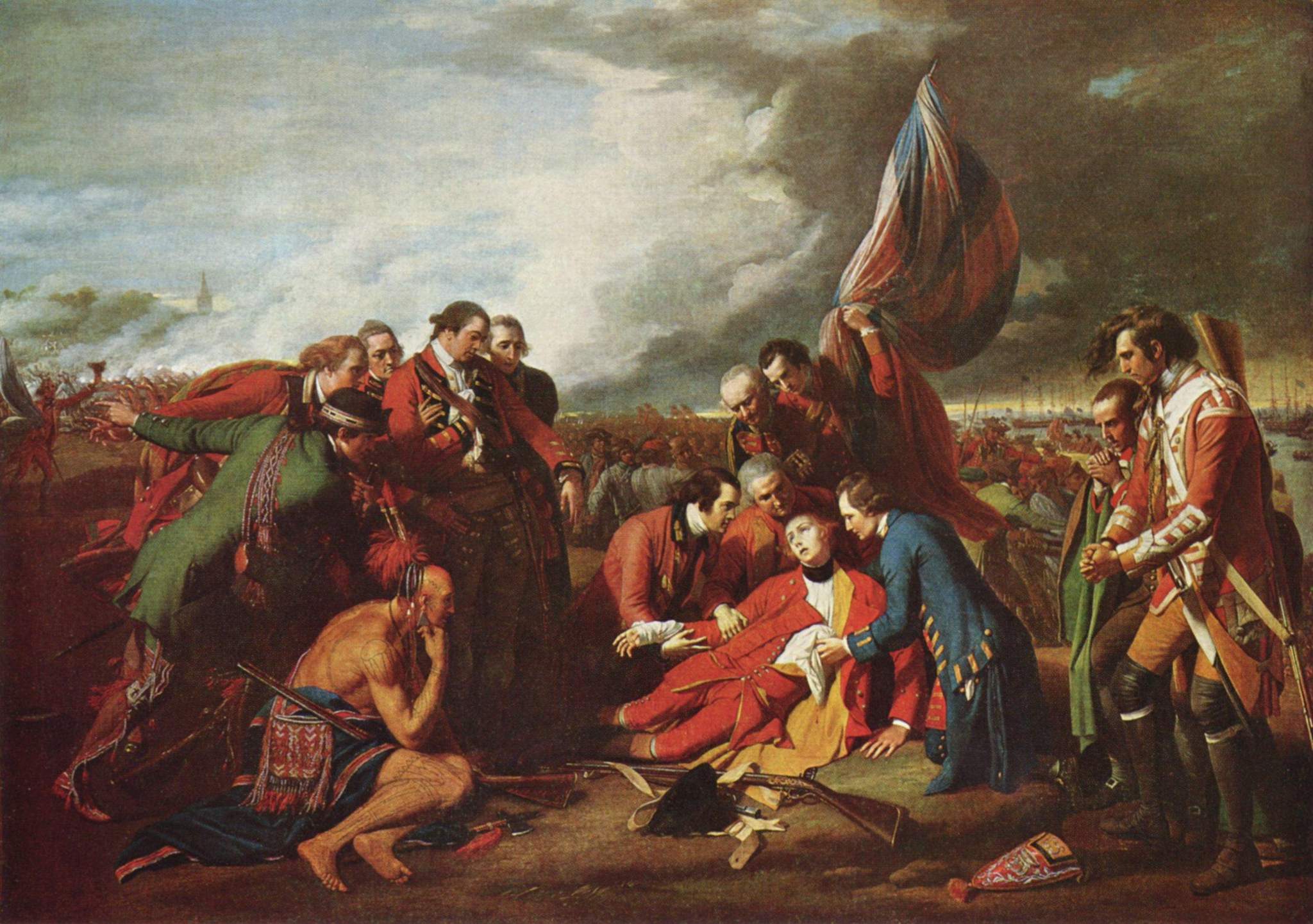
Was James Wolfe Gay?

2 01 2010

Benjamin West, The Death of General Wolfe, 1771

This is the provocative title of an article in today’s Seaway Times.


U.S. Political Pundits Wilkinson and Poulos discuss Avatar on Bloggingheads

1 01 2010

In this video, political pundits Will Wilkinson & James Poulos discuss the movie Avatar.

Vodpod videos no longer available.


Religion a Hot Topic with US Historians

1 01 2010

Religion has become the sexiest topic of study for U. S. historians, overtaking the previous favourite — cultural studies — and pulling ahead of women’s history  in the latest annual survey by the American Historical Association. Younger historians are more likely than older ones to turn to the history of religion. I bet that the tragic events of 2001 have something to do with this development!

According to the AHA survey of the profession, the proportion of academic historians working on topics in religious history is now 7.7%. The figures in other sub-disciplines are political history (4.6%), military history (3.8%), diplomatic history (3.8%), women’s history at 6.4%.

I have two thoughts about these stats. First, can an individual identify with more than one sub-discipline? After all, what is the dividing line between, say, (domestic) political history and diplomatic history? What about someone who does women`s history and the history of technology?!? Second, how would these figures be different in other  industrialized countries? The problem with the AHA is that it is so damn US-centric, even though it claims to be a global organization (“the association for all historians” says its website).  It would be very interesting to have some hard data to make cross-national comparisons of historians` interests. My impression is that university history departments in Japan are dominated by historians of business and technology. I know that in the UK, history departments are far more traditional in their curricula than in the United States– old-fashioned political and diplomatic history is still the norm. My impression is that in British history departments, there is far more business and economic history than in United States history departments. I`ve heard British historians ridicule their North American counterparts for an obsession with gender, sexuality,  postmodernism, and other newfangled historical topics.  It also my impression that few historians in France have heard of Foucault.

The stats also show that the US history curricula is still massively Euro-centric– the vast majority of historians are specialists in the history of “Western” countries. There are far more historians of Europe in the United States than historians of Asia, even though Asia`s population is vastly greater (and still growing).


Video Clips of Historian James M. McPherson

1 01 2010

In this video, noted Princeton historian James M. McPherson discusses Abraham Lincoln as a military leader.  McPherson has published many books on the Civil War, including his Pullitzer-winning Battle Cry of Freedom.

In this video, McPherson talks about Reconstruction and the legacy of the Civil War.