Wood-Lepore Controversy, or Shooting Fish in Barrel

19 01 2011

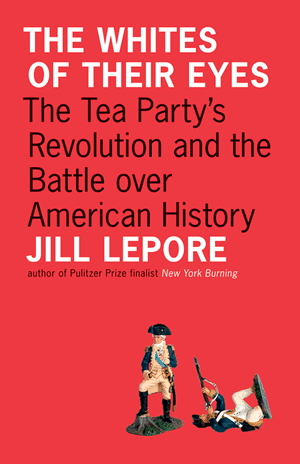
In the last few days, a controversy has raged in the US historical blogosphere about a recent book on the place of the American Revolution in American social memory by Harvard historian Jill Lepore. Lepore examines how political movements of both the left and the right have appropriated the memory of the American Revolution in recent decades. In the early 1970s, antiwar protestors and other left-wing groups associated themselves with the Boston Tea Party and the other acts of civil disobedience on the eve of the Revolution. More recently, the Tea Party, a right-wing force, has tried to lay claim to being the true heirs of the revolution. Lepore decries such attempts to harness the past to present-day political ends as fundamentally ahistorical.

Commenting on Lepore’s book in the New York Review of Books, historian Gordon S. Wood was extremely critical. He wrote:

America’s Founding Fathers have a special significance for the American public. People want to know what Thomas Jefferson would think of affirmative action, or how George Washington would regard the invasion of Iraq. No other major nation honors its historical characters in quite the way we do. The British don’t have to check in periodically with, say, either of the two William Pitts to find out what a historical figure of two centuries ago might think of David Cameron’s government in the way we seem to have to check in with Jefferson or Washington about our current policies and predicaments. Americans seem to have a special need for these authentic historical figures in the here and now.

It is very easy for academic historians to mock this special need, and Harvard historian Jill Lepore, as a staff writer for The New Yorker, is an expert at mocking. Her new book, which mingles discussions of the present-day Tea Party movement with scattershot accounts of the Revolution, makes fun of the Tea Party people who are trying to use the history of the Revolution to promote their political cause.

Wood’s basic message is that instead of mocking the errors of historical interpretation made by Tea Party political activists, Lepore should have tried to figure out why Americans continue to connect present-day political controversies to the values of the “Founding Fathers”.

I’m inclined to agree with Wood on this point. For an academic historian like Lepore to point out all the errors made by Tea Party members, none of whom are historians by trade, is like shooting fish in a barrel, which is apparently an activity some people actually do (see picture).

Wood’s rebuke of Lepore has generated many blog posts by academic historians (see here, here, and here) reports in the commercial media (see here) and a Facebook page.



Historian Eric Hobsbawm

18 01 2011

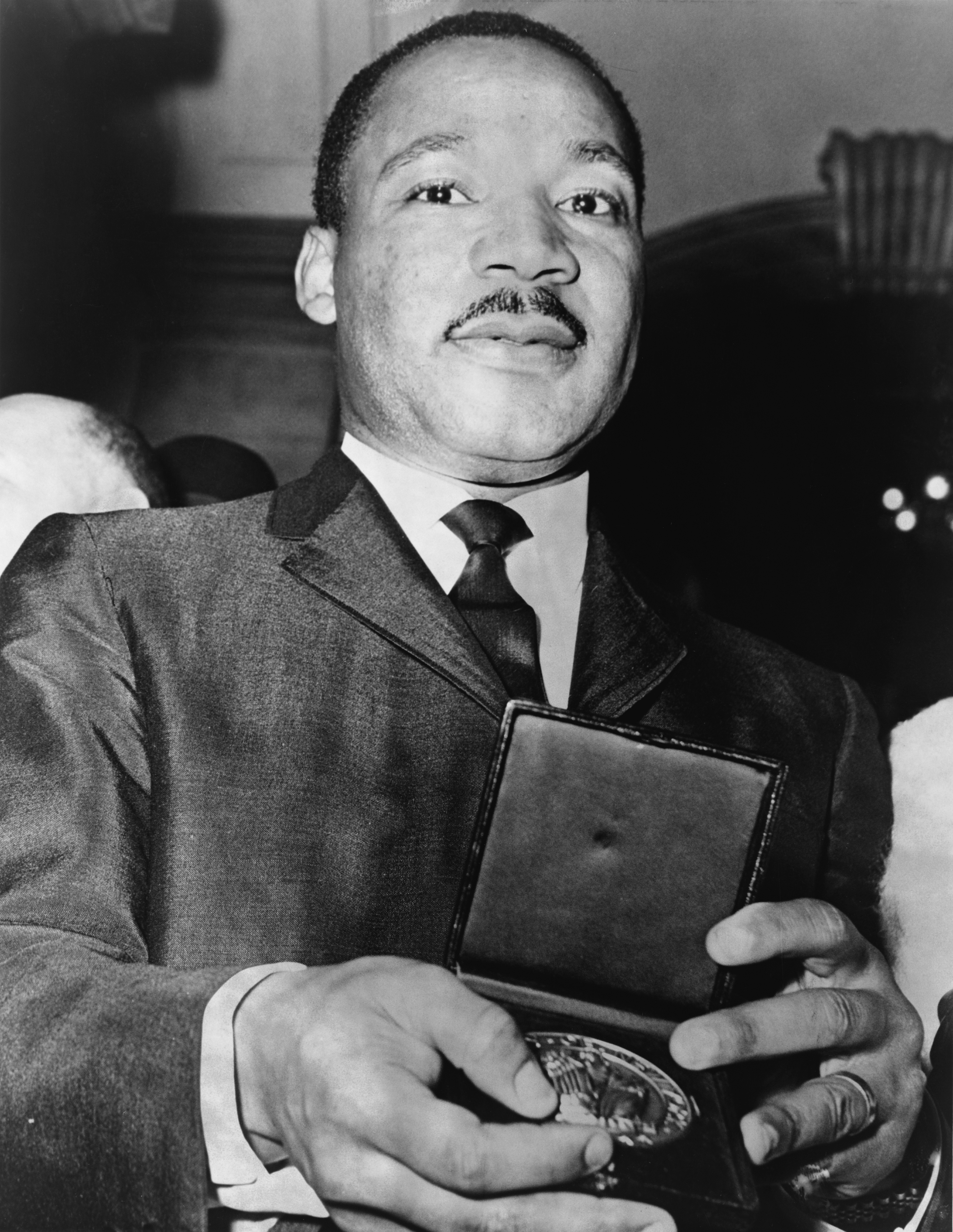
At age 93, historian Eric Hobsbawm is still very active. He was recently interviewed about his long career and the resurgence in interest in Marxism following the Global Financial Crisis. Tristam Hunt touches on one of the most attractive features of Hobsbawm’s personality– his cosmopolitanism.

With a well-thumbed copy of the Financial Times on the coffee table, Eric moved seamlessly from the outgoing President Lula of Brazil’s poll ratings to the ideological difficulties faced by the Communist party in West Bengal to the convulsions in Indonesia following the 1857 global crash. The global sensibility and lack of parochialism, always such a strength of his work, continue to shape his politics and history.

Hobsbawm’s latest book is reviewed here. For a pretty critical take on Hobsbawm, see here. For more positive assessments of the man, see here and here


Martin Luther King Day

17 01 2011

Today is Martin Luther King Day in the United States. The amount of material on the internet from other countries about MLK today is a reminder that King was a global rather than simply an American figure. Consider this text, which I have taken from a website in the Indian state of Kerala, which refers to King’s 1959 visit to India.

The legacy of Martin Luther King Jr lives on in India’s inclusiveness, cultural plurality, ethnicities and in the spirit of freedom, members of DilliNet, an online bridge connecting the expatriate community of the capital, said while sharing their India experience.

The members of Dillinet met over the weekend to pay a musical tribute to Martin Luther King, an avowed Gandhian, on his 82nd birth anniversary. King’s birthday, however, is being officially celebrated by the US government Jan 17. Born on Jan 15 in 1929, King, a Nobel Peace Prize winner, was assassinated on April 4, 1968.

Inspired by Gandhi’s ethos of non-violence, King, who led the movement for civil rights, liberties and racial bias in US, visited Mahatma Gandhi’s birthplace in 1959. It deepened his understanding of non-violent resistance. In a radio address made during his final evening in India, King said: “Since being in India, I am more convinced than ever before that the method of non-violent resistance is the most potent weapon available to oppressed people in their struggle for justice.”

King became the youngest recipient to get the Nobel Peace Prize in 1964 for his work to end racial segregation. At the time of his death in 1968, he was battling to and poverty and trying to stop the Vietnam war.

King Arrives in India, 1959


New Search Engine for Canadian History Resources

17 01 2011

The Canadiana Discovery Portal, a new search engine for Canadian history resources has gone online. I shall comment on this database of databases in the near future.


Historical Documents and the Study of Climate Change

17 01 2011

According to CBC News, researchers are hoping to glean new information about Arctic climate change by digging through the historical records of polar explorers.


Alan MacEachern, who is a professor of  history at UWO and the director of (NiCHE) the Network in Canadian History and Environment was interviewed for this story.

“The only way we know about climate change or environmental change anyway is by knowing the past temperatures, what the past environment was like,” he said. MacEachern said the field of historical climatology is still in its infancy in Canada, despite its obvious relevance in understanding modern climate change. “Why isn’t it happening more? I’m not sure,” he said. “I think the sources are kind of everywhere, and I think it’s taking a while for people to figure out exactly where they should start looking or even where they should stop looking.”

In 2008, NiCHE hosted a two-day workshop on Canada’s Climate History. To watch videos of the presentations, click here. The Early Canadian Environmental Data Project can be found here. Detailed observations of the weather were kept at HBC trading posts, as George Colpitts explained in his talk. Another important source of information for climate historians are the ships’ logs of the Royal Navy. The project Old Weather is crowdsourcing the transcription of these documents.
In the last few days, stories about the possible role of climate change in the fall of the Roman Empire have been prominent in the media (see here for example) and the blogosphere (see here, here, here and here). Doubtless this historical debate will add fuel on the fire of the political controversy over the science of climate change.


Alan Taylor War of 1812 Book Reviewed

17 01 2011

In earlier posts, I praised Alan Taylor’s new book on the War of 1812. The Toronto Star recently published a review of the book. It’s good to see that this work of scholarship is being brought to the attention of a large audience.


‘University of Aberdeen Global Empires Post-Graduate Research Project’

12 01 2011

Funding Announcement:

In recent years across a range of disciplines, empire has become a paradigm for rethinking a globalized world. In this context, the University of Aberdeen is pleased to advertise a number of Masters (fees
only) and Doctoral (fees and partial maintenance) Studentships within a broader interdisciplinary project on the ‘Ideas, Practices, and Impacts of Global Empires’. This brings together a supervisory team drawn from History, Anthropology, International Relations, and the University’s Museums. Within the project, we are interested in a number of themes: cross cultural encounters and collecting; material culture and visual representations of encounters; trade, migration, and empire; the ideologies of empires; and resistance and the ends of empires. Our areas of focus include: the British and American empires (especially Canada, the American South, South Asia, South Africa and the Antipodes); empires past and present in Latin America; Holy Roman Empire; modern German empires within and beyond Europe; Russia, especially Soviet Russia, including Russian informal empires; and competing imperialisms in East Asia. We invite applications from candidates with research interests (interdisciplinary or within the disciplines named above) touching one or more of these themes and areas.

Available studentships
2011-12
4 x Home Fees PhD Studentships
1 x Research Preparation Masters Studentships

In addition, the committee awarding studentships for the project will be able to allocate some funds towards maintenance.

Closing date: Friday 1 April

Code: RPAS2009NOV03
Please ensure that you quote this code on your application form under ‘Intended Source of Funding’ if you wish to be considered for funding under this research theme

For further details of the bid, and potential supervisors across the named disciplines, please visit:

http://www.abdn.ac.uk/cass/graduate/funding/research/empires

Informal enquiries should be sent to a.dilley@abdn.ac.uk<mailto:a.dilley@abdn.ac.uk>

This is a new project spearheaded by Andrew Dilley of the University of Aberdeen. Dilley will be known to students of Canadian historical political economy for such works as:

Andrew Richard Dilley,  ‘Empire and Risk: Edwardian Financiers, Australia, and Canada, c. 1899-1914’, Business and Economic History Online, 7 (2009)

‘Andrew Dilley review of Australia’s Empire and Canada and the British Empire’, Reviews in History, (London, Institute of Historical Research, 2009)

A. R. Dilley, ‘The Economics of Empire’, S. E. Stockwell (ed), The British Empire: Themes and Perspectives, (Oxford, Blackwells, 2008)

A. R. Dilley, ‘The Rules of the Game: London Finance, Australia, and Canada, c.1900-1914’, Economic History Review

A. R. Dilley, Finance, Imperialism, and the Dominions: London’s Square Mile, Australia and Canada, c1896-1914, (Forthcoming, Palgrave Macmillan)


Marcel Trudel

12 01 2011


Le Devoir reports that the great Canadian historian Marcel Trudel (1917 to 2011) has died.

Trudel’s publishing career as a historian lasted from 1945 until 2002.  He later created a website, which is still online. [I wonder how many people born in 1917 ever created websites].  Trudel’s earliest works were on the reception of Voltaire in 18th century French Canadian society. Published at a time when Quebec was still dominated by the Catholic Church, Trudel’s research, which showed that Voltaire had followers in New France, created a sensation. The other work that made Trudel’s reputation was his landmark study of slavery in New France. [I recently used this study in creating an assignment in which students looked at the torture and execution of Black slave in 18th century Montreal] His other publications dealt with weighty topics such as the impact of the American Revolution on French Canada and the evolution of the seigneurial system. Trudel was chosen to write The Beginnings of New France, 1524-1663 for the Canadian centennary series– most people writing lectures in Canadian history still use this book when preparing their lecture notes, as it is a great guide to Cartier, Champlain, and their times.

I don’t have bibliometric information about Trudel’s impact factor, but it must have been huge.

According to WorldCat’s author profile, Trudel’s corpus includes 216 works in 486 publications in 5 languages. His works appear in the holdings of 4,754 libraries online. The average audience level of his works was 0.79 [1 indicates a difficult work for specialists and zero a children’s book accessible to all literate people]. His most accesible book was his Atlas of New France (0.71).


1945: prix David pour la littérature (Vézine)
1951: prix David pour la littérature (Louis XVI, le Congrès américain et le Canada)
1960: médaille Léo-Pariseau remise par l’ACFAS
1961: Prix Casgrain de l’Université Laval
1963: prix des Concours littéraires et scientifiques du Québec
1964: médaille J. B. Tyrrell en histoire de la Société royale du Canada
1966: prix du Gouverneur général du Conseil des arts du Canada (Le comptoir, 1604-1627)
1966: prix des Concours littéraires et scientifiques du Québec
1966: prix Duvernay de la SSJB de Montréal
1967: médaille du Centenaire de la Confédération remise par le Gouverneur général
1971: officier de l’Ordre du Canada
1976: prix Montcalm du Syndicat des journalistes et écrivains de Paris (Le Terrier)
1977: prix d’excellence en recherche de l’U. d’Ottawa
1980: prix Molson du Conseil des arts du Canada

1984: prix Sir John A. Macdonald de la Société historique du Canada
1985: nommé Chevalier de l’Ordre national du Québec
1988: médaille de l’Union des éditeurs de langue française (Mémoires d’un autre siècle)
1989: médaille de la Société historique de Montréal
1992: médaille du 125e anniversaire de la Confédération remise par le Gouverneur général
1993: prix Archange-Godbout de la Société généalogique canadienne-française
1994: nommé Grand Montérégien
2001: prix Léon-Gérin (Gouvernement du Québec)
2003: prix Adagio (Salon du livre de Trois-Rivières)
2003: prix littéraire des Bouquinistes du Saint-Laurent
2004: nommé Grand officier de l’Ordre national du Québec
2005: nommé chevalier de l’Ordre national du mérite par le Consul général de France à Québec
2008: nommé compagnon de l’Ordre du Canada (plus haute distinction)


Madokoro on Wikileaks

12 01 2011


Laura Madokoro has published some thoughts on what Wikileaks means for the study of history. Mad0koro is both a trained archivist and an academic historian and is thus very qualified to speak about an issue related to data management and access to information. I posted some thoughts of my own on the implications of Wikileaks for historians, but my musings are rather amateurish compared to Ms. Madokoro’s recent piece, which is probably the finest post to date on the ActiveHistory.ca blog.

I liked this part of her post the most:

And so as I eagerly await to discover what 2011 has in store for the world generally and the Tommy Douglas file in particular, I find that I am less worried about what Julian Assange and WikiLeaks has done to the historical profession and more concerned about what the reaction to WikiLeaks releases portends for access to information in the future. Given the fragility of current access regimes in North America, one can only imagine how government clampdowns on the release of information in the present might affect the release of documents in the future. On the one hand, governments may feel that the damage has been done and provide greater access to researchers. But my fear is that the opposite will occur and access to information and privacy legislation will be interpreted in favour of greater restrictions and more limited access. Such a situation would indeed place history that is founded on research in public archives in great jeopardy.


HMV

11 01 2011

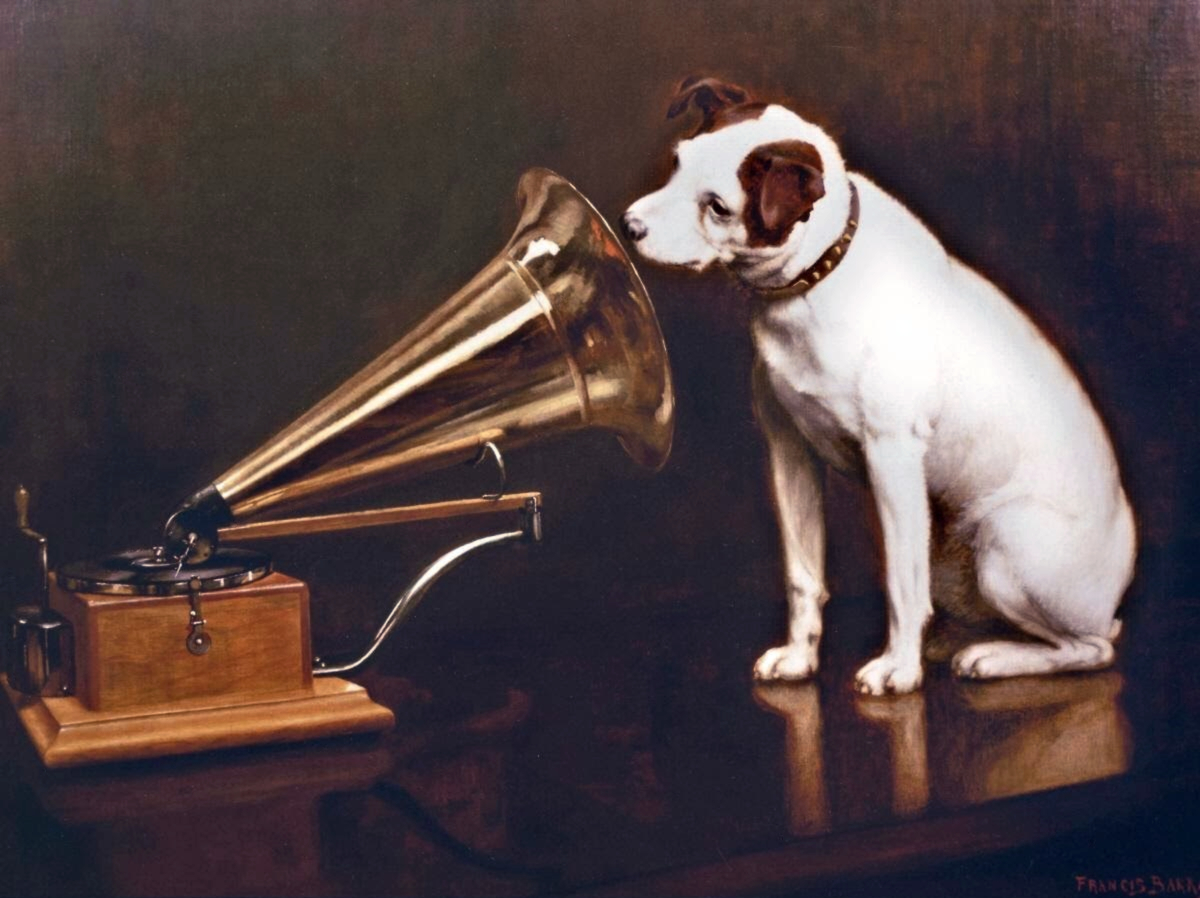
The chain music store HMV has has recently had some dissapointing sales figures. Over at The Business History Blog, Kevin Tennent has published some thoughts about HMV. Tennent, who has published research on the history of the UK music industry, places HMV’s current woes in a historical perspective. He also explains the origins of the brand name.

Dr Tennent is a lecturer in strategy at the Open University.