Toronto Star on Inuit Relocation

29 11 2009

During the Cold War,  a group of Inuit were relocated to a remote and inhospitable location in the High Arctic as part of a Canadian government effort to assert Canadian sovereignty in the face of the United States the Soviet Union. The move was a disaster for the Inuit involved, since the area to which they were shipped had little food.

Today’s Toronto Star has a lengthy and well-researched article on this topic.


Historian Joe Martin Quoted in Globe Article on the CN Strike

29 11 2009

Joe Martin, director of Canadian business history at the University of Toronto’s Rotman School of Management, is quoted in a Globe and Mail article on the ongoing strike at CN, the former Crown Corporation. His point is that the strike may have a greater effect on the Canadian economy than the last CN strike, which took place in 2007 when the economy was much more resilient.


Interesting Legal History Article in the CHR

29 11 2009

The new (December 2009) issue of the Canadian Historical Review contains an article with an interesting title:

Bradley Miller, “A carnival of crime on our border’: International Law, Imperial Power, and Extradition in
Canada, 1865-1883”

I’m looking forward to reading this article in December.


New Book by Dan Francis on History of the BC Coast

29 11 2009

Skidegate Inlet, British Columbia

The Canadian historian Daniel Francis is working on a new history of coastal BC. He is the process of posting chapters from the book on his blog. The introduction and chapter one are now online.

Here is Francis’s announcement re the blog:
“For some time I’ve been working on a new history of coastal BC, a narrative account synthesizing for the general reader the vast amount of information that’s been published about this part of the world. Eventually the history will be published as a book. In the meantime, a brave new world of digital publishing seems to have arrived. Thinking to be part of it, I’ve decided to serialize my history (titled Where Mountains Meet the Sea: a history of coastal British Columbia) online on the blog.
I launched the project on Sunday (Nov.15) by posting the book’s Introduction. Every Sunday from now until completion I will post several hundred more words. Like all the other blog entries at KnowBC, Where Mountains Meet the Sea will be fully searchable, interactive and open to everyone without passwords or credit cards. I look forward to reading your comments.

Please accept this invitation to visit us and become a regular reader as the history of the BC coast unfolds.”

You can read more about Francis here and here.


Global Reaction to the Idea of a Tobin Tax

28 11 2009

This is an Indian news report on the concept of a Tobin Tax.

Here is another news story on the Tobin Tax, this time from AFP.

Vodpod videos no longer available.


BBC News – Commonwealth summit opens with Queen’s climate speech

28 11 2009

The Queen has urged Commonwealth leaders to take action on climate change, a statement that some people see as a rebuke of Canada’s go-slow approach to the issue. I wonder if the Queen’s statement will influence the debate over the future of the monarchy in Canada, since it may alienate people on the right of the political spectrum, especially those in the Alberta oil patch. I don’t like the monarchy, but on this issue the Queen is saying something important.

Vodpod videos no longer available.


Krugman on the Tobin Tax

28 11 2009

The Nobel Laureate economist Paul Krugman has come out in favour of imposing a small tax on each financial transaction. The tax, which would be a small fraction on one percent of the value of each transaction, would have a trivial impact on long-term investment but would discourage short-term speculation on the price of stocks, currencies, and other assets.  Krugman’s proposal has been inspired by the work of the deceased economist James Tobin and by Gordon Brown, who recently mused that a Tobin Tax would be a good idea. CNBC’s Jim Cramer, who is neither a Nobel Laureate nor a world statesman, has also endorsed a sort of Tobin Tax.

I suspect that if all of the world’s actual and potential financial centres implemented such a tax, large financial institutions would have no choice but to pay. But   what if one or two countries refused to implement this tax? Wouldn’t currency speculators move to that country?  Financial services are highly mobile. After all, the SarbOx legislation in the US caused much business to shift from Wall Street to the City of London.

Toronto's Financial District Today

It seems to me that if the other Western countries implemented a Tobin Tax, there would be a golden opportunity to make Toronto a global financial centre. The Canadian government could simply announce that is had no intention of imposing a Tobin Tax.

For more on this issue see here, here, and here.


Andrew Cohen on the New Citizenship Guide

27 11 2009

Andrew Cohen, Ottawa-based public intellectual

Andrew Cohen has published some thoughts on the new citizenship test in the Ottawa Citizen. He is much more positive in his assessment of the guide than I am, but he also points out its many curious omissions. He points out that there is no mention of Prime Ministers after Sir John A. Macdonald. As he puts it, “Jim Balsillie (Research In Motion co-founder) and Dr. John A. Hopps (inventor of the pacemaker) are in, but not Mackenzie King or Lester Pearson. Peacekeeping is a footnote. The Golden Age of Diplomacy is ignored.”

Cohen is right to comment on the guide’s silences on huge swathes of Canadian political and diplomatic history. Any guide that is supposed to cover the recent political history of Canada but which leaves out the Prime Ministers and the names of the political parties is clearly not doing its job!  It would be unfair to ask prospective citizens to memorize all of the Prime Ministers, given that some of them were in office for very short periods. I confess that when I am lecturing to university students, I go over the Prime Ministers between Macdonald and Laurier rather quickly. Joe Clark and John Turner also get rather cursory treatment in my course for first-year students. I have to prioritize.  But surely being an informed citizen means knowing a little bit about, say, those Prime Ministers important enough to have international airports named after them. Most immigrants enter Canada through Pearson airport. Shouldn’t they know a few key facts about Pearson?!?!?

Cohen also mentions that “The Constitutional Wars are largely unmentioned, as is the FLQ. This is uncomfortable, but, if we can speak of domestic violence, why not domestic discord?” This is another major omission from this guide. This guide isn’t even good political history (it gets a key date wrong), and it also avoids any discussion of social history. The really big trends of post-1867 Canadian history (i.e., urbanization, industrialization, de-industrialization, secularization, the Demographic Transition) all go unmentioned, which is especially problematic when we consider that most of our immigrants now come from countries that are only have half modernized themselves.   This guide is terrible. Since it will have to be reprinted anyway to deal with the factual errors pointed out by Christopher Moore and myself, it makes sense to start talking about what sort of omissions should be recitified.

After reviewing some of the faults of this guide, Andrew Cohen describes it as “splendid”. I respect Andrew Cohen, but I am at a complete loss to understand how he could use the adjective “splendid” to describe this piece of crap. The fact the old citizenship guide was even worse and essentially ahistorical does not justify praising the new guide to the skies.

Check out Christopher Moore’s list of factual errors in DC.


Little Rock Nine Member Speaks in Sudbury

26 11 2009

My department hosted an interesting speaker last night. The 2009 Angus Gilbert Lecture was given by Minnijean Brown Trickey, a veteran civil rights campaigner from the southern United States.

Brown Trickey was one of the Little Rock Nine, the black high school students who desegregated Central High School in Little Rock, Arkansas, in 1957.  While the world watched, the students were turned away from the all-white school, first by the Arkansas National Guard and then by an angry white mob. Days later, in a seminal moment in US history, the students entered the school accompanied by 1200 armed US troops.  For the remainder of the school year, soldiers escorted the students to and from school. You can read more about her dramatic story here.

Brown Trickey has devoted her life to the causes of peace, the environment, and human rights.  She holds a bachelor’s degree in Native Human Services from Laurentian University and a master’s degree from Carleton University. In 2007, Laurentian conferred upon her an honorary doctorate of laws. In the administration of President Bill Clinton, she served in the Department of the Interior as Deputy Assistant Secretary for Diversity.  She is a recipient of the US Congressional Medal.

Entitled “Little Rock Revisited,” Brown Trickey’s lecture re-examined this seminal moment in the history of education and civil rights.

For more information, contact Professor Stephen Azzi, Department of History, at 675-1151, extension 4190.

Le mercredi 25 novembre, Minnijean Brown Trickey, qui fait campagne depuis longtemps pour le mouvement des droits de la personne aux États-Unis, a prononcé une communication à l’Université Laurentienne.

Brown Trickey faisait partie du « Little Rock Nine », le groupe d’élèves noirs de l’école secondaire qui, en 1957, a déségrégationné la Central High School à Little Rock, en Arkansas. Sous le regard du monde entier, on avait interdit à ces élèves d’entrer dans une école réservée aux Blancs, d’abord la Garde nationale d’Arkansas et ensuite, une bande d’émeutiers blancs. Plusieurs jours plus tard, lors d’un moment marquant de l’histoire américaine, ces élèves sont entrés dans l’école sous escorte de 1 200 soldats américains armés et pendant toute l’année scolaire, des soldats ont dû accompagner ces jeunes avant et après l’école. Pour plus de renseignements sur la vie de Madame Trickey, cliquez ici.

Ayant dévoué sa vie aux causes de la paix, de l’environnement et des droits de la personne, Minnijean Brown Trickey est titulaire d’un baccalauréat en services sociaux pour les Autochtones de l’Université Laurentienne ainsi que d’une maîtrise de l’Université Carleton. En 2007, la Laurentienne lui a conféré un doctorat honorifique en droit. En qualité de membre de l’administration du Président Clinton, elle a été secrétaire adjointe déléguée à la diversité au ministère de l’Intérieur. Elle est aussi lauréate d’une médaille d’honneur du Congrès américain.

La communication de Minnijean Brown Trickey, intitulée « Little Rock Revisited », a examiné à nouveau ce point saillant de l’histoire de l’éducation et des droits de la personne.

Pour obtenir plus de renseignements, communiquez avec le professeur Stephen Azzi du Département d’histoire, au 675-1151, poste 4190.

La Conférence commémorative Angus-Gilbert est présentée annuellement afin de rendre hommage à M. Angus Gilbert, professeur au Département d’histoire, qui a perdu son combat contre le cancer en 1993, après une longue et brillante carrière à la Laurentienne. Il était un universitaire reconnu, un professeur populaire et un collègue hautement respecté pour les services qu’il a rendus à l’Université.


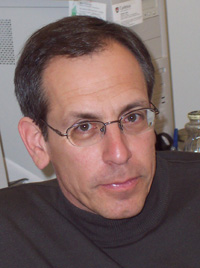

Historian Matt Hayday on the Vancouver Olympics and the Canadian Identity

26 11 2009

University of Guelph history professor Matt Hayday published a podcast on the Olympics and the Canadian identity crisis. The podcast is part of the Globe and Mail’s Intellectual Muscle series.

The student newspaper at the University of Guelph has published this summary of his talk:

“Because the Olympics are such an international forum, it’s a way of showing excellence on an international scale [it’s] almost like Canada breaking out of its little bubble of self-doubt, of constantly being in the American shadows… Canada seems to be having a bit of an identity crisis.  As a country that was founded as a colony for France and England, four hundred years later we appear to be having a tough time trying to figure out our national personality. After World War II, some realizations seemed to emerge for Canadians: we are not American, we need to be recognized on the international stage, and sporting heroes provide a rallying point for us to do it.”

Update: for more on the history of the winter Olympics, see here.