Section 121 and Canada’s Marijuana Monopolies

28 11 2017

I was quoted in a recent Toronto Star story on marijuana and the constitutionality of interprovincial trade barriers.  The reporter asked me whether a victory for  the advocates of interprovincial free trade in the Comeau case (see here) would destabilize the plans for provincial government monopolies on the sale of marijuana.  I answered that whether Canada ends up with a single national market for marijuana or a system whereby each province creates its own walled-garden system could indeed be influenced by the Supreme Court’s decision in the case of R v Comeau. If the Supreme Court agrees with the view that interprovincial trade barriers that impedes the trade in alcohol and other legitimate products are unconstitutional, then the existing restrictions on bringing beer, dairy products, etc between provinces would become unenforceable. In that scenario, clever lawyers for companies that want to be able to sell marijuana across interprovincial borders might then be able to use this precedent to argue that a provincial law banning mail-order sales from another province are also unconstitutional.


However, I also told the reporter don’t that I didn’t think that such arguments would be persuasive or that the courts would greenlight a free-for-all in marijuana, as opposed to commodities that have been legal for a long time (e.g., beer).  I arrived at this conclusion based on comparative constitutional history. Many federal unions have a provision in their constitution that mandates that there should be free trade between the members unit. For instance, the Australian constitution has a section (Section 92) very similar to the Canadian constitution’s section 121 that mandates that there should be free trade between the Australian states. The founding documents of the European Union enshrine a similar sort of principle called the single market, which means that EU courts have declared that citizens in one EU country can drive to another, fill their car with alcohol or any other legitimate product, and then return home. The key court case that helped to create the single market was the famous 1979 Cassis de Dijon ruling. Without this ruling, the EU Single Market as we know it would not have come into existence. One of the many consequences of the creation of the EU Single Market is that you routinely see heavily-laden cars stuffed with wine bottles returning to the UK from Calais, a French town that has a suspiciously large number of liquor stores.  In 2007, the European Court of Justice, which is effectively the EU’s Supreme Court, issued a ruling in a case that has many parallels with the Comeau case. In Sweden, alcohol sales are a state monopoly—you must buy your alcohol from Systembolaget. In Denmark, the sales regime is more liberal. Thanks to the famous bridge between the two countries, it is quite easy for people in western Sweden to circumvent the Swedish state monopoly. In 2007, the  European Court of Justice, ruled that some of the Swedish laws that support Systembolaget,  in particular the provisions prohibiting the importation of alcoholic beverages by private individuals, violate the principle of free trade within the EU.


As I explained to the reporter, the courts in federations that mandate interal free trade generally frown on internal trade barriers,  they seem to draw the line at things like recreational drugs or prostitution. For instance, people in EU countries cannot drive to Amsterdam or some other Dutch city where marijuana is openly sold in cafes, and then drive back to say, Germany, with the marijuana. The principle of the single market doesn’t extend to such controversial products. If it did, EU member nations would no longer be able to have drug laws that deviate from those of the most liberal EU member state.  In a 2010 test case brought by the owner of the Easy Going cafe, a Dutch marijuana establishment in the town of Maastricht, the European Court of Justice, ruled that the principle of free trade between EU countries just didn’t apply here. [Maastricht, it should be noted, is located conveniently close to the border and a German autobahn.]

Similarly, the Australian courts have been quite vigorous in using Section 92 of Australia’s constitution to strike down barriers to inter-stateat  trade in the goods and services in that country, particularly since the precedent-setting ruling in the 1988 case of Cole v. Whitfield. However, the principle of inter-state free trade is not taken so far as to  mean that brothel companies that operate in the Australian state where prostitution is legal (e.g., New South Wales) can open up branches in states that have banned brothels!

I suggested to the reporter that in interpreting section 121, the Canadian Supreme Court would likely adopt a similar approach to that taken by courts in other industrial democracies (the EU and Australia). Since the Gold Seal Case, Canadian judges have interpreted section 121 it very narrowly to mean that only restrictions on interprovincial trade that take the form of actual tariffs are prohibited. I suppose the Canadian courts could go to the other extreme and declare that anything that restricts interprovincial trade, such as federally-imposed fines for people who send marijuana through Canada Post, are unconstitutional under the  Section 121. After looking at how courts in other democratic federations have interpreted the constitutional protections for internal free trade in marijuana cases, I would predict that the Canadian courts would likely adopt a middle ground position is that some non-tariff restrictions on interprovincial trade are acceptable, particularly in the case of substances that have only just become legal and which are still illegal in most other democratic countries.  Such an interpretation of Section 121 would be analogous to the one that the European Court of Justice adopted in its 2010 ruling on marijuana.




The Comeau Case: a Compendium of Resources

28 11 2017

fathers

As long-time readers of this blog will know, I was the expert witness at a 2015 court case (Comeau) about the constitutionality of internal trade barriers in Canada. (I wrote a number of blog posts about this case at the time– see here and here). This test case involved a New Brunswick man who was charged with driving into Quebec, buying some beer, and then bringing it back to New Brunswick, which has a government monopoly on liquor sales. In Quebec, of course, you can buy beer in convenience stores and it is cheaper. The Comeau case has important ramifications for a number of industries, not just beer, since there are many interprovincial trade barriers in Canada that go against the constitution’s provision that there should be free trade between Canada’s provinces. For instance, there are restrictions on interprovincial free trade created by marketing boards. These restrictions serve to increase the price of milk and other commodities.

comeau-cbc-900x675

Canada’s subnational governments, the provinces, impose many restrictions on interprovincial trade that are protectionist in intent and effect. (Canada isn’t the only country to have such internal trade barrier—see here for a gateway into the academic literature on this subject).  Canada’s internal trade barriers appear to conflict with section 121 of the 1867 Canadian constitution, which explicitly provides for free trade between Canadian provinces. This constitution is the British North America Act, 1867 (UK), which was retroactively renamed the Constitution Act, 1867 by the Constitution Act, 1982 . [Most academic historians continue to refer to the text by its historical name]. Since I wrote a PhD thesis and book on the political economy of the 1867 constitution, I am considered to be well qualified to speak about the motivations of the creators of section 121. You can read the expert witness report I wrote for the Comeau case here.

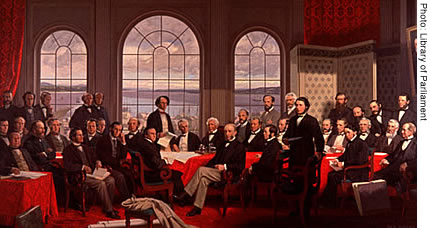
I believe that section 121 was included in the Canadian constitution because the framers of this document wanted the new Dominion of Canada to be a single market without fetters on interprovincial trade. These framers included the Fathers of Confederation- a group of British North American politicians- as well some senior British politicians (especially the Earl of Carnarvon but also Adderley, Watkin, and others), and a handful of very accomplished civil servants and lawyers in London.

150 years later, trade barriers are still in place. For those who don’t wish to read my entire expert witness report, this 2015 CBC article gives a summary of the views I presented in “The Historical Origins of Section 121 of the British North America Act: a Study of Confederation’s Political, Social, and Economic Context

In April 2016, the judge in the Comeau case made his ruling, which found that New Brunswick’s restrictions on the importation of beer from Quebec were incompatible with section 121. (You can download Justice Leblanc’s ruling, which was 194 paragraphs in length, here or here).

The Comeau case has now made its way to the Supreme Court of Canada, which will hear it on 6 and 7 December. In the last few weeks, the Canadian media have begun to carry a range of stories about the case and associated issues, such as the constitutionality of the provincial government monopolies on marijuana that will be created in 2018, when recreational marijuana becomes legal in Canada. There are literally dozens of stories on this topic, so I will content myself with linking to just a few (see-here, here, here, and here).  I was quoted in a recent Toronto Star story on marijuana and the constitutionality of interprovincial trade barriers.

I thought I would take this opportunity to share links to a series of online resources for people who are interested in this case and the various issues it raises.

The Supreme Court of Canada’s website has a section with a range of documents related to the Comeau case. For convenience, I have put links to them here.

As you can see, the Comeau case has attracted the attention of a wide range of interest groups!

Think tanks have published some interesting pieces about the case. For a perspective from the C.D. Howe Institute, see here. Also check out this 2013 report by the C.D. Howe institute,  “Beer, Butter, and Barristers: How Canadian Governments Put Cartels before Consumers”. (That report wins the prize for best title!)

In the wake of the lower court’s ruling in the Comeau case, the Canadian Senate Standing Committee on Banking Trade and Commerce has published a data-rich report on interprovincial trade barriers.

In the academic and legal blogosphere, the case has attracted some attention, particularly from those who are interested in whether “originalism” is the right way to the interpret constitutional documents (see here, here, and here). (I blogged some thoughts about originalism some time ago). Bradley Miller, a legal and constitutional historian at the University of British Columbia, published a much more eloquent piece about originalism in January that has recently been brought to my attention.

The implications of the Comeau case for the Canadian drinks industry have been discussed on Alcohol and Advocacy, a specialized legal blog maintained by Dan Coles, a litigation lawyer at Owen Bird Law Corporation in Vancouver, British Columbia.

In October 2017, Christopher Moore, a Toronto-based historian, published a paper that offers an interpretation of Section 121 that is very different from that which I offered in my 2015 report. You can read his paper Federalism, Free Trade within Canada, and the British North America Act, S.121 here.  Moore argues that Section 121 was not intended to eliminate non-tariff trade barriers between Canadian provinces, only tariff barriers.

There are many statements with which I disagree that appear in Christopher Moore’s paper. His paper motivated me to write a report that focuses on those of these statements that appeared in parts II and III of his paper. The most important of these points is his claim was that the creators of the British North America Act would not have been thinking about non-tariff barriers when section 121 was composed since nineteenth century people had not yet started to worry about non-tariff trade barriers. His argument is that paying attention to non-tariff trade barriers is a very comparatively recent development and one that dates from after 1970.  It is likely that Chris Moore has been misled by secondary sources that date from around the time of the GATT’s Tokyo and Uruguay rounds that declare that the focus on non-tariff barriers is totally new and without precedent.

Now it is certainly true that non-tariff trade barriers became a more important issue in trade diplomacy in the 1970s and 1980s than they had been in the 1950s. However, there is abundant evidence that the creators of the British North America Act and nineteenth-century people in general were indeed interested in non-tariff Western tariff barriers. The 1860 trade agreement between the UK and France, the famous Chevalier-Cobden agreement,  included sections that dealt with what we would today call non-tariff trade barriers.  (The WTO website has a good explainer that can act as an introduction to the academic literature on this agreemen and there is an equally good discussion of this treaty on the University of Exeter’s Imperial and Global Forum blog. Unfortunately, I can’t share an electronic copy of the text of this treaty here for copyright reasons).

Why is the Chevalier-Cobden agreement relevant here? The British parliamentarians who passed the British North America Act, Section 121 and all, were doubtless familiar with the provisions of the 1860 treaty, which they also debatedthey also debated. Most importantly, Francis Savage Reilly (1825-1883), the individual who actually wrote the British North America bill, also would have been familiar with the 1860 Anglo-French treaty, even though I haven’t been able to find out whether he actually read this document in his capacity as a lawyer who took on lots of British government work in the 1860s.   Reilly was the real architect of section 121 and my sense was that his drafting of it was informed by his knowledge of European commercial diplomacy.  Reilly literally wrote books on diplomacy and arbitration, as his WorldCat author entry shows! Moreover, we know from nineteenth-century US Supreme Court rulings that contemporaries in North America were aware of the potential to non-tariff barriers to impede trade between jurisdictions even in the absence of tariffs (i.e., fiscal levies imposed at ports of entry).

I discuss all of the problems with Moore’s interpretation in a new paper called A Critical Response to Christopher Moore’s “Federalism, Free Trade within Canada, and the British North America Act, S.121. Those who wish to read this as-yet unpublished paper can do so by emailing me on my University of Liverpool email address.


How to bury the lede: Nick Crafts on the postwar British productivity failure

27 11 2017

Nick Crafts (born 1948), who is a very senior and respected economic historian at the University of Warwick, has published a new paper on the postwar British productivity failure. It examines why productive grew at a slower rate in the UK than in similar Western European countries in the three decades after 1945, which were, of course, a period when the UK remained, for various reasons, outside of the EEC.

Abstract: British productivity growth disappointed during the early postwar period. This reflected inadequate investment in equipment and skills but also entailed inefficient use of inputs. Weak management, dysfunctional industrial relations, and badly-designed economic policy were all implicated. The policy framework was partly the result of seeking low unemployment through wage restraint by appeasement of organized labour. A key aspect was weak competition. This exacerbated corporategovernance
and industrial-relations problems in the British ‘variety of capitalism’ which sustained
low effort bargains and managerial incompetence. Other varieties of capitalism were better placed to achieve fast growth but were infeasible for Britain given its history.
Keywords: competition; productivity; relative economic decline; varieties of capitalism

In my view, the most interesting and policy-relevant part of this paper appears at the very end. Prof. Crafts has effectively “buried the lede” by tucking this information down near the end, where he writes that the main features of the postwar period of British economic history were


ineffective competition policy, nationalization, and protectionism including remaining outside the EEC. This exacerbated problems of corporate governance and industrial relations inherent in the British ‘variety of capitalism’ as the economic rents that were generated helped to sustain low effort bargains and managerial incompetence.

(Bolding added by AS)

This paper builds on Craft’s earlier estimate (2016) that joining the EEC raised the level of UK GDP by about 8 to 10 per cent through increasing the volume of trade and strengthening competition. You can also read his short piece on what history says about Brexit here.


Enterprise and Society to Launch New Fifth Issue

16 11 2017

BHC Banner squished

Enterprise and Society: The International Journal of Business History and Cambridge University Press are pleased to announce an exciting new initiative designed to extend the reach and impact of business history by promoting interdisciplinary dialogue and tackling the most pressing questions within and beyond the field

Announcement: Enterprise and Society to Launch New Fifth Issue


The International Journal of Business History and Cambridge University Press are pleased to announce an exciting new initiative designed to extend the reach and impact of business history by promoting interdisciplinary dialogue and tackling the most pressing questions within and beyond the field.

Business history takes as its topic the dominant institution of our day. Globally, we are at a moment when almost every critical issue and public discussion evokes deep historical resonances. Business history has much to say on a wide range of vital topics and we believe our voices should be heard louder and further afield.

The new fifth issue, which will be published online, will be a special issue unlike most others. Rather, than seeking original research articles the aim is to generate bold, ambitious, synthetic articles that will spark debate, inspire future lines of work, and broaden audiences. Each issue will focus either on the potential intersections of business history and another field, both within and beyond history, or on problems of the greatest magnitude. Potential examples of the former include: business history and legal history or business history and economic sociology. Potential examples of the latter include: business and inequality; business, democracy, and authoritarianism; or business and capitalism.

The new fifth issue will also differ from most Special Issues in other ways. We will not seek theme proposals. Rather, the editorial team at Enterprise and Society will decide themes. Teams of potential guest editors will then be invited to bid to take each theme forward to publication. Space and support will be given for guest editors to organize a supporting workshop at the Annual Meeting of the Business History Conference, on whose behalf Enterprise and Society is published.

Adopting an online only format for the new fifth issue allows us to introduce this new publication without any increase in member fees. We welcome the support of Cambridge University Press in making this possible. It is vital to stress that the online only format does not signal any difference in quality or status. All articles published in the new fifth issue will be subject to exactly the same processes of double-blind peer review as those published in the four standard issues. They will be subject to identical editorial processes and standards. Production standards, processes and formatting at Cambridge University Press will be identical. Articles published in the new fifth issue will be Enterprise and Society articles in every sense.

The first Call for Editors will be released very soon. That will introduce not only the first theme but also give further detail on processes, logistics, and timelines.

We are very excited to be able to make this new forum for debate and exchange available to business historians and the wider scholarly community. We believe it has great potential and hope others will be just as excited about participating and contributing.


Politics Gets Personal: Effects of Political Partisanship and Advertising on Family Ties

14 11 2017
800px-thanksgiving_dinner_alc2

Thanksgiving Dinner. Image from Wikimedia Commons. Falmouth, Maine, USA 2008


An academic friend sent me the abstract to a new paper that uses an innovative methodology to test the claims that political polarization in the US is eroding social capital. Some people have argued that polarization is making it harder for people to stand being around their relatives and neighbours, leading to more “bowling alone” and less face time with people with whom we disagree politically. Two data-savvy social scientists, M. Keith Chen and Ryne Rohla, tried to test this using smartphones. Thanks to what one likes on social media, one can get a good sense of a person’s political leanings. If they like Fox News and retweet Trump, they are probably a strong Republican. If they still have the Hillary Clinton 2016 app on their phone, they probably aren’t.

Smartphones are also GPS-enabled, which helps to pinpoint their locations. Since they tend to stay in the pocket of the owner, which allows to measure how long right-wing and left-wing Americans spend in each other’s presence. Data from the Thanksgiving following the 2016 presidential election suggests that Americans were curtailing the time they spent with ideological opposites, either by cancelling your attendance at Thanksgiving or makign the visit really short. You have your right-wing parents, so you abbreviate your visit to their house on Thanksgiving: turkey, quick dessert, then hit the road before a political argument about who is a traitor starts.

Politics Gets Personal: Effects of Political Partisanship and Advertising on Family Ties

Abstract

Using smartphone-tracking data and precinct-level voting, we show that politically divided families shortened Thanksgiving dinners by 20-30 minutes following the divisive 2016 election. This decline survives comparisons with 2015 and extensive demographic and spatial controls, and more than doubles in media markets with heavy political advertising. These effects appear asymmetric: while Democratic voters traveled less in 2016, political differences shortened Thanksgiving dinners more among Republican voters, especially where political advertising was heaviest. Partisan polarization may degrade close family ties with large aggregate implications; we estimate 27 million person-hours of cross-partisan Thanksgiving discourse were lost in 2016 to ad-fueled partisan effects.


The big-data techniques that went into this paper were really impressive– note how there were trillions (with a T!) data points supporting this paper.


Location tracking data comes from Safegraph, a company that aggregates location information from numerous smartphone apps. The data consist of “pings”, each of which identify the location (latitude and longitude) of a particular smartphone at a moment in time. Safegraph tracks the location of more than 10 million Americans’ smartphones, and our core analysis focusses on the more than 17 trillion pings Safegraph collected in the continental United States in November of 2016.

I had two initial reactions to this paper.

First, I felt sad when I saw evidence that social capital is being eroded in a country that I like. I’m not an American. I am relieved that political polarization is less of an issue in the two countries in which I have nationality: these two countries, the UK and Canada, have complex multi-party systems, which helps to preclude the severe partisan polarization one sees in the two-party US system. However, while I’m not an American and thus don’t have skin in this particular game, I do recognize that the US is important to my life and well-being and thus I want the US to function well. Eroding social capital undermines the ability of the US to function.

Second, reading the abstract and observing the attention this paper has generated for the authors made me more conscious of the challenges that we qualitative social scientists face trying to carve out impactful careers in a society that, largely legitimately, accords a great deal of respect to quantitative research using big-data methods. I’m not saying that we need to emulate these methods, merely that I and other qual social scientists need to up our games in the choice and design of research topics and then in the dissemination of our research findings to the wider society.


CFP: The firm and the sea: chains, flows and connections

14 11 2017

AS: I’m sharing this CFP, which is for a conference that will take place in the lovely city of Ancona. Thanks to Veronica Binda for sending these images of the city and venue.

The firm and the sea: chains, flows and connections

Call for Papers, European Business History Association 2018 Conference Università Politecnica delle Marche, Ancona – Italy September 6-8, 2018

The sea – whether considered as open ocean or as a mass of water bordered by land masses – is an enormous economic resource for mankind. Not only is it the principal way of transportation for goods and humans but it’s also a formidable source of food. Since we want to link the sea with the business unit (the firm, as well as other organizational units like clusters, networks and global value chains) the focus of the next EBHA conference will be on two units of analysis that are both extremely relevant for the sea as well as economic resources – ships and harbors.

In order to perform its function, the ship (a means for transporting goods and people) is run in a very hierarchical way, more than what occurs with a factory or a retail company (two good comparison points). Just as with a factory or retailer, ships embody economic goals to be achieved by workers, managers, and – this is the difference – CEOs whose decisions cannot be challenged given that the cargo and (more importantly) the life of its “inhabitants” can be at stake.

Rarely does the ship stand on its own as a business unit (unless we talk of an activity like fishing which is certainly important). It’s part of a group that refers to a shipowner acting in a very complicated world where the ups and downs of charters and continuous struggles with government regulations and policies render decisions delicate and complex.

The ship is the nexus of a tremendous amount of activity – just consider the shipyards, metallurgic factories, plants producing precision equipment, and those dedicated to heavy machinery. And think of other sectors like the extraction of raw materials and agricultural products that could have a real global circulation in relation to the capacity of the maritime vehicle.

Then there are associated service sectors such as insurance and banking activities focused on navigation (often with government support). Credit for navigation is a landmark of the modern economy with both successes as well as bankruptcies. Also worthy of further study is the role that passenger ships have played in the social and economic development of many nations. From the large ships of the late 19th and early 20th centuries that plied the Atlantic Ocean transporting passengers between the Americas and Europe to the postwar ocean liners that offered a glamorous way to travel to new destinations, ships helped make the tourism industry grow.

And we can’t close our eyes to some of the unlawful activities connected with the world of navigation including the illegal transportation of human beings, prohibited goods, and money laundering. Even today there are occasional episodes of piracy, something that we thought limited to history books and old novels.

The second actor we consider is strictly related to the first one – ports, an unavoidable reference point for ships that make them their destination for the goods and passengers on board. It’s in the port that a ship can stock materials needed when at sea and eventually undergo repairs before embarking on a new journey. We see the port as an

1

entrepreneur (formed by stakeholders with both common and divergent goals) which should be analyzed in an historical perspective. First are the many aspects of the governance of the port: who’s in charge? Is it a function of the State or the military? Is it a managerially run port authority that, even if designated by State powers, has relative autonomy in its actions? Are there private operators who handle the terminals? How does the type of governance impact a port’s efficiency? Second, we have to single out the crowd of operators in a port: maritime agents, stevedores, people who maneuver the cranes, pilots, dock workers. Several of these activities are strictly regulated, at times resulting in strong conflicts between various actors in the port.

The relationship between a port and the areas around it, the presence of appropriate infrastructures, and the many activities making up the field of logistics – all are tremendously important for the port as a kind of entrepreneur. Given their role of stimulating the trade of goods, raw materials and energy sources, the port becomes a key actor of the development of productive areas. Ports can strengthen or even launch the industrial take-off of the territories they supply. Moreover, ports are historically linked to global cities, nodes in a complex network of trade, but also of political international alliances, which emerged progressively in the phases of globalization (from Singapore to Hong Kong and from San Francisco to Yokohama, for example).

Even today seas and their ports remain a theater in which important geo-political and geo-economic stances take place; their relevance for business history can’t be underestimated. From the building or restructuring of infrastructures that are pillars of the first wave of globalization (the Suez and Panama Canals, for example) to new opportunities brought about by the latest waves of globalization, the sea continues to be an essential, physical component of the complex web of trade relations which allow the existence of global value chains that take advantage of its unique means of connection and communication.

Possible topics include (but are not limited to):

  • Connections, links and networks in waves of globalization and de-globalization
  • Characteristics and dynamics of the shipping and logistics industries
  • The long run transformation of shipbuilding and related industries
  • The fishing industry
  • The history of insurance and banking activities related to navigation
  • Technological developments and their impact on ships and ports
  • The variety and features of illegal activities connected to sea transport
  • Features and management of companies connected with the world of navigation
  • Private and public entrepreneurship in sectors related to sea transportation
  • Workers and industrial relations in maritime industries
  • The governance of ports and their transformation over time
  • Relations of cooperation/competition among maritime companies and ports
  • The history and development of global value chains and networks

Last, but not least, ports, ships, and even the sea are highly sensitive to technological change and the resulting emergence of competitive and alternative infrastructures (from railways and motorways to airlines and large airport hubs).

2

  • The role played by firms and entrepreneurs in shaping the development of maritime exchanges of goods, services, and information, or in integrating economies and cultures
  • Seas, ports and climate change
  • Dynamics and impact of governmental policies and regulations on navigation
  • The political economy of connections and links
  • The impact of ports on their surrounding territory and vice versa
  • The geography and features of global cities and their transformation
  • The role of the sea in shaping the emergence and consolidation of different kinds of

capitalism

  • Migrations flows across the sea
  • Passenger travel and the growth of tourism
  • International investments in the maritime industries
  • The relationships among port cities seen as nodes of a global network where

dimensions and scope change over time

The organizers expect to receive proposals related to some of the suggestions outlined above. But consideration will also be given to papers covering other aspects of the broader conference title.

In the event of a business history topic without ties to the sea or the firm, consideration will be given, provided that the proposal demonstrates originality and that this forum could be a useful place for further reflection.

We also invite other formats, such as panels and roundtables, poster sessions for Ph.D. students, workshops aiming to start collaborative projects, and “toolkit sessions”. Proposals should be directed to the paper committee as well.

Requirements for proposals

The submission system consists of a template that specifically asks for

(1) Author information: affiliation, short CV, authored publications related to the paper proposal

(2) An abstract of no more than 800 words

(3) Additional information important to the program committee: clear statement of the research question (not more than 150 words), brief information on the theoretical/conceptual framework used, major research areas to which the paper relates

(4) Joint papers need a responsible applicant who will be at the conference if the proposal is accepted.

Please have this information ready to enter into the submission system via copy and paste.

Requirements for panel proposals and roundtables

The criteria for single paper proposals also apply to session and roundtables proposals. There is, however, a specific template for session proposals.

3

Sessions can be ninety minutes long (usually three papers) or two hours in order to accommodate more papers. A successful panel/roundtable leaves significant time for the audience to raise questions, to comment and to generally discuss the panel’s theme.

A session proposal should not be made up of participants exclusively from one country. The program committee retains the right to integrate papers into sessions as they see fit.

Please note that paper, session/panel proposals must be submitted via the congress website (use this link http://ebha.org/public/C9 to upload proposals). See the Conference Website (http://ebha18.univpm.it) for further details.

The deadline is Monday, January 15, 2018.

If you have any questions please contact Veronica Binda or Roberto Giulianelli at:

scientific.ebha18@univpm.it


Research Fellowship for a Business Historian, University of Hertfordshire

7 11 2017

AS: This 12-month job would appear to involve writing a commissioned history of Morrison Construction, a Scottish firm. I’m not certain why the money is being routed through a university in England rather than, say, the business history unit at the University of Glasgow. Nevertheless, this could be a great opportunity for a young business historian, especially if this book project could also result in a few papers in ABS-3 and ABS-4 journals.

Research Fellow
University of Hertfordshire – School of Humanities
Location: Hertfordshire
Salary: £32,548 to £38,833
Hours: Full Time
Contract Type: Fixed-Term/Contract
Placed on: 31st October 2017
Closes: 16th November 2017
Job Ref: 015559
Salary: £32,548 – £38,833 pa dependent on relevant skills and experience

Grade: UH7

FTE: This is a full time position working 37 hours per week (1.0 FTE)

Duration of Contract: Fixed Term Contract 2 January 2018 to 31 December 2018

History of Alexander Morrison (Builders) LTD

Qualifications required:

They must hold an undergraduate honours degree at a minimum 2:1 (or equivalent in a relevant discipline) and are likely to have a PhD in History and/or Heritage. They will have experience of conducting oral histories.

Description of research area:

The Fellow will be required to take primary responsibility for researching and writing a history of Alexander Morrison (Builders) Ltd, later Morrison Construction, from its establishment in 1948. The Fellow must be working within the field of twentieth-century business and economic history, broadly conceived, and must have experience of conducting oral history interviews.

Description of the School:

The successful candidate will be based in the History Group, which is located in the School of Humanities. The History Group is one of the most successful History research units in the country, ranked 5th equal out of 83 submissions in REF 2014, and the only History unit in REF 2014 to achieve 100% 4* for Impact. The School provides a rich and supportive research environment, with close collaboration between its subject research groups: History, Philosophy, English Literature, Media and Mass Communications, and English Language and Communication.

http://www.herts.ac.uk/research/centres-and-groups/history-research-at-hertfordshire

Contact Details: Informal enquiries can be made to Dr Anne Murphy, Associate Dean Research, School of Humanities, email: a.l.murphy@herts.ac.uk or Tel: + 44 (0)1707 285639

Interview Date: Interviews to be held week commencing 27th November 2017

The University offers a range of benefits including a pension scheme, professional development, family friendly policies, child care vouchers, a fee waiver of 50% for all children of staff under the age of 21 at the start of the course,


EH.Net Review: Vincent Geloso, Rethinking Canadian Economic Growth and Development since 1900

4 11 2017

Published by EH.Net (October 2017)

Vincent Geloso, Rethinking Canadian Economic Growth and Development since 1900: The Quebec Case. New York: Palgrave Macmillan, 2017. xxi + 212 pp. $129 (hardcover), ISBN: 978-3-319-49949-9.

Reviewed for EH.Net by Herb Emery, Department of Economics, University of New Brunswick.


Vincent Geloso, Post-Doctoral Fellow at Texas Tech University, adds to the literature arguing against historical narratives that Quebec’s economic development and modernization only started after 1960 with the Quiet Revolution. For Quebec, the fifteen years after World War II, dubbed “La Grande Noirceur” or “the Great Darkness,” is associated with the Maurice Duplessis’s Union Nationale government supported by the Catholic Church and Anglophone business, prone to corruption, suppression of civil liberties and labor unions, and defense of traditional values and rural interests. While historians have acknowledged that the postwar economy of Quebec had strong growth, and elements of modernization like rural electrification, Duplessis is also considered to have been a leader that held modernization and the development of a secular, multi-cultural state back by at least a decade. Overall, the goal of the author is to spur a reconsideration of “La Grand Noirceur” as “The Great Catch Up” and to recast the leadership of Duplessis in a positive light. Perhaps more controversial, the author seeks to bolster that case that the Quiet Revolution was at best a continuation of an evolution and may have actually been a drag on growth.

Geloso contributes new evidence in support of a revisionist argument as to Duplessis’s legacy. He shows that after decades of no convergence between Quebec and Ontario, during Duplessis’ leadership from 1945 to 1960, Quebec’s economy boomed and incomes converged with those of Ontario, Canada’s leading provincial economy. He seeks to make a case that during the “The Great Darkness” the conditions for future growth, notably through the increased educational attainment of francophones, were sowed. The author describes how the forces underlying the Quiet Revolution, including the declining role of the church and populist, rural attitudes which resisted modernization, were underway well before the 1960s. In contrast, the era from 1960 to 1976 exhibited no break from the trend set from 1945 to 1960, and during the Quiet Revolution convergence with Ontario slowed to a halt and the gap with the rest of Canada has remained more or less constant since.

Geloso’s revisionist view of the Duplessis period is based on the convergence of Quebec’s income with that of Ontario rather than on absolute gains in income which occurred before and after the Duplessis period. Did Duplessis have anything to do with the income convergence of the 1950s? It could be that Quebec’s gains happened in spite of Duplessis as the author argues that Quebec’s later gains occurred in spite of the Quiet Revolution. Quebec’s economic gains during the time of Duplessis were not unique to Quebec and the lack of comparative work is a major shortcoming of the book. Economic modernization similar to what Geloso describes for Quebec was also underway in Alberta, Saskatchewan and New Brunswick under three ideologically different governments. All balanced their books like Quebec, all invested in rural electrification and other massive resource projects. Unlike those provinces, however, Quebec would have had a much greater boost following World War II because of the location of wartime industry favoring Quebec. Mary Mackinnon and Daniel Parent have shown that linguistic and economic assimilation of francophones in New England accelerated after World War II suggesting that the developments Geloso describes for Quebec francophones were not specific to Quebec.

Equating success with convergence with Ontario is curious. Relative incomes across Canada’s provinces have shown remarkable stability since at least 1870. That suggests that income differentials across provinces are equilibrium differentials perhaps reflecting differing industrial/sectoral compositions of the provincial economies. This perspective would have been clearer if the author had drawn on Alan Green’s (1971) Gross Value Added estimates with information on sectoral employment and incomes. John McCallum’s (1979) “Unequal Beginnings” posits that Quebec and Ontario had differing processes of industrialization due to differences between the productivity of agriculture in the two provinces. Quebec had low wages that attracted low value added manufacturing based on external capital while Ontario had internal sources of capital, high wages and high value added manufacturing. These differences could explain why Quebec had a lower level of income than Ontario and convergence could reflect changes in the industrial make up of Quebec, perhaps due to the wartime industries of World War II.

It may be that the importance of the Quiet Revolution was not about growth and modernization of the Quebec economy, but about the distribution of income and wealth towards Francophones which accompanied the majority population’s increasing economic power. Duplessis benefited from Anglophone business and external capital to develop resource industries. He used the Church employing priests and nuns at low wages for schooling and hospitals to keep taxes low. But, as the Canadian welfare state grew through the 1960s, spurred by federal government cost sharing in areas like health care, an increasingly educated Francophone population emerged as a middle class wanting jobs which the low paid priests and nuns held. The relative slowdown, if not decline, of Quebec’s gains against Ontario after 1976 must be related to the rise of Quebec nationalism and sovereignty referendum. The political uncertainty of the times resulted in capital and Anglophone business elites moving to Ontario which while reducing incomes in the province, shifted economic control to Francophones. There is not much in the book about this pivotal political development which would seem to be an obvious starting point for understanding post-1970s growth in Quebec.

Given Geloso’s work, one could interpret the Quiet Revolution as a rejection of growth as the top priority for Quebec’s society for a balance between growth and the redistributive goals that the Duplessis era had failed to address. Quebec may have failed to gain economically against Ontario after 1960, but the Francophone majority gained a greater share of the wealth that the province did produce.


Herb Emery is the Vaughan Chair in Regional Economics at the University of New Brunswick. He is co-author (with Ron Kneebone) of “Socialists, Populists, Resources, and the Divergent Development of Alberta and Saskatchewan,” Canadian Public Policy/Analyse de politiques 34 (4): 419-440 (2008).


Worthwhile Canadian Business History Association Initiative

3 11 2017

The Canadian Business History Association, of which I am now a board member, supports young business historians. Recently, it funded a grad-student organized conference that brought together business historians and historians of science and technology. The CBHA YouTube Channel recently added a video in which the organizers describe what they were able to do with this investment by the CBHA. I would encourage my readers to watch this video and then consider making a donation.


New Publication: Adolf Berle’s Critique of US Corporate Interests in the Caribbean Basin

2 11 2017

4db77a4747248508d4ee10d2ecb6ad00-united-fruit-company


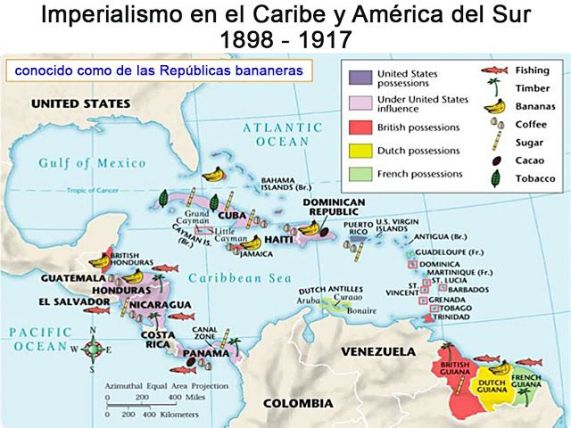
I thought I would let my readers know about a paper I have just published with my co-authors Jason Russell (Empire State College) and Kevin Tennent (University of York Management School). “Adolf Berle’s Critique of US Corporate Interests in the Caribbean Basin.” This paper appears in  Wiliam Pettigrew and David C. Smith (eds) A History of Socially Responsible Business, c.1600–1950. Palgrave Studies in the History of Finance. Palgrave Macmillan.

Abstract: The expansion of the USA into a global economic power began with the extension of its influence over the Caribbean and subsequently Latin America. This was not an accidental process and was instead the result of foreign policy decisions that led to the USA’s political and economic dominance in the western hemisphere.

This chapter is an outgrowth of our wider research project on Berle. We presented another paper about Berle at the recent Academy of Management conference in Atlanta.


s-l300 The abstract of that paper is below:

Our paper explores how a seminal text influenced corporate governance systems in the United States and abroad. The Modern Corporation and Private Property by Adolf Berle and Gardiner Means (1932) remains one of the most cited works in management. Unfortunately, the radical political vision that informed this book has been ignored or forgotten by the vast majority of management academics who now cite this book. Our paper shows that Berle and Means espoused a stakeholder theory of corporate governance that challenged the idea that the sole purpose of a corporation is to create value for the shareholders. Whereas shareholder value ideology was dominant in the United States in the 1920s, the nation’s corporate governance system moved towards a stakeholder model during the New Deal. We argue that the influential text by Berle and Means contributed to this shift. Stakeholder theory remained dominant in the US corporate governance theory until the late 1970s, when it was challenged by the re-emergence of shareholder value ideology. Our paper, which is based on archival research in the Franklin Delano Roosevelt Presidential Library, explores the cultural shifts that shaped how US companies have historically defined success, treated their workers, and influenced inequality in society. Our paper examines why Berle and Means choose to present a stakeholder theory of corporate governance in this text, which was written between 1928 and 1931. The paper then discusses the reception of this ideas of Berle and Means and documents how their theory came to influence how many US corporations allocated resources among different stakeholders. We suggest, somewhat tentatively, that the ideas of Berle and Means prompted corporate managers to behave in ways that contributed to the relatively low levels of income inequality that prevailed in the United States between the New Deal and approximately 1980. The paper documents how political cultural shifts in the 1970s undermined the popularity of the idea of Berle and Means and promoted a revival of shareholder value ideology. In advancing our explanation for the rise and fall the Berle-Means variant of stakeholder theory, we relate their ideas to United States cultural, political, and military history. We suggest that the same cultural shifts that contributed to the re-emergence of shareholder value ideology in the 1970s were connected to neo- liberalism and the post-1980 growth in economic inequality in the United States. By the time Gardiner Means died in 1988, the neo- liberal ideology of corporate governance presented by Jensen and Meckling (1976) had largely displaced the stakeholder approach espoused by Berle and Means. In addition to being informed by the research of business historians such as Lazonick and O’Sullivan (2000), our paper is also informed by the current debates about the relationship between national cultures of corporate governance and the comparative levels of inequality in various advanced economies (Piketty, 2014; Cobb, 2015; Atkinson, 2015).