Business-historians are very interdisciplinary and they are always looking to publish their historical findings in new journals. So here’s an opportunity that sits squarely at the intersection of business history and contemporary policy: the Sustainability (MDPI) special issue on “Energy Transitions and the Banning of Synthetic Products: Historical Developments and Present-Day Controversies.” The journal’s current Journal Impact Factor is 3.3, which puts it in the same general ballpark as some of the business-history-adjacent outlets that are important to business historians in business schools. I see that Industrial and Corporate Change’s 2024 JIF is 1.8; the Journal of Economic History is 2.9. The upshot: publishing in this Special Issue could gives business historians reach into policy conversations.
Practicalities first. The submission deadline is 30 June 2026; the special issue is under Sustainability’s “Energy Sustainability” section. Manuscripts go through the standard single-blind review, and accepted pieces appear online on a rolling basis. (APC details and instructions for authors are on the call page.)
The guest editor is Pierre Desrochers (Department of Geography, University of Toronto Mississauga). Many of you will know Pierre from BHC: he presented back in 2010 (“Industrial Symbiosis: Old Wine in Recycled Bottles?”), and he has long collaborated with scholars working at the business–environment interface. In short, he knows our literature and our norms.
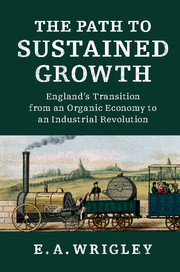
What makes this SI especially attractive to business and economic historians is its framing of “energy transitions” through the lens of E. A. Wrigley’s organic-to-mineral economy narrative. Wrigley’s central claim was that industrial development required escaping the constraints of an “organic economy” dependent on surface-grown resource by shifting to a “mineral economy” (coal, later hydrocarbons, and synthetic materials) is not just an energy story. It’s a firm-level, supply-chain, and market-structure story: greater energy density changes relative prices, which reorganize production functions, logistics, and the boundaries of the firm.
The CFP talks about Wrigley and then asks us to interrogate today’s policy moves that nudge economies back toward organic inputs (biomass substitutes for plastics, mandated renewables) and away from synthetics and fossil fuels. That is precisely the sort of historically grounded counterfactual thinking that business historians are well placed to do.
Several research avenues suggest themselves:
- Firm strategy and path dependence. How have incumbent producers of synthetics and polymers adapted to regulatory pushes toward “organic” alternatives? Do we see Schumpeterian entry or defensive consolidation? A comparative sectoral history—synthetic rubber, plastics, fertilizers—could illuminate.
- Transaction costs and infrastructure compatibility. Wrigley’s story is ultimately about system-level complementarities (fuels, machines, transport, finance). Policies that discourage synthetics may impose hidden coordination costs across supply networks. Business historians are good at thinking about the law of unintended consequences and can also quantify such frictions with archival pricing series and procurement records.
- Addition versus substitution. The SI explicitly notes that “transitions” often look like energy addition, not displacement. That invites studies of rebound, stacking, and multi-fuel equilibria inside firms and regions. Those are all topics business historians are good at.
- Corporate political economy. The present-day controversies over plastics bans, grid stability, and renewables integration echo earlier episodes (municipal light & power debates, post-war petrochemical build-out). Tracing lobbying, standard-setting, and coalition formation across episodes can test whether today’s arguments are genuinely novel or just re-packaged.
It’s an exciting time to be talking about energy transitions, particularly in light of the recent conversations sparked by the “note” by Bill Gates. If your comparative advantage is archival depth, you can still target contemporary relevance: the editor explicitly welcomes historical or contemporary analyses, qualitative and quantitative work, and literature reviews.




 The Past Speaks