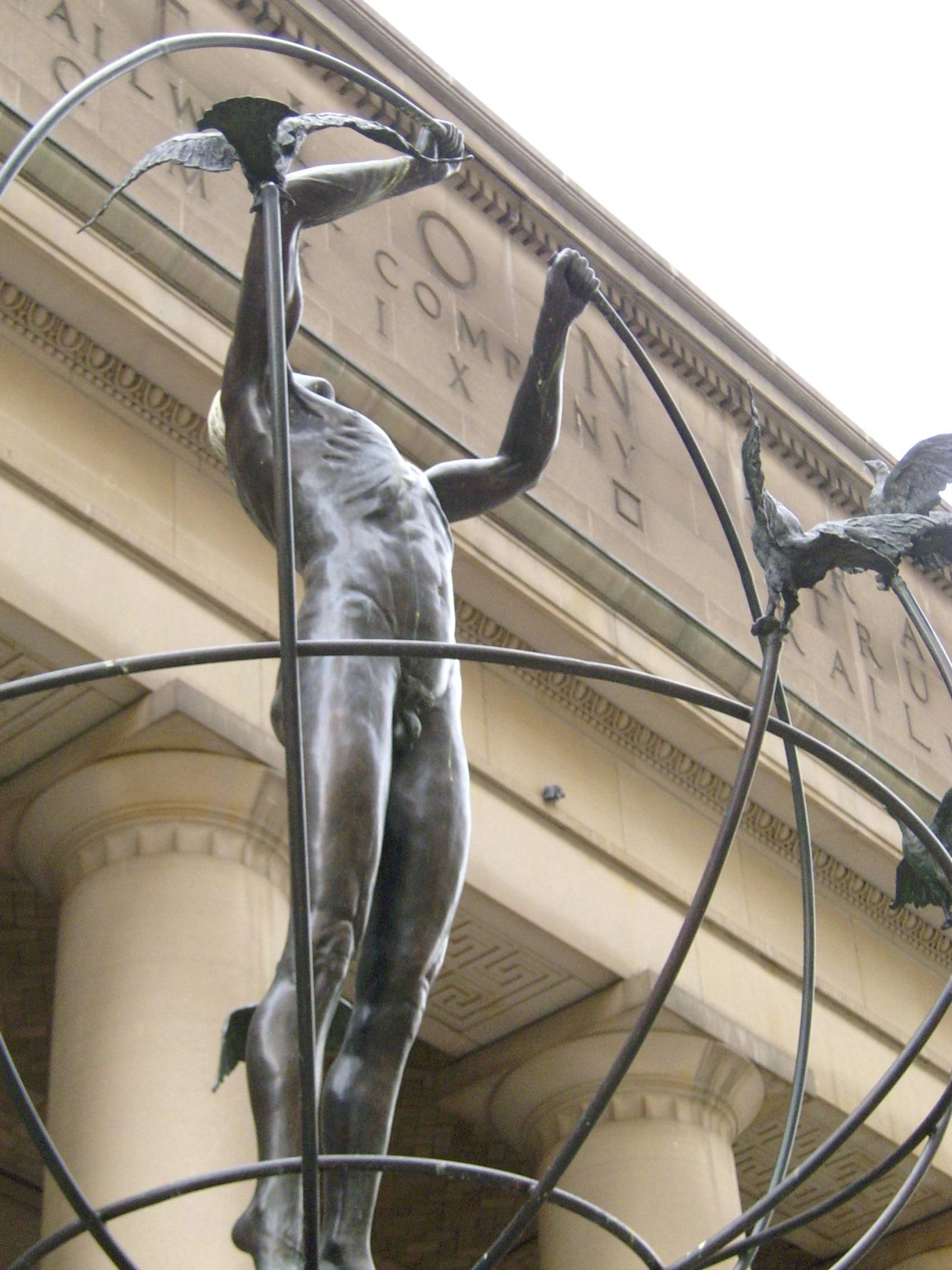
The Wallace B. Chung and Madeline H. Chung Collection at UBC has a new virtual home.
The handsome website highlights the Chung Collection’s three main themes: immigration and settlement, early British Columbia history, and the Canadian Pacific Railway Company.
This great new website will help me in teaching my history of the North American West course. There are lots of great images for lectures here!
In 2008, US academics live blogged election night. Today is election day in the UK. Tonight, a group of distinguished academics at the LSE will gather to discuss the results. The forum will be webcast.
Academics are occasionally invited to contribute to election night broadcast on TV, but they are usually drowned out by the journalists and partisan pundits. The advantage of a university webcast a live seminar is that it cuts out the middleman of the TV channels.
Thursday 6 May 2010, 9pm-1am A lively evening of academic analysis as the general election results come in. Speakers Speakers will include Professor Nicholas Barr, Professor of Public Economics, LSE European Institute; Professor Chris Brown, Department of International Relations; Professor Michael Cox, Director, LSE IDEAS; Howard Davies, Director of LSE; Dr Jon Davis, Executive Director of the Mile End Group and Lecturer at Queen Mary, University of London; Professor Patrick Dunleavy, Chair of the LSE Public Policy Group; Professor Kevin Featherstone, Director of the Hellenic Observatory at LSE; Dr Sara Hagemann, Lecturer in EU Politics; Professor Simon Hix, Director of the Political Science and Political Economy Group at LSE; Will Hutton, Executive Vice Chair of the Work Foundation; Professor Helen Margetts, Professor of Society and the Internet at the Oxford Internet Institute; and Tony Travers, Director of the Greater London Group.Topics of discussion will include ‘The State of the Economy and an Emergency Budget’ and ‘Britain’s Place in the World’, as well as updates and analyses of the polls coming in.
One hopes that Canadian academics will do something similar at our next election, but I wouldn’t hold my breath.
Here is a list of the most commonly downloaded articles from the Canadian Historical Review, which is the top journal in the field of Canadian history. More details about each article are available here.
Date
Article
Requests
Volume 86, Number 3, September 2005
The Boys and Their Booze: Masculinities and Public Drinking in Working-class Ham…Heron, Craig.
2495
Volume 86, Number 1, March 2005
Re-placing Objects: Historical Practices for the Second Museum AgePhillips, Ruth B. (Ruth Bliss), 1945-
2295
Volume 85, Number 3, September 2004
Heritage and Authenticity: The Case of Ontario’s Sainte-Marie-among-the-HuronsGordon, Alan, 1968-
2077
Volume 86, Number 2, June 2005
Rules of Engagement: Public History and the Drama of LegitimationCarr, Graham.
2062
Volume 86, Number 3, September 2005
Totem Poles, Teepees, and Token Traditions: ‘Playing Indian’ at Ontario Summer C…Wall, Sharon.
1789
Volume 85, Number 3, September 2004
Entering the Age of Human Rights: Religion, Politics, and Canadian Liberalsm, 19…Egerton, George W.
1642
Volume 86, Number 4, December 2005
Constructed and Contested Truths: Aboriginal Suicide, Law, and Colonialism in th…Erickson, Lesley.
1447
Volume 85, Number 1, March 2004
A New History for the New Millennium’: Canada: A People’s HistoryDick, Lyle.
1346
Volume 88, Number 1, March 2007
The Liturgy of Humiliation, Pain, and Death: The Execution of Criminals in New F…Moogk, Peter N., 1943-
1341
Volume 85, Number 4, December 2004
The Madman and the Butcher: Sir Sam Hughes, Sir Arthur Currie, and their War of …Cook, Tim, 1971-
1308
This chart suggests that the most popular articles for downloading are relatively recent ones. The CHR began publication in 1920, but no article from before 2000 is in the top ten list. This suggests that articles in the field of Canadian history have a relatively short half-life: many people read them when they are fresh, but they aren’t read much once they get decades old. I know that some disciplines (e.g., computer science, physics) naturally have shorter half-lives than other (e.g., biology, archaeology), but I’m surprised that the half-life in Canadian history is so short. I wonder how it compares with other branches of history.
I have also been unable to find data on the impact factor of articles in Canadian history. Which Canadian history article is the most cited, as opposed to most downloaded? My unscientific impression is that Ian McKay’s 2000 CHR article on the Liberal Order Framework would have a pretty high impact factor.
I also note that articles that deal with how the past is represented by modern people (e.g., in museums) seem to be more popular than articles about what actually went on in the past.
Winners of Fellowships from the Program in Early American Economy and Society at the Library Company of Philadelphia
Dissertation Fellowships
Katherine Arner, Johns Hopkins University
“Making Yellow Fever American: Disease Knowledge and the Geopolitics
of Disease in the Atlantic World, 1793-1822”
Melissah Pawlikowski, Ohio State University
“In the Land of Liberty: The Squatter Exodus into the Ohio Valley, 1760 to 1800”
Short Term Fellows
Rob Gamble, Johns Hopkins University
“A Second Hand Republic: The Informal Economy in the Antebellum Mid Atlantic”
Aaron Marrs, US Government, Office of the Historian
“Moving Forward: A Social History of the Transportation Revolution”
Simon Middleton, University of Sheffield
“Cultures of Credit in Eighteenth-Century America”
Dael Norwood, Princeton University
“Trading in Liberty: The Politics of the American China Trade, c. 1784-1862”
Caitlin Rosenthal, Harvard University
“Accounting for Control: Bookkeeping in Early Nineteenth-Century America”
What is political history today? How has the practice of political history changed in the last few decades? What is the New Political History? How do political historians operate in 2010?
These appear to be the themes of a forthcoming issue of Perspectives on History, the magazine of the American Historical Association.
I hope that the issue contains an essay by Susan Pedersen, who wrote “What is Political History Now?” in What is History Now?edited by David Cannadine (New York : Palgrave Macmillan, 2002), 36-56.
Here is the AHA’s call for papers:
“Perspectives on History invites proposals by July 1, 2010, for articles for a theme issue focused on Political History Today.”
Readers interested in submitting articles that discuss different aspects of political history are invited to submit article proposals for consideration by the editorial board for possible publication in a theme issue of Perspectives on History that will be dedicated to explorations of the state of political history today.
The editorial board of Perspectives on History hopes that the essays in the thematically focused issue (expected to be published in May 2011), will provide an overview of different dimensions of political history in its various manifestations, such as diplomatic history, military history, administrative history, and the history of past politics, in teaching as well as of research and in the contexts of academia and public history. The topics of the essays need not be limited to these suggested rubrics, however, and prospective authors can suggest other topics that should, in their opinion, be considered for inclusion in the theme issue.
Prospective authors can consider including in their articles the challenges that teachers and researchers working in the field encounter, the current state and future prospects for the field of political history.
Article proposals, of about 300 to 600 words, may be e-mailed by July 1, 2010 to perspectives@historians.org or mailed to Perspectives on History, American Historical Association, 400 A Street, SE, Washington, DC 20003-3889.
Authors invited to send complete essays will be required to submit them by December 31, 2010.
According to the BBC’s Sydney correspondent, Australians are debating whether the increased popularity of Anzac Day in recent years is helping to promote militarism and chauvinism in that country. Two historians, Professors Marilyn Lake and Henry Reynolds, have denounced Anzac Day and “the relentless militarisation of our history”. (To hear Professor Lake speak on this topic, click here).
Marilyn Lake
Anyway, I thought that this might be of interest to Canadian readers, especially since Vimy Ridge has a significance to Canadians similar to that of Anzac Day in Australia and New Zealand. In fact, something called Vimy Ridge Day was invented by our parliament in 2003 to supplement 11 November. In Australia and New Zealand, both Remembrance and Anzac Days are celebrated.
Anzac Cove, Turkey
The parallels between the social memories of the First World War in Canada and Australia are striking. In both cases, the citizens of increasingly multicultural countries pause each year to venerate men who died for an Empire that no longer exists. In both countries, hard right people who pine for the good old days of the British Empire have latched onto the relevant holidays for present-day political purposes. In both countries, conservatives say that military history is a very important, indeed central, part of the national historical narrative.
The place of Anzac, Vimy, and other events in military history in the social memories of Australia and Canada is especially striking when one considers that these countries are, thanks to lucky geography and the peaceful disposition of their inhabitants, among the least militarised societies on earth. Compare the histories of Canada and Australia to those of most of the 180 members of the UN and you will see just how pacific their histories are. The militarization of Australian history described by Professor Lake is ironic because military force has probably played a less important role in the history of Australia than in the history of any other continent (unless you count the guards who watched over the first convict settlers as military). South America, Europe, Africa, Asia, have all been terribly scarred by war. Australia hasn’t.
Similarly, the striking thing about Canada’s past after 1815 is just how _unmilitary_ it is. (I admit that military conflict is a big part of Canadian history before 1815). With the exception of the 1885 Rebellion in Western Canada and the Battle of Batoche, Canada’s domestic history has been _very_ peaceful by international standards. The FLQ crisis was really the exception that proves the rule that Canada is peaceful. Yeah, many Canadians went to help the mother country out in the two world wars and South Africa. The losses, although tragic, were light compared to those other countries. It’s true that there was a bit of food and gasoline rationing in Canada during WWII, although most British people wouldn’t have considered what we had real rationing at all. Toronto didn’t get bombed. Postwar, Canada made some contributions to UN missions around the world. These contributions are now honoured on the $10 bill. A few Canadians still go to fight for their respective mother countries today (e.g., the Serbian Canadians who fought in Bosnia in the 1990s). However, the overall importance of war and military conflict in post-1867 Canadian history is probably less than in the history of any other major country in the western hemisphere. War is also less important in Canadian history than in the histories of the countries that supply most of Canada’s immigrants (India, Pakistan, China). Canada since Confederation has been a pretty peaceful place where few people have died from violence, including wars and other forms of political violence.
Despite the overwhelmingly peaceful nature of Canadian history, many of our national commemorations revolve around the military. We have a national day to mark the end of the First World War (in Europe), but we don’t have a national day to commemorate the completion of the CPR which took place, I’ve been told, in Canada. This is ass backwards! What is even more bizarre is that so much of the social memory of English-speaking Canada focuses on 20th century military history and events that took place overseas rather than on the earlier wars and battles fought here on home turf. From a purely Canadian standpoint, the pre-1815 battles on Canadian soil were probably more important.
Yet for reasons that probably include the absence of photographic and motion picture records, the pre-1815 wars aren’t a major part of the social memory of English-speaking Canada. Recognition of the people who died in the pre-1815 conflicts have only recently begun to be integrated into the 11 November ceremonies in Ottawa, a long overdue development. It was only in 2005 that statues representing those of who served in the Seven Years’ War, the American Revolution, and other pre-Confederation conflicts were added to the national war memorial in Ottawa.
Statue of Joseph Brant, National War Memorial, Ottawa
As someone who teaches Canadian history to first-year university students, I try to strike the right balance between military and non-military aspects of our history. I talk about Canada’s role in the two world wars, but I also assigned a book on the history of the donut in Canada. Which of those topics is most important? In the long run, over-consumption of donuts may kill more Canadians than either world war.
Emphasizing the role of military conflict in Australian and Canadian history at the expense of other themes (e.g., economic growth, the emergence of consumer culture, the advent of TV, women’s emancipation, the histories of accountancy and fast food) obscures two important truths.
First, the world has been getting more peaceful over the last few centuries. So observers have been so bold as to predict that war is on the way out. This is a risky claim, but it does seem that as societies progress from tribalism to the nation state to capitalist democracy, the percentage of the population that dies from violence typically falls. The 20th century is often remembered as a bloody century and age of unprecedented mass murder. There are some terrible data points that support this view (the Holocaust, the Battle of Stalingrad) but in reality it was a relatively peaceful period of human history. One of the reasons why the death toll in the two world wars was so high was that the world’s population numbered in the billions by the 20th century. The percentage of the world and European populations that died from war and other forms of violence was actually lower than in early centuries. Of course, the atrocities that took place were captured on film. A German boy born in 1900 likely died of disease, not war, whereas in a hunter-gatherer society about half of all males die violently. Today Europe is, thank goodness, very peaceful, as is the world as a whole.
In Canada and Australia, the demographic impact of war was very small indeed. More Canadians died from car accidents between 1950 to 1953 than in the Korean Conflict, yet there are no memorials to them.
Second, Canada and Australia have been two of the countries that have been vanguard of the move towards a more peaceful world. Among other things, they are the nations that have embraced multiculturalism, democracy, capitalism, and globalization. Maybe we need more memorials to these phenomena.
Special issue call for papers from Journal of Historical Research in Marketing
The Journal of Historical Research in Marketing invites submissions for a special issue focused on the history of Canadian marketing. For this special issue of JHRM we particularly welcome manuscripts that address topics focused on Canada and Canadians, including but not limited to:
* Canadian marketing history
* Unique challenges to marketing in Canada, e.g. the impact of government regulation, challenges presented by Canada’s immigration history and bilingual nature
* The wheat economy and Canadian marketing
* Periodization in Canadian marketing
* How Canadian economic and business history shaped Canadian marketing
* The impact of marketing boards, reports of Royal Commissions, Canada-US trade controversies
* Tariffs, branch plants and Canadian marketing
* Canadian supply chains since Confederation
* Marketing and/or regions within Canada (e.g. the Canadian Prairies, Maritimes, North, etc.)
* Feeding and clothing Canada’s cities
* Marketing and the Canadian household — changes over time.
* Advertising history in Canada
* Retailing history in Canada.
The submission deadline for this special issue is 30 October 2010 with an expected publication date of August 2011. If you are unsure of the suitability of your topic, please contact the special issue Guest Editors:
Leighann Neilson, Carleton University
E-mail: leighann_neilson@carleton.ca or
Stanley Shapiro, Simon Fraser University
E-mail: sshapiro@sfu.ca
Submission procedures
Submissions for this special issue of JHRM may be sent electronically in either PDF format or MS Word as an e-mail attachment to either the special issue Guest Editors (at the e-mail addresses indicated above) or the JHRM Editor:
Professor D.G. Brian Jones, School of Business,
Quinnipiac University, Hamden, CT, USA
E-mail: bjones1@quinnipiac.edu
Please include the phrase “JHRM Submission” in your e-mail subject line. Title the submission file attached with the lead author’s surname. Full submission guidelines can be found at the JHRM web page: http://www.emeraldinsight.com/jhrm.htm