I used to make fun of Dominion Institute polls. The new Historica-Dominion Institute is, however, doing some useful polling work. The Historica-Dominion Institute, a Canadian non-profit also commissioned a poll about Canadian attitudes to the United States on the first anniversary of Obama’s election. The poll finds that while Obama is very popular in Canada, anti-Americanism is still widespread.
Survey of Canadian Attitudes to the United States
4 11 2009Comments : Leave a Comment »
Tags: Canadian nationalism, Canadian-American Relations, continentalism, Dominion Institute, Historica Foundation, Historica-Dominion Institute, Obama
Categories : Uncategorized
Simpson on the Monarchy
2 11 2009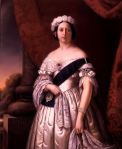
Queen Victoria, 1845
Jeffrey Simpson has published a good piece in the Globe and Mail calling for Canada to end its connection to the British monarchy.
Comments : Leave a Comment »
Tags: Canadian politics, Jeffrey Simpson, monarchy
Categories : Uncategorized
New Nature’s Past Podcast
1 11 2009
Logo of the Nature's Past Podcast
Episode 10 of Nature’s Past, the podcast of the Network in Canadian History and Environment, is now online.
“How have online digital technologies changed environmental history research, communication, and teaching? This episode of the podcast explores this question in the context of the recent NiCHE Digital Infrastructure API Workshop held in Mississauga, Ontario. Online-based Application Programming Interfaces or APIs are just one digital technology that holds the potential to change the way environmental historians access resources, analyze historical data, and communicate research findings. Within the past decade alone, the development of online digital technologies has offered the potential to transform historical scholarship.
This episode includes a round-table conversation with some leading figures in the realm of digital history as well as an interview with Jan Oosthoek, the producer and host of the Exploring Environmental History podcast.”
Check it out here.
Comments : Leave a Comment »
Tags: Canadian History, environmental history, Nature's Past, NiCHE
Categories : Uncategorized
Trudeaumania in 2009
29 10 2009
Trudeau Speaking in Montreal, 1980
Just Watch Me: The Life of Pierre Elliott Trudeau, 1968-2000, the second volume of Professor John English’s authoritative biography of the great Prime Minister, has been published. The book’s revelations about Trudeau’s personal life have gotten a great deal of attention in the Canadian media. See here, here, here, and here.
The Quebec newspapers have had little to say about this book. Perhaps this will change next month, when the French translation appears. For a rare newspaper article in French about the book see here.
Paul Wells of Maclean’s Magazine thinks that Canadian historians pay too much attention to Trudeau.
Comments : 1 Comment »
Tags: Canadian historu, Canadian History, Pierre Trudeau
Categories : Uncategorized
Joe Martin Interviewed on BNN
28 10 2009Joe Martin was recently interviewed on BNN about his new book on Canadian business history, Relentless Change. You can watch the interview here.
Comments : Leave a Comment »
Tags: BNN, Business History, Canadian History, economic history, Joe Martin, Relentless Change, Rotman School
Categories : Uncategorized
Historians Discuss the Development of the American Healthcare System
27 10 2009I thought I would share these two links related to the history of healthcare in the United States.
This podcast explores “the origins of the health care debate, and try to explain how we wound up with a system so different from the European model.”
James Mohr, history professor at the University of Oregon, places the current healthcare debate in a historical context. He explains, “We have to find ways to combine what is positive and unique about our system while eliminating the historical anomalies that make it unsustainable.”

Toronto General Hospital
I will add that the history of Medicare in Canada is one of the great under-researched topics in 20th century Canadian history. Medicare is clearly an important institution for the Canadian identity. Tommy Douglas was voted the greatest Canadian because of his role in creating our current system. More importantly, Medicare has a big impact on the level of health in Canada. Health spending represents a big share of GDP. Health care is consistently one of the most important issues for Canadians, according to pollsters. But while the general public is very interested in Medicare, academic historians, it appears, are not. There are few books on the history of Medicare. Steps on the Road to Medicare: Why Saskatchewan Led the Way by Sylvia O. Fedoruk and Stuart Houston is one of the few good books on this topic. Moreover, it deals with only one province and was written by two people who are not professional historians. Stuart Houston is a medical doctor. I base my annual lecture on the evolution of Medicare on research by non-historians: Eugene Vayda, Raisa B. Deber, “The Canadian Health-Care System: A Developmental Overview” in Canadian health care and the state : a century of evolution, edited by C. David Naylor (Montreal : McGill-Queen’s University Press, 1992).
There is an active community of historians of medicine in Canada. For instance, Michael Bliss has published a biography of Sir Frederic Banting, the inventor of insulin, and Jaclyn Duffin at Queen’s has published an interesting history of medicine in the Western world. Shelley McKellar at UWO has published a biography of Canadian surgeon Gordon Murray. However, there are few works on the history of the Canadian healthcare system.
Many of the students in my post-1867 Canadian history course want to write their essays on Medicare. Along with Vimy Ridge, it is the most popular topic. Unfortunately, there are few secondary sources to which I can direct them. (I have done a diligent search). What is a needed is a good book that gives the history of our health care system from say 1900 to the present. The book would talk about the Marsh Report, the developments of the 1950s, the Saskatchewan Doctors’ Strike, Diefenbaker, the Royal Commission on Health Care, Medicare, the Canada Health Act of 1984, the impact of the Charter of Rights, etc. Unfortunately, this book doesn’t exist.
This situation is absurd and represents a big systemic failure on the part of the Canadian historical profession. For some reason, research on the history of health care is not valued.
Comments : 2 Comments »
Tags: American history, Canadian historiography, Canadian History, healthcare reform, history of healthcare in Canada, Medicare, socialized medicine
Categories : Uncategorized
Hugh Segal on Sir John A. Macdonald
26 10 2009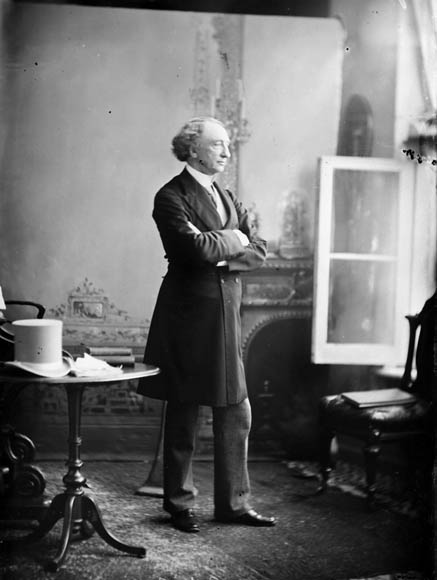
John A. Macdonald, 1875. Image from Library and Archives Canada
Senator Hugh Segal has published a piece in the Toronto Star arguing that Canadians should pay more attention to Sir John A. Macdonald. Segal notes that the bicentennial of Macdonald’s birth (2015) is rapidly approaching and that we should begin planning celebrations similar to the Lincoln bicentennial in the United States (2009).
I couldn’t agree more. In fact, I have recently become involved in a project that will involve the creation of a first-class website devoted to the life, times, and digitized correspondence of Macdonald. (details to follow). I am also in the process of designing a course for undergraduate entitled “The Life and Times of Sir John A. Macdonald”. This course will use Macdonald’s life as a vehicle for teaching Canadian history, 1815-1891.
Comments : 2 Comments »
Tags: Canadian History, Hugh Segal, Sir John A. Macdonald
Categories : Uncategorized
H. Sanford Riley Centre for Canadian History
25 10 2009The H. Sanford Riley Centre for Canadian History at the University of Winnipeg opened on Monday with a lecture by Ramsay Cook, a distinguished Canadian historian. The title of his talk was “Who Broadened Canadian History?” The title of his talk alludes to Who Killed Canadian History, a book by J.L. Granastein.
Here is a summary of Professor Cook’s lecture: “Over the past thirty years or so, the content of Canadian history has broadened out in several significant directions. In my years at United College and later when I began teaching university courses, the main, indeed almost the only, Canadian history menu listed political, diplomatic, military and constitutional dishes. In these fields the prominent Anglophone and Francophone men who dominated the “national stage” were featured But in the 1970s and 80s, as universities admitted increasing numbers of students from regional, class, ethnic and genders formerly under represented, students began to wonder why their ancestors were so often absent from the history that they were taught. Soon graduate students, often from these new groups, began research into these neglected areas with the result that a new past, or rather an expanded past, was discovered and made part of what is now accepted a more accurate and more diverse Canadian past. The success of this expansion, this enrichment of our past, now raises some new questions about Canadian history, questions which may suggest another broadening dimension based on comparative historical studies.”
I will put a link to a video of Cook’s talk online soon.
Comments : Leave a Comment »
Tags: H. Sanford Riley Centre for Canadian History, Ramsay Cook, University of Winnipeg
Categories : Uncategorized
Andrew Cohen on the Canadian Monarchy and the Head of State Controversy
22 10 2009
Canadian Postage Stamp, 1954
Andrew Cohen, the author of the Unfinished Canadian, has published a piece in the Ottawa Citizen calling on the federal government to begin a national debate on the future of Canada’s head of state. Cohen thinks that it would be wrong to continue sharing a head of state with Britain, as do most Canadians.
Comments : Leave a Comment »
Tags: Andrew Cohen, Canadian constitution, Canadian monarchy, Michaëlle Jean, monarchy in Canada
Categories : Uncategorized
Black Like Me
21 10 2009This radio interview discusses racial impersonation and John Howard Griffin, the author of Black Like Me.
Comments : Leave a Comment »
Tags: BBC Radio 4's Today Programme, history of racism, John Howard Griffin
Categories : Uncategorized

