James Belich on the Rise of the Angloworld

26 09 2009

Bernard Porter has published a lengthy and complimentary review of James Belich‘s new book, Replenishing the Earth: The Settler Revolution and the Rise of the Angloworld, 1783-1939 (Oxford University Press, 2009).  Belich’s book tells an epic tale, one of the great dramas of last millenium, the story of how a hitherto marginal group, the Anglo-Celtic population of the British Isles, seized and populated two continents, thereby creating much of the modern world.

The Anglosphere
The Anglosphere

I have not yet read Belich’s latest book in its entirety, but I have read chapters in the past, so I am familiar with the broad outlines of his argument.  Let me say at the outset that I am impressed by the breadth of Belich’s learning. Belich, who is one of the leading historians of New Zealand, had to learn a great deal about the histories of North America and much of the rest of the world in the course of researching this book.

I am very sympathetic to Belich’s overall approach to this topic.  First, I strongly agree with his trans-national approach. Rather than seeing western expansion in the United States and the settlement of Australasia as separate phenomena, it is more plausible to regard them as parts of the same phenomenon, the expansion of the English-speaking peoples.  I also like the fact that Belich avoids creating a triumphalist, self-congratulatory narrative.  In the past, writers such as Winston Churchill treated the expansion of English-speakers in celebratory terms.  This is certainly not Belich’s agenda!  Indeed, Belich points out that the expansion of the English-speaking peoples involved a great of cruelty towards the aboriginals whose land they seized.   Rather than writing to condemn or celebrate Anglo-Saxon expansion, he simply wants to explain why it took place. In particular, Belich seeks to explain why it was English-speaking people and not, say the French or the Spanish or the Chinese, who were able to colonize North America and Australasia and thus become the dominant culture on the planet.
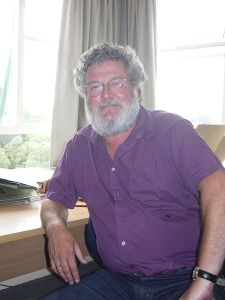
James Belich

James Belich

Belich is to be commended for venturing to give us an answer to this important question. I am not however, entirely convinced by Belich’s explanation for the “rise of the Anglosphere”. Belich dismisses the importance of both culture and institutions in explaining why Anglo-Saxon expansion was more successful than it rivals. (At the very least, this was Belich’s position several years ago and Porter’s review suggests that Belich’s views on this point have remained unchanged). I’m a big fan of the New Institutional Economics and Douglass North, and it seems to me that institutions are vitally important in explaining the wealth and poverty of nations, why some countries are rich and some are poor, and why some cultures are able to expand territorially while others are not. One of the things that set the English-speaking world apart from Spain’s overseas Empire was the existence of representative institutions in both the British Isles and their overseas offshoots.  While I am a bit more skeptical of “culturalist” explanations for economic outcomes (see my recent post on the topic), I also think that culture may have played a larger role in the expansion of the Anglo-Saxons than Belich suggests.

Bernard Porter, the author of the review, is himself a very distinguished historian. His major works include: The Absent-Minded Imperialists; Empire and Superempire: Britian, America, and the World (a fascinating comparison of the British and American Empires) and The Lion’s Share, a history of the British Empire that is now in its fourth edition.

Update: I just discovered another fine review of this book by historian Donald MacRaild. See also the review in the New Zealand magazine Stuff.


Is The Car Industry Still Worthwhile in Mature Economies?

26 09 2009

That’s the title of a thoughtful post on the blog of business historian Kevin Tennent. If preserving domestic car production is no longer  worthwhile, governments in North America have just wasted billions on bailing out their auto industries.


What Would Keynes Do ?

25 09 2009

What would Keynes do if he were confronted with the current economic situation? Have the ideas of Keynes been twisted by modern politicians to suit their own ends? This was discussed by British historian Peter Clark on the BBC`s Today Programme. The most interesting part of this interview was hearing Norman Lamont, one of the great freemarketeers of the 1980s, describe Hayek as a largely forgotten economist. In the 1980s, Hayek`s ideas were in the ascendant and Keynes was being dismissed. (click here to listen)


Hollywood and History

25 09 2009
Home of Distinguished Historians

Home of Distinguished Historians

I just discovered this list of the top ten historical inaccuracies in films. It was published in the Times in August. I was shocked to learn that Hollywood was not a reliable source of historical knowledge.

The image above is from the Wikimedia Creative Commons.


Positive Discrimination for Male Students?

24 09 2009

Female students now outnumber males in Canadian universities. Some are suggesting that there should lower admission standards for male applicants. For the debate, see here.

I don’t see a problem with having more women than men in university. The fact that many men decide not to go to university may be economically rational. In Canada, there are still big sectors of economy where the ability to do tough physical labour is rewarded quite well. (Think oil sands). Although a few women can do these jobs, these occupations are mostly male. So for an able-bodied young man, the opportunity costs of higher education are greater than for they are for women. That’s why many don’t go.


Thomas Paine and the Rights of Hindus

24 09 2009
Thomas Paine

Thomas Paine

I would like to draw people’s attention to a piece by historian J. M. Opal in Common-placeCommon Sense and Imperial Atrocity: How Thomas Paine saw South Asia in North America”. Opal argues that Paine understanding of British policy in the Thirteen Colonies was influenced by the ongoing British debate about British misrule and atrocity in India.

If Opal’s interpretation is correct, it means that Paine saw the whites of the Thirteen Colonies and Hindu and Muslim populations of India as co-victims of the British Empire.

I found Opal’s argument interesting in light of a book I have purchased and plan to read this weekend, David Armitage’s The Declaration of Independence: a Global History.

The picture of Paine is from the Library of Congress (see here) and is in the public domain.


Canadian History Image of the Day

24 09 2009

British Airship Visits Toronto in 1930

British Airship Visits Toronto in 1930

Original Caption: “His Majesty’s Airship R-100, over the Canadian Bank of Commerce, the tallest building in the British Empire (Toronto, Canada). 11 August 1930”

This public domain image is available from the City of Toronto Archives, listed under the archival citation Fonds 16, Series 71, Item 7921.


Interview with Historian Greg Robinson

23 09 2009

robinson book

In this interview, Prof. Greg Robinson talks about his new book, which examines the internment of Japanese North Americans in the United States, Canada, and Mexico after Pearl Harbor. All three countries interned people of Japanese ancestry living on the west coast.

I like the fact that this book takes a pan-North American perspective, looking at all three North American countries.  Call it NAFTA history. All too often, historians based in the United States conflate the “United States” and “North America”. Historians in Anglophone Canada are a little better– they make cross-border comparisons with the US but rarely think about Mexico.

Robinson‘s biography is as interesting as this book. He is a native of New York City who now teaches, in French, at l’Université du Québec à Montréal .  For a link to Robinson’s personal website, click here.

Image of book cover used with permission of the author.


Making Your Own Japanese Bento Lunch Explained

22 09 2009

Sushi

For video that explains how to make a bento box and why more Japanese men are doing so, click here.


Wolfe, Montcalm, Remembrance Day 2009 Part II

22 09 2009

Christopher Moore has commented on my proposal that the Government of Canada invite the descendants of Wolfe and Montcalm to the 2009 Remembrance Day ceremony in Ottawa.

He had this to say : “Andrew’s well worth a read. But the dead of 1759 who continue to resonate for me are the townspeople killed as their houses crumbled under shellfire during the siege of Quebec, the civilians shot down in skirmishes with the British, the militia who died in their thousands during the whole of the war, even the elderly and the children who died of malnutrition and fevers during the grim winters of that struggle. And that’s not to mention the Acadians, the people of Louisbourg…  It would be too bad if our understanding of that became caught up in honouring a French and a British general — or wrangling whether to honour them. Could we not honour an unknown soldier of the Canadian War of the Conquest?”

I certainly agree with Christopher  that we should remember all those who died in that battle—my proposal to invite the descendants of the two best-known casualties is intended to raise awareness of all those of who perished, white and Native, general and privates, civilians and military.