The Colonial Origins of the Greek Bailout

27 07 2015

This fascinating piece discusses the colonial origins of the Greek bailout.

CIGH Exeter's avatarImperial & Global Forum

not merkel's colony

Jamie Martin
Harvard University
Follow on Twitter @jamiemartin2

When news broke two weeks ago of the harsh terms of a new bailout for Greece, many questioned whether the country still qualified as a sovereign state. “Debt colony,” a term long used by Syriza and its supporters, was suddenly everywhere in the press. Even the Financial Times used the language of empire: “a bailout on the terms set out in Brussels,” as a 13 July editorial put it, “risks turning the relationship with Greece into one akin to that between a colonial overlord and its vassal.”

Suggestions like these have invited historical comparison. One parallel that’s been mentioned is that of Egypt during the late nineteenth century. In 1876, as a heavily indebted Egypt approached bankruptcy, the Khedive Ismail Pasha agreed to the creation of an international commission, staffed by Europeans, with oversight of the Egyptian budget and control over certain…

View original post 1,479 more words


Job Ad: Professor and Head of the Department of History University of Liverpool – School of Histories, Languages and Cultures

26 07 2015

I was asked to share this job advert for our university’s history department.

The School of Histories, Languages and Cultures wishes to appoint a Head of Department and Chair in History. The role of Head of Department will be fixed term until 31 July 2021 initially and will be offered in combination with a permanent post at Professorial level. You will be a leading researcher with an outstanding track-record of internationally excellent publications and ambitious research plans for the future. Experience of winning major research council funding and/or a proven record of securing other sources of research income and experience in organisational leadership is essential. You will demonstrate a track-record of innovation in (research-led) teaching and you may be specialised in any field of History. We particularly encourage applications from scholars with a specialisation in Public History or Medieval History, as these are two areas the Department is looking to strengthen.

More details here.


Duly Noted: Mowery on “Steven Klepper and Business History”

25 07 2015

David C.  Mowery, “Steven Klepper and business history.” Industrial and Corporate Change (2015): dtv023.

The impressive body of research published by the late Steven Klepper spanned a diverse array of topics, but among the most important were issues related to the evolution of industry structure. This survey of Steve Klepper’s work on these issues compares his scholarly legacy with that of Alfred D. Chandler, Jr. Both scholars addressed similar topics, and a comparison of Klepper’s work on firm and industry evolution with that of Chandler highlights enduring research challenges in economics, strategy, and business history.


The Past, Present and Future of Banking History

23 07 2015

This new working paper by Chris Colvin is a must-read for anyone who does banking history.

This essay discusses trends in new banking history scholarship. It does so by conducting bibliometric content analysis of the entire literature involving the history of banks, bankers and banking published in all major academic journals since the year 2000. It places this recent scholarship in its historiographical context, and speculates on the future of the field.


Events About History and/or Memory at the Academy of Management Conference

22 07 2015

PDWs on History and/or Memory at the Academy of Management Conference in Vancouver

As readers of this blog know, recent years have seen a “historic turn” that has witnessed the integration of historical themes into management research and teaching. Additional evidence of the historic turn can be seen in the programme of the upcoming Academy of Management Conference in Vancouver.

This year there are a number of PDWs at the AoM directly related to history and/or memory. Several of them offer opportunities to discuss abstracts of work in progress. So if you are going to the AoM, consider attending these PDWs. If you have any questions, feel free to contact Dan Wadhwani (dwadhwani at pacific.edu)

  1. The Uses of the Past: History and Memory in Organizations. Saturday, August 8th. 11:15-1:15p. Presenters include Majken Schultz, Bill Foster, Tor Hernes, Natalya Vinokurova, Gabie Durepos, Mads Mordhorst, and Alan Meyer. UBC Robson Square, Room C180. Contact Dan Wadhwani if you’d like to have your “research in progress” discussed as part of the workshop.
  1. When History Meets Theory: Historically Oriented Research in Strategy and Organization Theory. Friday, August, 7th. 2p-4:30pm. Presenters include Mary Tripsas, Dan Wadhwani, Giovanni Gavetti, Andy Hargadon, Marcelo Bucheli, and Zur Shapira. Vancouver Convention Centre, Room 8. Contact Dan Wadhwani if you’d like to have your “research in progress” discussed as part of the workshop.
  1. History Matters! Path Dependence, Imprinting, Process. Friday, August 7th, 2:45-5:15pm. Vancouver Convention Center, Room 220. Presenters include Matthias Kipping, Chris Marquis, Georg Schreyogg, and Behlul Usdiken. Contact Matthias Kipping or Behlul Üsdiken if you’re interested in finding out more.
  1. Connections between Organizational Identity and Memory. Presenters include Bill Foster, Michael Heller, Mick Rowlinson, and Roy Suddaby. Friday, August 7th, 1pm-4pm. Fairmount Hotel, Vancouver.
  1. Entrepreneurship and/in Context. Vancouver Convention Centre. Saturday, August 8, 9:45am-12:15am. Rooms 217-219.


New Book by Mark Kuhlberg

22 07 2015

AS: My former colleague Mark Kuhlberg has published an important new book in the field of Canadian business history.

For forty years, historians have argued that early twentieth-century provincial governments in Canada were easily manipulated by the industrialists who developed Canada’s natural resources, such as pulpwood, water power, and minerals. With In the Power of the Government, Mark Kuhlberg uses the case of the Ontario pulp and paper industry to challenge that interpretation of Canadian provincial politics.

Examining the relationship between the corporations which ran the province’s pulp and paper mills and the politicians at Queen’s Park, Kuhlberg concludes that the Ontario government frequently rebuffed the demands of the industrialists who wanted to tap Ontario’s spruce timber and hydro-electric potential. A sophisticated empirical challenge to the orthodox literature on this issue, In the Power of the Government will be essential reading for historians and political scientists interested in the history of Canadian industrial development.


Capitalist Peace Theory and the Iran Deal

21 07 2015

Jeff Sachs

One of my research interests is capitalist peace theory, the view that cross-border economic interdependence reduces the probability, frequency, and intensity of war (see here, here, and here). I was, therefore, struck by how Jeffrey Sachs closed his recent op-ed piece on the Iran nuclear deal.

The new treaty will verifiably prevent Iran from developing a nuclear weapon for at least a decade — and keep it bound to nuclear non-proliferation thereafter. This is the time to begin a broader U.S.-Iran rapprochement and build a new security regime in the Middle East and the world that leads toward full global nuclear disarmament. To get there requires, above all, replacing war (including the CIA’s secret wars) with commerce and other forms of peaceful exchange.

P.S. Adam Tooze has published an interesting essay assessing capitalist peace theory in light of the First World War.  “Capitalist peace or capitalist war? The July Crisis revisited.”Cataclysm 1914: The First World War and the Making of Modern World Politics(2015): 66. I’ll post about Tooze’s essay soon.


Entrepreneurial Opportunity: The Oxygen or Phlogiston of Entrepreneurship Research?

16 07 2015

I’m certainly planning to attend this PDW at the Academy of Management Conference in Vancouver. Looks like a great learning opportunity!

Peter G. Klein's avatarOrganizations and Markets

| Peter Klein |

PhlogistoncollectorDon’t miss this PDW at the upcoming Academy of Management conference in Vancouver. From organizer Per Davidssson:

I just wanted to bring your attention to a PDW I am organizing for the upcoming AoM meeting, where we will engage in frank and in-depth discussions about the problems and merits of the popular notion of “entrepreneurial opportunity”. We have been fortunate to gather a collection of very strong scholars and independent thinkers as presenters and discussants in this PDW: Richard J. Arend, Dimo Dimov, Denis Grégoire, Peter G. Klein, Moren Lévesque, Saras Sarasvathy, and Matthew Wood. . This illustrious group of colleagues will make sure the deliberations do not focus on a “beauty contest” between “discovery” and “creation” views but instead reach beyond limitations of both.  

I encourage you to join us for this session, and to make absolutely sure I won’t send you to…

View original post 2,241 more words


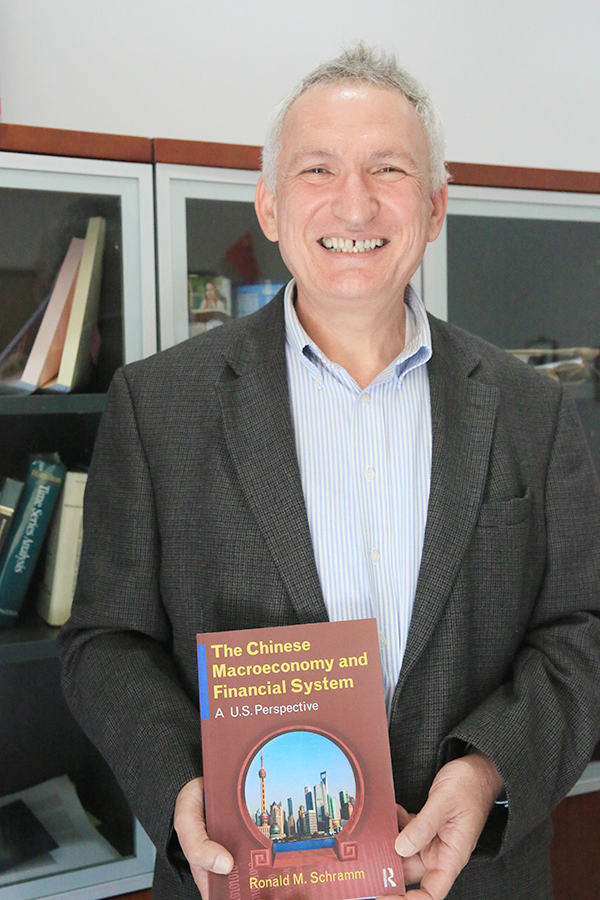
The Chinese Macroeconomy and Financial System: a US Perspective

16 07 2015

My employer, the University of Liverpool. has a joint-venture university called the Xi’an Jiaotong-Liverpool University. The academics there are our colleagues and one of them, Professor Ron Schramm, has just published an important new book The Chinese Macroeconomy and Financial System: a US Perspective (Routledge, April 2015)

Ron_Schramm_1

Another book to put on my summer reading pile!


Interesting New Theoretical Framework in International Business Research

6 07 2015

The impact of political risk on multinational corporations is an important theme in the literature in the fields of International Business and Strategic Management. Traditionally, academic researchers examined the management of political risk by MNEs through either the bargaining power approach (BPA) or the political institutions approach (PIA). The BPA approach, which derives from Vernon (1971), focuses on the relative bargaining power of a MNE and a given host country government. The PIA approach, in contrast, examines the mechanisms by which public policy in a host country is determined. Authors who use the PIA approach suggest that it is easier for MNEs to manage political risk in host countries in which decision-making authority is dispersed among a variety of individuals (e.g., through the US-style separation of powers) than in host countries in which authority is concentrated is concentrated in fewer individuals.

Both of these approaches have some value, but I’ve never been happy with them, not least because they tend to exclude the analysis of the cultural and intellectual contexts in which firms operate. That’s why I was intrigued by a new piece in the Strategic Management Journal by Charles E Stevens, En Xie, Mike W Peng.

Stevens, Charles E., En Xie, and Mike W. Peng. “Toward a legitimacy‐based view of political risk: The case of Google and Yahoo in China.” Strategic Management Journal (2015).

As the authors point out, the BPA and PIA lens is applied most frequently the forms of political risk confronted by MNEs who operate in the “asset-intensive extractive and infrastructure sectors” in developing countries. While recognizing that these approaches often provide the best way of understanding political risk, they argue persuasively that these approaches are less suitable for understanding political risk in the home country  (i.e., the country where the multinational has its headquarters) and in relatively “complex and interconnected” sectors in industries such services or the high-tech sector. S

Citing such scholarly articles as  Marquis and Quin (2014), Bucheli and Salvaj (2013), Kostova and Zaheer (1999), and Bitektine (2011),  Steven et al. identify an emerging approach to writing about political risk in multinationals that they call the Legitimacy-Based View (LBV). They then proceed to develop a formal conceptual model for the LBV. The LBV recognizes that corporations are granted legitimacy by a range of actors rather than simply the state. Such actors can withhold a corporation’s “social licence” to operate. Moreover, they break down the broad term “the government”  by recognizing that each national government is a far from monolithic entity: rather than being a single actor, the government is a collection of individuals, some of whom may have  very different ideas about the legitimacy of a given MNE. [This approach will be music to the ears of most political scientists, along with all methodological individualists].

The empirical information about Google and Yahoo in the paper is interesting to me, especially since I followed the saga of Google in China, but I am most interested in the theoretical framework the authors develop as it could be applied by a wide variety of IB, strategy, and business history scholars.

About the authors: Charles Stevens teaches at Lehigh University.  En Xie teaches at Xi’an Jiaotong University. Mike W. Peng is the Jindal Chair of Global Strategy Head, Organizations, Strategy, and International Management, University of Texas Dallas.