Dr Charli Carpenter, who is an Associate Professor in the Department of Political Science at the University of Massachusetts-Amherst, answers this question in this professional-looking video:
How is Social Media Changing Academic Communication?
10 04 2012Comments : Leave a Comment »
Tags: Charli Carpenter
Categories : Uncategorized
Vimy Ridge: Birth of a Nation?
10 04 2012
Christopher Moore has posted some thoughts about the recent anniversary of the Battle of Vimy Ridge in 1917. For the benefit of non-Canadian readers, I should explain that Vimy Ridge is sort of the Canadian equivalent of what Gallipoli is for Australians– a battle in a British war that is somehow seen as marking the transition to Canadian nationhood. Apparently there was a big ceremony at Vimy Ridge a few days ago, attended by Governor-General David Johnston and thousands of Canadians. See here, here, and here.

Academic historians have, of course, discredited much of the mythology surrounding Vimy Ridge. Among academic historians it is well-known that British troops played an important role in battle– it was British artillery that paved that way for the success of the Canadians. It is also well-known that many of the so-called “Canadians” in the battle were very recent British immigrants with tenuous loyalties to the Dominion of Canada, as opposed to the Empire as a whole. Indeed, as Geoffrey Hayes, Michael Bechthold, and Andrew Iarocci pointed out, individuals born in the British Isles probably outnumbered people born in Canada at the battle. In part, this was a function of the disproportionate numbers of British immigrants in the “Canadian” Expeditionary Force in the First World War.
It was once traditional for people giving Canadian history lectures to distinguish the English-speaking Canadians, who were enthusiastic about the First World War, and the French Canadians, who were neutralist. We now know that the situation was more nuanced than that and that in parts of Ontario that had been settled in the late eighteenth century, enlistment rates were as low as they were in rural Quebec. Many n-th generation Anglo-Saxon Canadians probably viewed that First World War much as their American cousins did, which isn’t surprising since many of them subscribed to magazines such as the Saturday Evening Post. We should remember that until early 1917, most Americans favoured remaining neutral.
In the early 1920s, few Canadians would have identified Vimy Ridge as the most important Canadian battle of the war. (Personally I think that the Canadians’ most valuable contribution came in the last 100 days of the war in 1918). I suspect that many Canadian newspaper readers in, say, 1922, would have identified the Somme as the most important battle for the CEF. The claim that Canada became a nation at Vimy Ridge really began to be made in earnest in the mid-1960s, when Canada adopted its new flag and went through an identity crisis of sorts. (It helped that the 50th anniversary of Vimy Ridge and the 100th anniversary of Confederation were in the same year). As Dr. Jearn Martin points out, the claim that Vimy Ridge represented the birth of the nation has never resonated in Quebec, where many people continue to regard Canadian participation in the First World War as a profoundly anti-national act.
The claim that Vimy Ridge represented the birth of, or even an intensification of pre-existing Canadian national sentiment, has long struck me as faintly absurd. There were, of course, nationalist movements throughout the British Empire that attempted to use the First World War to make a bid for independence. For instance, there were risings in South Africa by Afrikaners who were still unreconciled to British rule, the 1915 Mutiny in the Indian army, and anti-British guerilla warfare in the Punjab and the jungles of Malaya. (It should be noted that the British were not above trying to exploit nationalist discontent in the colonial possessions of their enemies, most notably in Ottoman Turkey and the Austro-Hungarian Empire, even as they fought to suppress nationalist insurrections within their own Empire).
Above all, there was the 1916 Easter Rising in Dublin. The juxtaposition of the Irish rebellion against British rule at Easter 1916 and the efforts by the Canadian soldiers on behalf of the British Empire at Easter 1917 illustrates the enormous problems with the efforts of 1960s Canadian nationalists to try to depict Vimy Ridge as in any way connected to nationalism. The suggest that Vimy Ridge intensified Canada’s desire to be independent of Britain or the First World War was Canada’s “War of Independence” is to stretch the truth so far that it breaks.
We don’t know whether German military strategists paid much attention to the state of public opinion in Canada and the other White Dominions before 1914. However, it appears that diplomatic experts in Berlin believed that Australia would unilaterally declare independence from Britain should the mother country involve itself in a major European conflict. This prediction rested on the assumption that the Australians would do the practical thing and protect their own interests by opting out of Britain’s war by issuing a Unilateral Declaration of Independence. Of course, the Australians and the Canadians did the exact opposite of what the Germans had anticipated: they drew closer to the land of their ancestors. As one Australian observer put it, the German diplomats might as “truthfully prophesied that Yorkshire would declare its independence or that Manchester would become as republic” as the independence of Australia. [1] The same could be said for English-speaking Canada.
The “birth of the nation” interpretation of Vimy Ridge implicitly equates the Dublin Rising of 1916 and Gandhi’s long campaign for Indian independence with loyal British colonies fighting in a British war. I’m certain many Irish and Indian nationalists, of which I am not, would find this interpretation deeply offensive. I find it merely laughable.
The main reason the Vimy-as-birth-of-the-nation idea has caught on in Canada is that most Canadians are woefully ignorant of the histories of the other part of the Empire of which Canada was once a part. Canadians are also ignorant of the ways in which their history intersects with that of those of other erstwhile parts of the Empire. For instance, few Canadians know that the Komagata Maru episode in 1914 touched off a series of Sikh revolts in India.
Fewer still know that one of the war aims of Sir Robert Borden, Canada’s Prime Minister during this conflict, was the acquisition of Jamaica as a Canadian colony. Borden believed that the acquisition of “subject races” by Canada would be a good thing because it would assimilate conditions within the Dominion to those prevailing in the British Empire as a whole.[2]
For those interested in learning more about the Easter Rising in Dublin in 1916, I suggest that they look at the Irish website historyhub.ie, which has a series of podcasts by Professor Michael Laffan on the Easter Rising. I defy any open-minded person to study the Easter Rising and then declare that Vimy Ridge saw the birth of Canada as a separate nation.
I would also ask proponents of the Vimy-as-nation-building thesis to study the Easter 1918 riots in Quebec City, which were sparked by federal efforts to enforce conscription in Quebec’s capital city. As a recent article in the Canadian Historical Review made clear, these riots created fears that Canada might be plunged into civil war. The Quebec City riots required the dispatch of English-speaking troops to assert the authority of the Dominion government, because Francophone soldiers and local police had become unreliable in its eyes. The riots were followed by the first twentieth-century discussion in the Quebec legislature of the possibility of the secession of Quebec from both Canada and the British Empire, proposals which would have been unthinkable in 1914. [3] Great going!!!
I’m deeply opposed to this mythologizing about Vimy Ridge being the birth of a nation. First, it rests on a tissue of lies. As somewhat who cares about historical accuracy, I don’t like that.
I also think that the celebration of the Canadians who fought for the land of their ancestors (Britain) at Vimy Ridge is extremely dangerous. As someone who is a dual citizen, I have given careful thought to the issue of national loyalty. I regard my loyalties to Canada and Britain as congruent, not because both countries share an anachronistic head of state, but because both countries are liberal democracies. In that sense, I would see no conflict between someone being a dual citizen of, say, the United States and the Federal Republic of Germany, provided the person in question regarded the national interests of these two states are distinct.
That being said, I think that hyphenated Canadianism is pernicious. I do believe that immigrants to Canada and their children should, while living on Canadian soil, try to forget their old world ethnic loyalties and focus on participation on the civic nation of Canada. The same is true of immigrants to the United States, the United Kingdom, Brazil, France, etc.
What we have with the Vimy Ridge celebrations is a thinly disguised form of hyphenated Canadianism—Canadians of British ancestry (such as Governor-General Johnston) are celebrating the decision of early twentieth century Canadian residents to return to Europe to fight on behalf of the land of their ancestors. The pining for the Old Red Ensign flag and jubilation some people with British surnames felt when the names “Royal Canadian Navy” and “Royal Canadian Air Force” were recently resurrected by a minister surnamed MacKay, these phenomena are confined almost exclusively to the half of the Canadian population that traces its ancestry to the British Isles. In my experience, the French quarter of the Canadian population and the more than 25% of Canadians of neither British nor French ancestry care nothing for these symbols.
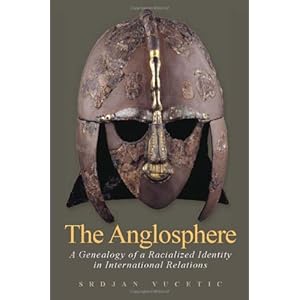
Ethnic nationalism of the sort represented by the Vimy Ridge celebrations has the potential to be an existential threat of Canada. At the time of the 2003 invasion of Iraq, we saw some people advocate Canadian participation in this war on the grounds that Canada’s was “an Anglo-Saxon country”. We thus saw the revival and modernisation of one of the most dangerous of all ideas, race patriotism. As Canadian academic Srdjan Vucetic has noted in a recent book published by Stanford University Press, the idea that the Anglo-Saxon countries ought to hang together is deeply entrenched the political cultures of the United States, Britain, and Australia. In my opinion, this idea has contributed to some really bad policy decisions in all of these countries. For instance, the United States has spent a trillion dollars and thousands of lives in its recent wars. It’s going to take some time for GDP growth to make up for that last money. The dead soldiers are never going to come back. But in the final analysis, Britain and the United States will still exist at the end of these wars. In Canada, the potential implications of ethnic nationalism are much more serious and they do pose an existential threat to the nation-state.
I feel passionate about this issue because I attended a high school in a Toronto suburb in the early 1990s where there were tensions between students of Serbian ancestry and those from other ethnic groups in the former Yugoslavia. Some young men Canadian birth went to Bosnia in the 1990s to fight in the armies of their respective ethnic groups. They may even have ended up shooting each other. More recently, we have seen Jewish and Muslim students rioting at Concordia University or Tamils blocking traffic in Toronto because of events on the other side of the world.
It is difficult for the host population to demand exclusive loyalty to Canada on the part of immigrant ethnic groups when some members of the country’s dominant ethnic group, people of British ancestry, persist in identifying with the land of their ancestors and celebrating people who fought wars on behalf of the ethnic homeland. On a fundamental level, the British immigrants who enlisted in the Canadian Expeditionary Force in 1914 are no different from the Croatian-Canadians and Serbian-Canadians who slugged it out in Bosnia in the 1990s. Of course, the same might be said of the German-Canadians and German-Americans who made it back to Germany in the summer of 1914 in time to enlist in the German army. The Canadians who fought in the First World War should not be condemned, but neither should they be honoured. Enough time has passed that we should be able to study their motivations in a detached and non-emotional way.
The really sad thing about the recent Vimy Ridge celebrations is that David Johnston, a former academic who once devoted his life to the pursuit of truth, decided to legitimize the event with his presence.
[1] Neville Meaney, “In History’s Page: Identity and Myth” in Australia’s Empire, 378.
[2] Borden to Sir George Perley, 3 June 1916, in Sir Robert Borden Fonds, Library and Archives Canada, microfilm C-4314. Borden’s comments have been cited in the existing historical literature on Canada’s wartime plans for southern expansion P.G. Wigley, “Canada and Imperialism: West Indian Aspirations and the First World War” in Canada and the Commonwealth Caribbean, edited by Brian Douglas Tennyson (Lanham : University Press of America, 1988); Brinsley Samaroo. ‘The Politics of Disharmony: the debate on the political union of the British West Indies and Canada, 1884-1921’ Revista/Review Interamericana 7 (1977):46-59.
[3] Martin F. Auger, “On the Brink of Civil War: The Canadian Government and the Suppression of the 1918 Quebec Easter Riots” Canadian Historical Review 89 (2008): 503-540.
See also: Hayes, Geoffrey, Michael Bechthold, and Andrew Iarocci. 2007. Vimy Ridge: a Canadian reassessment. Waterloo, Ont: Wilfrid Laurier University Press
Comments : 1 Comment »
Tags: Vimy Ridge, Vimy Ridge Day
Categories : Uncategorized
Canadian History at the Business History Conference 2012
9 04 2012I was not, alas, able to go to the Business History Conference this year.
However, looking over the list of papers I’m feeling very jealous of the people who went! I’m always enormously stimulated by the BHC. This year, I noticed two interesting papers on Canadian topics.
Laurence B. Mussio, McMaster University
A Clear and Present Danger? The State, Foreign Control, and the Canadian Life Insurance Industry, 1950-1962
[Abstract]
Chris Madsen, Canadian Forces College
Technology Adoption and Adaptation in Canada’s West Coast Shipyards, 1918-1950
[Abstract] [Paper]
There was also some Canadian content in one of the papers delivered in the Empire, State and Capitalism in Early Modern Britain panel.
Michael Wagner, Lady Margaret Hall, OxfordManaging to Compete: The Hudson’s Bay, Levant, and Russia Companies, 1714-1763
[Abstract]
I was also pleased to see that H.V. Nelles, who is the L.R. Wilson Professor of Canadian History at McMaster University and an expert on Ontario Hydro, was the discussant in a panel on State-Owned Enterprises.
A.5 The Rise and Demise of State-Owned Enterprises
Columbus B
Chair: Rowena Olegario, Oxford University
Discussant: H. V. Nelles, McMaster UniversityFranco Amatori, Bocconi University, and Daniela Felisini, University of RomeA Special Kind of Management: IRI, 1950-1980
[Abstract] [Paper]Mattia Granata, Universita degli Studi di MilanoPolitics and the Demise of the Entrepreneur State, Italy 1972-1992
Fabio Lavista, Bocconi University, and Giandomenico Piluso, University of SienaGetting Unsustainable: Debts, Investments, and Losses of Italian State-Owned Enterprises from the Golden Age to Privatizations, 1951-1991
[Abstract]
Comments : Leave a Comment »
Categories : Uncategorized
The Big Bang in UK Universities
5 04 2012In 1986, the financial services sector in the UK was deregulated with the famous Big Bang package of reforms. The debate about the consequences of this move towards a much more competitive environment continues to this day.
As Chris Cook reports for the Financial Times, the higher education sector in England is now undergoing a similarly dramatic Big Bang reform aimed at producing a genuine market in higher education. Subsidies for the teaching of most non-STEM subjects have been scrapped, forcing students (or more correctly, graduates) to cover the full costs of their education. Tuition fees have increased, although not to the level common in private profit and non-profit universities in the US. New entrants, such as the proposed New College of the Humanities in London, are trying to get into the education market. Moreover, the regulations governing the admissions process that previously shielded less attractive universities from the prestigious Red Bricks universities have been watered down, although not totally eliminated. In the days when governments subsidised every space in the UK’s universities, the number of spaces at each university was capped by the government. In practice, the quota meant that some of the top universities were forced to turn away good students, even though these universities would have liked to have expanded their student populations. The beneficiaries of this regulation were other universities, which ended up accepting the students who were very good but just below the cutoff to get spots at top institutions such as University College London. The following chart, which shows data for four universities in four different grades of institution, shows that the quotas affected the top universities (e.g., University College London) the most and had a minimal impact on student numbers at institutions such as the University of East London.

The conventional wisdom in British academic circles has been that the end/softening of the quota on student numbers at elite universities would result in these institutions expanding student numbers rapidly at the expense of less attractive universities in close proximity. The apparent reasoning is that since the marginal cost of teaching an additional student is very small, it would make sense for universities to pack more students into lecture theatres. However, according to data reproduced a few days ago on the Financial Times’s Data blog, the most prestigious institutions are not considering major expansions at this time.
As a business historian, this raises several important questions for me.
1) Is there another set of regulations, aside from the aforementioned quota, that has impeded the growth of the universities that have been forced to turn away students? I’m thinking about the UK’s onerous planning permission system, which makes it hard to put up new buildings and thus expand student numbers quickly. I would note that UCL is located in a part of London with really expensive real estate. Unless you want to grow vertically or to establish a suburban campus, your freedom to increase student numbers is limited.
2) To a certain extent, technology can help universities to cope with the costs of expansion. Delivering an increasing proportion of classes over the internet might be one way of easing growing pains. However, it is my impression that the ability of English universities to deliver content electronically is limited by other regulations that dictate that students have to have a certain amount of “face time” with their instructors. Is this correct?
3) Expansion involves all sorts of other capital expenditures. A private business can issue lots of bonds to fund expansion, using the future revenue to offset the expenditure. Public sector entities such as universities have less freedom to raise capital. Under New Labour, so-called Public-Private Partnerships were formed for expressing this purpose. The current government has discouraged the use of such PPPs, since they often involved the provision of capital at interest rates that were quite high, certainly higher than the government’s own borrowing costs. Discouraging PPPs is probably a good move, but alternative sources of capital should be provided, perhaps along the lines of the Export Banks that many countries use to subsidise exports.
4) The pricing structures adopted by English universities are still relatively simple. The tuition fees are much higher than they used to be, of course, but students are still charged in basically the same way: they pay in advance for the whole term or year’s worth of education. Contrast this with the “freemium” model adopted by an increasing number of US institutions. Freemium is common model in many businesses: a basic service is provided free of charge to users as a sort of teaser, but extra features must be paid for. The Massachusetts Institute of Technology is offering many of its lectures online for free via its MITx OpenCourseWare programme. The catch is that you have to pay to write the exams and get degree credit. Many other US and Japanese universities have adopted this model. To date, no bricks-and-mortar British university has even begun to offer this sort of pricing model. I suspect that regulations have something to do with it.
There is a lot of prejudice against the online provision of higher education. I have to admit that I used to be skeptical of the whole concept. However, a friend who worked for the Open University, which only delivers learning by distance, suggests that very good education can be provided in this way. Yes, online courses are no substitute for the one-on-one mentoring of young people by established scholars that I was lucky enough to receive as an undergraduate. I certainly do my damnedest to try and replicate that experience for my students. However, the reality is that only a small minority of young people in higher education today have anything resembling any of the sort. As Kevin Carey, a proponent of online higher education, recently wrote:
Whenever I write a post on this topic, I usually get comments along the lines of “This entire conversation is ridiculous and distasteful because online higher education can’t possibly be as good as the higher education that I once received and/or am currently employed to provide.” Short response: There is incredible diversity within our higher-education system. I have personally witnessed a class taught by a full professor to two (2!) undergraduates at a wealthy liberal-arts college and read senior theses produced in close collaboration with full-time research faculty that would put most graduate work to shame. Online higher education can’t touch that. But I’ve also seen—and participated in—big lecture classes that are worse than well-designed online courses. The difference between what higher learning should be in theory and what it really is in practice (and what’s feasible given the current economic and funding environment) is vast. And it’s in that space that new organizations are going to thrive.
Comments : 2 Comments »
Tags: The Big Bang in UK Universities
Categories : Uncategorized
The Wedgwood Collection Decision Condemned by Business Historians
22 03 2012
Josiah Wedgwood (1730 – 1795) was the greatest English potter of the Industrial Revolution era: he managed to mass produce beautiful pottery. The fact that Wedgewood occupies a prominent place in the Creating Modern Capitalism is suggestive of his sheer importance in world business history. The collection of his wares is therefore of tremendous historical value.

Dr Andrew Popp, Professor John Wilson and Professor Robin Holt of the University of Liverpool Management School have condemned a court ruling that says that the Wedgwood Museum’s collections could be sold to meet a £135m pension deficit inherited from the Wedgwood Pension Plan Trustee Limited.
See more here.
Comments : Leave a Comment »
Tags: Andrew Popp, John Wilson, Robin Holt, Wedgwood Collection
Categories : Uncategorized
Engaging Corporate Heritage
22 03 2012Public history blogger Krista McCracken has published a great post on corporate archives and institutional memory. In her post, she offers reasons why companies ought to care about preserving old records.

She writes: On the most basic level institutional memory can help prevent the repetition of past mistakes. Often the biggest gaps in institutional memory occur during a change in administration or management. For example, a newly hired administrator implements new methods without being aware of what has worked or failed in the past, and he makes the same mistake that was made six months ago. Institutional memory isn’t designed to stall innovation (though it can be misused that way). Rather, it can help organizations avoid reinventing the wheel. Having records which highlight past work allow for informed decisions to be made in the present.
She also says that company archives
can help cultivate institutional culture and pride. Remembering past triumphs and projects can help employees see the long term impact of their work and the institution at large. Celebrating anniversaries and other important dates in the organization’s history can further instill pride and a sense of longevity.
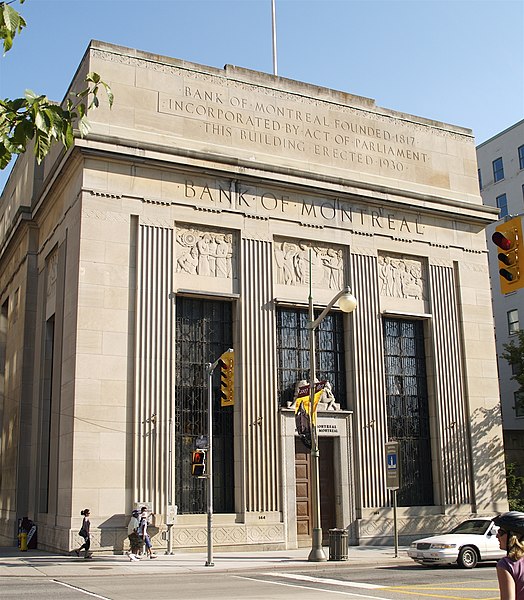
I think that the second point is a really important one. Long-established companies like invoking images of their histories in advertising aimed at the public and in communication for internal consumption. It builds confidence among consumers and pride among workers. That’s why older bank branches often have the year of incorporation displayed prominently– it helped to reinforce the idea that the bank (and the depositors’ money) would be around for the long term. Although most bank branches built after the introduction of government-run deposit insurance systems don’t display the dates of founding so prominently, banks still pride themselves on their heritage.
There are vast numbers of TV commercials that refer to the history of the company in question. For a recent example, see below:
As Deidre Simmons’s history of the archives department of the Hudson’s Bay Company, corporate archives can certainly help with all of these activities.

Comments : 1 Comment »
Tags: business archives, corporate archives
Categories : Uncategorized
What Can Elected Mayors Do For British Cities? A Canadian Perspective
20 03 2012
Since 2000, a small number of British cities have introduced mayors directly elected by the people. Most British cities, however, still have council leaders who are responsible to the city council. These council leaders have a position analogous to that of a Prime Minister in a Westminster-style parliamentary democracy.
A number of British cities are about to hold referenda on whether to introduce this controversial “American-style” institution: ten of England’s largest cities, including Birmingham, Bristol, Leeds and Manchester, will hold such votes in May. Read more here.
Canada, of course, has long had directly elected mayors. It is therefore rather interesting that Gordon Campbell, who was formerly Mayor of Vancouver and then Premier of British Columbia and who is now Canada’s High Commission in London, will be speaking at a forum in Birmingham on the benefits of having elected mayors.
I can certainly see why the British proponents of elected mayors invited Gordon Campbell to their event. Campbell is accomplished, cerebral, and articulate. It is, perhaps, unfortunate the current mayor of Canada’s largest city is unable to speak as well. Exposure to Toronto’s mayor might have provided voters in Birmingham’s referendum with additional food for thought.
Thursday 29th March 2012, please arrive promptly, 15.30 – 17.00
Followed by a drinks reception from 17.00 – 18.00
Millennium Point, Curzon Street, Birmingham, B4 7XG
– Rt Hon. Greg Clark MP, Minister for Cities and Decentralisation
– Sir Steve Bullock, Mayor of the London Borough of Lewisham
– Gordon Campbell, former Mayor of Vancouver
– Tom Gash, Editor of the publication & Programme Director, IfG
Greg Clark will make the opening speech putting forward the case for directly elected mayors and the broader decentralisation agenda. The Minister will then be joined by Steve Bullock, Gordon Campbell and Tom Gash to answer questions from the audience.
To request a place, please reply to events@instituteforgovernment.org.uk by the 13th March.
Comments : Leave a Comment »
Tags: directly elected mayors, Gordon Campbell
Categories : Uncategorized
Association of Business Historians: New Tony Slaven doctoral workshop in business history
19 03 2012Association of Business Historians: New Tony Slaven doctoral workshop in business history
This year ABH is holdings its first doctoral training workshop. This will take place on 5th-6th July, immediately preceding the 2012 ABH Annual Conference at Aston Business School. Participants will also be welcome to attend the Annual Conference. We very much hope that this will become an annual event and will provide an opportunity for doctoral students to discuss their research with other research students in business history-related disciplines in an informal environment.
The workshop is open to all students undertaking research degrees in business history-related topics and it is hoped that both students in their initial year of registration and those at more advanced stages of their thesis research will find it of benefit. In addition to providing new researchers with an opportunity to discuss their work with other research students in the same discipline, the workshop will also include a session related to careers. Business history doctoral work is spread over a large number of departments and institutions and by bringing students from throughout the UK together for an annual workshop, we hope to strengthen links between students working on business history – related topics.
For the purposes of the workshop `business history’ is interpreted broadly, and it is intended that students in areas such as financial history, agricultural history, not for profit organisations, government-industry relations, government policy towards trade and industry, the history of international trade and investment, accounting history, social studies of technology, and labour history will find it of interest. Students undertaking topics with a significant business history related element but in disciplines other than economic and business history are also welcome. A limited number of Tony Slaven scholarships are available, to contribute towards the travel, accommodation, and registration costs of attending the doctoral workshop and ABH conference. These will be awarded competitively prior to the workshop.
First year students would be expected to present an overview of their research (with around 20-30 minutes for the presentation and a roughly equal time for discussion). Those at a more advanced stage of their thesis might wish to present a draft chapter, or focus on one particular section of their thesis. Participants would also be expected to act as discussant for one of the other papers to be presented.
Students interested in attending the workshop and those wishing to apply for the Tony Slaven scholarship (for both the workshop and the ABH conference) should contact Prof. Peter Scott, IBS, Henley Business School at the University of Reading, Whiteknights, Reading, RG6 6UD (p.m.scott@reading.ac.uk). The application should comprise a short cv and an abstract (maximum four A4 sides of single-spaced typed text).
This should include the names of the student’s supervisors; the title of their thesis; the university and department where they are registered; the date of commencement of their thesis registration, and an outline of their research. Students in their first year of registration may wish to focus on their thesis literature review and research plan. Students in subsequent years may also want to discuss one particular chapter or section of their thesis that they would like to present at the workshop.
For full consideration, applications should be submitted prior to 15th May 2012. For further information, please contact Peter Scott at the above e-mail address.
Comments : Leave a Comment »
Tags: Association of Business Historians: New Tony Slaven doctoral workshop in business history
Categories : Uncategorized
Should You Choose Humanities?
18 03 2012According to the website Choose Humanities, “a high proportion of successful leaders in the UK come from a humanities background. Around 60% of people at the top of their professions – including CEOs of FTSE 100 companies, top creative industries and professional services organisations and MPs – studied arts, ‘broad humanities’ and social science degrees. In this study only 15% studied the STEM subjects, for which the Government will continue to provide funding to support teaching in English universities.”
The full research report is here.
Comments : Leave a Comment »
Categories : Uncategorized
How Long Will We Have Separate 9/11 Sections in Bookstores?
17 03 2012
Comments : Leave a Comment »
Tags: 9/11 section
Categories : Uncategorized
 The Past Speaks