Call for Papers: Immoral Business? Perspectives on Speculation, Speculators, and Scandalous Profits

11 01 2012

AS: Looks like a pretty interesting conference. I know of a number of business historians with research projects that would lend themselves to papers suitable for this conference.  

Immoral Business? Perspectives on Speculation, Speculators, and Scandalous Profits

International Conference at Leibniz University
Hanover
25 – 27 January 2013

Conveners: Karl Christian Führer, Kim Christian Priemel and Cornelia Rauh

Scholars are invited to submit proposals for original papers to be presented at an interdisciplinary conference in Hanover, Germany, in January 2013. The conference will explore how economic actions come to
be labelled as “speculation” in different societies and in diverse historical periods. It will specifically address questions such as how speculative trading was and is operated, how states and societies react to the phenomenon of “speculation”, and how the incurred profits or losses are publically assessed.

Speculation thus offers an excellent example to study economy as a historically contingent, socially constructed field of action. Its highly contested character clearly derives from a wide range of social interactions encompassing not only business protagonists (traders, brokers, shareholders, bankers, et al), but also politicians and state
officials engaged in regulatory efforts as well as other stakeholders such as labour representatives, scholars, the lay public, and the media. As such, speculation offers a rich field for interdisciplinary and comparative studies. The conference, we hope, will be joined not only by historians and economists, but also by participants from
Sociology, Anthropology, Theology, Criminology, and Media and Cultural Studies. Both papers on historical cases of speculation and on recent developments are welcome; internationally comparative presentations
are especially encouraged. Participants should be prepared to give a 20 minute presentation at the conference followed by discussion.

Questions to be addressed in the papers may include: Which forms of
“speculation” can be distinguished? Under what circumstances is
speculation regarded as functional or as disruptive both in economic
and in social terms? What are the differences between “speculators”
and “ordinary” economic agents? Do the notions of “greed” and of
“undeserved profits” necessarily form part of debates about
speculation and speculators? Or is speculation only scandalized once
it has failed? Can greed, as Gordon Gecko has it, be good?

In what way are speculation and its protagonists perceived by the general public of his or her time? Is there a public image of “the speculator” and – if so –who shapes that image at different times, in different places, and by what means? Is speculation a topic in high-brow art, the popular arts, and/or the media? Do economic actors conceive of themselves as speculators? Which efforts have public authorities historically made to prevent or check “speculation” and
with what results? Are such policies tied to notions of a “moral economy” meant to control profits and self-interest for the sake of the “common good”?

Please send an abstract of 150 – 200 words of your paper along with a brief CV (one page at the most) to Cornelia.Rauh@hist.uni-hannover.de by February 15, 2012. All submissions should be sent as e-mail
attachments (MS Word, Rtf, Pdf). At the moment, reimbursement of travel expanses cannot be guaranteed. However, we are optimistic that funding will be provided. There will be no conference fees.


Melodee Beals, Cliopatria Award Winner

8 01 2012

The 2011 Cliopatria Awards for history blogs have been announced a few days ago at the meeting of the American Historical Association in Chicago. A full list of the winners in the various categories is available here.

I was pleased to see that someone from my neck of the woods has won the award for best new history blog. Melodee Beals teaches at the University of Warwick, which is just a few miles from my employer, Coventry University.  She recently completed her PhD at the University of Glasgow, which was on the effects of nineteenth century emigration on those left behind. At Warwick,  she teaches North American Themes and Problems and Reform, Revolt and Reaction in the US. She is currently working on a project called “Demography and the Imperial Public Sphere Before Victoria“, which is the subject of the blog that won the award. Melodee also has a blog related to her teaching. In fact, it was one of Melodee’s recent posts that inspired me to give up (at long last) the practice of marking hard copies of student essays. Melodee’s post extolled the benefits of using GradeMark, which is part of the Turnitin family of software, and it convinced me that all-electronic is the way to go. The key paragraph in her post was this:

Time spent marking: It took me roughly 2 hours to mark 5 essays last week. This means an average of 24 minutes each. As my goal was 15 minutes per essay, this was rather depressing. However, once I used RescueTime to track my computer usage, I found I was actually spending just 18 minutes per essay. The other 7 minutes was spent getting coffee, checking my email, answering the phone and so on. Moreover, because I didn’t have to clear my desk, re-read the first half of the essay to remember where I was, print out comment sheets, alphabetize the essays or enter the marks into a spreadsheet, I actually saved several hours worth of administrative work.


Canadian Economic Historians Win Big Grants From Digging Into Data

5 01 2012

Back in March 2011, I posted to this blog about Round 2 of the Digging into Data project, a joint initiative of national funding councils in several Western nations.  The first round of the Digging into Data Challenge sparked enormous interest from the international research community and led to eight cutting-edge projects being funded. There has also been increased media attention to the question of so-called “big data” techniques being used for humanities and social sciences research, including a recent cover article in the journal Science.

In June 2011, teams of scholars submitted their proposals for Round 2. These teams were interdisciplinary and included academics in more than one of the participating countries.

Today, we learned that two of the winners of this hyper-competitive grant contest were teams that plan to work on topics connected to Canadian economic history.

The first of these teams is led by Canadian economic historian named Kris Inwood. Inwood’s project will involve linking together census data from Canada, the United States, and the United Kingdom from the 19th and early 20th centuries in ways that will allow researchers to track the migration of individuals  examine the effects of economic opportunity, mobility and health on social structures in Europe and North America. The Canadian data will come from censuses 1851 between 1911.
The second of these teams includes Colin Coates of York University. Its project is called Trading Consequences.

Description: (Taken from the Digging into Data press releaseThis project will examine the economic and environmental consequences of commodity trading during the nineteenth century. The project team will be using information extraction techniques to study large corpora of digitized documents from the nineteenth century. This innovative digital resource will allow historians to discover novel patterns and to explore new hypotheses, both through structured query and through a variety of visualization tools.


The eight sponsoring funding bodies include the Arts & Humanities Research Council (United Kingdom), the Economic & Social Research Council (United Kingdom), the Institute of Museum and Library Services (United States), the Joint Information Systems Committee (United Kingdom), theNational Endowment for the Humanities (United States), the National Science Foundation(United States), the Netherlands Organisation for Scientific Research (Netherlands), and theSocial Sciences and Humanities Research Council (Canada).


Trading with the Enemy

4 01 2012


Over on the Marginal Revolution blog, Tyler Cowen, an economist at George Mason University, has been discussing journalist Adam Hochschild’s new history of the First World War, To End All Wars: A Story of Loyalty and Rebellion, 1914-1918. Cowen is evidently fascinated by something Hochschild mentions, namely, that during this conflict, the British and German governments exchanged goods they needed for their respective war efforts. Using the Swiss as intermediaries, the two combatants traded German binoculars, which were required by British soldiers on the Western front, for the rubber desperately needed by the German army.  

I must confess that I had never heard of this example of trading with the enemy. I’m wondering whether the readers of this blog, who include many historians of the 20th century business, know more about it.

The First World War is conceived of as a total war in which both sides engaged in merciless tactics designed to destroy the entire economy of the opponent. Indeed, the British and the Germans used blockades to try to starve the enemy civilian populations out of the war. Despite this, some trade between combatants went on, apparently with the full support of national governments. In this sense, the First World War seems a bit like the relatively limited wars of the eighteenth century.


The Humanities Effect, Social Science, Hard Science, and the Future of Academic History

3 01 2012

Perspectives on History, the magazine of the American Historical Association, recently published a very detailed piece on the state of the job market for history doctorates.  The author, Robert B. Townsend, presents some interesting data about what happens to people who get PhDs in history. The “bad news” is that only about 30% of the people who started PhDs in 1997 had landed tenure-track jobs by 2007. This is bad news, because most people who start PhDs in history are aiming to become professors.

The good news is that most of the PhD graduates go on to have fulfilling careers in which they make good use the credential they have earned. There are, of course, cases of history PhDs who end up working as real estate agents or in other occupations utterly unconnected to their field. Sometimes this is by choice or because of family reasons. In other cases, they simply can’t find an academic job. For the most part, however, the people who don’t get tenure-track academic jobs ultimately get positions in government and other organisations that allow them to use the skills they acquired in graduate school.  Consider this chart

ve

Even though I’m a Canadian who did his PhD at a Canadian university (Western), I think that the pattern identified by Townsend’s data corresponds with what I observed about my colleagues from my PhD programme at Western. Most of the people who were in the programme with me have landed tenure-track jobs. In some cases, they got their jobs after several years on the post-doc/sessional lecturer circuit. Some of the others who didn’t get academic positions have found very comfortable niches for themselves working in government. Western began granting history PhDs in the late 1960s. The department has listed the current occupations of all of the PhD recipients since 1990 on its website.  The data here is incomplete, particularly for students who finished their PhDs in the last couple of years, but it gives a rough sense of where people have gone.

I was particularly interested in the part of Townsend’s article that deals with the so-called humanities effect.

One other change in the ecology of the academic job market is worth noting, as history salaries are now suffering from the “humanities effect.” As history has become more closely identified with the humanities over the past 25 to 30 years, history salaries have fallen below the average for all disciplines.

Back in the mid-1980s—when history was more closely aligned with the social sciences—history was above the average in academia. Since then, the discipline has fallen decisively below the average and now stands close to the other humanities fields such as English and Foreign Languages.6

The disciplinary shift from affiliation with social sciences—often made tangible through administrative shifts of history departments from their universities’ School of Social Science—had a direct effect on the resources available to departments. When combined with the large number of PhDs competing for a smaller number of jobs, wages in the discipline have been depressed for members of our discipline.

Townsend is making a very important point here.  The discipline of history is torn between the humanities and the social sciences. On the one hand, there are historians who approach history in a way that would not seem unfamiliar to a scholar of English literature or an art historian. On the other hand, there are the historians who incline more towards the social sciences, particularly political science and economics. Most political, diplomatic, and business historians fall into this category. Some history departments are more cultural, others are more social-scientific. Western, my PhD program, is one of the few history departments in Canada that is located in a Faculty of Social Science rather than in faculty of Arts or Humanities and that is reflected in the nature of the history taught and produced there. Some of the most stimulating parts of my graduate education were the joint seminars in which political scientists and economists. When I arrived at Western as a graduate student, I experienced a bit a culture shock, as my undergraduate eduction was at a university where the historians lean strongly in the opposite direction. At the time I completed my BA,  my main interests were in the history of political thought.  When I arrived at Western, I was thrust into a world in which historians spoke about regression analysis and IR theory.

As a business historian, I now count myself in the category of the social-scientific historians. However, I certainly see value in the humanities and feel it is sad that they are underfunded. I didn’t choose to specialize in the more social-scientific branches of history because I thought that there might be a bit more money in that field. I selected my research approach because that’s what interested me. However, now that I have ended up where I have, I recognise that there are some financial benefits in avoiding the so-called humanities effect.

Townsend’s comments about the humanities effect got me thinking about the future direction of the historical profession. The two fastest growing fields of history right now are digital history and environmental history.

Some of the people who work in the field of digital history are based in history departments. Others are computer scientists. At places like the Center for History and New Media at George Mason University, you have people from various disciplinary backgrounds working alongside each other.  Environmental historians work with and draw on the knowledge created by biologists, geologists, environmental scientists, and other hard scientists. Moreover, physical scientists sometimes make use of the research findings of environmental historians. For instance, archival research by environmental historians has allowed us to reconstruct climate data for the past few centuries, which is immensely important for the debate about anthropogenic climate change.

Now, the humanities effect stems from the fact that society values some disciplines that study society (e.g., economics and political science) a bit more highly than others (e.g. literary studies). Economists and political scientists have somewhat more prestige than literary scholars. However, it is safe to say that  all of the disciplines that study society rank very low in the view of the general public and policy makers than people in the hard sciences, particularly the STEM subjects. The average taxpayer or legislator might display a slight preference for funding political science over poetry, but the funding allocated to the study of society is minuscule to that governments lavish on Big Science.   Since the Second World War and, more particularly, the launch of Sputnik in 1957, governments in Western countries have been very generous in their funding of scientists. Sputnik convinced many in the West that the Soviets had a dangerous lead in science and technology and they responded by shovelling money at the problem with the apparent support of the vast majority of citizens.

Many taxpayers begrudge spending relatively small amounts of money on the humanities and the social sciences, but there is pretty much a consensus in favour of generous support for the hard sciences. The hard sciences enjoy massive prestige in our society. Almost nobody critiques government funding of medical research, particularly on common diseases like cancer and heart disease. Computer science is also generously funded, again because it has massive prestige.

As I said, the two fastest growing sub-disciplines of history are digital history, which marries computer science and historical research, and environmental history. It just so happens that these sub-disciplines of history are closely connected with disciplines that enjoy considerable prestige and financial support in our society (the West) and in all of the other societies that give substantial funding for academic research (e.g., Japan, Korea, Singapore and, increasingly China and some of the Gulf States).

If historians were to adopt a completely mercenary approach towards securing the future of their profession, they would do well to encourage the growth of environmental history and digital public history. This is true for individual academic departments as well. Don’t get me wrong. There are perfectly valid non-financial reasons to foster these important fields. In a world with unlimited academic resources, it would still be the right thing to nurture these two branches of historical enquiry. However, in a world of constrained resources, there are additional reasons for wanting to promote them.

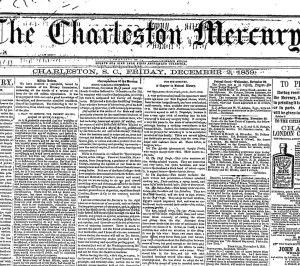


How Digitized Primary Sources Have Transformed the Teaching of History

23 12 2011

I have recently been thinking about how the digitization of primary sources has helped to change the nature of the education given to history undergraduates. I should explain three things right away: I was an undergraduate in the 1990s, I now teach North American history at a British university, and I’m a strong believer in exposing undergraduates to primary sources. The latter is a key part of my teaching philosophy.

In my second- and third-year modules, the coursework is typically built around an online primary source, such as a digitised newspaper. I use digital resources to expose my students to a broader range of primary and secondary sources than would have been possible when I was an undergraduate back in the 1990s. The digitisation of many primary sources in the past decade means that it is increasingly feasible for undergraduates to access materials such as historical newspapers or even the transcribed correspondence of political leaders. In the 1990s, many history students wrote ther essays without ever using any primary sources beyond, perhaps, a transcription of a famous historical document or a speech by a leading statesman. Edited collections of primary sources were published, but they were expensive and biased towards particular types of history, particularly topics that focused on the activities of social elites.

The digitisation of sources such as local newspapers has allowed undergraduates to learn much more about a greater variety of individuals and historical topics. Our students can now read complete runs of nineteenth century small town newspapers from pretty much every state in the United States, Canada, and Australia. These resources are all free of charge. Working with primary sources enhances the intellectual training of students and gives them the satisfaction that they are directly engaged with historical texts. Many students get a thrill from looking at scanned images of historical texts (e.g., a nineteenth century newspaper complete with advertisements).

Let me give an example of how I use digitized primary sources. In my second-year module on United States history, all of the essay topics are structured around a particular online primary source. For instance, one of the essay topics a student could choose is: “How were Anglo-American relations covered in The United States Democratic Review between 1837 and 1859? What sorts of biases were evident in this publication’s reporting on Britain and its leaders?” Students are directed to use the online version of this publication, which is keyword searchable. http://ebooks.library.cornell.edu/u/usde/index.html

The students will soon discover that this publication was virulently Anglophobic.

Although undergraduates require extensive instruction before they engage in primary source research, the process can be rewarding for both students and the instructor. I have the advantage of teaching American history, which means that online primary sources are both plentiful and in a language that British undergraduates can understand. I would also note that copyright laws make it much harder to share primary sourcescreated after 1922 with undergraduates. For instance, archive.org contains few scanned images of books published after that date. Most books published in Britain or the United States before that date are, however, downloadable from archive.org.

Teaching US history at a British university can be challenging because the holdings of the relevant secondary sources in the university library can sometimes be incomplete. This problem can be particularly acute at what the British euphemistically refer to as “newer universities” (i.e., non-elite universities). Digitized primary sources can help us to address the problems caused by under-investment in library budgets.


Widespread Ignorance About the History of the Canadian Constitution :Cui Bono?

14 12 2011

The passage of the Statute of Westminster on 11 December 1931 was an important milestone in Canadian political history, as it marked the effective end of Canada’s subordination to Britain. Indeed, it was a turning point in the history of the British Empire as a whole, for it dramatically limited the authority of the British parliament over Canada and the other “white Dominions”. Every American schoolchild knows that the Fourth of July 1776 marked the independence of the United States. Perhaps because the process by which Canada, Australia, and the other Dominions became independent was more gradual, few of the dates associated with the equivalent process are remembered in those countries.

I wasn’t expecting a lot of fanfare about the 80th anniversary of the Statute of Westminster. I am, however, shocked and saddened by precisely how little attention was paid to the anniversary. It is striking the 80th anniversary of the Statute passed largely unnoticed both in Britain and the former Dominions. A Google News search reveals only four stories about the anniversary of the Statute, all from Canadian newspapers and blogs. The office of the Canadian Prime Minister emailed out a brief statement on the anniversary, but I’m certain that it will be ignored, as are most of the press releases politicians issue on anniversaries. I’m surprised that Historica and the other Canadian history organizations didn’t use this anniversary as a teachable moment to educate Canadians about the history of their constitution.

The shocking ignorance of their own history that Canadians sometimes display is quite appalling. We also need to ask who might benefit from keeping Canadians ignorant of the history of their written and unwritten constitution. Cui bono?

You can read more about the Statute here.


Here are the four items that showed up in my Google News search.


Royal Canadian Navy on the West Coast To Fly Union Jack on Sunday For Anniversary

Ottawa Citizen (blog) – ‎Dec 10, 2011‎

ESQUIMALT, BC – Canada’s development as an independent nation is marked Sunday, when Royal Canadian Navy ships alongside, fly the Royal Union Flag from the masthead from sunrise to sunset. Dec. 11 is the Statute of Westminster Day, the 80th anniversary 

Navy ships to fly British flag – for one day only

Victoria Times Colonist – ‎Dec 10, 2011‎

The Union Jack flag will fly from Royal Canadian Navy ships and some federal buildings Sunday to mark Statute of Westminster Day. The anniversary refers to an important event in Canadian history – on Dec. 11, 1931, the British parliament passed 

Happy 80th Birthday, Statute of Westminster

Globe and Mail – ‎Dec 9, 2011‎

On Sunday, Canada will observe the 80th anniversary of the Statute of Westminster by flying the Union Jack once again, alongside the Maple Leaf, on many Government of Canada buildings. It is a modest gesture for a significant anniversary. 

Prime Minister Stephen Harper issued the following statement to mark the 80th 

Eesti elu – ‎Dec 11, 2011‎

“Today we mark the 80th anniversary of the Statute of Westminster, one of the most important documents in our country’s history. “The Statute removed the United Kingdom ‘s ability to make laws for Canada , effectively enshrining Canada ‘s equal status 


The Invention of “Choice”: Historical and Theoretical Perspectives on Markets, Democracy and Power

14 12 2011

Looks like a very interesting workshop!

The Invention of “Choice”: Historical and Theoretical Perspectives on Markets, Democracy and Power


Copenhagen Business School, January 12-13 2012


The concept of “choice” is at the heart of much theorizing in marketing, micro-economics and consumer psychology today. The aim of the workshop is to problematize the notion of “choice” from various historical and theoretical perspectives. Rather than asking whether or not more (or less) choice per se is either good or bad for citizens and consumers – a perspective that dominates much of the discussion in marketing, consumer psychology, behavioural economics etc. – we want to use this workshop to exchange ideas about the historical, cultural and political circumstances that led to the reification of choice as a social policy aim in its own right. The workshop will bring together scholars from as wide a background as business and economic history, psychology, marketing, theology, and sociology to analyse when, why and how the mundane idea of “choice” became a political-economic concept with such an enormous power to mobilize people.


Thursday, 12 January 2012: Historical Perspectives

Kilen Building, Room 146

9.30 – 10 am: Welcome with Coffee & Tea

10 – 10.30am

Stefan Schwarzkopf (CBS): “Introducing the Workshop: Why do we need a ‘History of Choice’?”

10.30 – 12.30pm

Panel 1: From Adam Smith to the Interwar Years

Chair: Alfred Reckendrees (CBS)

Amos Witztum (London Metropolitan University/London School of Economics)

“Choice, Liberalism and Markets: between Smith and Keynes”

Nicola Giocoli (University of Pisa)

“Consistent Choices: Homo Economicus becomes a Bayesian Statistician”

12.30 – 2pm: Lunch and Coffee

2 – 4pm

Panel 2: From the Interwar Years to Reagenomics

Chair: Per Hansen (CBS)

Will Davies (Saïd Business School, University of Oxford)

“Choice, Hayek and the Chicago Tradition”

Stefan Schwarzkopf (CBS)

“The Market Research Industry and the Invention of Consumer Choice, 1920-1980”

4 – 4.30pm: Coffee Break

4.30 – 5.30pm

Roundtable Discussion with Claes-Fredrik Helgesson (Linköping University)

“Researching the Socio-material Set-up behind Choice Architectures Past and Present”   

5.30 – 6.30pm Wine Reception sponsored by CBS Business-in-Society Public-Private Platform (Kilen, 4th floor)

6.30pm: Conference Dinner at Restaurant “Frederiks Have”, Smallegade 41

Friday, 13 January 2012: Theoretical Perspectives

Kilen Building, Ground Floor, Room Ks 54

9.30 – 10am: Welcome with Coffee & Tea

10am – 12noon

Panel 3: “Choice” and Choices in Contemporary Branding and Consumer Research  

Chair: TBC

Søren Askegaard (University of Southern Denmark, Odense)

“From Lifestyle-based Choices to Choice-based Lifestyles… and Back?”

Mads Mordhorst (CBS)

“Brands as Parasites – the Marketization of Choice in Contemporary Branding Regimes”

12 – 1pm: Lunch and Coffee

1 – 3pm

Panel 4: “Choice” in the Perspective of Game Theory, Theology and Psychoanalysis 

Chair: Camilla Sløk (CBS)

S. M. Amadae (Ohio State University)

“Game Theory’s Philosophy of Value:  can Choice be free when Money is used to measure all Value?”

Bent Meier Sørensen (CBS)

“The Right to Choose: ‘Wo Ich war soll Es werden’”

3 – 3.30pm: Coffee Break

3.30 – 4.30pm

Roundtable Discussion with Paul du Gay (CBS)

“‘Choice’ and Public Governance: Introducing CBS’ Business-in-Society Public-Private Platform”   

4.30pm: End of Conference. 

 
Organiser: 

 Stefan Schwarzkopf, Centre for Business History, Copenhagen Business School

Event Location: 
Kilen Building, Copenhagen Business School

Kilenvej 14

CopenhagenDK-2000

Denmark
 

Registration details

Registration deadline: 

 6 January 2012

Registration via email to Stefan Schwarzkopf (ssc.lpf@cbs.dk)


Echoes: New Group Blog in Business and Economic History

12 12 2011

For some time now, I have been saying that historians have to participate in present-day debates about the economy. For far too long, the media have relied on the expertise of scholars just one discipline, economics. It is nice to see, however, that Bloomberg is now hosting a blog in which historians show how business and economic history are relevant understanding the day’s business news.

Stephen Mihm, an associate professor of history at the University of Georgia, runs the Echoes blog. Along with Phil Scranton and John B. Taylor, Mihm is responsible for arranging for historians to write short posts on current events.

Full disclosure: I absolutely loved Mihm’s 2007 book A Nation of Counterfeiters: Capitalists, Con Men, and the Making of the United States.

Here is Mihm’s description of the blog’s function:

That idea animates our revamped “Echoes” blog, dedicated to the history of economics, business, finance and, above all, capitalism. Our contributors will aim to unearth parallels between past and present, highlighting how the economic crises of our own era are perhaps not as unique as we think.

What we cover will be driven largely by current events. And, if history is any guide, the coming months and years will be dominated by the reverberations from the worst financial crisis since the 1930s. A crew of historians will weigh in on how our own hard times measure up against the Great Depression.

The echoes, of course, will reach back further and range more widely than the 20th century. We’ll try to connect the speculative bubbles of 18th-century Europe with the sub-prime crises of the 21st century; or the breakneck economic growth of the U.S. 200 years ago with the meteoric rise of China today.

Many of history’s best economic stories can’t be reduced to numbers and charts. They’re dramatic tales of hubris, innovation, brilliance and luck — of people caught in the grips of forces that they don’t fully comprehend. We’ll be trying to tell those stories here.

The blog went live on 3 November. Since then, there have been a number of excellent posts, including Bob Wright on violence in the history of Wall Street (see here),  Phil Scranton’s article “This Week in Depression Economics,”  (see here) and a piece by Regina Lee Blaszczyk comparing Steve Jobs with the entrepreneurs involved in Britain’s Industrial Revolution (see here)

You can follow the blog here.


Book Launch: Canada’s Entrepreneurs

7 12 2011

The deadline to RSVP for the launch event is today, 5 December 2011.

The Dictionary of Canadian Biography

is pleased to invite you to a 

book launch 

CANADA’S

ENTREPRENEURS


Edited by

J. Andrew Ross and Andrew D. Smith

Monday, 12 December 2011

5:00 – 7:00 p.m.

Hart House, Music Room (2nd Floor)

7 Hart House Circle

University of Toronto

loretta.james at utoronto.ca or (416) 978-6621

Remarks at 5:45 p.m.

Cocktails and light refreshments


Canada's Entrepreneurs: From the Fur Trade to the 1929 Crash: Selections from the DCB


You can order the book here.