Monetary Unions

4 01 2011

I am posting a link to an interesting article in the EH.Net Online Encyclopedia every day this week. This Encyclopedia contains a treasure-trove of really great information on economic history related topics.

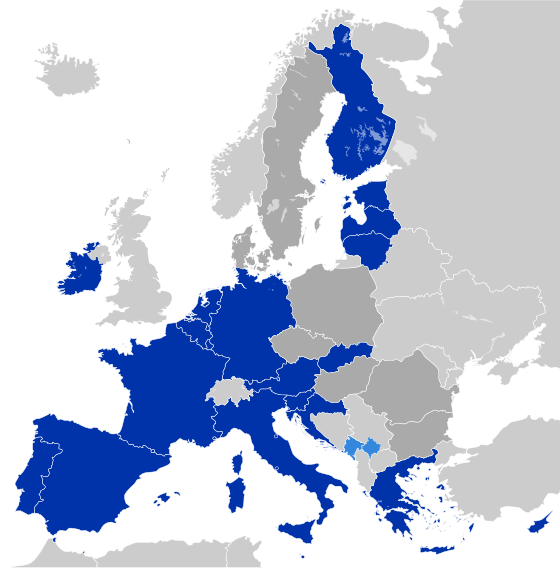
Today’s selected article is on “Monetary Unions” by Benjamin Cohen, who is the author of The Geography of Money (Ithaca, NY: Cornell University Press, 1998). I think that this piece is especially interesting in relation to the current problems in the Eurozone.

Eurozone


Interesting Articles from the EH Net Online Encyclopedia

4 01 2011

Each day for the next week, I will be posting a link to an interesting article in the EH.Net Online Encyclopedia. This encyclopedia is a treasure-trove of really great information on economic-history topics. I have identified seven articles that are my favourite. Over the next few days, you will find out what these articles are, along with my reasons for liking each piece.

Today’s selected article is by Robert White,  “Origins of Commercial Banking in the United States, 1781-1830”.  It’s on a really important subject– the evolution of banking in what later became the world’s largest economy. The article draws on economic theory but is also based on a very good knowledge of the political and social history of the period. I think that the discussion of the political economy of banks is perhaps the strongest part of this piece. The author of the piece also publised The Wealth of Nations Rediscovered: Integration and Expansion in American Financial Markets, 1780-1850 (New York: Cambridge University Press, 2002).


Bren Gun Girl

2 01 2011

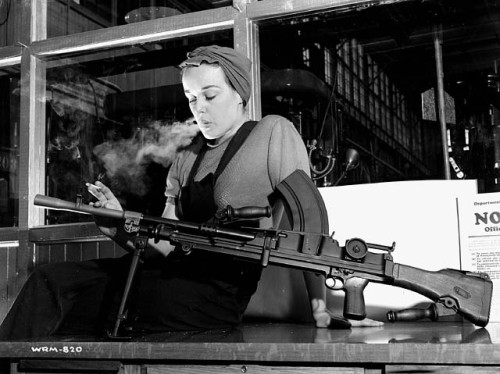
During WWII, Canadian propaganda posters often featured the “Bren Gun Girl“, a female munitions worker named Veronica Foster. Foster worked at the John Inglis plant in Toronto, which made washing machines in peacetime.

Some high resolution images of these famous pictures have been posted to the web. I thought I would share them with you. They might be useful to someone teaching a Canadian history survey.


P.S. If anyone knows what happened to Veronica Foster after the war, please contact me.


Culture of the Market Network

2 01 2011

I would like to bring your attention to a collaborative scholarly project called the Culture of the Market Network. This project, which is funded by Britain`s AHRC, will look at the evolution of economic culture in 19th century America. The project will run 2009-11 and will bring together scholars from various disciplines (literary studies, history, business and management studies, geography, sociology, anthropology) to explore the cultural dimensions of market capitalism. The focus is primarily on the long nineteenth century in the US, but the network seeks to develop comparative insights from other regions and periods—most obviously, the current crisis.

The network will organise four two-day symposia. There will be 12-15 speakers at each event, with room for c. 25-30 participants altogether. There will be limited travel and accommodation funding for core participants, and some bursaries for PhD students. Some of the papers will be delivered by videoconference, with selections from each event available by podcast.

Here is a list of their upcoming events:

1. Reputation, Emotion and the Market (University of Oxford, 19-20th March 2010)
This event will focus on the role that seemingly non-economic factors such as reputation, trust and confidence play in shaping conceptualisations of the market and economic behaviour—both individual and corporate—in the long nineteenth century in America. It will consider what the financial panics of the 19th Century can teach us about the present and vice versa, as well as looking at the changing nature of corruption and scandal.

2. Reading the Market (University of Manchester, 10-11th September 2010)
This symposium will be centred on the ways that both experts and non-experts learned to “read” the emerging market in securities. It will look at the epistemologies and forms of subjectivity shaped by market engagement, and will investigate e.g. the forms of financial knowledge, statistical information, visualisation and financial forecasting as ways of representing the market.

3. Power and the History of Capitalism (New School, New York, April 15-16th 2011)
This conference seeks to sharpen our long-term historical perspective on relations of power, politics and modern capitalism, with a special emphasis on United States history from the eighteenth to the twenty-first century.  We ask how capitalism and its periodic crises have revised political rights and responsibilities, reconfigured political practices and institutions, and redistributed wealth.  Conversely, we aim to analyze how power relations – whether organized by state policy and laws, or structured by social norms and institutions, articulated in ideology, or embedded within racial, gender and class relations — have shaped economic outcomes. The ongoing crises of contemporary capitalism – as well as the heightened emphasis on questions of power within the social sciences and humanities – invest these questions with new urgency.

4. Commodities and the Idea of a Global Market (Harvard, September 2011)
What are the advantages and pitfalls of the turn to “commodity biographies” (e.g. of coffee, cotton, madeira, silk, seeds, cocaine) in business history? This symposium will focus on the role that commodities played in enabling or hindering the imagination of a global marketplace, and how a global economy in turn shaped a sense of national identity.

See the project website for full details.

Here is a statement of the project`s aims:

Although “financial literacy” has recently become a strategic priority for many governments, there has been little systematic research into the history of popular financial knowledge, or the role of cultural and emotional dimensions of market behaviour in times of economic crisis. The Culture of the Market Network will bring together an international group of intellectual and cultural historians on the one hand and business and economic historians on the other to investigate the particular forms of epistemology, subjectivity and social relations that were created by and that in turn help reconfigure financial capitalism in the long nineteenth century in the United States. A series of four symposia (Oxford, Manchester, UC Irvine and Harvard, including videoconferencing) will focus on the intersections between culture and economics in nineteenth-century America, a period that offers many insightful parallels to the current moment of crisis in global financial capitalism. The Network is interdisciplinary and comparative in outlook, promoting interaction between the core group of researchers and invited experts from related fields such as Victorian Britain and present-day Wall Street.

The Network aims to investigate how non-experts learned to make sense of financial information in general and the operations of the stock market in particular in the period. It will do so by focussing on the forms of financial knowledge that they acquired, and the ideological assumptions behind the turn to statistics and forecasting as ways of representing the market. The Network will consider the institutional, rhetorical and psychological mechanisms that helped persuade ordinary people to participate in the stock market, and the role of seemingly non-economic factors such as trust and confidence in shaping market behaviour in the period. It will also showcase research on how global commodity chains helped forge a popular understanding – and distrust – of a globalised market. Finally the Network will explore how popular scepticism about the market and money played out in the political struggles of the era.

The head of the Network is Dr Peter Knight, Senior Lecturer in American Literature, University of Manchester. His publications include:

Knight, P. The Kennedy Assassination. Edinburgh University Press, 2007.

Knight, P. Conspiracy Conspiracy Culture – American Paranoia from the Kennedy Assassination to The X-Files. Routledge, 2000.


Why Are the East Sides of Cities Normally Poorer ?

2 01 2011

This link should interest all urban historians.


Wikileaks, Post-It Notes, and the Primary Sources Available to Future Generations of Historians

1 01 2011

How might Wikileaks change the challenges facing future generations of historians ?

Prof. Skinner

According to Prof. Kiron Skinner, Wikileaks will result in fewer and less informative documents reaching the archives on which historians rely.

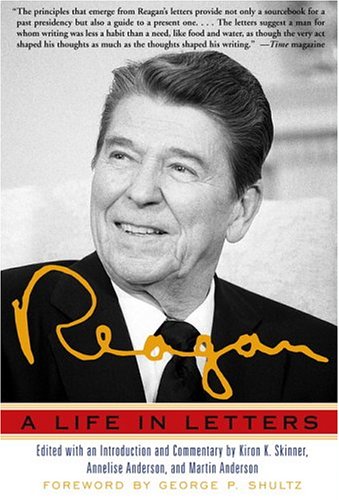
Skinner can speak with some authority on this issue. She is the co-author of “Reagan, In His Own Hand” and “Reagan, A Life in Letters.” She is on the advisory board of the George W. Bush Oral History Project and is the W. Glenn Campbell Research Fellow at the Hoover Institution at Stanford University. She also is an associate professor of history and political science at Carnegie Mellon University. Her government service includes membership on the Chief of Naval Operations (CNO) Executive Panel, the U.S. Defense Department’s Defense Policy Board, and the National Security Education Board. She has cochaired the CNO task force on the Middle East and currently cochairs the task force on the new Africa Command. She also serves on the boards of the Atlantic Council of the United States in Washington, D.C., and the World Affairs Council in Pittsburgh. Skinner is a member of the Council on Foreign Relations in New York City.

She writes that:

Governments require monitoring, but exposures such as those by WikiLeaks and similar outlets may produce unintended consequences. One result may be that fewer records are kept of diplomatic activities, thus curtailing, rather than advancing, transparency and openness. Another is that WikiLeaks and its imitators will transform the study of history.

She also suggests that historian may be forced to rely more on oral history, which is a problematic source.

as policy makers, intelligence analysts and statesmen find it necessary to write to each other in code, future students of history will find it a daunting task to decipher the records of past heads of government.

They will be forced to rely on the memories of living subjects or on real-time journalistic accounts. These sources — research mainstays for many historians — must always be cautiously weighed against archival documents. Eventually, however, those archives may become so difficult to use that they will slip into irrelevance. Constructing the past will be especially difficult in the absence of candid, carefully written historical accounts.

You can read the rest of her post here.

Skinner makes some interesting points, but it may be that Wikileaks has less of a long-term impact on the archival record than the advent of new technologies. I know from historians who work on post-1945 Canadian history that researching government decisions after the mid-1960s becomes a challenge because there is less correspondence in the archive due to the falling cost of long-distance telephone calls.  Instead of a nice letter outlining the reasons for a decision, the archival record contains a short notation that a decision was made after a phone call.

The yellow Post-It Note, which first went on sale in 1980, has also discouraged decision-makers from recording their thoughts in letters. In some cases, civil servants will omit a key sentence or idea from a letter and include it in a Post-It note if they think there is a chance the letter will someday be the subject of a Freedom of Information request: the recipient of the letter throws away the potentially incendiary Post-It before the letter is filed away.

In a 2010 lecture on document disclosure to the Friends of the (British) National Archive, Jonathan Sumption, who is a practising lawyer and an accomplished medieval historian said he had asked senior civil servants about their record-keeping practices. He reported that:

With one exception, every one of them admitted to having omitted significant information from internal documents, which in earlier times would have been included, and to having communicated them informally instead, so that they would not be recorded in writing. One of them remarked that in some departments it was quite common for politically sensitive matters to be omitted from documentary records and recorded only on marginal notes written on Post-It stickers, which could be removed and binned after the right people had seen it… see here

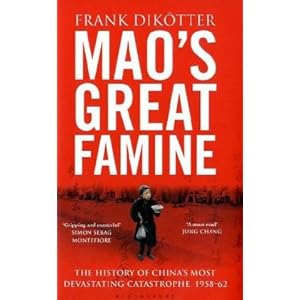
The controversy over Wikileaks should be considered alongside the ongoing debate in China over Yang Jisheng`s new book Tombstone (Mubei), a groundbreaking work on the Great Famine (1958–1961), which, though imprecisely known in the West, ranks as one of worst man-made disasters in history. Yang was recently interviewed by Ian Johnson from the New York Review of books about the sources he used to research this book. The really interesting thing about Yang`s book is that it is based on archival materials: Yang used his contacts around the country to access local Communist Party archives and uncover more direct proof of the number of dead, the cases of cannibalism, etc.  Johnson asked Yang why these records, which document the results of Mao`s terrible policies, were not destroyed.

Here was his answer:

Destroying files isn’t up to one person. As long as a file or document has made it into the archives you can’t so easily destroy it. Before it is in the archives, it can be destroyed, but afterwards, only a directive from a high-ranking official can cause it to be destroyed. I found that on the Great Famine the documentation is basically is intact—how many people died of hunger, cannibalism, the grain situation; all of this was recorded and still exists.

Yang was a journalist who worked in China`s state-controlled media for decades. Even more astonishing than his access to the archives was the fact Frank Dikötter, a professor at SOAS in London was able to see similar archival materials for his recent book on the famine.

So why were these documents left in Chinese archives so that Yang and Dikotter were able to access them ?

It seems to me that there might also have been another factor at work. I read somewhere that the archival record in dictatorships can often be more complete and easier to access than similar records in democracies, where government officials tend to destroy documents for fear they will be leaked to the press or result in a civil liberties court case. In a country without a free press, you don’t need to worry about such things. Moreover, the murderous thugs who staff the bureaucracies of dictatorships are probably less embarrassed by documents reported human rights abuses than civil servants in democracies are. In Canada, public confidence in the RCMP was damaged in the 1970s by the revelation that its intelligence agents had broken into the offices of a separatist political party in Quebec to look at their records.  Needless to say, the RCMP tried to keep these activities secret.  In a totalitarian state in which millions are routinely murdered, a document recording the details of a single individual`s suffering may be perceived as less incriminating than it might be in the West.  There is less of a shame factor to prompt officials to destroy documents.  The Nazis, after all, carefully documented the Holocaust even though they were incriminating themselves in the process. Admittedly, their leaders weren`t expecting to lose the war and be put on trial in Nuremberg, but the very fact they generated evidence of their crimes suggests a total lack of shame.

Letter by Reinhard Heydrich to the Head of the SS Personal Main Office SS Gruppenführer Schmitt, January 25, 1942 conc. "Final solution of the Jewish question" (in German)



Alan Taylor Interviewed About War of 1812.

1 01 2011

I have posted about Alan Taylor`s new history of the War of 1812. On Christmas Eve, public radio in Southern California broadcast an interview in which Taylor talks about his book. To hear the interview, click here.

Pulitzer Prize-winning historian Alan Taylor tells the story of a war that redefined North America. Taylor presents the war not as a second war of independence (as it is conventionally understood) but rather as a complicated civil war with many parties struggling over the legacy of the American Revolution. Immigrants, Indians, soldiers and settlers fought along the undefined northern borderland to decide the fate of the continent.


Scripto: New Open Source Software for Creating Crowdsourced Transcription Websites

1 01 2011

I have written before about crowdsourcing the transcription of primary sources. I have posted before about Transcribe Bentham. I would now like to bring your attention to Scripto, new open-source software that allows archives and libraries to crowdsource the transcription of archival materials. This information was sent to me by Prof. Sharon Leon of George Mason University, the head of the project and I am taking the liberty of re-posting it here.

The lead programmer for Scripto is Jim Safley, who is Web Programmer and Digital Archivist for the Center. He received his undergraduate degree in history at GMU and is currently working towards his master’s degree in American history. Beginning his archiving career in 1999 at the National Archives and Records Administration, Jim moved through several related positions, including records manager at Phi Beta Kappa national headquarters and archivist assistant at GMU’s Special Collections and Archives. Arriving at CHNM in 2002, Safley applied his traditional archiving experience to his work in digital archiving, web programming, and database administration. His interests include metadata standards, database design, web technologies, progressive history and history of technology. Safley was involved in developing that September 11 Digital Archive.

The Scriptio software is currently being developed the Center for History and New Media at George Mason University for its transcription of the Papers of the War Department, 1784-1800 project. The software will then be made available for others to use and, if they wish, modify. They will be launching the tool to allow for crowdsourcing of transcription toward the end of January.  After that point, they will begin work on writing connector scripts for the tool so that it can be used with common content management systems (Omeka, Drupal, WordPress, etc.).

Scripto uses the wikimedia api and editing interface and some additional scripting to capture the transcriptions and pass them back to the CMS.  Thus, it provides for all of the versioning and notation capacities of wikimedia, but makes the current version of the transcription available to the main CMS for search and association with the rest of the standardized archival metadata.  This is one of the differences between Scripto and the system that Transcribe Bentham is using; the Bentham project is totally contained within the wikimedia interface and has no way to export standardized metadata.  Additionally, the Transcribe Bentham project has created an interface for TEI mark-up (Text Encoding Initiative) of the texts.  The people at the Scripto project  have not added this modification to their use of wikimedia, but since the tool is open source, another programmer could add that modification on a individual basis or could release a plugin for our system.


Crowdsourcing The Transcription of Archival Materials

28 12 2010

The New York Times has published an interesting article about the use of crowdsourcing to transcribe digital material. The article discusses Transcribe Bentham and other crowdsourced transcription projects. It also mentions that Sharon Leon, a historian at the Center for History and New Media at George Mason University, recently received a grant from the National Endowment for the Humanities to design a free digital tool that any archive or library could use to open transcription to the public.

The article also quotes people who are skeptical of the whole idea of crowdsourcing the transcription of primary sources. The critics of crowdsourcing transcripton work to online volunteers include Daniel Stowell, who has been director and editor of the Papers of Abraham Lincoln project in Springfield, Illinois since 2000. Unlike Sharon Leon’s effort, Stowell’s initiative is a traditional transcription project done by a small number of employees who have been trained in paleography.  Like Sharon Leon’s project, Dr. Stowell’s transcription is funded by the NEH.  Stowell reports that his office experimented with the hiring of an unspecified number of “nonacademic transcribers”, but they produced so many transcription errors that “we were spending more time and money correcting them as creating them from scratch.” He also reports that when tens of thousands of unpublished and rarely seen documents written by or to Lincoln were digitally scanned in advance of the Lincoln bicentennial celebration in 2009, the National Center for Supercomputing Applications at the University of Illinois, Urbana-Champaign, created a prototype for crowd-sourced transcription. This prototype was ultimately abandoned for reasons not specificied in the article.


Ten Years of Debate on the Origins of the Great Divergence between the Economies of Europe and China during the Era of Mercantilism and Industrialization

28 12 2010

Shortly before Christmas, historian Patrick O’Brien published “Ten Years of Debate on the Origins of the Great Divergence between the Economies of Europe and China during the Era of Mercantilism and Industrialization”. Essentially, this review essay was about the scholarly debates sparked by Kenneth Pomeranz, The Great Divergence: China, Europe, and the Making of the Modern World Economy (Princeton, NJ, Princeton University Press, 2000, ISBN: 9780691090108; 392pp.)

Professor O’Brien is head of a major collaborative research project on global economic history  funded by the European Union. This project is called  Useful and Reliable Knowledge in Global Histories of Material Progress in the East and the West (URKEW). The project focuses upon institutions, cosmologies and cultures, promoting or restraining the accumulation of useful and reliable knowledge for industrial and agricultural production in the Orient and the Occident in the early-modern period – from the accession of the Ming Dynasty (c.1368) to the First Industrial Revolution (c. 1756-1846). The working hypothesis behind the project is that for the past three centuries, Western exceptionalism in the economic sphere has been in some considerable degree based upon a distinct regime for the generation and diffusion of such knowledge. To do the research for this project, Professor O’Brien assembled a team that includes specialists in the economic histories of Japan, China, India, and the Islamic world. O’Brien has a long list of publications and is one of the few people who can speak with authority about the ultra-important questions raised by Pomeranz’s book.

Pomeranz’s book sought to answer a truly fundamental question– when and how did the so-called West surpass East Asian is terms of its level of technological and economic development? What factors drove the rise of the West? Pomeranz argued that the rise of the west was quite recent and that until the eighteenth century, East Asia and Western Europe were quite similar to each other in terms of their social institutions and overall level of economic development. This is what O’Brien means when he says that the New Global History is a story of “Surprising Resemblances”.

Needless to say, Pomeranz was grappling with some of the biggest questions in history. O’Brien’s essay discusses Marx, Weber, and other great thinkers who have thought about them.

In this essay, O’Brien repeats an argument he has made elsewhere, namely, that the colonization of the Americas by Europeans provides the key to explaining the Great Divergence.

Europeans (not Chinese, Arabs or Indians) discovered conquered, infected, plundered, colonized and eventually established mutually beneficial, commercial relationships with the Americas. That protracted enterprise should not be designated as ‘peripheral’ (as I suggested, before climbing onto a learning curve some 18 years ago) nor reified (as it continues to be in the writings of Immanuel Wallerstein, James Blaut and the world systems school of historical sociology), as the ‘motor’ driving Europe’s benign transformation towards successful industrial market economies over the course of the 19th century.

It would be interesting to know what O’Brien thinks of Deirdre McCloskey’s neo-Weberian argument that the rise of the West was driven by the advent of a new pro-business bourgeois culture that facilitated economic growth.  She wrote:

A big change in the common opinion about markets and innovation, I claim, caused the Industrial Revolution, and then the modern world. The change occurred during the seventeenth and eighteenth centuries in northwestern Europe. More or less suddenly the Dutch and British and then the Americans and the French began talking about the middle class, high or low — the “bourgeoisie” — as though it were dignified and free. The result was modern economic growth. See here as well as my earlier blog posts on McCloskey.

You can read the full essay here.