How the Iraq War Weakened the USA: Lessons for Canada

1 09 2010

“The Real Cost of the War in Iraq: What seven years of fighting has done to American society”  is  the title of a recent article by historian Anne Applebaum.  She enumerates the obvious and non-so-obvious ways in which the war reduced American power, such as increasing the price of America’s oil imports. I think that her list in incomplete, but it is still a good article.

I thought that this bit of the piece is particularly relevant to Canadians:

America’s ability to organize a coalition has also suffered. Participation in the Iraq war cost Tony Blair his reputation and the Spanish government an election. After an initial surge of support, the Iraqi occupation proved unpopular even in countries where America is popular, such as Italy and Poland. Almost no country that participated in the conflict derived any economic or diplomatic benefits from doing so. None received special U.S. favors—not even Georgia, which sent 2,000 soldiers and received precisely zero U.S. support during its military conflict with Russia.

Canada got precisely nothing from the US for sending a similarly sized contingent to Afghanistan. Zero, zilch, nada.   It is true that the US has, so far, refrained from cancelling NAFTA, but Mexico’s NAFTA privileges also got extended as well, even though President Vincente Fox was a vociferous opponent of the Iraq War. Perhaps if the US were had  a parliamentary regime instead of a congressional one, there would be more commercial rewards for being an obedient ally, but under the current arrangement American economic diplomacy doesn’t seem to be connected to its military alliances.

It is clear that subservience to the US doesn’t pay. I’m not a Canadian nationalist, I’m a realist.  Sometimes subservience to our big powerful neighbour may be the practical thing to do, so philosophically I wouldn’t be opposed to offering up a token contribution of troops as a way of generating goodwill in Washington, provided it translates into some tangible benefit. Call me a poodle by convenience. But US foreign policy isn’t coherent. Canada wisely opted out of the Vietnam War and that had zero impact on our trade relations with the US.  British people now get fingerprinted when entering the United States, even though Tony Blair was a cheerleader for the US. Being a poodle isn’t terribly lucrative nowadays. This is one of the reasons why people in the British Conservative Party are now distancing themselves from the United States and no longer fond of the “special relationship”. See here.

Canadians should honour the memory of Jean Chrétien, who kept us out of the Iraq War. Lest we forget.

The cost of the Iraq War has been estimated at $900 billion. One of the broad lessons of economic history is that a country should hold down the proportion of money it spends on its military to an absolute minimum. In the business history field there is a big debate about why United States rather than European companies were able to dominate the world economy for much of the twentieth century. There is a general agreement that by say, 1920 or so, the United States had clearly overtaken the western Europeans in many technical and economic fields. American living standards were higher than those in the UK, the first industrial nation. By 1950, the approximate peak of US relative power, roughly half of the world’s economic output took place in the USA.  Why was this the case? Why do we drink Coca-Cola, an American invention and watch Hollywood films rather than consume equivalent European brands?

Scholars have provided a whole catalogue of reasons for the rise of US business. Some scholars argue that the slightly different form of company organization adopted in the US was the key to success. Other suggests that American culture is somewhat more supportive of entrepreneurs than British or German culture. Such explanations overlook the fact that Europeans periodically slaughtered each other and wasted vast sums on their militaries. Europe’s nationalists also ruined that continent’s economy by drawing tariff frontiers across it.  The US, in contrast, fought few wars and was one big common market. It did fight the Civil War, which was costly, but it only lasted a few years. The Indian Wars lasted a long time, but they were cheap to fight because they were fought against neolithic peoples.  Traditionally, the US was very skeptical of foreign wars. It did get involve in the two world wars, but only reluctantly and after great provocation. Millions voted with their feet in favour of the anti-militarism of the United States– hence Ellis Island.

Until two generations ago, Americans heeded the advice offered by George Washington in his 1796 farewell address:

avoid the necessity of those overgrown military establishments which, under any form of government, are inauspicious to liberty, and which are to be regarded as particularly hostile to republican liberty…

As a very important source of strength and security, cherish public credit. One method of preserving it is to use it as sparingly as possible, avoiding occasions of expense by cultivating peace, but remembering also that timely..

Observe good faith and justice towards all nations; cultivate peace and harmony with all. Religion and morality enjoin this conduct; and can it be, that good policy does not equally enjoin it – It will be worthy of a free, enlightened, and at no distant period, a great nation, to give to mankind the magnanimous and too novel example of a people always guided by an exalted justice and benevolence.

The great rule of conduct for us in regard to foreign nations is in extending our commercial relations, to have with them as little political connection as possible.

Good advice, by George.

Flash forward to 2010. The European Union, which is home of many of the companies that rival American ones, is fast demilitarizing itself. France and Sweden are just two of the countries which have abolished conscription in the last few years. Most Europeans were totally against the Iraq and Afghanistan wars and have punished politicians who supported them. European countries are cutting spending on their militaries. France is closing military bases in its former colonies in Africa. It no longer wants to pay for the luxury of pretending to be a great power. American firms and households, in contrast, have to shoulder the burden of the imperial ambitions of the Washington elite. The EU countries do, of course, have a lot of problems. For one thing, they squander an obscene amount of money on agricultural subsidies.  There are too many regulations that make it hard to hire young people. But you can say this about them– they are cutting spending on their militaries and are making it easier for people and goods to move around the EU. Historians should not make predictions, but if I had to bet money on whether the USA or the EU will be an economic superpower in 50 or 75 years, right now I would go with the EU, since they are getting the deep fundamentals right. As Canadians, we need to ask why Canada’s trade talks with the EU are stalled. Needless to say, we should be negotiating free trade agreements with other regions of the world as well– anything to reduce our dependence on the nation to our south. Sadly, progress on the proposed deal, called the Comprehensive Economic and Trade Agreement has been slow, in part because the government of Ontario has been foolishly obstructing the negotiations.

Applebaum failed to list one of the less obvious costs of the war in Iraq– loss of trust in government by the American people.  The discovery that there were no WMDs in Iraq had a devastating impact on Americans’ trust in their rulers. A recent poll found that only 21% of Americans believe that the US government has “the consent of the governed”. That is a shockingly low figure for an industrialized democracy.

I mention this point because I follow the literature on social trust and transparency. The basic message of much of this literature is that if people in a country think that their government has lied to them in the past, they will be distrustful of all politicians and all government agencies, from the Post Office to the local town council. I suspect that the rise of the Tea Party in the US and the revival of the old paranoid style in US politics  had something to do with the Iraq War, which has created a crisis of legitimacy in the United States.  Most Americans seem to think that George Bush lied his ass off about WMDs. It is not surprising that many of them think that Obama is also lying when he says that he is not a Muslim. This distrust can carry over into other areas of life– people makes folks less likely to trust their local cop, their doctor, and the random stranger they encounter in the street.

Another cost of the war is the intensification of anti-Muslim sentiment in the US, which had already been exacerbated since 9-11. Even though the leadership of the US has said repeatedly that the US is not at war against Islam, many Americans do not seem to have grasped the fine distinction between Islam and al-Qaeda.  It now appears that some in the US wish to imitate the Swiss minaret ban, since there are campaigns against mosque construction in New York (the famous Ground Zero mosque), Tennessee, and elsewhere. Needless to say, the crusade against mosques in the United States is being reported in the Muslim World, thereby reinforcing suspicions that the US is anti-Muslim. What a great strategy for winning hearts and minds.

Canadians should not gloat about the problems in the United States, since a strong, prosperous, tolerant, and cohesive United States is in our national interest. The Tea Party is a characterized by an intense and somewhat vicious nationalism, so I shudder to think what a Tea Party controlled congress might do to NAFTA.  However, if the US does continue to careen down the road towards an unhealthy amalgam of militarism, nationalism, religious intolerance and sectarianism, there may be a silver lining to the cloud for Canada. Rather than shoulder the burden of US imperialism and militarism, American companies and individuals may elect to move to quiet, peaceful Canada. The tax rates between Canada and the United States are pretty similar– the big difference is that in Canada your taxes buys healthcare for your workforce, while in the US it goes into aircraft carriers and the space shuttle and the like.




The Great Depression in Social Memory

31 08 2010

The ongoing dispute between Keynesian proponents of government stimulus and advocates of fiscal retrenchment often involves references to economic history. Both sides cite the Great Depression to make their point, although they draw very different lessons from the economic history of the 1930s.

Jean Pisani-Ferry, who is an academic and an advisor to the French Prime Minister, discusses the use and abuse of economic history here.


Essay on the Historiography of Technology

30 08 2010

Check out this interesting essay on the evolution of writing on the history of technology. It appeared recently the website of SHOT– the Society for the History of Technology.


Afghanistan’s armies, past and present

23 08 2010

I would like to bring your attention to “Afghanistan’s armies, past and present“, a paper by Stephanie Cronin recently published on the History and Policy website. In a History and Policy paper, historians with appropiate expertise boil down their research into a short paper that provides a “take-home” lesson for people in government and the media.

Stephanie Cronin is Departmental Lecturer in the Faculty of Oriental Studies, University of Oxford.  She writes:

There have been many attempts at army reform in Afghanistan since the early nineteenth century. They all unquestioningly adopted a Western model for military reform for which neither the fiscal nor the human resources were available, and no consideration was given to the viability of this model in the absence of national administrative structures or economic development.


Eckhard Höffner on IP and Technological Innovation and Some Lessons For Canada

21 08 2010

Old Patent Office, Washington DC

Do intellectual property laws promote technological innovation and economic growth?

There is a huge body of literature on this question. Some scholars argue that patents for inventions, which are intended to spur innovation, actually slow it down, at least in some cases. Economic historians have contributed a great deal to this debate. See here and here. Perhaps the best known case of a patent acting as an impediment to technological innovation was the infamous Selden Patent, which would have given its own the exclusive right to manufacture automobiles in the United States. Henry Ford famously persuaded a judge to throw this patent out. The result was a proliferation of competing car companies, each engaging in technological innovations that improved motoring and made it accessible to the masses. Some people have extrapolated from the Selden Patent that all patents for inventions are therefore bad monopolies.  Others say this is throwing the baby out with the bath water.

The debate about whether intellectual property rights for inventors are good or bad is, in turn, connected to the even bigger debate on IP in general. The consumers who believe in freedom to fileshare have contributed both heat and light to this debate in their many websites. Some scholars think that we would be better off in a world with no copyright laws at all. This is the theme of books with titles such as Against Intellectual MonopolyThe Public Domain: Enclosing the Commons of the Mind and The Gridlock Economy: How Too Much Ownership Wrecks Markets, Stops Innovation, and Costs Lives.

Needless to say, this scholarly debate has massive implications for public policy: there is a community of scholars who are passionately opposed to what they call “intellectual monopoly” and are always on the lookout for data points to support their case. Most the evidence they have marshalled to date is focused on the patent system.

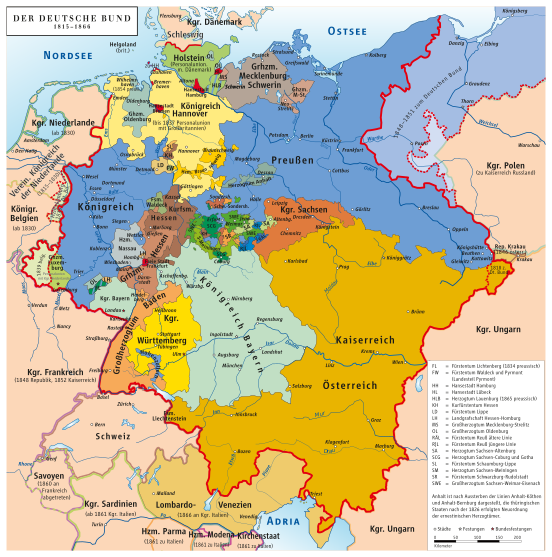
Economic historian Eckhard Höšner’s research on 19th century Germany suggests that a weak copyright system for books may have spurred economic growth by making technical manuals and other practical books much cheaper than in Britain, the first industrial nation.  For most the 19th century, the German-speaking countries lacked a unified copyright law, which meant that pirate printers were able to shop around for principalities with conveniently lax laws. [It should be noted that the US in this period was also notorious for pirated editions of British authors]. The German-speaking countries lacked such a copyright law because they were politically fragmented, even after 1871.  Höšner has argued that Germany’s rapid catch-up with England was due, in part, to the absence of copyright laws. It was sort of a substitute for technical colleges, although Germany had plenty of those too. See here, here, and here.

It will be interesting to see how Hoener’s research fares at the peer review stage. As a Canadian historian and a citizen of Canada, I think that his research on pre-unification Germany is a very interesting case study. I’m not convinced one way or the other by the arguments for and against IP. This is outside of my area of expertise, although I have looked at the impact of international trademark on the history of the soap industry in the course of my research. I’m inclined to be tentative in pronouncing on the relative merits of any nation’s IP regime. But I do believe that national legal diversity is a good thing since it creates natural experiments or laboratories so that we can evaluate the impact of different patent regimes. Since 1883, countries have been working harmonize their IP laws. Within certain limits, such harmonization might be a good thing. But it would be a tragedy if the whole world adopted a single IP regime. We would be putting all of our eggs in one philosophical basket.

Unfortunately, the United States seems to be intent on forcing encouraging other countries to bring their IP laws in line with their own. I don’t quite agree with those leftists who complain that the United States is acting as a de facto world state, but the American Congress has certainly appropriated the functions of a North American parliament. Congress is sort of like the European Union parliament, but with only one country having  a seat at the table. Anyway, the pressure on Canada’s government to harmonize in this area has been intense and has continued under successive Democratic and Republican administrations.

European Parliament. Note how the flags of multiple countries are visible in this photo.

Through a conjunction of historical circumstances, Canada did not become part of the United States, just as a few of the German-speaking regions avoided incorporation into Germany. Our special constitutional status within North America involves both costs and benefits, but one of the advantages is the right to write our own laws. Why shouldn’t we? The Hong Kong Special Administrative Region has different IP laws than the People’s Republic.

At present, Canadian law is much more lax than American law when it comes to the whole issue of digital property rights. That Canada has maintained its sovereignty and legal distinctiveness in this particular area is largely a function of the fact we have had weak minority governments since the 2004 election. No one political party has a majority of seats, there is chronic instability, and politicians have to be more sensitive than normal to the wishes of voters.  In June 2005, the centre-left Liberal government introduced Bill C-60, a law to amend the old, pre-internet Copyright Act, which had been written on a typewriter, and bring it in line with the infamous Digital Millenium law in the United States. The bill was never passed into law, as this government fell in November 2005 due to a corruption scandal.  In 2008, the centre-right Conservative government, an administration with even fewer nationalist scruples than the Liberals, introduced Bill C-61, which was very similar to the Liberals’ Bill C-60.

This modest building houses US diplomats in Ottawa

Needless to say, this statute would have been music to the ears of the denizens of the massive American Embassy building in Ottawa, which is conveniently located just steps away from the parliament buildings in Ottawa.  This bill was not passed, when the Conservative government dissolved parliament and called an election in September 2008 in a failed bid to get a majority of seats in the House of Commons.

In June of 2010,  the Conservative Industry Minister tabled Bill C-32, another kick at the proverbial can. Government spokesmen loudly protested that this statute was indeed a “Made in Canada” law although a government website also said that this law was required if Canada were to meet its “international obligations” and “bring Canada in line with international standards“.  Made in Canada?  Feel free to quote Shakespeare’s “The lady doth protest too much” here.

For comments about C-32, see here, here, and here.

As someone who believes in having as much diversity as possible when it comes to IP laws, the best case scenario from my point of view is for Canada’s federal government to cede effective control over IP law to the provinces. This could probably be done in a sub-constitutional way and could be justified in the courts as an extension of the provincial power to regulate property and civil rights. Yes there would be costs in the form of possible interprovincial trade barriers, but the benefits of turning this matter over to the provinces is that provincial legislatures are much more insulated from the power of the Washington imperium than the Canadian federal government.  You can’t rely on minority federal parliaments forever to protect our autonomy from all of the thugs and lobbyists in Washington.


Richard Toye, Churchill’s Empire

18 08 2010

The young Churchill charged through imperial atrocities, defending each in turn…  Of course, it’s easy to dismiss any criticism of these actions as anachronistic. Didn’t everybody in Britain think that way then? One of the most striking findings of Toye’s research is that they really didn’t: even at the time, Churchill was seen as standing at the most brutal and brutish end of the British imperialist spectrum.
This is from Johann Hari’s review of Richard Toye’s new book Churchill’s Empire. The main subject of the book is Churchill’s thinking about race.

It looks as if there is some interesting material for Canadian historians in this book.


John Moore on the Tamilboat

18 08 2010

John Moore, a Toronto-based journalist and commentator, had a great column in the National Post on the Tamil refugees. See here.

I’m not going to pronounce on whether the Tamils should be allowed into Canada because I know little about the state of ethnic relations in Sri Lanka. However, I am wondering to what extent the Sinhalese-dominated government of the island wanted this boat to leave. It takes a great deal of diesel to get to Canada. Who gave it to them? What were the motives of the government officer who gave issued clearance papers to the ship? [I’m assuming the boat actually cleared a legitimate port with harbour master appointed by Sri Lankan government].

Admitting the Tamils into Canada seems like the compassionate thing to do, but it might be aiding and abetting ethnic cleansing. After all, if governments can rid themselves of unpopular minorities by giving them enough diesel to make it to a liberal democracy, you will have a  powerful incentive for ethnic cleansing.  Sending your minorities is Ethnic Cleansing Lite– you can get rid of them in good conscience because you know they are going to end up Toronto high-rise apartments, not squalid refugees camps or mass graves.


The Shield

17 08 2010

Last night, TVOntario broadcast a great episode of The Shield, a documentary series about the history of Canadian Shield community.The episode was about Sudbury and included some good information on local business history. Matt Bray, a retired professor of history at Laurentian University, was interviewed about the history of nickel mining.

For more about the episode, see here.

Perhaps one day Vale Inco will open its archive to researchers so we can learn more about the history of this important industry.


Best Sentence of the Day

17 08 2010

The best sentence I read today was:

“Before 1815 the American East Indies trade made the United States and Britain more like one another– ironically, given how fundamental the Boston Tea Party had been in driving the two apart.”

James R. Fichter, So Great a Proffit: How the East Indies Transformed Anglo-American Capitalism (Harvard University Press: 2010) p. 278

Actually the book whole book the sentence if from is rather good. Fichter has written a brilliant book that, among other things, helps to explain the transition from mercantilism to the more liberal form of capital that was ascendant throughout the English-speaking world after 1815. The writing is brilliant and the analysis seems quite plausible, at least to me, a non-expert in the field. The research that went into this book is really impressive. The archives visited by the author include:

Archivo General de Indias, Seville

Bibliothèque nationale de France

Cape Town Archives Repository

St. Helen Archives (on the remote  island to which Napoleon was sent)

Plus the national archives of the United States, the United Kingdom, and, of course, Mauritius

I read this wonderful book in the course of updating my lecture notes on the Maritime fur trade of the northwest coast of North America. While Fichter’s book certainly won’t replace Gibson’s study of the fur trade in that region, it complements it quite well by allowing us to put the otter skin trade into a new perspective.

Fichter is Assistant Professor of History, Lingnan University, Hong Kong. His book has been discussed another blog.


Decolonization, the Cold War, and Obama’s Dad

17 08 2010

“The story of the movement that led President Obama’s father and thousands of other young Africans to study abroad in the 1950s and 1960s is much more complicated than is usually thought, according to Dan Branch, a historian of Kenya and alumnus of the National History Center’s International Seminar on Decolonization.

In a talk at the Library of Congress July 28, Branch argued that Kenyans stress that the students returned home to build a new nation, while historians of civil rights point to the program as one of the first times that African Americans were able directly to influence American foreign policy. But he said this misses a crucial element: students were sent not just to the United States and Western Europe, but to Communist states in Eastern Europe and China. Their experiences, both positive and negative, injected the politics of the Cold War into the politics of Kenyan decolonization.”

See more here.

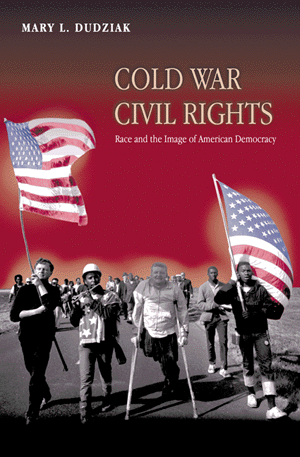
This talk is very interesting in light of the historiography on the connection between the Cold War and the Civil Rights movement. Some historians argue that the US government’s actions to enforce racial equality in the Deep South in the 1950s and 1960s were part of a strategy to ensure that the newly independent countries of the Third World did not go Communist.