Should Scotland Join the Canadian Federation?

10 04 2017

The author Ken McGoogan has recently proposed that Scotland leave the UK and become part of Canada.  His argument is that Scotland would enjoy considerable autonomy as a Canadian province and tariff-free access to the EU market. His proposal, which has attracted some attention in the press, is reminiscent of the early twentieth century Irish and Scottish nationalists who favoured imperial federation, a constitutional arrangement in which there would be a common parliament for the British Empire along with a federal system in which each country (Scotland, Canada, England, etc) would enjoy internal autonomy– Home Rule All Round.  I would say that there is a zero percent chance of this proposal being implemented  but it is interesting that some people in Scotland are thinking in such terms. The sentimental ties between Scotland and Canada remain strong. Moreover, the social memory of the historic ties between the two countries is being used by a variety of social actors, including Nicola Sturgeon, Scotland’s First Minister, who made an appearance yesterday at the 100th anniversary commemoration of the Battle of Vimy Ridge. (It is not entirely clear what agenda drove Ms. Sturgeon to travel to France for this event, which was also attend by the French president and other EU leaders).  Even though academic military historians tend to scoff at claims that it was important, the Battle of Vimy Ridge now looms large in the Canadian historical consciousness in which the same way that Galliopi is important to present-day Australian. For those who want to learn more about how the memory of Vimy Ridge is used by Canadian social actors, I would recommend this recent piece by the journalist Tony Keene as well as this article by Jean Martin, a historian.


Sturgeon at Vimy Ridge


Digital Fabrication and the Transformation of Global Production?: Uneven Landscapes of Innovation

7 04 2017

That’s the title of our paper for the Academy of International Business UK&I conference. My co-author Jennifer Johns will be presenting it.

Abstract

This paper examines digital technologies with a focus on a particular type of digital fabrication space, the FabLab. Much existing research on these technologies predicts transformative impacts on international business through the adoption of digital technologies.  We aim to begin filling the gap in empirical examination of this issue, using qualitative interview data collected between 2014 and 2017 in the Manchester, Barcelona and London FabLabs. These sites of adoption of, and innovation in, digital technologies are lenses through which we can observe the interaction of actors in the evolution of digital technology.  We find that a significant challenge for international business is the highly uneven landscape of innovation in digital technologies.  Far from being uniform, development in digital technologies and their impact on international business and production networks are highly geographically specific.


Since a major theme of the year’s AIB UK&I conference is deglobalization, I should stress that our paper is agnostic on the question of whether digital fabrication technologies such as 3-D printers will actually contribute to deglobalization  by decentralizing manufacturing back towards the household and community levels  Instead, our paper’s focus is on how European entrepreneurs who work with digital fabrication technologies engage in sensemaking to understand our current era in economic-historical time. I would point out that even if the most radical version of the ‘substitution scenario’ comes to pass and most manufacturing reverts back to the community or household level, it would not mean that globalization itself had been reversed. Such a scenario would instead represent a change in the nature of global production networks from a system in which manufactured goods are moved long distances to one in which the data in the form of the designs for such goods are transmitted long distances and are then applied to raw materials, some of which are sourced locally. Such a scenario would be congruent with a trend that has been underway since approximately 2008: as a recent report by the McKinsey Global Institute observed, globalization in the form of the circulation of physical goods has become proportionally less important, as global merchandize trade as percentage of world economic output has fallen, but the globalization of data flows has become ever more important.


Future Role of Business Archives

5 04 2017

ICA-SBA-Stockholm-huvudbild

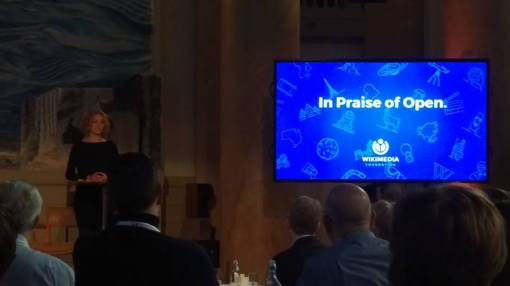
The annual conference for the International Council on Archives‘ (ICA) Section on Business Archives (SBA) is taking place right now,  5-6 April 2017, in Stockholm. A follow-up conference will be taking place 4–6 December in Mumbai. Both events are about the Future Role of Business Archives and should interest both business historians and uses of the past scholars (I’m both). In the photo below, you can see Kathrine Maher, executive director of the Wikimedia Foundation giving keynote today.  Photo courtesy of Anders Ravn Sørensen

mahler


Although I can’t be at the Stockholm conference, I am hoping to get to the one in Mumbai. The focus of the Stockholm conference in on the importance of using true stories for external brand-building communication. In Mumbai, the focus on the internal effects that historical stories can have on management decisions and organizational culture. Since my current research looks at how history influences managerial cognition and organizational culture, the Mumbai conference is a better fit for my research.

These two conferences will help us to answer the following questions: why do corporate archives exist?  How does the use of history give firms a competitive advantage?  How do corporate archives help firms to use history more effectively?   Why on earth would a for-profit company fund the creation of a corporate archive? Why are firms in some industries more likely to spend money on elaborate archives than firms in other industries?  Scholars  various disciplines have come up with competing explanations for why corporate archives exist.  There is a consensus that corporate archives exist because they help firms to achieve their objectives. However, there is disagreement about precisely how archives give firms a competitive advantage.

According to National Strategy for Business Archives of England and Wales (2009), which was written by people trained in the academic discipline of archive science, company archives exist to support “new product innovation, corporate culture and brand identity management information and evidence to protect against litigation, trademark infringement, or assault on reputation”. This description of the function of corporate archives hints at the fact that corporate archives can serve very different purposes.  According to Castellani and Rossato (2014), two Italian communications studies professors,  corporate archives “act as an innovative communication tool” that create opportunities “for dialogue between the company and its community”. This interpretation, likely reflects the Italian context of the authors and is difficult to reconcile with the examples of corporations that fund excellent, well-organized archives that are closed to all external users (Alcan’s archive in Montreal is a famous case in point).

My point is that right now the social-scientific literature doesn’t give us a clear generalisable answer about what exactly corporate archives are for and how they contribute to the competitive advantage of companies. Our paper seeks to answer these questions.  Our argument is that possessing an archive gives a firm a competitive advantage because it makes the historical narratives produced by the firm seem more authentic in the eyes of stakeholders. Most firms invest at least a few resources in the production of historical narratives. The advantage one gets by spending money on a proper archive is that people in post-Enlightenment cultures are much more likely to believe a firm’s historical narrative if it is based on archival documents. It is no coincidence that the world’s first corporate archive was developed by the East India Company in the wake of the Enlightenment, which had convinced educated British people that for a historical narrative to be true, it had to be based on primary sources. Needless to say, many companies have since emulated the EIC’s archive-based rhetorical history strategy!


Castellani, P., & Rossato, C. (2014). On the communication value of the company museum and archives. Journal of Communication Management18(3), 240-253.


Reflections on BHC 2017

2 04 2017

The Business History Conference is my favourite conference of the year. I always come away from this conference feeling energized and inspired. One of the great strengths of the BHC is its interdisciplinarity: economists, historians, management academics, and many other contribute to making the conference very rich. Many of the people who work in management schools who attend BHC will tell you that the research presented here is of greater relevance than the papers that are presented at many management conferences.  The conversations one has at BHC are fascinating: where else can you speak to range of people that include NASA employees, practicing corporate lawyers, and the odd Hollywood actor.

This year’s conference was, in many ways, a typical BHC conference. However, it was exceptional in the sense that there were frequent references to the life and work of the late Chris Kobrak. At last year’s BHC, Chris Kobrak held a reception to announce the launch of the Canadian Business History Association. This year, there was a reception to honour the memory of Professor Kobrak.


Connecting the Histories of International Business and “Otherization”: What Business History Can Offer International Business Scholars Who Want to Become Relevant Again

30 03 2017

Andrew Smith: This is the abstract of the paper I will be presenting today at a pre-conference workshop here at the Business History Conference. 

Judging by the content of the leading journals in their field, International Business (IB) scholars have paid little attention to how the imagined communities of race, faith, and ethnicity influence the strategies of multinational firms. In recent years, the terms “othering” and “otherization,” which were previously used postcolonialist academics, have become part of the lexicon of political commentators on both sides of the Atlantic. The Oxford English Dictionary identified “otherize”.  Otherization is the process by which a racial, religious, or ethnic group is deemed to be exotic, alien, and interior to the observer. In March 2016, National Public Radio in the United States noted that this word was being by analysts to describe a particular presidential campaign’s methods of representing those who are perceived to be outside the national community.  These development have profound implications f or multinational firms, particularly those with multicultural global workforces.  Indeed, the managers of the world’s leading corporations appear to be increasingly worried about the rise of populism and xenophobia. Multicultural global capitalism appears to be under attack. Otherization and xenophobia, terms whose use was once confined to left-wing academics and activists, is now being used in debates about the future of global capitalism.  Business people are aware that there has been a change in the mind-set of many voters, consumers, and policymakers.


Historians will note that the process of otherization is nothing new and the level of ‘otherization’ in the world is not a fixed constant but a variable that changes over time. To become relevant again, IB scholars should become more historical. By becoming more historical, I mean that IB scholars should both take advantage of historical empirical data for theory testing and development and should engage with such issues as otherization, two themes that are very important to scholars in history departments.  In my  paper, I call on historians of international business to do for the Otherization of racial, ethnic, and religious groups  what international business historians are starting to do for warfare: to combine serious archival research and IB theory so as to produce scholarly works that can inform managerial concerns in the present. My paper will sketch several  ways in which historians of international business can develop our understanding how the shifts in mindsets associated with Otherization have influenced how commercial activity across the imagined borders of races and civilizations have been conducted. It is my contention that by exploring how such “large-group” identities influenced the operation of international business in the past, we can help IB scholars to think about the impact of Otherization in the present, and possible future.


Deglobalization: What Business Historians Can Teach Managers

26 03 2017

17397546-abstract-word-cloud-for-deglobalization-with-related-tags-and-terms-stock-photo

Deglobalization is the current buzzword, as I pointed out in a  blog post I published soon after the WEF meeting in Davos.  Actually economists have been talking talking about deglobalization for a number of years, ever since international trade as a share of world economic output began to decline. Now, however, CEOs and other top executives are really worried about how to respond to the rising levels of protectionist sentiment and the apparent trend in actual government policies towards protectionism.

Stephen D. King, the chief economist of HSBC, discusses deglobalization in a new book on the future of the global economy. King notes that we are in a very different historical epoch than the sunlit uplands of the 1990s, when globalization appeared unstoppable and public intellectuals announced the end of history and great power conflict. King sees a pattern that others have observed, namely that we are going back to an era of protectionism, nationalism, and  ethno-religious tensions similar to that of the interwar period of the 1920s and 1930s.  As a senior executive at a corporation that embodies the multicultural, multiracial global financial capitalism that emerged at the end of the twentieth century, King has very good reasons to be worried about deglobalization.  A similar historical analogy was used by Ruchir Sharma, Morgan Stanley’s chief global strategist in December 2016, although Sharma observed that today’s deglobalization  is somewhat different from the deglobalization of the interwar period .


It seems to me that mainstream strategy literature doesn’t appear to offer much guidance to managers seeking to formulate strategies to cope with the new phenomenon. Perhaps that’s because strategy professors haven’t yet had a chance to think about managerial responses to the newly discovered phenomenon.  Similarly, political science doesn’t  seem to offer a lot of practical advice to decision-makers in the private sector.  Michael Witt is a first-class political science/IR professor who teaches at INSEAD business school. If any political scientist could help executives to deal with deglobalization, it would be him.

Late last year,  Dr Witt wrote two pieces in which he pondered what deglobalization means for multinational firms. His first piece did an admirable job of summarizing the political science literature on globalization and deglobalization and tells people how two of the three main schools of thought in IR (Realism and Liberalism) view these phenomena. Somewhat curiously, Witt doesn’t say much as about Constructivism, another interpretative tradition in IR, which is unfortunate since constructivism has a great deal  to offer here. Anyway,  his second piece, which was published a week after the first one, sought to offer concrete advice to business executives interested in this topic. Sadly, the main pieces of managerial advice he provided weren’t that useful to managers.

Let me justify that assessment. Witt says that Liberal IR theory argues that  deglobalization is driven by rising inequality, which caused an upsurge of populist, anti-globalization sentiment from the parts of the electorate that have suffered from globalization.  Witt says that if firms wanted to continue doing business across borders, they need to shore up the political foundations of globalization by accepting a more progressive form of taxation. (Similar sentiments were heard from CEOs the January 2017 gathering in Davos).  Witt also argues recommends that  “longer-term investment plans should probably involve scenario planning”  that takes the re-imposition of tariffs into account.

The second piece of advice is sound and common-sensical, but the suggestion that senior executives do more to combat inequality  isn’t really practical, since a single CEO would be unable to combat rising inequality in their home country, unless that country happened to be very small and their firm was a major employer. There is a sort of free rider problem—if a CEO increases the wages his firm pays and no other firm follows suit, the CEO will have added to his costs without having done much to change the overall level of inequality in the country. A CEO operating in a corporate system dominated by Shareholder Value Ideology has very limited freedom to act.  That’s the problem with the argument that the left-wing venture capital Nick Hanauer made, when he said that CEOs who are worried about Trump’s protectionism should simply have paid their workers more.

It seems to me that Constructivist IR and, especially, my own home discipline of Business History could offer more useful advice to the makers of MNE strategy at this junction. (Business History informed by Constructivist IR could be a very powerful tool indeed).

The Constructivist approach to IR and International Political Economy (IPE) stresses that nations make policy in a cultural context that shapes how contemporaries view their self-interest. In other words, cultural differences such as gender ideologies, racial, religious, and ethno-national identities need to be taken into account. Deglobalization, both historically and in the present, appears to be associated with the rise in ethno-nationalist sentiment and growing hostility to the perceived other. While no single firm can reverse a pronounced trend in the culture towards  greater intolerance towards the Other, a group of firms, working together, can help to limit the spread of ethno-nationalist ideologies. For instance, they could do so by agreeing not to advertise on websites that promote the alt-right mentality that is congruent with tariff protectionism (see here).

Business history provides even more concrete advice. As business and economic historians know, deglobalization has happened before, most famously with the outbreak of the First World War. We can look to see how firms at the time handled deglobalization. Business historians have shown that a classic response to the imposition of tariff barriers is for firms to create local manufacturing subsidiaries within foreign nations.

There are other lessons about how to deal with deglobalization that managers can take from the historical record.    In a paper I published in an international-business journal, I discussed how the Hongkong and Shanghai Banking Corporation dealt with the First World War, a crisis that had the potential to destroy the corporation. HSBC, which was founded in 1865 and which had a multinational shareholder base and board of directors on the eve of the First World War, embodied that the open and cosmopolitan capitalism of the late nineteenth century, an era that was marked by falling trade barriers and increasing interconnectedness. HSBC was able to survive the First World War by paying close attention to the state of public opinion in Britain, which became increasingly xenophobic, and by severing ties to its German shareholders, directors and customers and by purging its executive workforce of a prominent individual of German-Jewish ancestry. HSBC was a much less profitable firm at the end of the conflict, but unlike many of the international banks in existence in August 1914, it survived the war. My paper aimed to use the historical experience of HSBC in war to identify lessons for the managers of present-day firms confronted with war and other drivers of deglobalization. One of these  lessons for present day managers is that conserving political capital in periods of heightened tensions between nations or other imagined communities may require the ruthless termination of relationships with people who are associated with the Other, at least insofar as the law of the land permits. (Note that I’m not saying that such a strategy would be morally right, just that it has worked in the past for firms). Another lesson that wartime managers could take from my paper on HSBC in WWI is that preserving legitimacy in the home country requires the head office to exert more control over overseas managers, less they embarrass the MNE in the home country, than would be the case in a time of generally good international relations.

There are important lessons for managers in the edited collection on the impact of the First World War on firm strategy was released by Routledge.  This book brought together the research of a business historians who use corporate archives. It is a common place among economic historians and historians of globalization to say that First World War end a long period of globalization and initiated a long period of deglobalization that that continued until after 1945. The edited collection was intended to help explore how firms confronted with a radical change in their operating environment responded. The papers in the collected documented a range of creative managerial responses to the First World War and its aftermath that included the creation of trans-national interfirm research alliances (see the paper by McGlade),  the adoption of new legal forms for companies (see the paper by Hannah), and the adoption of new management techniques in France and the UK (the chapter by Boyns). Studying how firms responded to sudden and dramatic change in the geopolitical environment in 1914 has the potential to offer lessons to the managers of today’s multinational firms.


Commonwealth Trade and the Brexiteer Imagination

25 03 2017

empiregoods.jpg

In previous blog posts, I have discussed how the Commonwealth looms large in the imagination of many advocates of Brexit.  The coalition that supports Brexit is, of course a diverse one that included libertarian millionaires to hard-core leftists who see the EU as a capitalist plot. However, one important strand of the pro-Brexit thought holds that when Britain joined the European Economic Community in 1973, it was severing its historic ties to the economies of the Commonwealth. People in this camp seem to think once Britain leaves the EU, it will be easy for the country to capitalise on the goodwill that exists towards Britain in the Commonwealth by negotiation free trade agreements with these nations, some of which have large and fast-growing economies.  As I and other commentators noted before the referendum, whenever people on the right-wing of the Conservative Party mention Brexit, the word “Commonwealth” is never far behind (see here).

For the time being, I will leave aside the issue of whether there is actually much goodwill towards Britain in the countries of the New Commonwealth, as opposed to the Old Dominions, where most of the population is of British stock. I’ll also leave aside the issue of whether it is possible for Britain to have strong ties with both the Commonwealth and the EU: the fact that Winston Churchill fought to preserve the British Empire and advocated the creation of a United States of Europe suggests that ties to the two blocs are not mutually exclusive. I’ll also leave aside the question of whether it is worth sacrificing the access the UK has to nearby access in the hopes of negotiation potential trade deals with distant markets. Instead, I will direct your attention to an excellent recent piece on Vox.Eu on the 1930s, when Britain and the Commonwealth countries negotiated a series of deals designed to redirect trade so that it remained within the boundaries of the Empire-Commonwealth. In the piece, which summarizes a full-length paper, Alan de Bromhead, Alan Fernihough, Markus Lampe, and Kevin O’Rourke shows that the protectionist trade policies introduced in the wake of the 1931 Ottawa Economic conference did indeed help to redirect British trade towards Commonwealth countries and away from foreign countries , including its neighbours in continental Europe. The authors conclude that tariff policy matters a great deal more than earlier economic-historical research had suggested. Earlier studies had suggested that the policies implemented after 1931 were not responsible for the shift in British trade towards Commonwealth countries and that other variables explain the shifts.  The new research shows that trade policies mattered more then and likely is more important as a determinant of international trade patterns in the present than we used to think.

So what is the significance of this research to the ongoing debate about the likely impact of a hard Brexit on intra-EU trade?  If trade policy matters more than previous thought, it suggests that a hard Brexit would have more implications for firms than some appear to believe.


One school of thought I have encountered recent goes like this: “Sure a hard Brexit in which we leave the Single Market isn’t ideal, but it’s not going to affect trade too much. Trade policy does affect trade that much- our trade pattern is pretty much a function of underlying fundamentals. For the last 200 years, the UK had done about half of its peacetime trade with Europe and about half with the outside world and that’s just dictated by geography.  Trade policy and membership in the Single Market can move the needle a little bit, but overall isn’t doesn’t matter. Therefore, relatively little trade with the created or destroyed by the distortions that would result from a change in trade policy.”

The new research shows why this seemingly plausibly line of reasoning, which I’ve heard from many smart people, doesn’t really work. A great deal of money at stake here and we need therefore need to redouble our efforts to ensure that the UK remains in the Single Market, or at least the Customs Union.


Funded PhD Position: The Making of a Lopsided Union: Economic Integration in the European Economic Community, 1957-1992

24 03 2017

Two 3-year fully funded PhD Scholarships

to be held at the University of Glasgow from September 2017


Applications are invited for two 3-year PhD scholarships (with a possibility of a one-year extension) in Economic and Social History at the University of Glasgow.


The successful candidates will be part of the ERC-funded project The Making of a Lopsided Union: Economic Integration in the European Economic Community, 1957-1992 (EURECON) led by Dr Emmanuel Mourlon-Druol. They are expected to begin on 1 September 2017, or as soon as possible thereafter.


Description of the EURECON project


The goal of EURECON is to explore European policymakers’ views about how to make the organisation of the European Economic Community (EEC) fit for the creation of a single currency, from 1957 to 1992. It is often said that the euro has faults of conception. But how did this happen? How was the euro made in such a way that it nearly completely overlooked some critical aspects of monetary unions? The assumption is that in the run-up to the 1992 Maastricht Treaty, European policymakers just did not think properly about how to make the Euro work. Was this really the case? Did European policymakers really overlook the economic foundations of European monetary union?


The project aims to examine European policymakers’ debates and proposals, understand the reasons for their success or failure, identify the dynamics of political and economic trade-offs and compromises, shifting priorities, and alternative approaches that were abandoned at the time but recycled later. The project focuses on five work packages: macroeconomic policy coordination, fiscal transfers, capital market integration, banking harmonisation/supervision and the deepening of the common/single market. The project will examine the origins of the issues that are currently bedevilling the European Union (EU) by investigating the period between the creation of the EEC in 1957 and the decision to create a European single currency in 1992.


PhD positions


The PhD projects will focus on the role and influence of non-state, non-EEC actors and factors in the above discussions. Interested applicants should focus specifically on the role of one of the following actors/factor:


  • Commercial banks: Commercial banks were central actors in the development of European economic integration, in particular with regard to capital market integration, regulation/supervision, and the development of the common/single market. Did they support the creation of a common market in banking? Did they adopt specific lobbying strategies within their respective member states and in Brussels? How did they view the possible future creation of a monetary union in Europe?


  • Big business (other than banks): The implementation of the common/single market, the issue of EEC fiscal transfers, and macroeconomic policy coordination had an impact on the conduct of business in Europe. Did big business consider that these developments would improve their environment, in creating more business opportunities, easier financing and trade? The Roundtable of Industrialists famously lobbied for the Single Market Project; did big business aim to actively support or oppose other developments at different time periods?


  • Trade unions: Macroeconomic policy coordination, EEC fiscal transfers, and the development of the common/single market had an important impact upon labour relations. How did trade unions try to influence European economic policymaking? In particular, how did they promote European social policies and how did they cope with the challenges induced by European economic integration in a globalising world? The rise of unemployment in Europe from the 1970s as well as the reflections mentioned above about the introduction of an EEC-wide unemployment benefit provided an important points of interest for trade unions.


  • The spread and influence of economic ideas on the evolution of European economic cooperation and integration: Many economic ideas have influenced and competed over the development of European economic integration, including German ordo-liberalism, French planning, and neo-liberalism. Recent studies have shed light on the rise of neo-liberal politics in the evolution of thinking about deregulation and the free movement of capital. How did economic thinking evolve in the EEC and how did these influences permeate policymaking at the European level? This topic would more specifically focus on the intellectual history dimension of the economic integration of Europe by looking at one of these schools of thought. How did these ideas spread among European policymakers? How did these ideas change over time? What was their actual influence?


The successful candidate is expected to:

  • Write a PhD thesis under the supervision of Dr Emmanuel Mourlon-Druol
  • Be an active part of the EURECON project and work in close cooperation with other team members
  • Present papers at conferences
  • Publish in international peer-reviewed journals (individual and co-authored)
  • Participate in yearly workshops organised within the scope of EURECON.


The successful candidate will register for a PhD in Economic and Social History, School of Social and Political Sciences, College of Social Sciences, University of Glasgow.


The scholarship covers the successful student’s full-time home/EU tuition fees (£4,121 p.a. for 2016/17), pays a stipend (£14,296 p.a. for 2016/17), and includes a research budget allowance to cover expenses related to archival research and conference attendance (at least £1500 p.a.). There is a possibility for an extension to a fourth year, under the same financial conditions.


PhD students at the University of Glasgow benefit from the College of Social Sciences’ Graduate School Research Training Programme, as well as an annual Thesis Review Committee and an annual Doctoral Retreat. PhD students may also have the opportunity to become Graduate Teaching Assistants and gain teaching experience.


Candidates must be fluent in English. A good command of another European language would be an advantage.


How to apply


Please include the following supporting documentation with your application:

  • Your CV
  • Your research proposal focusing on one of the actors/factors outlined above (max. 2500 words, including footnotes, references and bibliography)
  • Your degree transcripts
  • Your English language certificate
  • Two letters of reference


Interested candidates should apply on the University of Glasgow’s Online Application System http://www.gla.ac.uk/research/opportunities/howtoapplyforaresearchdegree/#/. Applicants should put ‘EURECON’ in the ‘Research Title’ field in ‘Step 6 – Course Details’ of the application form, and select ‘PhD in Economic and Social History (Research)’.


Interested applicants are strongly advised to discuss their research proposal with Dr Emmanuel Mourlon-Druol (emmanuel.mourlon-druol@glasgow.ac.uk) before they apply.


Short-listed candidates may be invited for an interview in Glasgow.
Application deadline is 7 May 2017.


CFP: Methodological Debates in Management History

21 03 2017

Use of Methodology in Management History
Special issue call for papers from Journal of Management History

Guest Editors:
Wim van Lent, Montpellier Business School
Gabrielle Durepos, Mount Saint Vincent University

Submission deadline: 1 February 2018

Background

Ever since the “historical turn” in organisation studies (Clark and Rowlinson 2004), the importance of history to understanding organisations and institutions has been increasingly recognized (e.g. Sydow, Schreyogg and Koch 2009, Ocasio, Mauskapf and Steele 2015, Suddaby 2016, Durepos and Mills 2012). Since history provides an alternative to the dominant science paradigms in organisation studies (Zald 1993), studies using a historical approach are contributing to and even shaping a growing number of scholarly debates (Decker, Kipping and Wadhwani 2015). The growing appreciation of historical approaches to building and testing organisation theory has spawned a body of work on how to engage in historical analysis with the specific aim of bridging the gap between the historical and organisational scientific communities (e.g. Rowlinson, Hassard and Decker 2014, De Jong, Higgins and Van Driel 2015, Whittle and Wilson 2015, Suddaby 2016, Durepos 2015). The fundamental insight that emerges from it is that history is no less fragmented than organisational theory (Rowlinson et al. 2014: 269). According to Bowden (2016), management scholars are essentially divided along a continuum with on the one extreme De Jong et al.’s (2015) position that history should be empirical and theory-oriented, and on the other extreme Whittle and Wilson’s (2015) “ethnomethodological” perspective, which is rooted in postmodernism and takes a more critical perspective on history-writing. Scholars find themselves either on the continuum with genealogy (Decker et al. 2015) and rhetorical history (Suddaby, Foster and Quinn Trank 2010) and even beyond with ANTi-History (Durepos and Mills 2012, 2017).

Although methodological diversity could impede moving the field forward, the variety that they encompass comes with potential, for example in terms of diversity of research questions and richness of historical knowledge (Decker et al. 2015). Fortunately, the conditions for the further development of management history (also in relation to other fields) seem to be in place: despite history’s growing permeation of organisation studies, there is still a lot of evidence enclosed in corporate archives with which management historians can formulate novel insights into the working of organisations and institutions (Rowlinson et al. 2014, Mills and Helms Mills 2017). However, in order to fully realize this potential, management history will have to go beyond “merely” continuing the proliferation of research using alternative types of historical data and analysis. Most importantly, research should be multidisciplinary (Bucheli and Wadhwani 2014), connecting an understanding of organisational theory and methods with historical contexts and source material (Rowlinson et al. 2014), or involving multiple sources and methods for data analysis (Bowden 2016). In addition, since histories are not uncontested records, management history is greatly helped by methodological reflexivity (Rowlinson et al. 2014). That is, when researchers are aware of their role in selecting certain traces over others, what their sources cover, and how and why they were put together, as well as the shaping influence of the historical context within which they construct theoretical arguments, they may improve the plausibility of their analyses and better identify scope conditions (Bowden 2016).

Aims and Scope

This special issue has two broad purposes: 1) to move forward the methodological debates in management history and 2) to demonstrate the use of / refine historical methods in organisational research through empirical analysis. We therefore welcome both theoretical and empirical papers. Below we suggest a non-exhaustive list of specific topics that contribute to the above two goals. Papers focusing on topics that are not included but sufficiently related to the goals highlighted above would also be welcome as submissions to the special issue.

• Epistemology and management history
• Typification of research methodologies
• Novel research methods in management history
• Ways in which different methods can be combined for richer empirical insights
• Empirical demonstrations of the use of one or several methodologies
• Methodological refinement through empirical analysis
• Benefits / drawbacks of research methods for a management history audience

Submission Process

Submitted papers must conform to the submission guidelines of the Journal of Management History. Manuscripts are due by 1 February 2018 and must be submitted using the JMH submission system at https://mc.manuscriptcentral.com/jmh. Authors should indicate that they would like their document to be considered for the special issue “Uses of Methodology in Management History”. Authors of papers invited to be revised and resubmitted will be expected to work within a tight timeframe for revisions.

Further information
Questions pertaining to this special issue may be directed to:
• Wim van Lent (w.vanlent@montpellier-bs.com)
• Gabrielle Durepos (gabrielle.durepos@msvu.ca)
• Bradley Bowden (b.bowden@griffith.edu.au)

For questions about submitting to the special issue contact the JMH Publisher, Patti Davis (pdavis@emeraldinsight.com).

References

Bowden, B (2016) Editorial and note on the writing of management history. Journal of Management History, Vol. 22, No. 2, pp. 118-129.
Bucheli M and Wadhwani D (2014) Organizations in time: history, theory, methods. Oxford: Oxford University Press.
Clark P and Rowlinson M (2004) The treatment of history in organisation studies: toward an “historic turn”? Business History, Vol. 46, No. 3, pp. 331-352.
De Jong A, Higgins DM and Van Driel H (2015) Towards a new business history? Business History, Vol. 57, No. 1, pp. 5-29.
Decker S, Kipping M and Wadhwani D (2015) New business histories! Plurality in business history research methods. Business History, Vol. 57, No.1, pp. 30-40.
Durepos G (2015) ANTi-history: Toward amodern histories, in P Genoe McLaren, AJ Mills and T Weatherbee (Eds.), The Routledge companion to management and organisational history (pp. 153-180). New York: Routledge.
Durepos G and Mills A (2012) ANTi-history: Theorizing the past, history, and
historiography in management and organizational studies. Charlotte, NC:
Information Age Publishing.
Durepos G and Mills A (In press, 2017) ANTi-history: An alternative approach to historiography, in C Cassell, A Cunliffe and G Grandy (Eds.), The SAGE handbook of qualitative business and management research methods. London: Sage.
Mills A and Helms Mills J (In press, 2017) Archival research, in C Cassell, A Cunliffe and G Grandy (Eds.), The SAGE handbook of qualitative business and management research methods. London: SAGE.
Ocasio W, Mauskapf M and Steele CWJ (2016) History, society, and institutions: the role of collective memory in the emergence and evolution of societal logics, Academy of Management Review, Vol. 41, No. 4, pp. 676-699.
Rowlinson M, Hassard J and Decker S (2014) Research strategies for organisational history: a dialogue between historical theory and organization theory, Academy of Management Review, Vol. 39, No. 3, pp. 250-274.
Suddaby R (2016) Toward a historical consciousness: following the historic turn in management thought, M@n@gement, Vol. 19, No. 1, pp. 46-60.
Suddaby R, Foster W and Quinn Trank C (2010) Rhetorical history as a source of competitive advantage, Advances in Strategic Management, Vol. 27, pp. 147-173.
Sydow J, Schreyögg G and Koch J (2009) Organisational path dependence: opening the black box, Academy of Management Review, Vol. 34, No. 4, pp. 689-709.
Whittle A and Wilson J (2015) Ethnomethodology and the production of history: studying ‘history-in-action’, Business History, Vol. 57, No. 1, pp. 41-63.
Zald M (1993) Organisation studies as a scientific and humanistic enterprise: towards a reconceptualization of the foundations of the field, Organisation Science, Vol. 4, No. 4, pp. 513-528.




An Evolutionary Economics Perspective on the Liverpool Timber Cluster, 1810-1913

21 03 2017
canada dock
Next week, I will be presenting at the Business History Conference in Denver, Colorado. The research I’ll be presenting was funded by a Social Science and Humanities Research Council of Canada Insight Development Grant. The title of the project is Empire, Trees, and Climate in the North Atlantic: Towards Critical Dendro-Provenancing.
The co-authors of my paper are: Kirsten Greer (Canada Research Chair in Global Environmental Histories and Geographies, Nipissing University), Kirby Calvert (Department of Geography, University of Guelph).

Abstract

Abstract: This paper uses theoretical insights derived from Evolutionary Economic Geography (EEG) to relate the experience of Liverpool’s timber cluster to ongoing debates about the merits of various types of mercantilist tariff policies. In 1810, the British government introduced a tariff policy designed to create alternative to Britain’s traditional supplies of wood in the Baltic region. The policy consisted of discriminatory duties to incentivize timber importing firms to switch from their traditional suppliers in the Baltic to more Canadian sources of wood. As we show below, this policy, combined with the spatial and material nature of the timber trade, shaped the kinds of knowledge acquired by Liverpool firms during and after the ‘stimulus period’. This knowledge included greater geographical awareness, knowledge of how to manage vertically-integrated international timber enterprise, knowledge of non-European timber, and knowledge of how to cooperate together politically. After the stimulus policy was dismantled starting in 1842, these new sources of knowledge were leveraged by Liverpool timber merchants to preserve their competitive advantage.


On a practical level, this historical research speaks to contemporary concerns about how governments can use tariff policy and other interventions in the economy to encourage the development of competitive capabilities by clusters. Our paper suggests that tariffs and other interventions are more likely to promote competitive advantage by a cluster if there is a so-called “anchor” present. This work therefore speaks to EEG scholars who are increasingly interested in the role of “anchors” in the development of clusters. They theorize that the development of competitive capabilities within a cluster is likely to take place if the local institutions include an “anchor” that serve to share knowledge within the locality. In modern economies, such anchors range from universities to independent record stores (Hauge and Hracs, 2010; Hracs and Jansson, 2016). In the Liverpool timber cluster, the key anchor was the firm of Edward Chaloner, which generously shared its knowledge of tropical woods with other firms in the clusters, thereby helping to make Liverpool into a great centre for trade in mahogany and other New World tropical timbers.


The research presented in this paper was financed by the Social Science and Humanities Research Council of Canada under the following Insight Development programme project: Empire, Timber, Climate: Empire, Trees, and Climate in the North Atlantic: Towards Critical Dendro-Provenancing. The international trade dataset on which this paper draws will soon be downloaded as an Excel file from the Empire Timber project website.


SSHRC-CRSH_FIP