Origins of the Term “Red Tory”

19 05 2017

A great deal has been written about Theresa May’s political philosophy, which combines a mixture of left-wing and right-wing ideas and which explicit repudiates the Thatcherite belief in individualism and the free market, which is now to be called “selfish individualism”. Searching for a label to describe this worldview, the media have found the term “Red Tory” (see here, here, and here). In a recent piece, the BBC’s Ben Wright credits  Phillip Blond with inventing the term in a 2008 article. The article became a book in 2010.  Blond,  a former lecturer in politics and theology, is the director of the thinktank ResPublica, which promotes a sort of collectivist conservative ideology.  The reality, as any long-term observer of Canadian politics will tell you, is that the term Red Tory is much older (see here, here, and here). Blond merely imported the term, which is of course a respectable intellectual innovation but not an act of pure creativity.

Readers: if any of you know when the term “Red Tory” first appeared in print, please contribute that information in the comments section.


Tworek on Cambridge Analytica

18 05 2017

Heidi Tworek of UBC has posted an excellent piece that puts the recent wave of hysteria about the role of Cambridge Analytica in swaying recent elections into historical perspective. She notes that fears of mass manipulation by new media are as old as mass media themselves. The advent of every new media technology provoked concerns about the contagious emotions and irrationality of the unwashed masses. Heidi writes:

Did “sinister” emotional manipulation by the data analytics company, Cambridge Analytica, decide the U.S. election? History suggests otherwise.

For over a century, there has been a recurrent theme of exaggerating and mythologizing the power of new communications technology to influence mass psychology. Take a deep breath and ensure that we don’t need to wait decades to debunk the new old fear of the manipulated masses.

Heidi has written a great piece, one that covers everything from the legendary War of the World’s broadcast to the rise of Big Data.


EDHEC Family Business Conference

12 05 2017

EDHEC

I just finished a fantastic two-day conference at EDHEC business school. I would like to thank the EDHEC Family Business Centre for organizing such a stimulating event  that included purely academic sessions, meetings with practitioners, and a behind-the-scenes tour of Les Galleries Lafayette.

I would particularly like to thank Prof. Fabian Bernhard for pointing me in the direction of an important paper that had previously escaped by attention. Kammerlander, N., Dessì, C., Bird, M., Floris, M., & Murru, A. (2015). The impact of shared stories on family firm innovation: A multicase study. Family Business Review, 28(4), 332-354.


How to Lose the Global War for Academic Talent: the Mismanagement of the Canada Research Chair Project

12 05 2017

41xeiwslcul-_sx321_bo1204203200_

In 2000, the Canadian government began investing resources in a project to attract top international researchers to Canadian universities. The Canadian Research Chair program essentially gives money to universities to allow them to induce promising and accomplished researchers to relocate to Canada. The creation of this program was motivated by a belief that Canadian universities were  losing talent to wealthier universities in other countries, chiefly the United States. The program may also have been inspired by the seminal 1997 book The War for Talent, although I don’t know whether McKinsey consultants actually played a role in its design (readers with insider knowledge are welcome to contribute in the comments section below). In any event, the creators of this program, who were in the centre-left Liberal government of the day, were aware that universities play a very important role in nurturing innovation and anchoring clusters. (Everyone knows that Stanford University played a crucial role in the rise of Silicon Valley). During the 1990s, there were complaints that Canadian universities were losing their top researchers to other countries and  that this loss of talent was ultimately going to undermine Canada’s capacity to raise the global research profile of its universities, engage in R&D,  and create entrepreneurial ecosystems. The Canada Research Chair project was thus a logical and targeted response to this perceived problem.  The CRC program has since been emulated by other countries, most notably by China’s famous Thousand Talents program, which provides big bucks to foreign researchers willing to move to Chinese universities.

More recently, a number of exogenous forces began to help Canada to compete more successfully in the global war for talent. In the wake of the UK’s vote to leave the EU, many foreign academics working in British universities have expressed the desire to leave the country. The people who are speaking of leaving include both researchers from continental Europe as well as British academics who fear that Brexit and the xenophobic policies associated with it, such as the plans to dramatically slash the number of international students the UK admits each year, will endanger the finances of their employers.  The need to capitalize on the narrow window of opportunity associated with Brexit by poaching top researchers from the UK has been discussed by the Presidents of the Universities of Toronto and Waterloo, two important hubs for innovation (see here). Then there is the Trump effect—US academics seeking to leave the country due to the election of a President who is xenophobic and, more importantly, is likely to cut budgets for science and technology. Canada’s current Prime Minister, Justin Trudeau, is known throughout the world (unlike his immediate predecessors who had close to zero name recognition outside of Canada) and has helped to make Canada’s  place brand even better. (Shortly before the final round of the French presidential election, I heard some French people joke that if Le Pen wins, they would move to Quebec and live in Justin Trudeau’s house).  I’m currently at a conference at EDHEC Business School in France and can attest that Canada is today regarded as a very attractive employment destination by many European management academics. The Atlantic, a US magazine, just published an article on whether the Toronto-Waterloo corridor can ever become Silicon Valley North. As the article notes, there is tremendous interest in the potential of this innovation hub.

In an uncharacteristically swift move,  the Canadian government announced in early April that it was going to create 150 new endowed research chairs to bring the world’s best researchers to Canada.  The government selected the number 150 to refer to the 150th anniversary of the creation of Canadian state in 1867. The real reason for this sudden investment, I suspect is all of the factors discussed in the previous paragraph.

Let me quote from the press release:

The Honourable Kirsty Duncan, Minister of Science, announced today at the University of Waterloo that the Government of Canada will invest $117.6 million over eight years for the new Canada 150 Research Chairs program. The program provides one-time funding in celebration of Canada’s 150th anniversary. It is designed to attract approximately 25 internationally esteemed researchers and Canadian expatriates who wish to relocate to Canada so they can further knowledge in the sciences, technology, health, engineering and the social sciences and humanities.

The Canada 150 Research Chairs program will be open to top-tier international scholars and researchers from across all disciplines, including Canadian expatriates.

The Government anticipates that the drive to recruit new chairs will take months, not years

The press release suggests that the Canadian government is going to act swiftly and boldly to take advantage of the situation. Indeed, reading the press release would cause one to think that it had been prepared by the government of Singapore, a nation characterised by a thoroughly modern and professional approach to policy implementation.

Now just a few weeks later, the Canadian government announced that the entire Canada Research Chair program may be scrapped unless universities agree to fulfil some sort of equity mandate by filling more of the positions thereby created with women and members of certain domestically-defined ethnic minority populations.  By calling this entire program into question, the Canadian government reduced the incentive to academics to invest time in applying for jobs under this scheme. This lack of policy coherence is astonishing to me. The ability of the Canadian government to disappoint through the shoddy implementation of policies never ceases to disappoint me.

Now if the Canadian government was truly serious about recruiting the best and the brightest to its universities, it would change the immigration laws so that Canadian academic job ads no longer contain the alienating and vaguely xenophobic words:

All qualified candidates are encouraged to apply, however, Canadian Citizens and Permanent Residents will be given priority. 

The policy represented by these words is ignored by most of the U15 universities anyway and all it does is to suggest that potential applicants that Canada is a place where factors other than professional competence are considered when hiring for academic jobs.


“Accounts with Interest:” An Interdisciplinary Research Project at Barclays Group Archives

11 05 2017

bank-ext1-smallest-cropped

My co-author Margaret Procter will be presenting our paper at a conference at the Federal Reserve of Saint Louis (see picture above).  The theme of the conference is Innovative Solutions for Banks and Financial Archives. The title of our paper is “Accounts with Interest:” An Interdisciplinary Research Project at Barclays Group Archives.  The paper falls into the broad category of “the uses of the past” and considers how banks can make use of the historical information in their archives so as to better achieve their objectives. The project is designed to speak to the interest of scholars in strategy and archive science as well as practitioners.  Our co-authors are Maria Sienkiewicz of Barclays and Ian Jones, my excellent PhD student.


The conference in St Louis looks very interesting, as the other speakers include the renowned historian Harold James, leading economic historians such as Michael Bordo, Larry Neal, and Eugene N. White as well professional archivists from such organizations as the World Bank, the Bank of International Settlements.

The full programme is here.

Unfortunately, I can’t be at this event, as I’m at the 2017 Family Business Conference, which is running at EDHEC business school in Lille today and then in Paris tomorrow.


Ben Oliphant on Originalism and History

6 05 2017
londonconf

Making the Canadian Constitution:  the Fathers of Confederation

Benjamin Oliphant  (@BenOliphantis a Vancouver-based lawyer and writer (see Google Scholar profile here), whose work focuses on constitutional, administrative, labour and employment law. He is also an adjunct professor at the UBC Allard School of Law. He has published a very interesting piece on Originalism, Beer, and Interprovincial Trade Barriers in Policy Options, a Canadian outlet.  His piece, which discusses the R. v. Comeau court case (see my blog posts about being the expert witness in this case here), talks about the competing schools of thought about how to interpret the text of written constitutions– “originalism” versus the “living tree approach”. This seemingly arcane issue was very relevant to this case, because while the text of the 1867 Canadian constitution clearly mandates that there should be free trade within the Canadian federation, Canadian courts have often interpreted this text in a fashion that authorizes the existence of internal trade barriers).  To lawyers of a certain school of thought, this mode of interpreting the constitution seems totally logical. To someone who has a PhD in history from a history department,  and was thus socialised to think about the past in a particular fashion, this conclusion seems totally bizarre– at odds which what the primary sources say.

There are many disciplines that involve studying the past- law, of course, but also political science, economic history, international relations, sociology, as well as what I call “history-department history.” Each of these disciplines has its own internal debates about methodology and but also a set of shared assumptions about how to think about the events in the past. I suppose as I’ve matured as a scholar, I’ve become more accepting of the use of these different disciplinary lenses for viewing the past. I’ve become far more methodologically tolerant, especially since I started teaching management. (In between teaching in a history department and working in a business school I had a brief spell teaching International Relations students).

benjamin-oliphant1

Benjamin Oliphant


I’ve been asked a few times whether I’m an originalist. I was first asked that more than a decade ago.  I’ve always replied “No, I’m just a historian who knows a great deal about the making of the Canadian constitution and the business history of that era.” In fact, the first time I was asked this question by a lawyer, I wasn’t entirely certain what the term originalism meant.

9780773534056

My curiosity stimulated, I’ve since done some reading on what “originalism” means in US, Canadian, and Australian constitutional jurisprudence (see here, here, here, and here). The philosophy of originalism differs in subtle and important ways between these three countries and has evolved over time, as this recent piece by a US history-department historian named Jonathan Gienapp shows. Gienapp, who is a young man, appears to be a methodologically intolerant history-department historian, as he insists that originalist legal scholars have waged a decades-long war against the “methods of history” — by which he appears to me the ways of interpreting history that are derived from Leopold von Ranke and which have been taught in US graduate programmes since the 19th century.   Despite what Gienapp says, it seems to me that some forms of originalism, particularly what Gienapp calls Originalism 1.0, are indeed  consistent with the rules of evidence/modes of inquiry that are taught in graduate programmes in history in English-speaking countries.  Of course, these modes of inquiry aren’t the only legitimate way of approaching the past, as Gienapp’s colleague Dave Donaldson, the winner of the 2017 John Bates Clark Medal, would doubtless attest!

Anyway, Oliphant’s piece is interesting reading. If you are interested in the underlying issues, I would also check out the 2013 C.D. Howe’s Institute paper Beer, Barristers, and Butter— a great title by the way.


Arnold Kling on the Canadian Banking System

3 05 2017

Arnold Kling, a US libertarian economist and blogger, has posted some thoughts about the differences between the US and Canadian banking systems. His conclusions:


1. The best part of Canadian banking is their mortgage design.

2. The worst part of Canadian banking is the high concentration in large banks. As in Europe, this goes along with a very stunted equity market. Firms raise capital using debt, and they owe that debt to big banks. The U.S. system, with its much more prominent stock markets, is better.

3. The worst part of the U.S. financial system is the political power of trade associations and large banks. 

4. Over the last thirty years, we have seen a decline in the relative importance of the stock market in the U.S… Household wealth also has become more highly concentrated.

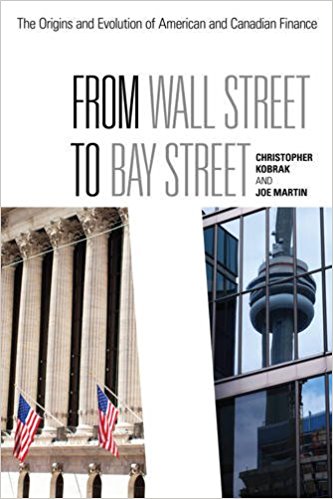
I’m not at all certain why Kling believes that the greater prominence of the US stock market is a good thing. Anyway, for readers interested in learning more about the comparative evolution of the banking systems of the two countries, I would recommend From Wall Street to Bay Street: The Origins and Evolution of American and Canadian Finance By Christopher Kobrak and Joe Martin


51nv9wvs-cl-_sx331_bo1204203200_

From the publisher’s blurb:
From Wall Street to Bay Street is the first book for a lay audience to tackle the similarities and differences between the financial systems of Canada and the United States. Christopher Kobrak and Joe Martin reveal the different paths each system has taken since the early nineteenth-century.

Joseph E. Martin is the Director of the Canadian Business and Financial History Initiative at the Rotman School of Management as well as President Emeritus of Canada’s History Society.

The late Christopher Kobrak was the Wilson/Currie Chair of Canadian Business and Financial History at the Rotman School of Management as well as a professor emeritus of finance at ESCP, Paris.

Amazon link is here.


Brilliant Opportunity

2 05 2017

AS: One of the best places on earth do a PhD in Business History right now is Copenhagen Business School. I’m therefore very happy to share this announcement, which concerns opportunities to do funded PhD research at CBS in a variety of fields, including business history.

 cbs_3cmyk_2

PhD Scholarships in “Time and Societal Challenges in a Changing Global Economy”

PhD Scholarships in “Time and Societal Challenges in a Changing Global Economy”

Copenhagen Business School invites applications for 6 vacant PhD scholarships within the field of “Time and Societal Challenges in a Changing Global Economy”. The successful applicants will be organized as a cross-departmental cohort with a number of common PhD courses and other activities such as workshops. The positions will be based in the four Departments associated with the OMS Doctoral School: Department of Business and Politics (DBP), Department of Organisation (IOA), Department of Management, Politics and Philosophy (MPP) and Department of Management, Society and Communication (MSC).

Theme of the Cohort

The notions of time and temporality have increasingly become the object of study across the social sciences. Temporality refers to the linear progression of time, historicity, the perception of time, processes of sequencing and order and rates of change as well as the social organization of time. In sociology, for instance, it is becoming increasingly recognized that existing theoretical frameworks, largely rooted in traditional approaches, do not adequately explain the active role of time in a globalizing economy. In the political sciences, the historicity of practices, norms and political ideas and the concept of “political time” have received increased attention particularly in association with questions about the character of continuity and change. Furthermore, analyses of the ways in which political, institutional and ideational processes unfold over time are central to the study of political economy and the shaping of policy processes. Also, in the area of Business Studies, there is an increasing turn of attention to the strategic use of historical narratives in corporate action.

The work of the cohort will challenge prevailing chronological, linear and sequential theories of time in politics and the study of organizations to embrace an active and dynamic view of time. Using innovative theories and methods, it will seek to explain how and why temporal dynamics shape and impact contemporary challenges. These challenges include, for example, globalizing and de-globalizing processes, state capacities in an era of limited economic growth, and the changing relationships between actors, organizations and the institutional frameworks. A particular focus will be put on how temporal structures and processes of sequencing constrain, but at times also empower individual and collective actors (e.g. business, workers, policy makers, civil society representatives), and the ways in which, within that context, those actors seek to reconfigure past, present and future. The work of the cohort will furthermore explore how processes of temporal construction affect the interactions between different actors and institutions in the context of these challenges.

The proposed PhD cohort will draw upon central ideas in philosophy, sociology, political science, history, cultural studies and organization theory. Although students may choose to write a PhD within a particular disciplinary perspective they will be encouraged to draw upon some of the other disciplines that will be utilized and explored within the cohort. We see this interdisciplinary and multi-disciplinary cohort which is expected to use a range of innovative theoretical frameworks and sound research designs (including qualitative, quantitative and mixed methods alongside experimental approaches) as the only viable way forward in new research endeavors. There will be a shared understanding that differences in temporalities constituted by factors such as past and future time horizons, mechanisms of connecting past and future in the present, pace and acceleration of change, lead to increased temporal complexity.

Pool of possible topics within the overall theme

Department of Business and Politics (DBP)

• The politics and history of social challenges in a comparative perspective (such as sustainability, inequality, 4th industrial revolution)

• The political economy of European crises: politics, polity and policy
Department of Organization (IOA)

• The role of time in organizing for societal challenges

• Organizational time, learning and innovation

• Organizing time, routines and change
Department of Management, Politics and Philosophy (MPP)

• Time, history and entrepreneurship in a globalized world

• Time and transformations in private-public relations

• The philosophy of time and chronology
Department of Management, Society and Communication (MSC)

• Temporality and talk-action dynamics in CSR

• Varieties of time perceptions attached to multi-stakeholder initiatives

• Colliding temporal orders and new forms of organizing

The PhD programme

The PhD programme at CBS is highly international. It allows you to conduct research under the supervision of CBS professors, supported by research training courses (30 ECTS points). You are expected to participate in international research conferences and spend time abroad as a visiting PhD student. For further information on the CBS PhD programme please consult this page: http://www.cbs.dk/en/research/phd-programmes/phd-skoler
It is also required that the applicant shows an interest in joining the respective Department’s research environment. You find information on the departments here: http://www.cbs.dk/en/research/departments-and-centres

CBS PhD graduates are held in high esteem not only in academia and research institutions but also in government and business where their research qualifications are increasingly demanded. One third of CBS PhD graduates go on to employment outside universities and public research institutions.

Copenhagen Business School has a broad commitment to the excellence, distinctiveness and relevance of its teaching and research programmes. Candidates who wish to join us should demonstrate enthusiasm for working in organization of this type (highlighting, for example, relevant business, educational and dissemination activities).

For further information please contact the head of department of the respective department:

• DBP: Prof MSO Caroline de la Porte +4538153550

• IOA: Prof MSO Signe Vikkelsø +4538152827

• MPP: Prof Lotte Jensen +4538153637

• MSC: Associate Prof Dorte Salskov-Iversen +4538153181
For administrative information please contact Henrik Hermansen +45 3815 3656, heh.mpp@cbs.dk.
General information

A PhD scholarship runs for a period of 3 years, and includes teaching obligations equivalent of 1⁄2 year’s work (840 work hours). The scholarships are fully salaried positions, according to the national Danish collective agreement. The scholarship includes the tuition fees, office space, travel grants plus a salary, currently starting with per month app. DKK 23.770 (app. 3,160 euro) up to DKK 28.964 (app. 3,860 euro) depending on seniority, plus a pension contribution totaling 17,1 % of 85 per cent of the base salary.

The salary level and appointment is determined by the Ministry of Finance’s collective agreement with the Central Academic Organization.

The PhD student will be enrolled at the PhD School in Organization and Management Studies (OMS). To be considered, the candidate should have a degree at the Masters level (similar to the 3 + 2 Bologna process). An educational background in philosophy, sociology, political science, history, cultural studies and organization theory or related fields is necessary. The applicant must have successfully completed the Master’s degree before commencing a PhD at CBS. The applicants must be fluent in English.
The application must include a 5 page research proposal following the guidelines available here: http://www.cbs.dk/en/research/phd-programmes/admission
In addition to the research proposal, the application must include copies of a Master’s degree certificate or other certificates of a corresponding level, brief curriculum vitae (CV), a list of papers and publications, and one copy of a selected written work (e.g. Master’s thesis). Applicants must enclose documentation for English language skills if not mother tongue.
Recruitment procedure

The Recruitment Committee will shortlist applicants. The shortlisted applicants will be assessed by the Assessment Committee. All applicants will be notified of their status in the recruitment process shortly after the application deadline.

The applicants selected for assessment will be notified about the composition of the Assessment Committee and later in the process about the result of the assessment.

Once the recruitment process is completed each applicant will be notified of the outcome of their application.

The successful applicants are expected to start their position on September 1 2017.

Closing date: June 1, 2017

Copenhagen Business School must receive all application material, including all appendices (see items above), by the application deadline.

Details about Copenhagen Business School and the departments are available at www.cbs.dk


What’s Missing from Noah Smith’s Analysis of the Alt-Right?

1 05 2017

A Trump supporter holding up a sign reading “Deplorables and Alt-Right Unite”. 4 March 2017, 13:28

Image source:  Wikimedia Image Commons Donald_Trump_alt-right_supporter_(32452974604)

The economist and Bloomberg columnist Noah Smith has published a thoughtful, erudite, and nevertheless frustrating piece about ethnic heterogeneity and the Alt-Right. What’s missing from Noah Smith’s analysis of the Alt-Right? A recognition of the important role of business in promoting harmony in divided societies!

For those who don’t know him, Noah (no relation to me) is a rising force in economics more generally and the economic blogosphere more generally. His worldview is centre-left, which is near the centre of gravity in the economics profession nowadays, but he differs from most of his fellow economists and indeed most academics in that he is sympathetic to nationalism and efforts to promote stronger national identities. (He recently advocated the re-introduction of universal military service in the United States on the grounds that the common experience of service in uniform would create a greater sense of social cohesion). My reading of the situation is that Noah is an old-fashioned liberal nationalist of the FDR and JFK school. That makes him stand out, since most economists (and social scientists more generally) are socialised into a very different way of thinking about nations that corresponds to Angus Deaton’s term cosmopolitan prioritarianism. Another ways in which  Noah’s perspective on social and political issues is distinctive in that it is informed by the time he lived in Japan, which gave him a perspective on European and US politics that is quite rare in the academic blogosphere.

Anyway, his recent blog post on diversity is fascinating because Noah, who is a card-carrying social scientist, engages with the arguments of the more intellectual wing of the Alt-Right, the cluster of anti-immigration, anti-liberal movements that contributed to the electoral success of Donald Trump and which is allied with xenophobic, anti-immigrant political parties in Europe. As Noah notes in his post, while many on the Alt-Right are stupid, others construct semi-intellectual arguments to support their content that the United States would be a better society if it were a more racially and religious homogenous society (i.e., a society in which non-whites were a much smaller percentage of the population than they are right now). The Alt-Right have been able to cite some academic studies that purport to show that increased ethnic and racial diversity in a country can create social problems by reducing levels of social trust.


The meta-historical narrative that informs such studies holds that the countries of north-western Europe were able to construct generous welfare-states in the first half of the twentieth century because they then were homogenous. In other words, wealthy taxpayers in Sweden didn’t resent fiscal transfers because the recipients looked and sounded like them, at least in 1950. This reading of history suggests that political support for such welfare states has recently been undermined by immigration, which made these societies more ethnically diverse and thus more like the US, a country with a far weaker welfare state. Some people attribute the low levels of social spending in the US to its diversity and the unwillingness of wealthy people, who are mainly white, to pay for recipients who are disproportionately non-white. (Concerns that too much diversity was incompatible with the welfare state convinced David Goodhart, an erstwhile British social democrat, to embrace the cause of restricting immigration).  Some alt-right people speak of turning the United States into a “white Japan” by which they mean an ethnically and racially homogenous society that is characterized by high rates of trust and social cohesion. This particular variant of the alt-right philosophy doesn’t say that one race is superior to another, merely that the world is a better place when communities are homogenous.  Noah reports that a section of the alt-right

want to live in a place where only white people are allowed. They want the dream of a half-remembered, half-imagined 1950s Southern California – the clean streets, the nice lawns, the dependable white neighbors who tip their hat and say hi to you as they stroll down the lane.

The Alt-Right has latched on to the research that stresses the costs of diversity. Noah methodologically deconstructs this line of argumentation by drawing on a range of social scientific research that seeks to measure the costs and benefits of diversity in terms of social trust and social cohesion indicators. To his credit, Noah looks at research produced by non-economists, including

  1. Arecent study in Southern Californiafound that ethnic diversity is associated with decreased crime and higher home values2. A

    study in Britain showed no relationship between ethnic diversity and trust.3. A

    study in Europe found a positive long-term effect of diversity on trust.4. A

    2014 literature survey finds that “ethnic diversity is not related to less interethnic social cohesion.”5. A

    2008 study in Europe found that ethnic diversity didn’t decrease social capital.6. A

    2007 study in Britain found that the negative effect of diversity on social cohesion disappears after controlling for economic variables.7. There’s also a big literature on

    diversity and group decision-making, most (but not all) of which concludes that ethnic diversity makes groups smarter.

Noah blows the Alt-Right out of the water here, in my view. Noah concedes that while, yes, in certain cases a rapid and poorly-managed increase in diversity can indeed result in falling levels of generalised trust, high levels of ethno-racial diversity in a community can, in fact, be consistent with high trust.  In his view, the key variable is how well diversity is managed and the nature of the institutions in newly diverse societies. (I totally agree with this viewpoint). He then begins to discuss what these institutions might be.

It’s at this point that I start to disagree with what Noah is saying since it he appears to be ignoring the research in many disciplines, including IR, politics, and now management, on how capitalism can allow different groups to cooperate and live in in peace. There is a vast literature on the capitalist peace or commercial peace. Some of this literature is on inter-state conflict, while others papers are on intrastate conflict. I’ve contributed to this literature in a modest way (see here). I’ve also blogged about new research, especially in management, that has documented ways in which capitalism helps to promote peace and inter-ethnic cohesion. (see here, here, and here). I’m currently working on a paper on this subject that uses data from Canadian business history. I’ll be presenting this paper at a conference in Toronto in September that will mark the 150th anniversary of the Canadian Confederation.

Noah writes:

as time goes on, the previous inhabitants and the newcomers get used to each other. This process is accelerated by integrating institutions like public schools, colleges, and the military, and is complete once intermarriage is widespread. 


Notice what is missing from Noah’s list—business corporations and the other institutions associated with the market economy! Noah’s list is about public-sector and non-profit institutions. Of course, these institutions do promote cohesion (think of the role of the IDF in integrating Ashkenazi and Sephardic Jews), but public-sector organizations can’t be the whole story. The old Soviet Union had public schools, colleges, and army units where people of different ethnicities mixed, and were indoctrinated with rhetoric about the unity of the world’s workers, but ethnic animosities nevertheless persisted. Noah’s list of integrating, pacifying institutions is sadly incomplete. I’m inclined to think that Noah’s decision to omit business institutions from this list of integrating factors may be related to his centre-left political views. There were certainly many US economists, particularly those of the generation taught by Milton Friedman, who went to great lengths to note the benefits of all things related to the market and to denigrate the state.  I suspect that Noah Smith, who is reacting the excesses of libertarian market-worship, may be committing the opposite error in failing to note in this paragraph the very important role that commercial activity and a vibrant private sector play in promoting peace.

I would call on Noah Smith and other progressives to reflect more about the positive role of business in promoting ethnic harmony. Thinking about the potential role of business in combating xenophobia and ethnic animosity is the first step towards having a conversation about the social responsibilities of business leaders in the face of the Alt-Right.


Business and Management in an Age of Rising Nationalism: Historical Perspectives 

14 04 2017

As I have mentioned in previous blog posts, there are an increasingly number of data points that support the thesis that economic nationalism is on the rise and that political developments may be contributing to the ongoing process of deglobalization. Brexit and the election of Trump are perhaps the most famous of these events.  Public intellectuals and business people are now talking about deglobalization as never before (see here). I’ve also pointed out that academics in business schools have yet to provide managers with concrete and practical advice about how to manage the political risks associated with elevated levels of economic nationalism and protectionist sentiment.  For instance, one of my blog posts critiqued Michael Witt, a political scientist at INSEAD, for failing to give managers advice that was non-obvious and useful. Here’s what I wrote


Late last year,  Dr Witt wrote two pieces in which he pondered what deglobalization means for multinational firms. His first piece did an admirable job of summarizing the political science literature on globalization and deglobalization and tells people how two of the three main schools of thought in IR (Realism and Liberalism) view these phenomena. Somewhat curiously, Witt doesn’t say much as about Constructivism, another interpretative tradition in IR, which is unfortunate since constructivism has a great deal  to offer here. Anyway,  his second piece, which was published a week after the first one, sought to offer concrete advice to business executives interested in this topic. Sadly, the main pieces of managerial advice he provided weren’t that useful to managers

I am, therefore, glad that my fellow business historians are now preparing to enter the conversation and to give advice to managers. A special panel on historical perspectives on managerial responses to rising nationalism will be held at this year’s American Academy of Management conference in Atlanta.  Business historians have written extensively about how firms managed previous episodes of deglobalization and my impression is that this panel will draw on this research. In a sense, the panel in Atlanta will complement a recent British Academy of Management event that was held in the city of Coventry. (A few months ago, I blogged about the unfortunate choice of venue for this otherwise excellent event, which included such speakers at  Steven McGuire, University of Sussex, Thomas Lawton, Open University Business School, and Neil Rollings,  University of Glasgow).

My hope is that the events in Coventry and Atlanta will result in publications that give advice to practitioners that goes beyond simply stating the obvious (e.g., “in times of elevated political risk, consider creating an in-house department for engaging in political risk analysis”). Given the calibre of the scholars who attended the two events, I’m very optimistic that high quality manager-relevant research outputs will emerge. It also occurs to me that the volume of the extant business-historical research on managerial responses to rising levels of economic nationalism may now be sufficient to support a meta-analysis paper targetted at a journal such as the International Journal of Management Reviews.

Anyway, here are the details.

Sunday  10.30-12.00pm, Hyatt Regency Atlanta, Spring
Chair: Daniel Wadhwani, U. of the Pacific

Panelist: Matthias Kipping, Schulich School of Bus, York U.

Panelist: Takafumi Kurosawa, Kyoto U.

Panelist: Stephanie Decker, Aston Business School

History can provide management scholars with a unique lens for understanding the current rise of nationalism, and the choices that businesses, managers, and entrepreneurs face in response to those changes. In part, this is because both supporters and critics of the current wave of nationalism point to historical examples and their consequences in justifying their positions. But, even more so, historical waves of globalization and de- globalization allow us a mirror for reflecting on the options and consequences that both policymakers and managers face today. For instance, on the eve of World War I, much of the world economy was economically integrated, with the relatively free mobility of firms, people, and capital across borders. This earlier wave of global integration fell apart with the rise of nationalism and nationalist policies during the interwar period, and a different kind of globally integrated economy had to be rebuilt by policymakers and businesspeople in the post-World War II world. This panel will discuss the lessons of such earlier waves of nationalism and de-globalization for our own time. It draws together four leading business historians, with expertise in four different regions of the world as well as in different aspects of management research. The panel will examine how rising nationalism affected not only the global context in which managers operated, but also consider its implications for business strategy, organizational behavior, social and political legitimacy, labor mobility and entrepreneurship. The goal of the panel will remain focused on the relevance of history for understanding managerial choices and consequences in the face of nationalism in our own time.