Predicting the Past: Understanding the Causes of Bank Distress in the Netherlands in the 1920s

10 11 2014

Academics are increasingly being encouraged to use social media to promote their research. Christopher L. Colvina,  Abe de Jong, and Philip T. Fliers have raised the bar with a YouTube video that summarizes the key points of their recent article in Explorations in Economic History.

Christopher L Colvin, Abe De Jong, and Philip Fliers. “Predicting the Past: Understanding the Causes of Bank Distress in the Netherlands in the 1920s.” (2014).

Abstract:

Why do some banks fail in financial crises while others survive? This article answers this question by analysing the effect of the Dutch financial crisis of the 1920s on 142 banks, of which 33 failed. We find that choices of balance sheet composition and product market strategy made in the lead-up to the crisis had a significant impact on banks’ subsequent chances of experiencing distress. We document that high-risk banks – those operating highly-leveraged portfolios and attracting large quantities of deposits – were more likely to fail. Branching and international activities also increased banks’ default probabilities. We measure the effects of board interlocks, which have been characterized in the extant literature as contributing to the Dutch crisis. We find that boards mattered: failing banks had smaller boards, shared directors with smaller and very profitable banks and had a lower concentration of interlocking directorates in non-financial firms.

The video raises some damn good questions about the role of the state in bank bailouts. The authors note that the Dutch banking crisis of the 1920s was resolved without taxpayer bailouts. 


Corporate Darwin Awards

5 11 2014

“What has been the best corporate Darwin Award? A decision made by a company that basically killed the business.”

  • George Lucas wanted X salary to direct Star Wars. The studio thought it was too much. Of course they thought the movie might make money, but they didn’t really think it would become the powerful franchise we know it today. So George said “I’ll take a pay cut of $20K, if you give me all the merchandising rights”. Those rights were part of the $4 billion that Disney just paid him for Lucasfilms. Fox lost billions over several decades, in order to save $20K back in the 70’s.

    [AS: My comments– sure Fox lost money, but it is still in business]

  • Eddie Lampert, the CEO of Sears is one of the best contenders for the Corporate Darwin Award. He’s an Ayn Rand-loving, free-market ideologist who attempted to take his non-reality-based style of life out of the lobbyist/Congress rigged world of hedge funds and into retail. He laid off, cut, and trimmed back everything he could and forced departments, managers, and employees to fight against each other for resources and pay under the delusion that the company would benefit from a survival of the fittest atmosphere. Since that time, Sears has lost half its value in five years and has closed more than half of its stores, not to mention just about destroyed one of the oldest and most trusted brands in the history of the United States.

    [AS: He hasn’t ruined the company yet though].

  • Enron for paying their executives “idea bonuses” before the ideas turned a profit. They paid one guy millions for inventing an online movie downloading service about ten years before that was feasible. Ironically, the documentary is available on Netflix.

    [AS: Actually, idea bonuses are not a bad idea. The real problem with Enron was the fraud].

Hat tip to Chris Blattman.


Business History Reading List Bleg

4 11 2014

I’m appealing to all of my fellow Business Historians here. I need to prepare a (very short) reading list for a PhD student who is embarking on a project in the field of business history. [Please keep in mind that I am in the UK, where we don’t have comprehensive exams].  The student needs to get a sense of what business history is all about. What are the top 10 essential reads in the field? Any suggestions? . I’ve listed ten titles below– please tell me what you think of this list in the Comments section.

I believe that a good knowledge of Chandler is essential for any business historian, which is why there are four pieces by or about Chandler on the list.  However, I am conscious of the need to expose the student to current debates in business history.

I should explain that her PhD thesis will be on the history of energy price regulation in the UK. Her undergraduate degree was joint honours in Business and History. A few of her undergraduate courses dealt with British economic and social history, so I would imagine that she has some background knowledge I can draw on. I want to expose her to current debates in the field.

I’m co-supervising this PhD student with a political economist. I should explain that the student will be given a similar short reading list of key works in the field of political economy.

Debating Chandler

Chandler Jr, A. D. The Visible Hand: The Managerial Revolution in American Business (Cambridge, Mass., 1977

Chandler, Alfred Dupont, Takashi Hikino, and Alfred D. Chandler. Scale and scope: The dynamics of industrial capitalism. Harvard University Press, 2009.

John, Richard R. “Elaborations, Revisions, Dissents: Alfred D. Chandler, Jr.’s, The Visible Hand after Twenty Years.” Business History Review 71, no. 02 (1997): 151-200.

Bucheli, Marcelo, Joseph T. Mahoney, and Paul M. Vaaler. “Chandler’s Living History: The Visible Hand of Vertical Integration in Nineteenth Century America Viewed Under a Twenty‐First Century Transaction Costs Economics Lens.”Journal of Management Studies 47, no. 5 (2010): 859-883.

Two Key Overviews of UK Business History

Wilson, J. F. (1995). British business history, 1720-1994. Manchester University Press.

Hannah, Leslie. The rise of the corporate economy. Routledge, 2013.

Contemporary Debates

Bucheli, Marcelo, and R. Daniel Wadhwani, eds. Organizations in Time: History, Theory, Methods. Oxford University Press, 2013.

Rowlinson, M., Hassard, J., & Decker, S. 2014. Research Strategies for Organizational History: A Dialogue between Historical Theory and Organization Theory. Academy of Management Review, 39(3)

Winter, Sidney G. “An Evolutionary Program for Business History?.” Enterprise and Society 14, no. 3 (2013): 498-506.

Kobrak, Christopher, and Andrea Schneider. “Varieties of business history: Subject and methods for the twenty-first century.” Business History 53, no. 3 (2011): 401-424.

———

Update: Someone contacted me via email to suggest some additional sources. I’ve pasted them below:

Decker, S. 2013. The silence of the archives: business history, post-colonialism and archival ethnography. Management & Organizational History, 8(2): 155-173.

Kipping, M., & Üsdiken, B. 2014. History in Organization and Management Theory: More Than Meets the Eye. The Academy of Management Annals, 8(1): 535-588.

de Jong, A., Higgins, D., & van Driel, H. 2015. New Business History? An Invitation to Discuss. Business History  (forthcoming).

Decker, S., Kipping, M., & Wadhwani, R. D. 2015. New Business Histories! Plurality in business history research methods. Business History (forthcoming).

Obviously this might not all be relevant to your student, but if he/she does a historical subject at a B-School, I think these are becoming part of the canon


From Imperial Capital to global City: Transformations of Istanbul 1914-2014

28 10 2014

AS: Recently I’ve been blogging quite frequently about events related to the First World War. This post continues the theme.

04 December 2014 18:30 to 21:00

Professor Erik-Jan Zürcher (Leiden University), one of the world’s leading experts on Turkey, will chart the development of the architecture, economy and population of Istanbul in the 20th and 21st centuries.  In 1920 it was occupied by Britain and its allies after the Ottoman defeat in World War I. Then, in 1923 it lost the position as imperial capital it had held for 1600 years. In 1924 it also ceased to be the seat of the caliphate, an honour it had held for some 350 years. During the early republic, plans were developed to remodel the city according to the modernist ideals of the Kemalists, but the construction of Ankara as the iconic city of modern Turkey had priority. Big changes came with the fifties, not only in terms of architecture and city planning but also in the composition of Istanbul’s population. From a cosmopolitan city of Turks and Greeks it turned into a destination of Turkish and Kurdish migrants from inner Turkey. The city of one million grew into a city of fourteen million in little over half a century.  From the nineteen eighties onwards integration  into the capitalist world economy combined with the end of the cold war to return to Istanbul its position as economic and cultural hub. Finally, in recent years, the city has aspired to rival emerging world cities like Dubai and Singapore. As this lecture will show, all of these developments are clearly reflected in Istanbul’s changing cityscape.

Professor Zürcher has published many articles and books including The Young Turk Legacy and Nation Building: From the Ottoman Empire to Atatürk’s Turkey (IB Tauris, 2010).

This event will also mark the launch of the first book of the new BIAA-IB Tauris series on contemporary and Ottoman Turkey.  Turkey and the Politics of National Identity: Social, Economic and Cultural Transformation by Shane Brennan and Marc Herzog.

More details here!

Thursday, 4 December
6.30 pm

The British Academy
10 Carlton House Terrace
London SW1Y 5AH


Why Are So Many of the World’s Oldest Companies Japanese?

27 10 2014

That’s the title of an interesting article in Slate.


A Business Historian’s Thoughts on Zingales’s “Preventing Economists’ Capture”

25 10 2014

In early September, I blogged about a new paper by Luigi Zingales, an economist who works at the Booth School of Business in Chicago. The paper suggests that economists in business schools have a strong pro-business or rather pro-management bias.

Zingales was the guest on this week’s episode of Econtalk. I usually enjoy listening to Econtalk but this week’s episode was unusually good–educational and entertaining.

Obviously I’m not an economist, but I do work in a management school and I think that much of what Zingales says about the possibility of capture and pro-business bias applies to all management researchers, including business historians. At one point in the interview, Zingales says that scholars who use archival sources are less prone to capture than those who do research involving interviews with executives. Hmmm— I don’t know about that. I would suggest that Zingales read Stephanie Decker’s piece on research in business archives.

I thought that this particular exchange was particularly important to business historians who rely on company archives.

Zingales: So, first of all, let’s start with data. Nowadays it’s very sexy and trendy to either use propriety data for certain analysis, or to do a field study about a certain topic. Now, the best researchers guarantee themselves against being prevented from publishing their results, the research they do. Still there is a very subtle quid pro quo about what I’m doing. So, if I partner with some payday loan, with one payday loan firm to do some field experiment, I probably don’t want to come up with a result that says that payday loans
Russ Roberts: Exploit poor people.
Zingales: Exactly. And so, it’s not that I am sort of prevented from doing that. Like, the regulator is not prevented from really going after the industry. But the incentives are such that I probably will sort of fine tune and try not to look at the worst things, and look at the things I can look at. So, inevitably the research is going to be a bit biased. Now, we know every research is a bit biased. I don’t think that anybody holds[?] the truth. But in general, we come to the conclusion that if we come across research, those individual biases cancel out, and as a result, the average is pretty accurate. What I’m saying is, because the data in this case are controlled by people with a particular interest, even if you take the integral of all this research, the overall picture cannot be unbiased.

I’ve been very lucky to work with company archivists who have given me no-strings attached access to internal documents. However, I know that not all firms are like that.

andrewdsmith's avatarThe Past Speaks

Luigi Zingales, an economist who works at the Booth School of Business in Chicago, has published an interesting paper that suggests that economists in business schools have a strong pro-business or rather pro-management bias. The ungated version of the paper is available here.

Abstract: The very same forces that induce economists to conclude that regulators are captured should lead us to conclude that the economic profession is captured as well. As evidence of this capture, I show that papers whose conclusions are pro-management are more likely to be published in economic journals and more likely to be cited. I also show that business schools’ faculty write papers that are more pro management. I highlight possible remedies to reduce the extent of this capture: from a reform of the publication process, to an enhanced data disclosure, from a stronger theoretical foundation to a mechanism of peer pressure. Ultimately, the most…

View original post 380 more words


Of Redwoods and Property Rights

23 10 2014

AS: The ways in which property rights can protect natural resources have been explored by Professor Terry Anderson over his long academic career. (listen here). The theme of property rights appears to be an important one in Greg Gordon’s new biography of A.B. Hammond. I’ve put key sentences in Sarah Anderson’s review in bold.

Published by EH.Net (September 2014)

Greg Gordon, When Money Grew on Trees: A.B. Hammond and the Age of the Timber Baron.  Norman, OK: University of Oklahoma Press, 2014. xiv + 482 pp. $30 (cloth), ISBN: 978-0-8061-4447-4.

Reviewed for EH.Net by Sarah Anderson, Department of Department of Political Science, University of California, Santa Barbara.

Greg Gordon’s When Money Grew on Trees: A.B. Hammond and the Age of the Timber Baron follows the life of A.B. Hammond, once the owner of the largest redwood logging company in the United States and a major player in logging throughout the West. The book uses his biography to explore themes of how timber ownership affects its harvest, the politics of public lands, and the relationship between industrialists and labor unions.

After learning the logging ropes on the East Coast, including New Brunswick, Hammond, like many other young men of the era, moved west to seek his fortune. Arriving too late to make it in gold, he founded the Missoula Mercantile, which would serve as a continual source of credit throughout his career as a timber baron. Hammond frantically logged the open-access timber of Montana to supply the railroads and the mines. He then moved to the West Coast, building mills, railroads, and company towns to cut the large coastal trees.

Gordon’s main thesis is that the West was not just exploited by Easterners but that Westerners themselves contributed. He succeeds in offering at least anecdotal evidence of this in the form of A.B. Hammond, but his more interesting insights come in his discussions of the tragedy of the commons in western forests, the political economy of public lands, and the nascent labor union movement.

While Gordon does not focus entirely on economic history, his insights draw from a notion that incentives (and particular ownership rights) drive behavior. Gordon’s book can be read as a continuous narrative of the ways in which a failure of both ownership rights and government contributed to the over-extraction of western natural resources. From the bison, about which he states that “Without ownership claims, and without government or community restrictions, the animals [bison] were doomed” (p. 45), to timber poaching in places like Cramer Gulch, Montana where two teams literally fought to cut and move the logs, pushing, swearing, cutting logs loose, and dumping loads, the book illustrates how the early chaos of settlement allowed the A.B. Hammonds of the time to quickly extract resources and move on.  Because it covers a long time span, the book demonstrates how the same man adapted to ownership conditions as they changed.  Following Hammond’s career offers an opportunity to observe him taking advantage of lack of ownership, well-defined property rights, or government as it serves his interests. Where there was a lack of clear ownership, he poached timber from unsurveyed lands, knowing that charges would be difficult to make stick when the government couldn’t identify whether the land was held by the railroads or by the government. He intensely extracted logs without long-term investments. Where the property rights were well-defined, he bought competing lumber mills (and more importantly their timber lands) whenever possible. He built company towns and permanent large mills. And where government policy could benefit his enterprises, he lobbied (or even outright bribed) government officials to put their stamp of approval on clearly false settlement claims.

Scholars of the economic history of labor will particularly appreciate Gordon’s detailed presentation of the struggle of labor versus capital. A.B. Hammond was virulently anti-union and went to great lengths to avoid a unionized workforce. He imported labor from all over the world, shuttered plants, and used his political acumen to bring the force of the law down on strikers. Gordon’s detail allows for a useful comparison between the varieties of capitalism that were emerging in the early 1900s from proprietary capitalism, with its paternalistic attitudes toward workers, to Hammond’s industrial capitalism, where workers were simply inputs to production.

Throughout, Gordon is attentive to the ecological forces at play, and not just the ecological consequences of logging. He notes that the pure stands of ponderosa pine facilitated a mechanized timber industry, that the long regeneration time of 2,000 year old redwoods made sustainable yield a difficult, if not impossible, concept, and that the varied role of fire in the western ecosystems changed how loggers logged.

If the book suffers at all, it is in length. Gordon covers so much ground that each reader may find herself captivated by only a portion of the 400+ pages. Given the contribution Gordon makes to a detailed understanding of the political economy of public land and the history of the conflict between labor unions and industrialists, the book is a worthy read for scholars with a deep interest in either.

Sarah E. Anderson (Associate Professor at the Bren School of Environmental Science and Management and in the Department of Political Science at the University of California, Santa Barbara) is the author (with Heather Hodges and Terry Anderson) of “Technical Management in an Age of Openness: The Political, Public, and Environmental Forest Ranger,” Journal of Policy Analysis and Management (2013) and “Complex Constituencies: Intense Environmentalists and Representation,” Environmental Politics (2011)


The Role of Conferences on the Pathway to Academic Impact: Evidence from a Natural Experiment

22 10 2014

AS: Who benefits the most from presenting at conferences? It looks like junior researchers and those at less prestigious institutions get a greater conference bump.

The Role of Conferences on the Pathway to Academic Impact: Evidence from a Natural Experiment

Fernanda L. L. de Leon by University of Kent, Canterbury and Ben McQuillin, University of East Anglia (UEA)

October 9, 2014

Abstract:      

This paper provides evidence for the role of conferences in generating visibility for academic work, using a ‘natural experiment’: the last-minute cancellation — due to ‘Hurricane Isaac’ — of the 2012 American Political Science Association (APSA) Annual Meeting. We assembled a dataset containing outcomes of 15,624 articles scheduled to be presented between 2009 and 2012 at the APSA meetings or at a comparator annual conference (that of the Midwest Political Science Association). Our estimates are quantified in difference-in-differences analyses: first using the comparator meetings as a control, then exploiting heterogeneity in a measure of session attendance, within the APSA meetings. We observe significant ‘conference effects’: on average, articles gain 17-26 downloads in the 15 months after being presented in a conference. The effects are larger for papers authored by scholars affiliated to lower tier universities and scholars in the early stages of their career. Our findings are robust to several tests.
Read the whole thing here.


Zahir Irani Calls for the De-Americanization of the European Management School

20 10 2014

Inside a HBS Classroom

Dean Zahir Irani of Brunel University’s business school here in the UK has published a thoughtful piece on the rankings of MBA programmes. He points out that these rankings are highly US-centric and that the ranking system incentivizes European business schools to adopt US curriculum materials and research approaches.

The latest ranking of business schools has just been released by the Princeton Review and a certain type of business school continues to dominate—American ones. Having earned their reputation over the years by producing some of the world’s top business leaders, their influence stretches far beyond the lecture theater into the business world and society more widely…Following the US model and working to build recognition and favor within the US system has implications: changing the role of business schools, their nature and the basic idea of what their function is and embedding a greater sense of needing to serve society as a whole…In the UK, we benefit from looking beyond our borders and testing ourselves against competition for space in respected international publications. Why don’t the US schools do the same?

Irani points out that the way to get ahead in any business school in the world is currently to publish research that is recognized by US business school academics. This argument is true for the UK, where I work and it’s especially true in Canada, where management and economics researchers are penalised for publishing on Canadian, as opposed to US, topics. Irani argues that this incentive structure for academic researchers short changes the taxpayers who fund management research is most countries. He calls for management research to be more response to local conditions and the needs of practitioners.

You can read the whole thing here.


Why History Should Replace Economics in the 21st Century

20 10 2014

Fifty years ago, historians advised politicians and policy-makers. They helped chart the future of nations, by helping leaders learn from past mistakes in history. But then something changed, and we began making decisions based on economic principles rather than historical ones. The results were catastrophic.

That’s from Annalee Newitz’s review of 2014. The History Manifesto (Cambridge: Cambridge University Press, 2014) by David Armitage and Jo Guldi.

Armitage and  Guldi are calling for a “historic turn” in the public-policy process. i’m certainly inclined to think that more input from academic historians would improve public policy (as would more input from psychologists, scientists, and other experts). Moreover, their efforts to promote a historic turn in policy is very interesting to me in light of the ongoing “historic turn” in management-school research: a small but growing number of management academics are turning to  the historical record and historical methods, rather than economics, to make sense of present. Management academics are concerned, primarily, with decision-making in the private sector, whereas policy academics are interested, primarily, with decision-making in government. In both areas of research, there is obviously some push back against perceived economic imperialism (i.e., the tendency of neo-classical economics to colonize subject matters that were not traditionally considered to be within the purview of economics). One interpretation of the historic turn in management and Armitage-Guldi book is that history is engaged in a form of counter-imperialism against economics, which was long the most imperialistic of the social sciences.

(I’ve posted a list of sources on the historic turn in management schools below).

There is, therefore, much to like about the History Manifesto. However, I’m disturbed by several arguments that the authors make.

First, while they do not equate historical writing with historical writing by academics, their book tends to overestimate the role of academic historians in the production of historical knowledge.

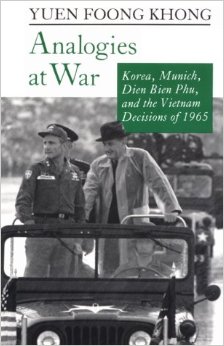
Second, they suggest that policy-making today is rarely informed by history. William Hague, a British politician who does consult with historians, is presented as a rare and honourable exception to the prevailing trend towards ahistorical modes of thinking about policy. Another interpretation is that policy is frequently informed by incorrect interpretations of history. Political scientists have shown that historical-analogous reasoning is actually quite common and influential. For instance, analogies to Munich 1938 are often made during US discussion of foreign policy. Indeed, this gave rise to the joke that for Senator John McCain, it’s always Munich, always 1938.

Third, I’m amused by the idea that there was once a golden era in which academic historians had a significant, and positive influence on public policy. Hmmm… I don’t know about the positive bit. David Armitage’s Guardian piece is accompanied by a picture of John K Kennedy with Arthur Schlesinger Jr. In the context of Armitage’s article, this choice of image suggests that Kennedy was a better president because he was advised by historians. First of all, Kennedy’s intellectual advisers included the economists John Kenneth Galbraith as well as Schlesinger. Moreover, I’m not certain if Kennedy’s presidency is an example of great public policy,given that JKF’s handling of the Cuban Missile Crisis nearly brought the world to the edge of nuclear Armageddon!!! Kennedy viewed the world through the lens of Britain’s appeasement of Hitler in the late 1930s, a historical analogy that likely influenced his decision to “get tough” with the Soviets. Note that during the Eisenhower Presidency, there was a partial thaw in relations with the USSR.

Economists have been accused of contributing the the climate of opinion that resulted in the 2008 financial crisis. Let’s assume that this claim is correct.  I think that we would all agree that while the social impact of the 2008 crisis was negative, it was less negative than than a nuclear exchange between the superpowers would have been. Ms Newitz’s writes that “we began making decisions based on economic principles rather than historical ones. The results were catastrophic.” Hmmm… I think that I would prefer a financial catastrophe to a thermonuclear catastrophe any day of the week!

Armitage writes:

The mid-1960s were the high-water mark for historians in public policy. In the US, Harvard historian Arthur Schlesinger Jr became the court historian of John F Kennedy’s Camelot as a presidential adviser, and the radical historian of American foreign relations William Appleman Williams turned down the chance to steer Latin American policy for the Kennedy administration. (At least he was asked.) The last historian seconded to the White House was Eric F Goldman, a professor of American history from Princeton, who was a special adviser to Lyndon Johnson in 1963-66. In 1965, a historical section was added to Britain’s Treasury but its operations were wound up in 1976, “after its early advocates moved on and the relevance of its work to the ‘man at the desk’ became subject to concerted challenge”, as the historian of public policy Alix Green has observed.

analogies at war

I think that David Armitage can find better data points to support his thesis that academic historians can have a positive influence on the making of foreign policy than the disastrous presidency of Lyndon Johnson.  It is pretty clear in retrospect that Johnson’s decision to escalate the war in Vietnam was the wrong choice and that this choice was influenced by a particular interpretation of history that his historian advisers did not challenge.

—————-

Sources on the historic turn in management research.

Clark, Peter, and Michael Rowlinson. “The treatment of history in organisation studies: towards an ‘historic turn’?.” Business History 46, no. 3 (2004): 331-352.

Rowlinson, Michael, Charles Booth, Peter Clark, Agnes Delahaye, and Stephen Procter. “Social remembering and organizational memory.” Organization Studies (2009).

Kipping, Matthias, and Behlül Üsdiken. “History in Organization and Management Theory: More Than Meets the Eye.” The Academy of Management Annals 8, no. 1 (2014): 535-588.

Burghausen, Mario, and John MT Balmer. “Repertoires of the corporate past: explanation and framework. Introducing an integrated and dynamic perspective.” Corporate Communications: An International Journal 19, no. 4 (2014).

Rowlinson, Michael, John Hassard, and Stephanie Decker. “Strategies for organizational history: A dialogue between historical theory and organization theory.” Academy of Management Review (2013): amr-2012.