Best Pair of Sentences I Read Today

11 07 2014

That is, constitutive historicism helps us account for how entrepreneurs’ understanding of their own historical context shapes the nature of the opportunity they pursue (Gerschenkron, 1966Sabel and Zeitlin, 1997Popp and Holt, 2013). Two entrepreneurs presented with a similar objective situation may interpret them in very different ways based on their historical understanding (p.210) of the ways events have unfolded and the possible directions they may take in the future.


It’s from Wadhwani, R. D., & Jones, G. (2014). Schumpeter’s Plea: Historical Reasoning in Entrepreneurship Theory and Research. Organizations in time. History, theory, methods, 192-216.


CFP: Joint Meeting of the BHC and the EBHA

9 07 2014

Call for Papers

“Inequalities: Winners and Losers in Business”

What does business have to do with inequality? Contemporary answers have ranged from “everything” to “nothing.” The call for proposals for the 2015 joint meeting of the Business History Conference (BHC) and European Business History Association (EBHA) challenges business historians of all stripes to historicize the economic, political, cultural and social processes by which inequality has taken hold, ebbing and flowing over time. Business is central to those processes. The very word “inequality” suggests injustice and unfairness, subjugation and lack of opportunity. But in fact, there are many different inequalities, and their historical significance depends upon how societies have regarded and valued difference. Men and women of various racial and ethnic populations, the rich and poor, dominant and subordinate, leaders and laggards, have been praised and derided, advantaged and disadvantaged in various ways by different societies in different time periods. By inviting a broad historical exploration of the many inequalities that affected and have been affected by business, both positively and negatively, the conference hopes to illuminate more clearly the complexities involved in distinguishing winners from losers. In keeping with longstanding BHC and EBHA policy the Program Committee will give equal consideration to submissions not directly related to the conference theme.

Thomas Piketty, author of Capital in the 21st Century, will deliver the joint meeting’s plenary address. The conference also will have several additional plenary sessions, receptions, and organized local activities in Miami; addresses by the BHC and EBHA presidents; lunch meetings for business historians in business schools and for women in business history; a meeting of the Alliance of Centres for Business History in Europe; a breakfast and reception for emerging scholars (graduate students and recent Ph.D.s); membership meetings for the BHC and EBHA; and a closing banquet with presentation of awards by the BHC and EBHA.

This will be the fourth joint meeting of the Business History Conference and the European Business History Association. The Program Committee includes Lucy Newton (chair), University of Reading; Mary Yeager (BHC president), University of California Los Angeles; Raymond Stokes (EBHA President), University of Glasgow; Juliette Levy, University of California, Riverside; Stephen Mihm, University of Georgia; Ben Wubs, Erasmus University, Rotterdam; and Stephanie Decker, Aston Business School. Most sessions will take place at the Hyatt Regency Miami, where a large bloc of lodging rooms has been reserved for $135/night.

The program committee will consider both individual papers and entire panels. Individual paper proposals should include a one-page (300-word) abstract and one-page curriculum vitae (CV). Panel proposals should include a cover letter stating the rationale for the panel and the name of its contact person; one-page (300-word) abstract and author’s CV for each paper; and a list of preferred panel chairs and commentators with contact information. It also invites proposals for innovative sessions, such as roundtables. Proposals will be reviewed by all program committee members and evaluated for their quality and originality. Graduate students and recent Ph.D.s (within 3 years of receipt of degree) whose papers are accepted for the meeting may apply for funds to partially defray their travel costs; information will be sent out once the program has been set. Everyone appearing on the program is required to register for the meeting.


Does the Maker Movement Have An Ideology?

8 07 2014

In the last few years, techno enthusiasts around the world have created “Maker Faires”, gathering where people interested in 3-D printing can show off their things they have made with their gadgets. Some people think that the so-called Maker Movement will usher in an era of radical economic change through the rise of decentralized manufacturing. Others think that the whole thing is a bit over-hyped and the 3-D printing a home will turn out to be the CB radio of our generation: a fun little fad that doesn’t really change the economy.

A Mini Maker Faire in Idaho

Anyway, the Al-Jazeera website recently carried an article by two US grad students in which the Maker Movement is attacked for embodying an individualistic ideology. Jathan Sadowski and Paul Manson wrote:

 The maker movement is born out of, and contributes to, the individualistic, market-based society that has become dominant in our time. More specifically, the movement fits well into what, nearly 20 years ago, the media theorists Richard Barbrook and Andy Cameron called “the Californian Ideology.” According to this view, new technologies promise to create a class of high-tech entrepreneurs thanks to their ability to “empower the individual, enhance personal freedom and radically reduce the power of the nation-state.” All while allowing them to ignore or simply design their own way around the established political, economic and legal system. And thus clearing the way for the “unfettered interactions between autonomous individuals and their software” that perpetuate, rather than disrupt, that very system. 

The authors note that people from both the left and the right of the political spectrum have been attracted by aspects of the Maker Movement.

For those who lean to the right, the movement is representative of good old-fashioned economic values and entrepreneurial individualism. “Love the ‘makers,’ deride the ‘takers,’” goes their refrain. For progressives, the maker movement and its “hackerspaces” and “makerspaces” — workshops with tools and space for engaging in making — give an aura of grassroots community building and self-empowerment, from bowling alone (as political scientist Robert D. Putnam characterized our turn-of-the-century decline of social involvement) to making together. For libertarians, the maker movement fits into the common narrative of the “self-made man” who wields market power; only now self-making takes on a more literal meaning.

If you want to learn more about the Maker Movement, Dale Dougherty’s “The maker movement.” innovations 7, no. 3 (2012): 11-14 is a good starting point.


Of Rights and Witches: Bentham’s Critique of the Declaration of Independence

6 07 2014

This blog post about Jeremy Bentham’s scathing and totally valid critique of the Declaration of Independence is a must read. I’m sorry I didn’t discover this before the 4th of July.

James Schmidt's avatarPersistent Enlightenment

It is not surprising that friends of the Enlightenment tend to assume that the Enlightenment was generally friendly towards the American Revolution. Richard Price had, after all, been an energetic supporter of the Colonial cause and, like Joseph Priestley, saw it as a link in the chain of “glorious revolutions” that stretched from 1688, through 1776, to 1789. Pierre-Augustin Caron de Beaumarchais spent several crucial years figuring out ways of getting weapons to the American revolutionaries. There was also considerable interest in the revolution in German-speaking Europe. The Basel Aufklärer Isaak Iselin translated the Declaration of Independence for the October 1776 issue of his journal Ephemeriden der Menschheit (a translation of a text by John Adams followed in a later issue). And, between 1787 and 1788 the Berlinische Monatsschrift devoted three articles to the recently enacted Virginia Statute for Religious Freedom.

There were, however, a few enlighteners who were…

View original post 4,499 more words


Confederation and the Environment

5 07 2014

Canadian Confederation and the Environment

Later this month, I’ll be presenting at a scholarly workshop on Confederation that will be held in Charlottetown, Prince Edward Island.  As many readers of this blog will know, Charlottetown hosted a conference in September 1864 that led to the federation of the British North American colonies. This process is known as Confederation. A rather boring version of Confederation’s history is taught to every Canadian schoolchild, usually in Grade 7. Most Canadians vaguely associate Charlottetown with Confederation and this is something the city’s tourist and convention bureau uses to attract visitors. (The natural beauty of Prince Edward Island is the main draw, of course).  Charlottetown is using the 150th anniversary of Confederation as a hook to lure in tourists from other parts of Canada. As you can see from the images I’ve pasted below, the authorities are going into overdrive with the Confederation references. I also like that a local craft brewery is producing special beers in honour of the Fathers of Confederation.


2014_sqbanner

licence plat

fathers_profile

PEI2014_70 PEI2014_70 pei 2014 ii


Anyway, the theme of the workshop is the relationship between Canadian Confederation and the environmental history of the period.  How did federation a collection of British colonies into a nation-state of transcontinental proportions change the relationship between people and the environment?  My paper looks at the implications of Confederation for fisheries and fishermen.  In its very first session, the Canadian parliament passed the Dominion Fisheries Act, which was designed to centralize control over the new nation’s fisheries in the hands of a bureaucratic hierarchy controlled by the new federal government. My paper shows that this experiment in top-down bureaucratic control didn’t work terribly well in practice. I draw on the theories of knowledge and governance developed by Vincent and Elinor Ostrom and the other members of the Bloomington School of Political Economy in explaining why this legislation had such negative results.

My paper is also designed to get us thinking about the broader implications of the constitution of 1867 for the environment. That’s a question of more than historical interests- since the 1867 constitution is still, albeit in amended form, in force. In recent months, Canadians have debated the proposed Northern Gateway pipeline project. The Premier of the province of British Columbia, through which the pipeline will pass, had vowed to block construction.  The thing is, she can’t, thanks to the Fathers of Confederation. (See a helpful little article by Kristen Pue). Even though local majorities in the communities throughout which it will pass appear to be opposed to its construction, that doesn’t matter, since the 1867 constitution vests ultimate control with the federal government, which is strongly supportive of the project.  This feature of the Canadian constitution reflects the values of its long-dead authors. Some of the Fathers of Confederation wanted the new country to be a unitary state like the United Kingdom. They couldn’t quite get away with that, so they created a constitution that was superficially a federal one but which was really highly centralised. That choice has implications for environmental policy in Canada today.

It would be simplistic to say that the decision of the Fathers of Confederation to centralize power in the hands of the federal government was “good for business” and “bad for the environment”, because “business” and the “environment” are heterogeneous categories. However, allocating control over the main levers of environmental policy to a senior level of government certainly made it easier for certain types of businesses, especially those that fall into the category of Big Business, to engage in activities that produced negative environmental externalities that were felt mainly by residents of communities located far from the centres of economic and political power.  There are numerous examples of this one could provide, particularly in the period before 1930, when Crown lands in the Prairie Provinces were micromanaged by a bureaucracy under the control over the national government, not local government. The bureaucracy was captured by particular Big Business interests, most notably the Canadian Pacific Railway Company.

In thinking about the relationship between national constitutions and the environment, there is a fair bit of political science literature we can draw on. National constitutions influence how individuals interact with the natural environment. Ceteris paribus, democratic constitutions tend to produce better environmental policies than non-democratic ones (Midlarsky, 1998).  Although the differences are less pronounced, centralized democratic regimes generate different environmental policies than federal democracies (Wälti, 2004; Fredriksson and Wollscheid, 2007).  This research has helped to frame my research into fisheries policy in the years immediately after Confederation.

P.S. My book British Businessmen and Canadian Confederation suggested that the real Fathers of Confederation were a clique of London financiers that included Baring Brothers. To be truly historically accurate, perhaps the brewery should a beer that honours these financiers. The beer should be light, frothy, and vaguely red in colour as as to reflect the financial state of some of the investors who held Canadian securities in the 1860s. 


More Thoughts on Hobby Lobby

4 07 2014

AS: A reader who is a lawyer had these comments in response to my blog post about the Hobby Lobby decision. They are very thoughtful so I am reposting them here.


Predicting the future is certainly hard, Andrew. But I think your more restrained take is correct. There is ample precedent for endowing corporations with mental facilities, and without distinguishing religious belief from other kinds of mental structures, a Court would find it difficult to say that a corporation cannot practice religion.

Imposing liability on corporations can require determining the corporation’s “intention”. Since “Lennard’s Carrying Co Ltd v Asiatic Petroleum Co Ltd”, [1915] AC 705 or so, the corporation’s intent is found by examining its “directing mind(s)” — the person(s) whose actions are those of the company itself. The presumption is that the director is that directing mind, but it can be shown that someone else is actually the directing mind.

Mostly, this has been used in situations where a corporation is to be convicted of criminal acts (requiring mens rea) or sued on grounds which require evidence of malice or other purposes (conspiracy, eg.)

It’s hard to accept that one can grant a body corporate intent for punitive or retributive purposes but deny it the same for beneficial purposes. You could decide to eliminate corporate liability for crimes/torts of intent if you wanted to reform the issue. That would not affect the liability of employees/directors/agents who used the corporation as the instrument of criminal or tortious acts, so someone would still be left holding the bag. Presumably the corporation would insure them against such liability on the same terms it does now, so there wouldn’t necessarily be cause for concern over the loss of available funds for compensatory or restitutionary judgments.

I’m also not certain that the decision goes so far as to create separate categories of corporations. It recognizes that the determination of such beliefs may be difficult, but refuses to distinguish corporations on that basis.


Mammon and Armageddon Workshop Programme

4 07 2014

Mammon and Armageddon Workshop Programme

Note that this programme was revised on 4 July 2014

Thursday 10 July 

9:00-9:15 Welcome Message:  Neil Forbes, Coventry University

9:15-9:30 Opening Remarks: Andrew Smith, Simon Mollan, Kevin Tennent

9:30-10:30 Session 1: The City of London At War

The 1914 moratoriums: banks, business, government and financial crisis management  (Richard Roberts) Commentator:   Neil Forbes

Rock Bottom? Just when they think it’s all over! Rothschild  and the Royal Mint Refinery (Michele Blagg) Commentator:   John Singleton


10:30-10:45 Coffee Break

10:45-12:15 Session 2 Science, Technology, and Business at War

Wartime scents: the First World War and the modern perfume industry (Galina Shyndriayeva). Commentator:   Rory Miller

The Essential French Connection: Comptoir des textiles artificial and the Movement of Du Pont from Military to Consumer Products Development, 1916-1939 (Jacqueline McGlade)  Commentator:   Neil Forbes

Taming the War Octopus, 1915-1921: Labour Dilution, Scientific Management, and the impact of the Ministry of Munitions on Interwar British Manufacturing (Michael Weatherburn) Commentator:   John Singleton


12:15-1:00 Lunch

1:00-2:30 Session 3: Profiting from Neutrality

Enhancing the neutrals: Organizational change of Swiss and Dutch multinationals as a result of the First World War (Takafumi Kurosawa, Ben Wubs) Commentator:   John Singleton

The Impact of the First World War on Swedish Economic  Performance: a Case Study of the Ball Bearings Manufacturer SKF (Eric Golson and Jason Lennard) Commentator:  Dr Neil Pyper

Profiting despite the Great War:  Argentina’s grain multinationals (Phillip Dehne) Commentator:  Neil Pyper


2:30-2:45 Coffee Break

2:45:4:45  Session 4: The Impact of the War on International Finance

Trading With the Enemy: HSBC’s Relationships with German Companies during the First World War (Andrew Smith) Commentator:  Chris Kobrak

Mammon Unbound: The International Financial                Architecture of Wall Street Banks, 1915-1925 (Trevin Stratton) Commentator:  Rory Miller

Friday 11 July2014

9:00-10:00 Session 5: Post-War Reconstruction

 American Big Business and the Attempt to Reconstruct War-Torn Western Europe in 1918-1920 (Volker Berghahn) Commentator:  Chris Kobrak

The impact of the First World War on British investment in the Anglo-Egyptian Sudan (Simon Mollan and Kevin Tennent)  Commentator:  John Singleton

Germany’s Sonderweg in Corporate Development in Comparative Perspective: the effects of the European “civil war” of 1914-45 (Leslie Hannah) Commentator:  Chris Kobrak

10:00-10:15 Coffee Break

10:15-12:00 Session 6: Legacies

The Great War: Matrix of the International Chamber of Commerce, a fortunate Business League of Nations (Clotilde Druelle-Korn)  Commentator:  Neil Forbes

Imperial Business at War: The British Imperial Council of Commerce, the Great War, and the Empire, 1914-1918 (Andrew Dilley) Commentator:  John Singleton

The Flows of International Finance after the First World War: the Bank of England and Hungary, 1920 – 1939 (Neil Forbes) Commentator:  Chris Kobrak


The Power of Historical Analogy

4 07 2014

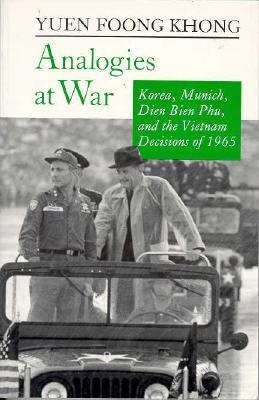
I’m fascinated by analogous reasoning, particularly when people try to apply historical analogies to understand the present. Those who study decision-making debate the extent to which historical analogies shape thought and action in the present. Some people, such as Professors A.J. Taylor, J.T. Rourke, are clearly pretty sceptical of the theory the historical analogies structure many decisions. I’m in the other camp and think that they exert a powerful influence on decision-makers in both the public and private sectors. In fact, one of my research projects right now looks at the impact of historical-analogous reasoning on the strategies of entrepreneurs in a particular field of technology.

The newspaper coverage of the centenary of the First World War has included many historical analogies between the pre-1914 rise of German manufacturing prowess and the recent growth in China’s GDP. An article that appeared in the Times of India, is an example.

The Times of India observes:

Exactly a century ago, on June 28, 1914, the assassination of the archduke of the Austro-Hungarian empire in Sarajevo triggered World War I.

In Asia, the rise of China and territorial disputes between China and its neighbours have raised concerns that Europe’s past could become Asia’s future.

[For context, it should be noted that India’ new Prime Minister is Sinophobic and wants to build a defensive alliance with the United States]/

The popularity of the Anglo-German historical analogy for viewing the current relationship between the US and China is noted here as well: Franz-Stefan Gady, Let’s Drop the Anglo-German Historical Analogy Once and For All When Discussing China

Gady writes:

Prime Minister Shinzo Abe did it: He compared the relationship between Japan and China to the one of Great Britain and Germany prior to World War One. In particular he referred to the Anglo-German arms race and used the historical analogy to warn of a new arms race in Asia. It appears that it is virtually impossible to discuss the rise of China without sooner or later making a historical analogy to 1914. It is, however, typically used to describe the relationship between the United States and China.

The Anglo-German historical analogy often leads policy makers astray from the actual reality of the rise of China and its military build-up. If we use historical analogies at all we should get them right!

The Globe and Mail newspaper actually had an online debate between two distinguished historians, Sir Richard Evans and Harold James, on this topic. Here are Sir Richard’s opening remarks:

Sir Richard J. Evans : As we enter the centenary year of the outbreak of the First World War, journalists and historians in Britain and the United States have begun to suggest that there may be similarities with the world in our own time. “A century on,” wrote The Economist on Dec. 21, 2013, “there are uncomfortable parallels with the era that led to the outbreak of the First World War.” The catastrophe that overtook Europe and the world in 1914 was unleashed, says the magazine, by Germany, a rising power that challenged the supremacy of the British Empire, the global superpower of the day. Now, the magazine claimed, “the United States is Britain, the superpower on the wane, unable to guarantee global security. Its main trading partner, China, plays the part of Germany, a new economic power bristling with nationalist indignation and building up its armed forces rapidly.” Others, notably the historian Niall Ferguson and Japanese Prime Minister Shinzo Abe, have echoed this alarmist view.

How plausible are these parallels? Do we really need to worry that history is about to repeat itself right on cue for the centenary of the First World War?


A Report on the Association of Business Historians Conference 2014

2 07 2014

The ABH conference took place at Newcastle University Business School last week. I presented two papers: “Trading With the Enemy: HSBC’s Relationships with German Companies during the First World War” and “From Hierarchy to Market in Hong Kong’s retail banking, 1945-2005.” The second paper was co-authored with Bernardo Batiz-Lazo. I got valuable feedback and am currently revising the papers for submission.

The audience seemed to like the general approach I was taking in my paper on HSBC in the First World War. Some of my listeners were surprised to learn that the London branches of German banks remained in operation for much of the war. Other listeners were well aware of this fact and knew more than me about some of the British individuals who closely monitored these branches.  A historian of accountancy gave me very focused advice about a specific individual I need to investigate a bit more. I’m not certain what the audience thought of the theoretical framing of the paper, especially my decision to draw on the  theories of IB scholar Pankaj Ghemawat.  A senior person in the audience did suggest that I would have trouble publishing the paper in an International Business journal such as JIBS, since such journals have not yet been affected by the “historic turn” in management schools.  They are still pretty ahistorical, I’m told.

People really liked the theoretical framework we used in the Hong Kong payment systems paper, which was inspired by the knowledge-based theory of the firm developed by Lars Håkanson in his work on the firm as an “epistemic community.” We combined Håkanson’s theory with transaction-cost economics in studying the organizations that structured the transition to the cashless society in Hong Kong. During the early phases of Hong Kong’s transition towards the cashless society, the relevant technological innovations took place largely within the boundaries of large, Chandlerian corporations. During the more recent periods, interfirm networks became more important. Our paper compared and contrasted the “internal” deployment of early computers (at HSBC) in the pursuit of economies of scale in the 1960s and 1970s; with the “external” (i.e. non-bank or market) use of computers in micro-payments (Octopus chip) in the 1990s and 2000s.

Let me turn now from my papers to the conference in general. The conference went well. The organization was smooth, the IT always worked, and the food was superb.  Of course, you can say that of many conferences. The academic quality of the conference, which is the crucial thing, was high. This year’s ABH was inspirational and invigorating. I got the impression that many of the papers I was listening to were going to end up in 4 and 3 star journals. Moreover, the conference got me thinking about what it is to be a business historian in a management school. Where does my comparative advantage lay?  What relative strengths do people trained in history have?  What is the ideal division of labour when business historians collaborate with other management academics? What can I bring to the table that other management academics cannot?

Ostensibly, the theme of this year’s ABH conference was Crisis, Accountability and Institutions. At least that was the theme mentioned in the Call For Papers we sent out last year. However, conferences and workshops have a way of developing their own “emergent” themes that are different from those originally planned by the organizers. Call it Hayekian spontaneous order if you will.  I admired how the organizers of this year’s ABH allowed a theme that wasn’t mentioned in the original CFP to emerge and become dominant rather than try to squeeze the conference back into the original theme. There is a lesson there for all of us who organize conferences, workshops, or indeed anything in life, including the education of children.

Anyway, the issue that emerged as the central theme of this year’s ABH conference was the “historic turn” in management studies. In other words,  question of how business history can be mainstreamed (i.e., incorporated into the core curriculum of business schools and published in core management-schools journals). Back in 2004, Clark and Rowlinson called for a “historic turn” (i.e., the integration of “more history” into research and teaching is business and management schools. Keulen and Kroeze (2012) claimed that since 2004, incorporating history has indeed become “more common.”  When I first read the Keulen and Kroeze piece, my reaction that their claim that history was becoming part of the mainstream was an exercise in wishful thinking. I thought that because Keulen and Kroeze do not provide hard bibliometric data to support their assertion that there has been an increase in the volume of historical research published in top-tier management journals.

As the discussion at this year’s ABH conference made clear, a great deal has happened since Keulen and Kroeze wrote their optimistic piece in late 2011. Top management-school journals have recently published important articles by business historians. This point was made by Roy Suddaby in his keynote address. [Note:  Suddaby is the Eldon Foote Chair of Law and Society at the University of Alberta and is the Editor of the Academy of Management Review. He currently holds visiting professor positions at the University of Newcastle Business School and Copenhagen Business School, two institutions that really value historical research and teaching.] It was a reinforced at a roundtable session at which the current state of business history in management schools was discussed by Stephanie Decker, Michael Rowlinson, Alan McKinlay, Roy Suddaby, Alistair Mutch, Dan Wadhwani,  and John Wilson. The panellists discussed the recent publishing successes by members of the Business History community (see image below of a PowerPoint slide with some key publications listed on in) and strategies for helping to strengthen business history.

ABH 2014

There are a number of younger business historians who were trained in history departments and who are now working on getting their research published in core management school journals. What I would like to propose is an informal bi-annual gathering of such historians where we present our research and then get advice from scholars with similar disciplinary backgrounds who have already succeeded in getting their research published in the target journals. Essentially, this would involve an informal gathering at a seminar room somewhere near the middle of the UK, some beer and sandwiches, and then industrial-strength feedback.

I’ve included some photos that I took during the conference below. The first shows Laurence Mussio presenting on the history of the Bank of Montreal. The second shows Davie Bowie of Oxford Brookes presenting on the history of hotel management in Victorian Britain.

Mussio at ABH 2014


David Bowie


I didn’t get a chance to see much of Newcastle, but I was impressed by the parts of the city I saw, which were mainly located between the central railway station, my hotel, and the conference venue. The Sainsbury’s supermarket in the station has a very good selection of takeaway meals that you can bring with you on a train journey. The selection was much more extensive than in the average Sainsbury’s located in a train station.  Newcastle’s subway system was excellent and has roughly as many stations as Toronto’s network. Contactless payment systems similar to those pioneered in Hong Kong in the 1990s are used by passengers. There is a Chinatown of respectable size there, which means that an East Asian person would have no problem getting ingredients for their meals. I noticed that Taiwanese-style bubble tea, which is rarely found in British Chinatowns, was available in Newcastle. Bubble tea will be familiar to those who live near Canadian Chinatowns or university campuses.

Bubble Tea in Newcastle Chinatown

Bubble Tea in Newcastle’s Chinatown


Works Cited

Clark, P., & Rowlinson, M. 2004. The Treatment of History in Organisation Studies: Towards an ‘Historic Turn’? Business History. 46, 331-352.

Håkanson, L. 2010. The firm as an epistemic community: the knowledge-based view revisited. Industrial and Corporate Change vol. 19, no. 6 (2010), 1814.

Langlois, R.N., 2003. The vanishing hand: the changing dynamics of industrial capitalism. Industrial and Corporate Change 12, 351-385.

Keulen, S., & Kroeze, R. 2012. Understanding management gurus and historical narratives: The benefits of a historic turn in management and organization studies. Management & Organizational History7(2), 171-189.


Does the Monarchy Hurt Canada’s Exporters?

2 07 2014

As someone who is interested in constitutional political economy, any newspaper article that deals with the relationship between constitutions and business is of interest to me. No, this post isn’t about the constitutional aspects of the U.S. Supreme Court’s ruling in the case of the Hobby Lobby corporation. Instead, I want to direct your attention north of the Canada-US border to the constitutional issue of Canada’s relationship with the British monarchy.

Queen Elizabeth is Canada’s head of state. Public opinion polls show that while a majority of Canadians feel this state of affairs is slightly anachronistic. Actually,  many Canadians who are non-British ancestry (now a majority of the population) are mildly hostile to the monarchy. However, there is no burning desire to invest political resources in amending the constitution to become a republic. Most Canadians feel that the issue of the monarchy is of little practical importance. In an article that appeared in the Globe and Mail on Canada Day, Paul Heinbecker, a distinguished Canadian diplomat, explains why the monarchy issue is important. [Note: You can read the full paper here.] Canada has a great reputation, a great brand around the world precisely because it isn’t associated with imperialism and colonialism. None of the other G7 countries can say the same. British firms dealing in, say, India, have to confront the social memory of colonialism. This historical baggage was very much in evidence when David Cameron visited the Indian operations of Unilever.

Heinbecker describes, with evident pride, Canada’s reputation in the world:

As a career Canadian diplomat, I have seen Canada as others see us. When I was Canada’s ambassador to the United Nations, I was invariably given a respectful hearing because of the people and the values I represented, and because of the constructive foreign policy carried out in their name. Canada was regarded as a model global citizen that made diversity a strength, while safeguarding equality before the law and protecting the interests of our minorities, albeit with some disappointing failures with respect to aboriginal Canadians. As Prime Minister Brian Mulroney’s foreign-policy adviser, I saw the high regard with which Canada was held in opposing apartheid in the eighties and in promoting German unification in the nineties, both against London’s druthers. As Canadian ambassador to the UN, I witnessed the respect Canada enjoyed when Prime Minister Jean Chrétien withstood British (and American) pressure to join in the catastrophic 2003 Iraq war.


Canada’s reputation is a great advantage for Canadian companies operating in overseas markets. That’s why the decision of the current Canadian government to display the symbols of the British monarchy in Canada’s international airports, and in Canadian embassies and High Commissions abroad, is so stupid: it involves associating Canada with a country that has a lot of historical baggage.

During the many years in which the Liberals were in power in Ottawa, Canadian diplomatic offices overseas strove to cultivate a distinctly Canadian image. They did so by having lots of painting of stereotypically Canadian landscapes, some Inuit art, and, of course, the flag introduced by a Liberal government in 1965 displayed everywhere. Under the Harper government, the paintings of boreal forests have been replaced by portraits of Queen Elizabeth. [I can attest that this is certainly the case inside the front entrance of the Canadian High Commission in Trafalgar Square. The same change in artwork has been made in Canadian embassies around the world]. The websites of Canadian embassies and High Commissions are no longer in the colour scheme of the Canadian flag: instead, they are in the colours of the old union Jack—red, white, and blue. Although all of the right-wing politicians who fought against the introduction of a distinctively Canadian flag back in 1965 are dead, they are doubtless smiling right now. In 2012, the Canadian High Commission in Trafalgar Square displayed a banner celebrating the Royal Diamond Jubilee for basically the entire year, which was really trying too hard since the Diamond Jubilee bunting in the rest of the UK was up for only a few days.

Please note that I attribute the desire of the current Canadian government to symbolically associate Canada with Britain through these actions is motivated by simple ignorance of how Britain is viewed in much of the world rather than actual malice towards Canada’s export industries.

Heinbecker’s piece in the Globe and Mail shows that the claims that the Queen is really Canada’s Queen too are invalid: in the eyes of people in, say, Germany or the US, Elizabeth is the Queen of the UK, not Canada or Belize. When members of the British Royal Family travel abroad, they are expected to promote the interests of British exporters, not companies based in the other countries that have Queen Elizabeth as their nominal head of state. Heinbecker tried a little experiment when he was Canada’s Ambassador to West Germany. He writes:


The royal family themselves are under no illusion about who they are – British; where they live – Britain; and what they represent – the United Kingdom. When I was posted to Bonn in the nineties, Queen Elizabeth paid an official visit to Berlin largely to promote British industry. Ambassadors from Commonwealth countries were convened to Berlin, at their countries’ expense, to greet the Queen (in reality a photo-op). Because there were Canadian firms in Germany that could have used some high-level support, and because my credentials said that it was in her name and on her behalf that I was accredited as the Ambassador of Canada to Germany, I decided to test what the Monarchists’ assertions – that she is our Queen, too – meant in practice.


Not much, as it turned out. I asked an aide at the photo-op whether while promoting UK business her majesty might put in a good word for Canadian business too. It was evident from his reaction that such an idea was as unwelcome as it was novel. Years later, Kate and William, following their rapturous welcome in Canada, headed to Hollywood where they promoted British artists.


I’m very sensitive to this issue because I’m currently writing an academic article that examines how a British multinational bank worked hard in the 1960s and 1970s to shed the legacies of colonialism: the bank’s executives understood that being associated with a defunct Empire wasn’t going to do the bank any favours in former colonies. Indeed, banks based in the old colonial powers (e.g., the UK, France, and the United States, which practiced its own form of imperialism) are at something of a competitive disadvantage in emerging markets. Banks based in countries such as Switzerland and Sweden don’t have the same historical baggage.

We should not forget that Britain has a unique place in world history. In the 19th century, London really was the capital in the world. The other European colonial empire were much smaller than the British, which is something that comparative historians of Empire sometimes forget. Unlike the other colonial powers, the British Empire in its heyday was able to project power to every continent.[1] The sheer extent of the old British Empire has important implications for business in the present.

France is now resented in its former colonies, most of which are in Africa. The Dutch and their companies aren’t terribly popular in Indonesia. The uniquely global reach of Britain’s formal and informal empire means that resentment of the British Empire is now felt in every corner of the globe. In contrast, global banks based in the other former colonial powers have to deal with the social memory of colonialism in only some parts of the world.  For instance, while US imperialism is deeply resented in Latin American and the Caribbean nations, most people in India have a neutral or positive view of that country. Germany’s national reputation is generally positive in global surveys, notwithstanding lingering resentment in Israel and some European countries.[2] (Volkswagens actually sell well in Israel, but they initially had a marketing challenge in that country).


If you look at this list of the world most important banks, which was prepared by the International Financial Stability Board back in 2013, you will note the absence of any Canadian banks. There are, of course, many reasons for this state of affairs. I should point out that Canadian banks have, of course, long been international players, particularly in the Caribbean and Latin America.


Banks Ranked According to Importance in Global Financial System[3]


Bank Headquarters Colonial Power Associated With Bank Geographical Concentration of Historical Resentment
HSBC London British Empire Worldwide
JP Morgan Chase New York U.S. (informal empire) Primarily Latin America
Barclays London British Empire Worldwide
BNP Paribas Paris French Empire Concentrated in Francophone Africa
Citigroup New York U.S. (informal empire) Primarily Latin America
Deutsche Bank Frankfurt U.S. (informal empire) Europe, also Israel
Bank of America Chartlotte, NC United States (informal empire) Primarily Latin America
Credit Suisse Zurich None No Colonial Baggage
Goldman Sachs New York U.S. (informal empire) Primarily Latin America
Group Crédit Agricole Paris French Empire Concentrated in Francophone Africa
Mitsubishi UFJ FG Tokyo Japanese Empire, 1895-1945 Korea, China, Philippines, Other Asia
Morgan Stanley New York U.S. (informal empire) Primarily Latin America
Royal Bank of Scotland Edinburgh British Empire Worldwide
UBS Zurich None No Colonial Baggage
Bank of China Beijing None No Colonial Baggage
Bank of New York Mellon New York U.S. (informal empire) Primarily Latin America
BBVA Bilbao Spain Latin America, Morocco
Groupe BPCE Paris French Empire Concentrated in Francophone Africa
Industrial and Commercial Bank of China Beijing None No Colonial Baggage
ING Bank Amsterdam Dutch Empire Indonesia
Mizuho FG Tokyo Japanese Empire, 1895-1945 Korea, China, Phillipines, Other Asia
Nordea Stockholm None No Colonial Baggage
Santander Santander Spain Latin America, Morocco
Société Générale Paris French Empire Concentrated in Francophone Africa
Standard Chartered London British Empire Worldwide
State Street Boston U.S. (informal empire) Primarily Latin America
Sumitomo Mitsui FG Tokyo Japanese Empire, 1895-1945 Korea, China, Phillipines, Other Asia
Unicredit Group Milan Italian Empire in North Africa Ethiopia, North Africa
Wells Fargo San Francisco U.S. (informal empire) Primarily Latin America


There are many things the Canadian government can do to help Canadian banks to succeed in global markets. Associating Canada with the empire responsible for such accomplishments as the Sykes-Picot agreement, the Amritsar massacre, and the Opium Wars surely is not one of them. I don’t want to overstate the importance of political symbols in international business, but they do matter, at least at the margins.

Heinbecker’s newspaper article outlines a workable and sub-constitutional solution to this problem. Canadians should follow his advice if they really want to help Canadian companies to succeed.


[1] John Darwin, The Empire Project: The Rise and Fall of the British World-System, 1830–1970 (Cambridge University Press, 2009).

[2] Reputation Institute, “The 2013 Country RepTrak™ Study” http://www.reputationinstitute.com/frames/events/2013_Country_RepTrak_Press_Release_Final.pdf 27 June 2013.

[3] International Financial Stability Board, “2013 update of group of global systemically important banks”

(G-SIBs) 11 November 2013 http://www.financialstabilityboard.org/publications/r_131111.pdf