1864 and 2014: Charlottetown and Quebec City

20 07 2014

This year marks the 150th anniversary of two crucial meetings that led to Confederation in 1867. I’m referring to the Charlottetown and Quebec conferences. In a recent article in the Globe and Mail, political scientist Antonia Maioni notes that the while Charlottetown is going into overdrive to commemorate the sesquicentennial of the Charlottetown conference, much less has been done to commemorate the equally important meetings in Quebec City. She writes:

Indeed, this year is historically important because it marks the 150th anniversary of the two conferences that would shape the form and content of what we know as Canada. In PEI, the Charlottetown Conference of 1864 has become a cottage industry: The scene of Sir John A. Macdonald and his Canadian colleagues crashing the Maritime union party with a boatload of champagne is the stuff of legend. And Charlottetown has made sure that those iconic whiskered gentlemen live on and on, with the federal government’s help.

Still, if the devil is in the details, it’s the Quebec Conference of 1864 that should be riveting our attention. Quebec, the capital of the then United Canada, is where the resolutions about the actual constitutional framework were hammered out..,

Which may be why, at least compared to Charlottetown, there is relatively little in the way of celebration in Quebec City to mark this historic date. 

Professor Maioni’s point is basically correct, but I think that she is overlooking the conference on the Quebec Conference that will be taking place at Quebec City’s Museum of Civilization, October 16-18.

I’m going to be presenting on business, capitalism, and resistance to Confederation in the third session.

I’ve pasted the programme below.


THURSDAY, OCTOBER 16
17 H OPENING REMARKS

FRIDAY, OCTOBER 17
Morning

First Session: The Legal and Political Context
Speakers:

Janet Ajzenstat
Writing Constitutional Law

Rachel Chagnon
The Founders of Confederation and the B.N.A. Act : their Visions and Models of Constitutionalism

Marc Chevrier
Making a Dominion, or the Completion of a Conquest

Phillip Buckner
Canadian Constitution-Making in the British World

Afternoon

Second Session: The Key Actors
Speakers:

Éric Bédard
The Anguishes of Joseph Édouard Cauchon

Guy Laforest
Georges-Étienne Cartier and the Renaissance of Quebec’s Autonomy

Christopher Moore
A Large Group in a Small Room: Multi-Party Dynamics at the Quebec Conference

Bruce Ryder
The Quebec Resolutions and the Birth of a Quasi-Federal State

Paul Romney
George Brown and Oliver Mowat on the Quebec Resolutions and Confederation : What They Said and What They Meant

Third Session: The Opponents
Speakers:

Louis-Georges Harvey
Confederation and Corruption : The Republican Critique of Canadian Confederation in Quebec

Stéphane Kelly
The Opposition to Federal Union in Lower Canada: Economic Arguments

Speaker to be confirmed

SATURDAY, OCTOBER 18
Morning

Fourth Session: The Moral Foundations
Speakers:

Robert Vipond
The Quebec Resolutions and the Ideas Left Behind

André Burelle
Perspectives of a Personalist-Communitarian Philosopher on the 1864 Quebec Conference

François Rocher
Opposing the 1864 Confederation Project : some Critiques of the Goals of the Regime

Afternoon

Fifth Session: Assessing the Historiography
Speakers:

Michael Behiels
« Déjà vu all over again » : Revising the English-Language Historiography of Canada’s Confederation Movement, 1865-1867 and beyond

Claude Couture
French-Language Historiography and the Quebec Conference

Anne Trépanier
Imaginations of a Canada in Becoming

Closing Remarks


The Industrial Revolution That Never Was

19 07 2014

Marc Levinson tells us the tale of an ironworks that was ahead of its tim.


James C. Scott, F.A. Hayek, and Organization Studies

18 07 2014

Hayek


Daron Acemoglu and James A. Robinson have been posting a series of blog posts on the ideas of James C. Scott, the author of  Seeing Like a State and The Art of Not Being Governed. I believe that Scott is one of the most important social thinkers around today.  Scott’s paradigm blends the best of conservative and left-wing insights. Scott transcend the left-right political spectrum we use to categorize thinkers.  As Brad De Long has shown, Scott’s ideas incorporate a variety of insights from F.A. Hayek and Austrian economics.


Scott


Back in 2007, De Long wrote this about Scott’s Seeing Like a State:

 Heaven knows that I am no Austrian–I am a liberal Keynesian and a social democrat–but within economics even liberal Keynesian social democrats acknowledge that the Austrians won victory in their intellectual debate with the central planners long ago.


This book marks the final stage because it shows the spread of what every economist would see as “Austrian ideas” into political science, sociology, and anthropology as well.


No one can finish reading Scott without believing–as Austrians have argued for three-quarters of a century–that centrally-planned social-engineering is not an appropriate mechanism for building a better society.

De Long mentions that Hayekian ideas have gone mainstream in political science, sociology, and anthropology.  I’m convinced that the ideas of Scott and Hayek also offer a lot to management academics in the field of organizations studies. (I’m actually working, on and off, on a paper on that subject. I suppose I’ll present it at EGOS next year). Anyway, there are signs of growing interest in Scott’s paradigm on the part of people who study large companies. Consider this article:

James Ferguson, “Seeing like an oil company: space, security, and global capital in neoliberal Africa.” American anthropologist 107, no. 3 (2005): 377-382.

As the title suggests, the author draws on Scott’s ideas to understand not a state but another type of organization that replaces market with hierarchy, namely, a big vertically-integrated oil company.

Last year, Nicolai J. Foss and Peter G. Klein published a paper called “Hayek and Organizational Studies.” I have tremendous respect for both Foss and Klein and I liked this paper, which discussed the impact of Hayek’s ideas on people in Organization Studies. They listed Hayek’s direct and indirect influence on the field. For instance, they show that the knowledge management concept and knowledge-based view of the firm are based on Hayekian ideas. There was, in view, a serious omission from their paper in that they don’t mention Scott, who has been a conduit for the transmission of clearly Hayekian ideas to a range of scholars of organization, particularly those who are associated with the Critical Management Studies tradition.  I’ve often thought that the intellectual traditions of Austrian economics and CMS are very similar in a number of ways. I think that Scott is a bridge between these two camps.


Update: I’m including this cool video in which Scott talks about his research.


Why the Maker Movement Is Important to America’s Future

17 07 2014

I’m reblogging this Time article about the Maker Movement by Tim Bajarin. Most of the article is pretty boiler-plate stuff that were hear from supporters of the Maker Movement: it’s going to revitalise the economy, liberate the Little Guy, dethrone Big Business, and allow the US to compete with China. The really interesting part of the article is where Bajarin uses historical analogy to understand the current state of the Maker Movement. He writes:

One of the people who really understands the Maker Movement is Zach Kaplan, the CEO of Inventables, which is an online hardware store for designers in the Maker Movement. I think of his site as a kind of Amazon for Makers.

I met Kaplan at the recent TED conference in Vancouver, where he told me about the history of the Maker Movement and its culture… he likened the Maker Movement at the moment to where we were with the Apple II back in 1979. He said that in those days, the computer clubs and tech meetings fueled interest in tech and got thousands interested in software programming, semiconductor design and creating tech-related products. Of course, this begat the PC industry and the tech world we live in today.

Notice how Bajarin is using history to understand the current state of the Maker Movement and to predict its future.


Lessons from the financial preparations in the lead-up to the first world war

16 07 2014

by Harold James, 9 July 2014

Abstract: The 1907 panic affected the world, demonstrating the fragility of the international financial system. This column discusses the steps the US and Germany took in fortifying their financial systems following 1907. There is a link between the financial crisis and the escalation of diplomatic relations that led to war in 1914. And this link has implications for today as the world is recovering from the 2008 crisis.

Read the full article here.


The Historical Consciousness of the Academic Literature on Commons-based Peer Production

16 07 2014


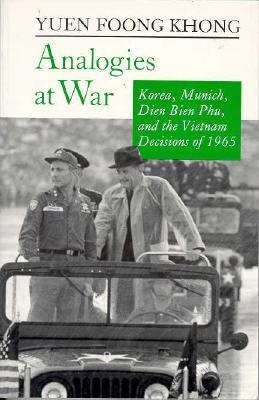
As readers of this blog will know, I’m interested in constitutive historicism (i.e., the ways in competing perceptions of history structure decision-making in the present). There is a large body of literature that examines how historical facts, historical factoids, historical analogies, and historical meta-narratives shape the thinking of people in different domains, such as the making of US foreign policy (see book cover below).


One of my current research projects examines the use of historical analogy by people involved in particular type of technology-based start-up. As I’ve read through the academic literature on open innovation and commons-based peer production (think of Linux and also Wikipedia), I’ve been struck by how frequently academics use ideas about different types of history (e.g., world history, US history, the history of technology, business history) to understand the new part of the economy.

linux

Consider Yochai Benkler’s seminal 2002 article  “Coase’s Penguin, or, Linux and” The Nature of the Firm“.” Yale Law Journal (2002): 369-446. Benkler argues that we have entered a new era in the history of innovation in which the old model, whereby innovation was done in-house by for-profit corporations, is becoming obsolete.  In the following paragraph, which references key personalities in post-war US history, Benkler makes this point.

Imagine that back in the days when what was good for GM was good for the
country an advisory committee of economists had recommended to the President of
the United States that the federal government should support the efforts of volunteer
communities to design and build their own cars, either for sale or for free distribution
to automobile drivers. The committee members would probably have been locked up
in a psychiatric ward—if Senator McCarthy or the House Un-American Activities
Committee did not get them first. Yet, in September of 2000, something like this in
fact happened. The President’s Information Technology Advisory Committee
recommended that the federal government back open source software as a strategic
national choice to sustain the U.S. lead in critical software development.


One of the interesting things about this paragraph is that Benkler, who is originally from Israel, assumes a fair amount of knowledge about US history on the part of the readers of the Yale Law Review. Although he does not feel the need to refer to him by name, Benkler alludes to General Motors CEO Charles Erwin Wilson in his first paragraph. In the 1950s and the 1960s, a statement attributed to Wilson “what’s good for General Motors is good for the United States” went viral and became part of the consciousness of many Americans. Today, many Americans believe that some General Motors executive once uttered these words back during the Cold War. This factoid shapes how they thing about the world. Of course, Wilson never actually said the exact words that have been attributed to him, but for the purposes of Benkler’s argument, the important thing is most readers of the Yale Law Review probably think that some suit from GM said it.

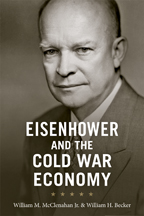
If you want more information about what Wilson actually said and did, including the major cuts to spending on defence contracts he made after 1953, you may wish to check out William M. McClenahan Jr and William H. Becker. Eisenhower and the Cold War Economy. JHU Press, 2011, especially pages 21, 48.

Becker, Eisenhower and the Cold War


I’m not saying that the overall argument of Benkler’s article is wrong.  I’m certainly not saying that Benkler (see below) deliberately set out to impart inaccurate historical information to his readers. I’m certain that Benkler, like most educated Americans, believes in the accuracy of the mythical Wilson quote.  I’m more interested in the fact that he and many other people use the familiar world of history to try to understand the brave new world of open source software.


Yochai_benkler_boalt_high-res


Mark Casson’s The Entrepreneur at 30

16 07 2014

I find that I’m citing Mark Casson with increasing frequency, so I thought I would re-post Peter Klein’s interesting blog post about Casson’s ideas.

Someone once said to me that Casson would have received the Nobel Prize already if he were American. I don’t know if that’s true, but he is certainly a major figure in a number of fields.

Peter G. Klein's avatarOrganizations and Markets

| Peter Klein |

2012 marked the 30th anniversary of Mark Casson’s classic work The Entrepreneur: An Economic Theory. Casson was one of the first economists since Frank Knight to elaborate on the role that uncertainty and judgment play in entrepreneurial decisions. Casson’s book offers not only a critique of the theories of competition and the firm offered in neoclassical microeconomics, but also a positive theory of the entrepreneur as a judgmental decision-maker under uncertainty. Casson’s work had a strong influence on the Foss-Klein approach to entrepreneurship, as well as Dick’s work on the theory of the firm.

Sharon Alvarez, Andrew Godley, and Mike Wright have written a nice tribute to The Entrepreneur in the latest edition of the Strategic Entrepreneurship Journal.

Mark Casson’s The Entrepreneur: An Economic Theory (1982) has become one of the most influential books in the field of entrepreneurship. For the first time, this article outlines…

View original post 205 more words


Constitutive Historicism versus Corporate Social Memory Studies

15 07 2014

Wadhwani and Jones (2014) have recently outlined a research agenda of ‘constitutive historicism’ for scholars of business and management.  ‘Constitutive historicism’ involves investigation how economic actors’ perceptions of their own place in historical time shape their strategies. As Wadhwani and Jones note that ‘two entrepreneurs presented with a similar objective situation may interpret them in very different ways based on their historical understanding of the ways events have unfolded and the possible directions they may take in the future.’

Constitutive historicism includes, but is distinct from, the study of corporate social memory. Corporate social memory, which is an emerging area of research, involve the investigation of how social and organizational memory influences how (large) companies operate. Scholars have begun to look at how firms use their histories to defuse potential political threats (Kroeze, 2013), market their products (Foster et al., 2011), and motivate workers (Anteby and Molnár, 2012). Other organizational scholars have examined how the narratives that firms and other organizations create about their histories influence the behaviour of people within those firms (Linde, 2009). Corporate social memory scholars have recognized that history is a key strategic asset for firms.

This paper abstract describes a recent example of some excellent research on corporate social memory (Kroeze and Keulen, 2013)

 This article states that the distinctiveness of business history and its convincingness can be improved by the concept of invented tradition and narrative. After a theoretical overview it suggests that the narrative approach explains the way leaders operate in practice. It argues that with a narrative approach one sees that history is used by business leaders in four different ways: as a source to create traditions and symbols as means of communication, as a way to understand and strengthen the identity of the organisation, as means to create corporate memory and as a tool to connect past, present and future. The examples are taken from a Dutch oral history project on management behaviour at multinationals.


In corporate social memory studies, the firm is the basic unit of analysis.  Scholars of corporate social memory rely on primary sources created by firms such as websites, commissioned corporate historians, employee magazines, company art collections, company archives, interviews, and internal correspondence. The researchers’ reliance on such sources tends to bias corporate social memory studies towards the investigation of firms that are relatively large and well established, since small and new firms typically lack the institutions needed to manage their social memories. 

Unfortunately, a considerable volume of economic activity takes place outside of large firms and historical consciousness influences economic actors that do not happen to be employees of large companies. The corporate social memory approach cannot, therefore, help us to understand the thinking of the owners of small businesses, self-employed individuals, or members of loose networks. However, by changing the unit of analysis from the firm to the industrial cluster, the industry, or the professional community, we can investigate how ideas about history influence the thinking of participants in the economy.    

Constitutive historicism can involve the use of a wide range of primary sources, including published documents (such as books and newspaper articles), unpublished texts (e.g., email exchanges), and interviews.

Anteby, M., & Molnár, V. (2012). Collective memory meets organizational identity: remembering to forget in a firm’s rhetorical history. Academy of Management Journal55(3), 515-540.

Foster, W. M., Suddaby, R., Minkus, A., & Wiebe, E. (2011). History as social memory assets: The example of Tim Hortons. Management & Organizational History6(1), 101-120.

Kroeze, R. “The sources and narrative structure of organizational history. The corporate historical narrative of HSBC and Deutsche Bank on their websites” Paper Presented at EGOS, Montreal, 2013.

Kroeze, R., & Keulen, S. (2013). Leading a multinational is history in practice: The use of invented traditions and narratives at AkzoNobel, Shell, Philips and ABN AMRO. Business history55(8), 1265-1287.

Linde, C. (2009). Working the past: Narrative and institutional memory. Oxford University Press.


So what’s text analysis actually good for?

13 07 2014

If you asked me to identify the most important difference between social-scientific research circa 2004 and 2014, I would be tempted to point to the rise of quantitative discourse analysis. The quantity and quality of text analysis being done by social scientists has increased dramatically in the last decade. What this means is that getting a PhD in a field like history is now rather different than it was in 2000-5, when I did mine.  This video gives a sense of what cutting-edge historical research now looks like.

Now I have very mixed feelings about the rise of digital humanities. Some of the Digital Humanities projects I have seen tell us nothing new despite the use of the sexy new technologies. Such projects are a huge waste of time and money. Then there are the Digital Humanities projects that make a genuine but modest contribution to their fields. Some of the research done using the new techniques,  expands our understanding somewhat, but I don’t think that it will dramatically change our view of the subject.  

Then there is research with really revolutionary potential. Here’s an example of that. In modern societies, people tend to distinguish violent crimes from “mere” property crimes and demand much more severe penalties for the former. In backward societies such as Saudi Arabia, the priorities are reversed and there are severe penalties for the theft of even small amounts, while some forms of severe violence go unpunished. This raises the historical question of when exactly the modern Western distinction between violent and property crimes emerged and became widespread in Western societies. 

A new Digital Humanities project,  The civilizing process in London’s Old Bailey, answer this question.


The jury trial is a critical point where the state and its citizens come together to define the limits of acceptable behavior. Here we present a large-scale quantitative analysis of trial transcripts from the Old Bailey that reveal a major transition in the nature of this defining moment.

…we demonstrate the emergence of semantically distinct violent and nonviolent trial genres. We show that although in the late 18th century the semantic content of trials for violent offenses is functionally indistinguishable from that for nonviolent ones, a long-term, secular trend drives the system toward increasingly clear distinctions between violent and nonviolent acts.

…This work provides a new window onto the cultural and institutional changes that accompany the monopolization of violence by the state, described in qualitative historical analysis as the civilizing process.

new PNAS paper by Klingenstein, Hitchcock, and DeDeo.


H/T to Chris Blattman. 


Privatized Profits, Socialized Losses

12 07 2014

This great video illustrates the nature of crony capitalism and regulatory capture.