Turks and Caicos as the 11th Province

26 05 2014


I see that the Canadian media is filled with stories speculating about the possibility of the country’s annexation of the Turks and Caicos Islands.  See here, here, and here.

Readers interested in some historical background to this movement might be interested in this article:

Smith, Andrew. 2009. “Thomas Bassett Macaulay and the Bahamas: Racism, Business and Canadian Sub-Imperialism“. The Journal of Imperial and Commonwealth History. 37, no. 1: 29-50. 

Note that the link is to an ungated pre-publication version of the article.


The First World War, the City of London, and Globalization

25 05 2014

Image

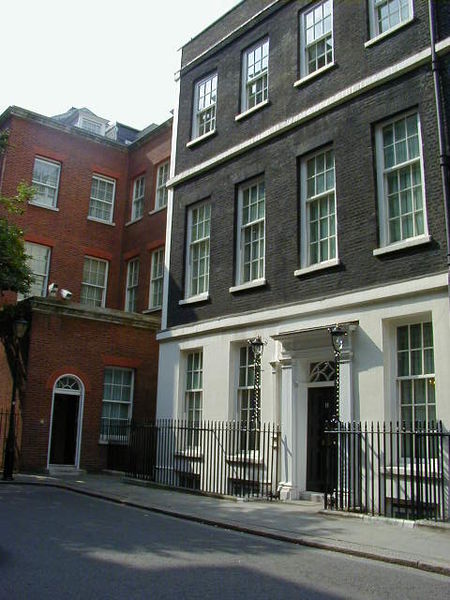
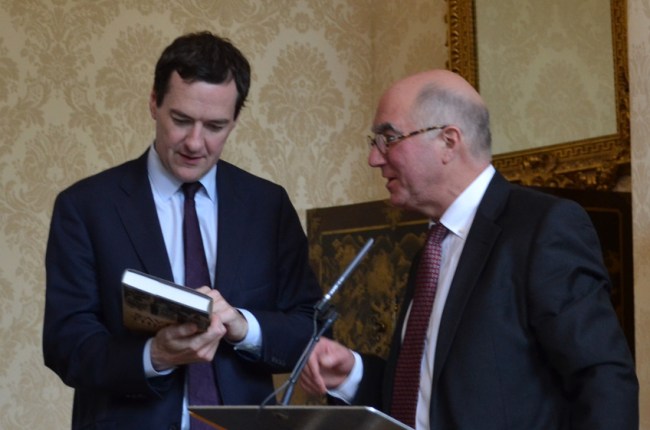
History and Policy, the London-based historical think tank, recently hosted an event at which the impact of the First World War on international finance n was discussed. George Osborne, Britain’s Chancellor of the Exchequer (i.e., Finance Minister), was present. Professor Richard Roberts spoke about ‘The Great Financial Crisis of 1914 – Then and Now’ at an event on 20 May 2014. The event was held at No. 11 Downing Street, the seminar was part of a series about the Treasury and the First World War.

Image

Richard Roberts is Professor of Contemporary History at the Institute of Contemporary British History at King’s College London. His new book, Saving the City: The Great Financial Crisis of 1914, is published by OUP.  Richard will also be presenting some related research at workshop I have organised called Armageddon and Mammon: the Impact of the First World War on
International Business. This workshop will take place on Thursday 10 July and Friday 11 July 2014 at East India House in the City of London (closest tube station is Liverpool Street).  I have pasted the programme below.

The historical research presented at this workshop should interest many non-historians because the world economy on the eve for the First World War resembles in the present. The world economy in 1914 was highly globalized and interconnected. Britain and Germany were each other’s largest trading partners. There was massive cross-border investment and international financial activity was extensive. The globalized economy was suddenly disrupted by the rupture between the Great Powers, as trade with enemy countries suddenly became illegal. The rapid de-globalization of the world economy caused economic chaos but also opportunities for some companies. The recent imposition of some trade sanctions on Russia gives us reasons to think about what the impact of a major war on our interconnected world economy would be like. Looking at the historical record can help us to make sense of the situation.

Non-presenters, including journalists, are welcome to attend, but should RSVP at least 48 hours in advance. They should do so by emailing 1914ibhconf@gmail.com

Thursday 10 July 

9:00-9:15 Welcome Message:  Neil Forbes, Coventry University

9:15-9:30 Opening Remarks: Andrew Smith, Simon Mollan, Kevin Tennent

9:30-11:00 Session 1:  Science, Technology, and Business at War

Wartime scents: the First World War and the modern perfume industry (Galina Shyndriayeva). Commentator:   Rory Miller

The Essential French Connection: Comptoir des textiles artificial and the Movement of Du Pont from Military to Consumer Products Development, 1916-1939 (Jacqueline McGlade)  Commentator:   Neil Pyper

Taming the War Octopus, 1915-1921: Labour Dilution, Scientific Management, and the impact of the Ministry of Munitions on Interwar British Manufacturing (Michael Weatherburn) Commentator:   John Singleton

11:00-11:15 Coffee Break

11:15-12:15 Session 2 The City of London At War

The 1914 moratoriums: banks, business, government and financial crisis management  (Richard Roberts) Commentator:   Neil Forbes

Rock Bottom? Just when they think it’s all over! Rothschild  and the Royal Mint Refinery (Michele Blagg) Commentator:   John Singleton

12:15-1:00 Lunch

1:00-2:30 Session 3: Profiting from Neutrality

Setting sail for an uncertain future Three Dutch steamship companies and the First World War, 1914-1918 (Samuël Kruizinga) [via teleconference] Commentator:   Neil Forbes

Enhancing the neutrals: Organizational change of Swiss and Dutch multinationals as a result of the First World War (Takafumi Kurosawa, Ben Wubs) Commentator:   John Singleton

The Impact of the First World War on Swedish Economic  Performance: a Case Study of the Ball Bearings Manufacturer SKF (Eric Golson and Jason Lennard) Commentator:  Dr Neil Pyper

2:30-2:45 Coffee Break

3:15:5:15  Session 4: The Impact of the War on Developing Countries

Global finance, trade and war: the influence of the First World War on investments on the Johannesburg Securities Exchange, 1914-1920 (Grietjie Verhoef) Commentator:  Neil Forbes

Profiting despite the Great War:  Argentina’s grain multinationals (Phillip Dehne) Commentator:  Neil Pyper

The impact of the First World War on British investment in the Anglo-Egyptian Sudan (Simon Mollan and Kevin Tennent)  Commentator:  John Singleton

Trading With the Enemy: HSBC’s Relationships with German Companies during the First World War (Andrew Smith) Commentator:  Chris Kobrak

Friday 11 July2014,

9:00-10:00 Session 5: Post-War Reconstruction

 American Big Business and the Attempt to Reconstruct War-Torn Western Europe in 1918-1920 (Volker Berghahn) Commentator:  Chris Kobrak

Mammon Unbound: The International Financial               Architecture of Wall Street Banks, 1915-1925 (Trevin Stratton) Commentator:  Rory Miller

Germany’s Sonderweg in Corporate Development in Comparative Perspective: the effects of the European “civil war” of 1914-45 (Leslie Hannah) Commentator:  Chris Kobrak

10:00-10:15 Coffee Break

10:15-12:00 Session 6: Legacies

The Great War: Matrix of the International Chamber of Commerce, a fortunate Business League of Nations (Clotilde Druelle-Korn)  Commentator: 

Imperial Business at War: The British Imperial Council of Commerce, the Great War, and the Empire, 1914-1918 (Andrew Dilley) Commentator:  John Singleton

The Flows of International Finance after the First World War: the Bank of England and Hungary, 1920 – 1939 (Neil Forbes) Commentator:  Chris Kobrak


UKIP and the Small Shop

20 05 2014

Image

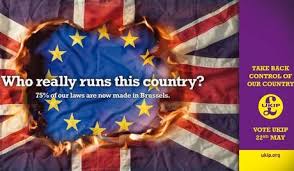
I don’t normally blog about political issues, but I’ve noticed an interesting political phenomenon that is connected to entrepreneurship, which is one of my research areas. We are currently in the middle of the elections for the European Parliament. People all over the continent are due to vote just five days. Recent polls have shown that a brand-new political party called the United Kingdom Independence Party (UKIP) may capture the largest number of UK seats in the EU parliament. 

Image


UKIP has attracted many voters. Many people are supporting UKIP essentially as a protest vote against the three main parties. Such voters may know little about UKIP’s actual policies. UKIP favours the immediate withdrawal of the UK from the EU and a dramatic reduction in the number of immigrants admitted each year. Neither Euroscepticism nor opposition to mass immigration is a position that can be associated with either the left or the right of the political spectrum, as all of the major political parties have, historically, been divided by these issues. UKIP’s economic philosophy is staunchly libertarian: it favours big tax cuts, the end to many environmental regulations, and a generally business-friendly environment. Opponents have, of course, attempted to label UKIP as racist. Although a few racists have joined the organization, that particular charge is basically unfair. UKIP has much more in common with the US Tea Party movement than with white supremacist political parties of continental Europe.


Many small businesses, at least near me, appear to be sporting UKIP signs. I’ve noticed that most of the businesses with UKIP signs are small, inefficient, obsolete, dingy-looking and run by elderly white men. A case in point would a toy shop near by house. It has a single worker (the elderly owner) and is almost impassible because of the boxes of old toys on the floor. It is dark and crowded. Many of the toys are in boxes that look old and certainly sun-faded (red ink has turned to a faint pink, etc). The owner of this shop handed me a UKIP lealflet that attacked immigration from Eastern Europe.


Please note that the photo below is of another business that supports UKIP. This shop appears to specialise in refilling printer cartridges, an activity that likely reduces the profits of the large US and Asian companies that manufacture printers.

Image

Businesses such as my local toy store are relics of yesteryear and are precisely the type of firm that would benefit from protectionism. Given that economic actors and businesses models from outside of the UK, such as US-style Big Box stores have deciminated such small businesses, one can understand why such business owners would favour a political party the combines protectionism with (internal) laissez-faire.  

It is true that a future UKIP government would never pass a law restricting Toys R Us or Amazon from competing against dumpy little toy shops. Such a law would be anathema to the laissez-faire ideology of the Anglo-American right. (In other parts of the world, most notably Japan and France, centre-right political parties have built electoral coalitions by supporting laws designed to protect small retailers from big chains). While UKIP wouldn’t pass a law modelled on Japan’s infamous Large Scale Retail Store Law, it might keep a young and ambitious migrant from the EU from opening a clean and colourful toy shop. Moreover, it would cut taxes and eliminate environmental regulations and the minimum wage, which would help this type of marginal business to survive.

My experience shopping in businesses with UKIP signs over the last two weeks has been uniformly negative, and not because of the signs. UKIP appears to attract a type of pennywise and poundfoolish businessman who competes the using materials of the lowest cost. Last night I stayed in a bed and breakfast that appears to be owned by a UKIP supporter. Shortly before going to bed, I popped into the bar, where the owner of the business was lecturing a guest about the reasons to vote UKIP. I noticed that soap in our room was of the cheapest type. The television in the room was tiny and had very poor image quality. Breakfast was made with cheap ingredients. I’m not complaining because I selected this B&B precisely because it was cheap and I just needed a place to sleep. I’ve been to other B&B where only the finest foods were served at breakfast. Each type of B&B has its time and place.

 My brief experience with this B&B got me thinking about the relationship between the personality traits of different types of entrepreneurs and the relationship between their business strategies and political proclivities.  This relationship is certainly something an economic sociologist might wish to investigate. My experience based on a tiny sample size suggests that people who compete by cutting their costs to the bone might be more inclined to vote UKIP than entrepreneurs who compete at a different end of the market. I suspect that the owners of a B&B would buy the ingredients for breakfast at Waitrose would be less likely to vote UKIP.

It also occurred to me that UKIP signs in businesses might provide useful information to consumers, even those who don’t care about politics.  

In North America, there is a voluntary certification programme for small companies called the Better Business Bureau (BBB). If a company meets their minimum standards, it can put a BBB sticker in the window. This certification reassures customers and can help develop a firm’s brand.  It seems to me that a UKIP sign on a business might serve a similar function. I’m not suggesting that consumers boycott UKIP-supporting firms. Far from it. However, people who are willing to pay a bit more for quality, the Waitrose Shoppers as it were, might wish to avoid a pro-UKIP firm. On the other hand, customers who want the cheap and cheerful experience may wish to gravitate to this sort of business.

I should point out that I don’t have strong views about politics in the UK or any other jurisdiction. I’m too transnational for that. Let me also stress that I love entrepreneurship and admire many types of entrepreneurs. However, the term “entrepreneur” embraces a vast range of businesspeople who cater to customers with very heterogeneous preferences. Political affiliation may be a useful signal for consumers in the UK and other countries.


Canadian Business and Environmental History Workshop Program (Revised), 22-23 May 2014  

20 05 2014

AS: Please note that this version of the program replaces the one I posted a few days ago. We have change the order in which the papers are to be presented.

Funding has been provided by NiCHE and the Wilson Institute for Canadian History, and  L.R. Wilson/R.J. Currie Chair in Canadian Business History.

Venue: Rotman School of Management, 105 St.George St, Toronto, ON M5S 3E6, Canada

Local Organizer:  Jessica Van Horssen,jvanhors@yorku.ca

Thursday, 22 May 2014

9:00 Meet for Breakfast, Introductions

9:15 Professor Chris Kobrak, University of Toronto, Welcome.

9:30 Overview of Workshop Themes, Andrew Smith and Jessica van Horssen

Note: Each Presentation will be 25 minutes in length. 10 minutes per paper has been set aside at the end of each panel for the Commentator’s feedback. 10 minutes per paper for feedback from other audience members has also been planned.

10:00 to 11:50

Presenter and Paper Title Commentator
Josh MacFadyen, Western, “The Business of Biomass Fuel in Nineteenth-Century Central Canada” Christine Rosen, Haas School of Business, UC Berkeley
Amanda Robinson, York University The UAW Welcomes a Spectacular Landmark of Progress: Suburbs, Shopping Malls, and Automobility in “Canada’s Motor City” Christine Rosen, Haas School of Business, UC Berkeley


11:50 to 13:00 Lunch

13:00 to 15:00

Presenter and Paper Title Commentator
Hayley Goodchild, McMaster University, “An Environmental History of Dairy Production in Ontario, 1860 to 1900”


Matthias Kipping, York University
Stéphane Castonguay, Université du Québec à Trois-Rivières, “ Shawinigan Water and Power Company and the Transfiguration of the Saint Maurice River Valley”


Jessica Van Horssen, York University


15:00 to 15:15 Coffee Break

15:30 to 17:50

Presenter and Paper Title Commentator
Dawn Berry, Oxford, “Flows of Environmental Knowledge From Alcan’s Greenland Operations: 1940 to 1945” Christine Rosen, Haas School of Business, UC Berkeley
Mark Kuhlberg, Laurentian University, “Meshing Environmental and Business History in Ontario’s Pulp and Paper Industry, 1894-1932”


Matthias Kipping, York University


Friday, 23 May 2014

9:00 Meet for Breakfast

10:00 to 12:00

Presenter and Paper Title Commentator
George Colpitts, University of Calgary, “Accountancy and the Quantification of Environmental Data by Hudson’s Bay Company, 1821-1862”


Pierre Desrochers, University of Toronto
Andrew Smith, University of Liverpool “The Dominion Fisheries Act of 1868: a Hayekian Approach”


Pierre Desrochers, University of Toronto


12:00 to 13:00 Lunch

13:00 to 15:00

Presenter and Paper Title Commentator
Jessica Van Horssen, York University  “Selling our land, tying our hands: the environmental history of Asbestos” Laurence Mussio, McMaster University
Kirsten Greer, Nipissing University and Andrew Smith, University of Liverpool, “An Environmental History of the Trade in Sugar between the Province of Canada and the British West Indies”


Christine Rosen, Haas School of Business, UC Berkeley


15:00 to 15:15 Break

15:15 to 15:45 Publication Planning Session

15:45 Workshop Concludes


Canadian Business and Environmental History Workshop Program, 22-23 May 2014

13 05 2014

Funding for this workshop has been provided by NiCHE and the Wilson Institute for Canadian History, and  L.R. Wilson/R.J. Currie Chair in Canadian Business History.

Venue: Rotman School of Management, 105 St.George St, Toronto, ON M5S 3E6, Canada

Local Organizer: Jessica Van Horssen,jvanhors@yorku.ca

If you wish to attend some or all of these sessions, please RSVP.

Thursday, 22 May 2014

9:00 Meet for Coffee, Introductions

9:15 Professor Chris Kobrak, University of Toronto, Welcome.

9:30 Overview of Workshop Themes, Andrew Smith and Jessica van Horssen
 

Presenter and Paper Title Commentator
Josh MacFadyen, Western, “The Business of Biomass Fuel in Nineteenth-Century Central Canada” Christine Rosen, Haas School of Business, UC Berkeley
Amanda Robinson, York University The UAW Welcomes a Spectacular Landmark of Progress: Suburbs, Shopping Malls, and Automobility in “Canada’s Motor City” Christine Rosen, Haas School of Business, UC Berkeley


11:50 to 13:00 Lunch

13:00 to 15:00

Presenter and Paper Title Commentator
Kirsten Greer, Nipissing University and Andrew Smith, University of Liverpool, “An Environmental History of the Trade in Sugar between the Province of Canada and the British West Indies”


Christine Rosen, Haas School of Business, UC Berkeley
Hayley Goodchild, McMaster University, “An Environmental History of Dairy Production in Ontario, 1860 to 1900”


Matthias Kipping, York University.


15:00 to 15:15 Coffee Break

15:30 to 17:50

Presenter and Paper Title Commentator
Stéphane Castonguay, Université du Québec à Trois-Rivières, “Private Enterprise, Hydroelectricity, and First Nations”


Jessica Van Horssen, York.
Mark Kuhlberg, Laurentian University, “Meshing Environmental and Business History in Ontario’s Pulp and Paper Industry, 1894-1932”


Matthias Kipping, York University.


Friday, 23 May 2014

10:00 to 12:00

Presenter and Paper Title Commentator
Dawn Berry, Oxford, “Flows of Environmental Knowledge From Alcan’s Greenland Operations: 1940 to 1945” Alison Kemper, Ryerson University
Andrew Smith, University of Liverpool “The Dominion Fisheries Act of 1868: a Hayekian Approach”


Pierre Desrochers, University of Toronto


12:00 to 13:00 Lunch

13:00 to 15:00

Presenter and Paper Title Commentator
George Colpitts, University of Calgary, “Accountancy and the Quantification of Environmental Data by Hudson’s Bay Company, 1821-1862”


Pierre Desrochers, University of Toronto
Jessica Van Horssen, York.  “Selling our land, tying our hands: the environmental history of Asbestos” Laurence Mussio, McMaster University


15:00 to 15:15 Break

15:15 to 15:45 Publication Planning Session

15:45 Workshop Concludes


Entrepreneurship and Business History Workshop at Copenhagen Business School

9 05 2014


Image

I have thoroughly enjoyed the entrepreneurship and business history workshop at Copenhagen Business School. This was my first visit to CBS and I must say that I’ve been really impressed with the professors and PhD students I’ve met here. Wow! What a great institution of learning. A paradise for business humanities scholars. Kudos to Dan for organizing this stimulating event.

Jean-Baptiste Say was mentioned in a number of our conversations yesterday. For this reason, I thought I would share a link to an older blog post that deals with his ideas. See here.


Confusing Definitions of Entrepreneurship

9 05 2014

This post by Peter Klein has some interesting ideas about the problems involved in defining “entrepreneurship”.

Peter G. Klein's avatarOrganizations and Markets

| Peter Klein |

Some of you have heard me complain before about the confusing ways “entrepreneur” and its cognates are used in the literature. Sometimes entrepreneurship refers to an outcome or phenomenon (startups, self-employment, high-growth firms), other times to a behavior or attribute (creativity, alertness, innovation, judgment, adaptation). I find the occupational, structural, and functional taxonomy useful, but other organizing schemes may be useful too. In any case, reading the entrepreneurship literature can be a frustrating experience.

I’m glad I’m not the only one who thinks so:

[T]he book’s diversity of approaches and styles is both a strength and also an inherent weakness. Some chapters offer comprehensive descriptions over long periods of time (e.g., Hudson, Hau, Wengenroth, Chan), while others focus on narrow aspects of entrepreneurship (e.g., Yonekura and Shimizu, Mokyr, Wolcott). The first kind appears to be written for a broad audience of noneconomic historians, whereas the second…

View original post 186 more words


Historical Parallels for the Piketty Craze

3 05 2014


piketty

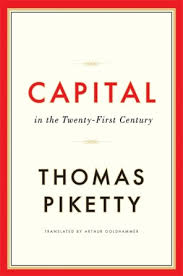
I’ve blogged on Thomas Piketty’s monumental door-stopper of a book about inequality. I’m really impressed, even shocked, by the extent to which this book is being talked about in the United States.  When the French-language version came out last year, it sold a respectably number of copies in France, but the impact was nothing like that of the translation that appeared in the United States about two months ago. Suddenly, everyone is talking about inequality and Piketty’s book, which contains hundreds of pages of dense economic-historical data about trends in inequality since the eighteenth century, has soared to the top of the non-fiction best-seller list.

One café in New York has attempted to cash in on the interest in Piketty by adjusting the names of some of the things on its menu. I wouldn’t read too much into a lighthearted sidewalk menu, but it’s clear that the restaurant people expect that pedestrians in this affluent area of New York would be familiar with Piketty. Given that Piketty has been discussed extensively in the New York Times and National Public Radio, that’s a good bet.

pikettymenu

[Thank you Justin Fox for tweeting this photo!]

It is certainly true that many of the copies of the book that have been sold in recent weeks will likely go unread. Matt Yglesias has noted that while the book has topped the non-fiction best-seller list for hard copy books, the Kindle version isn’t the best-selling e-book. In fact, it’s only at number 23. He suggests that this discrepancy between hardcopy and Kindle sales is because people want a physical book they can show to others in order to demonstrate that they are smart. This explanation has the ring of truth to me. However, it is undeniable that many people are reading the book, understanding much or all of its content, and then applying Piketty’s arguments to pressing political issues.

As Tyler Cowen and Veronique de Rugy have pointed out, the book made much less of a splash in France than in the United States. The y attribute this to several factors. First, Piketty’s core idea that inequality is very bad is pretty much the conventional wisdom in France, where it is a contentious claim in the United States. Moreover, the intellectual climate in France has, in the last 18 months, turned away from the focus on distributional justice that characterized the first few months of M. Hollande’s presidency. Today, France’s centre-left government is talking about deregulation, cutting taxes, more flexible labour markets.  Catherine Rampell  of the Washington Post also points out the French book is even longer than the English-language version and that this may help to explain while sales have been relatively sluggish in France.

As a business historian, I’m left thinking about historical parallels. Are there other books about economic topics that became runaway best-sellers and changed the political climate? [For the record, I’ll point out that it is uncertain whether the Piketty craze of the last few months will effect a permanent change in the political climate in the United States. It does appear, however, to have promoted economic inequality to the top of the agenda for the time being].

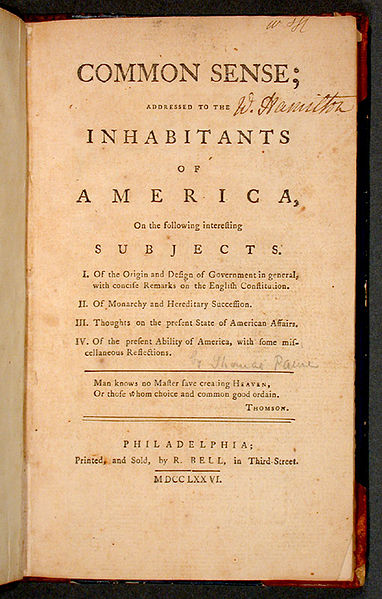
Piketty’s book is both a descriptive-analytical economics book and a programmatic political tract that calls for action to address inequality. To the extent to which it is a prescriptive book, its bibliometric success parallels Thomas Paine’s Common Sense, which was published in Philadelphia in January 1776 and which was soon being read throughout the Thirteen Colonies. It was this book, more than any other, that convinced Americans that full independence from Britain was required. Common Sense was short, punchy, and written in accessible language.

382px-Commonsense

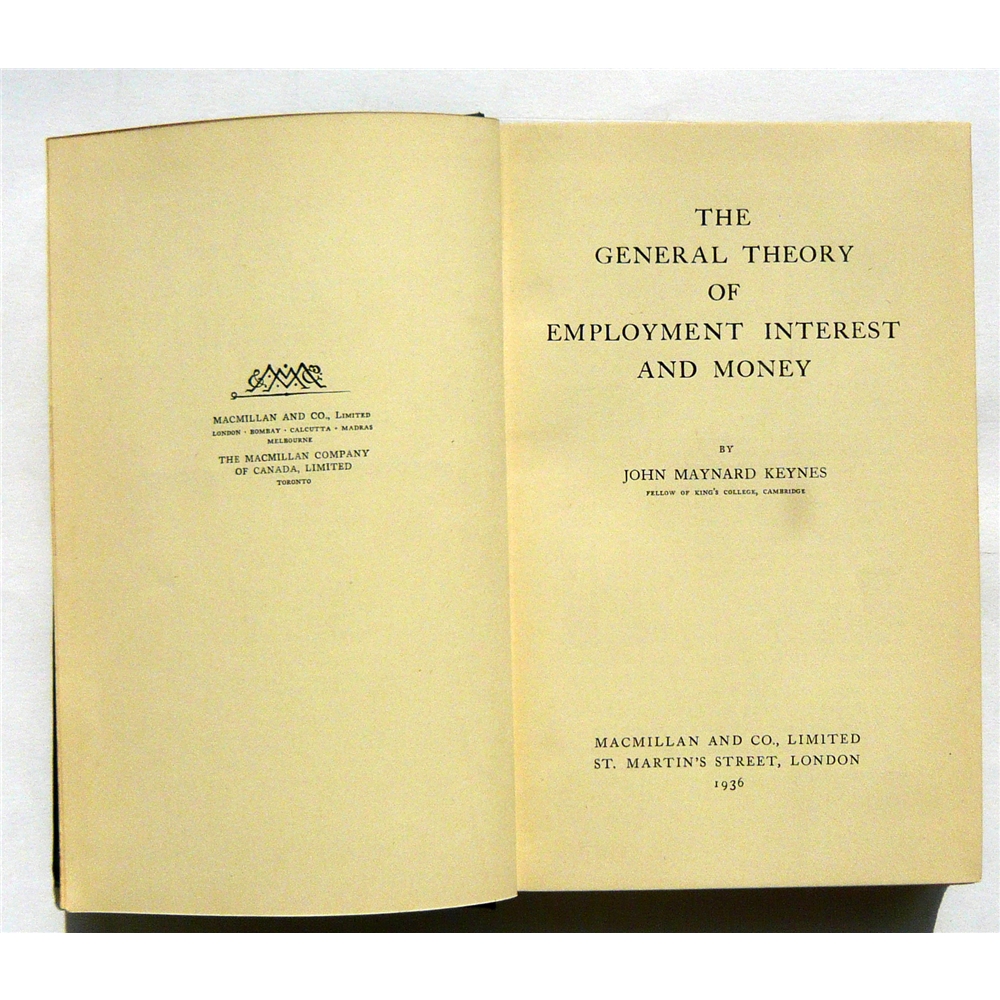
Keynes’s General Theory of Employment, Interest and Money, which was published in early 1936, had a huge impact on academic economists and, eventually, public policy. Indeed, it produced the so-called Keynesian Revolution of the late 1930s. However, very few non-academics read this book.In contrast, The Economic Consequences of the Peace was a best-seller and had a huge impact on public policy in the 1920s and 1930s.


generaltheory


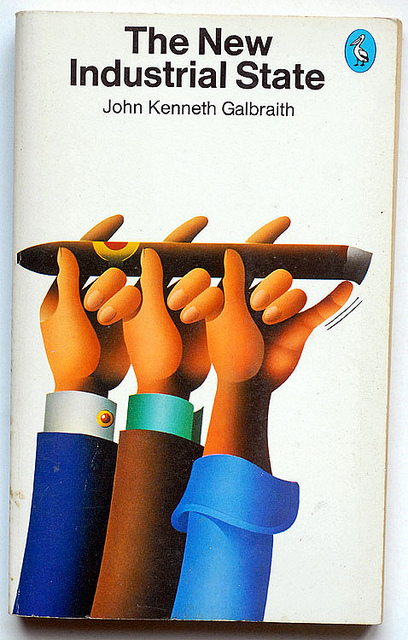
John Kenneth Galbraith’s 1967 The New Industrial State also made a splash when it came out. It shot to the top of the bestseller lists and was purchased by many people who don’t normally read business and economics books. I recall reading a novel published around 1970 in which one of the characters, the wife of a professor, forced herself to read The New Industrial State so that she would have something to say at dinner parties. [Sorry, I forget the name of the novel]. I’m not certain, however, whether Galbraith’s bestseller had much of an impact on public policy in the United States. However, I know that it was asserted the 1975 decision by the Canadian Prime Minister to support wage and price controls was a result of his having read this book during his vacation. (In 1974, the Prime Minister had ridiculed his opponent’s proposals for such controls).

newindustrialstate


Bryan Burrough and John Helyar’s Barbarians at the Gate: The Fall of RJR Nabisco, a bestseller published in 1989, reinforced public hostility to corporate takeovers. In a sense, it probably contributed to the desire to change the law in Delaware in other US states to make hostile takeovers harder to effect. That’s another example of a bestselling book that influences public policy.

barbarians


Everyone is thinking about what the impact of Piketty’s book on US politics will be.  I’m actually more interested in what the impact of the Piketty book on the private decisions of investors and managers might be. We therefore need to ask three questions:


1) How would an investor change his or her strategy if they believed the Piketty’s predictions about inequality were true?

2) Would a CEO who accepted Piketty’s theory behave differently from one who didn’t?

3) How would belief in the accuracy of Piketty’s theory change the marketing strategies of firms? If Piketty is correct and we can expect the gap between rich and poor to increase, it might make sense for firms to eliminate their mid-market product lines and concentrate on designing goods for the very rich and the very poor.

So far, I haven’t seen any evidence that Piketty’s book is affecting the behaviour of investors and managers. However, it is too soon to tell.


Revisiting Post-Confederation Fiscal Policy: Liberal Dissent from Conservative Deficits

1 05 2014

By Raymond Tatalovich. Journal of Canadian Studies/Revue d’études canadiennes Volume 47, Number 2, Spring 2013 

Abstract:

The leading studies of post-Confederation fiscal policy (Perry 1955; Gillespie 1991) have assumed that both political parties favoured deficits to build public works, notably railroads, but these studies’ research, which looked only at selected budget speeches, was inconclusive and misleading. This essay analyzes Liberal and Conservative budget speeches as well as the Opposition responses for the entire period of 1867-1903; this more complete historical record shows that the Liberals consistently opposed the Conservative reliance on deficit financing and public indebtedness.


About the author: Raymond Tatalovich received his PhD from the University of Chicago where he studied under Theodore J. Lowi. As professor of Political Science at Loyola University Chicago, he teaches Canadian Politics and is the immediate past president of the Canadian Politics Section of the American Political Science Association.


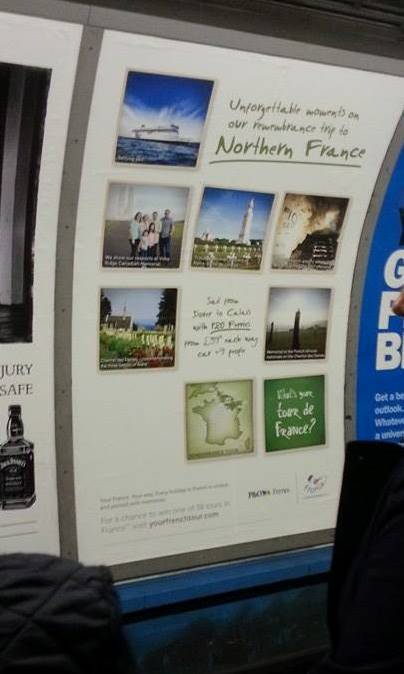
25 04 2014

VimyRidgeTourism


The centenary of the start of the First World War has caused a surge in battlefield tours. I snapped this photo yesterday while waiting for an underground train.  It’s nice to see that one of the cross-channel ferry companies is cashing in on all of this WWI nostalgia. I noticed that they are encouraging Londoners to go visit Vimy Ridge rather than some other battlefield in France.