Joseph Heath on Cooperatives

8 11 2025

I read everything Professor Joseph Heath writes, whether it’s a blog post from In Due Course or one of his books. He’s one of the most consistently clear-headed philosophers working today, especially when it comes to political economy. His recent Substack post, “Are cooperatives more virtuous than investor-owned firms?“, is another example of his signature style: lucid, skeptical, and refreshingly empirical. In it, Heath challenges the romanticism often attached to cooperative firms, arguing that they are neither inherently more virtuous (i.e. more socially beneficial) than investor-owned enterprises. (I suppose we should define organizational virtue here as an organization that seeks to increase the utility the human race/sentient beings as whole, not just the people who control the organization). I agree with Heath’s central claim, and it aligns with the argument made by Henry Hansmann in The Ownership of Enterprise, which shows that the choice of ownership form is best understood as a response to transaction costs and governance challenges.

Heath’s post also makes a comparative political claim that deserves closer scrutiny. Here’s where the empirical researcher in me gets pedantic. He writes: “In Canada, co-operatives have always played a much more important role in left-wing politics than they have in the UK.” This is a striking assertion, and one that I think isn’t quite right. While Canada certainly has a rich tradition of cooperative enterprise, especially in agriculture and finance and in Heath’s native Province of Saskatchewan, the UK’s Labour Party has had a formal electoral alliance with the Co-operative Party for about a century. This relationship is not merely symbolic. As of the 2024 general election, 41 sitting Labour MPs are also officially designated as Labour and Co-operative MPs. These MPs advocate for cooperative principles within the broader Labour agenda, and the alliance reflects a deep institutional connection between cooperative ownership and British left politics.

The historical relationship between the Co-operative movement and Britain’s Labour Party dates back nearly a century, back to the time when Canada’s CCF, and it predecessors, closely followed intellectual trends in the UK. The cooperative movement and the UK Labour Party formalized their alliance in the 1920s, jointly endorsing candidates who represent both Labour’s social democratic values and the Co-operative movement’s commitment to shared ownership and democratic control. Today, the partnership remains robust, with dozens of MPs carrying the joint designation, although I can’t think of any recent Labour policies in tax or anything else that favour the cooperative form over the investor-owned firms.

By contrast, the link between cooperative ownership and left politics in the United States seems to be far weaker, except perhaps in a few states settled by Scandinavians. While there are many successful cooperatives in the US, particularly in agriculture and rural finance, these organisations often have stakeholder bases that would almost certainly lean Republican. Some of the largest agricultural co-ops in the Midwest, for example, are deeply embedded in conservative communities. The cooperative form in the US has not been consistently championed by the Democratic Party, nor has it been institutionally integrated into, say, the DNC’s machinery, in the way it has in the UK or Scandinavia. In countries like Sweden and Norway, cooperative ownership is tightly woven into the fabric of social democracy, supported by both policy and party infrastructure.

This variation raises an important question: why is the linkage between cooperative ownership and left politics stronger in some countries than others? We probably need scholars to develop a causal model that explains this divergence. Such a model would need to account for historical party structures, electoral systems, the role of civil society, regional economic patterns, and perhaps even cultural attitudes toward ownership and governance. Heath’s skepticism about cooperative moralism is well-founded, but his comparative politics could use a bit more empirical grounding. A few years ago a great book on the history of the UK’s Cooperative group was published by some of my friends. It could provide empirical detail to stimulate the thinking of philosophers.


The End of the Bromance: Musk and the Tragedy of Diverted Talent

6 06 2025

The latest spat between Elon Musk and Donald Trump has moved from petty to poisonous. After months of barely concealed tension, Musk finally went on the offensive. For an overview of the events of the last 48 hours, see here, here, and here.

The two men, once mutual admirers, now represent opposing poles in the Republican constellation. This latest clash offers more than just tabloid drama for us to gossip about it underscores a deeper institutional problem: why do entrepreneurs as talented as Musk get pulled into the dark gravity well of rent-seeking politics?

Musk’s career is a study in duality. On one hand, he is the archetype of the Schumpeterian entrepreneur: making life slightly better for millions of people through innovations in things like payment systems. On the other, he has repeatedly deployed his political acumen to extract subsidies from governments. Tesla’s early growth was underwritten by generous tax credits, SpaceX relies on NASA contracts, and his energy ventures have gorged on regressive green subsidies. Musk is certainly not unique in this regard—he merely illustrates with exceptional clarity the tragic misallocation of genius that occurs when institutions permit, or even incentivize, rent-seeking entrepreneurship. Imagine the gains to human welfare if all of Musk’s talents had been directed solely at solving engineering problems rather than navigating political patronage.

President Donald Trump meets with Conor McGregor and family in the Oval Office, March 17, 2025. (Official White House Photo by Molly Riley)

William Baumol was one of the most versatile and influential economists of the 20th century, whose career spanned over six decades and touched virtually every subfield of economics from labour markets to innovation theory to the economics of art. Baumol spent much of his academic life at Princeton and later at NYU. While he published extensively on the theory of the firm and macroeconomic policy, his most enduring contribution to entrepreneurship studies came in the form of a deceptively simple insight: that entrepreneurship is not inherently productive. In his seminal 1990 paper, Entrepreneurship: Productive, Unproductive, and Destructive, Baumol argued that while the supply of entrepreneurial talent may be more or less fixed across societies (only a certain proportion of people are born with the genes that make them good entrepreneurs), how this scarce resource is allocated is highly sensitive to the institutional environment. In societies with strong property rights, the rule of law, and competitive markets, entrepreneurs are more likely to engage in innovation and socially beneficial enterprise. In contrast, in institutional contexts that reward rent extraction, through bribery or lobbying at the royal court—the same entrepreneurial energy may be directed toward unproductive or even destructive ends. Baumol’s typology reframes the policy debate: the problem is not a shortage of entrepreneurship per se, but the set of incentives that determine where entrepreneurial effort is deployed. His work reminds us that the entrepreneur is not always the hero of capitalism; he or she is whatever the institutional context incentivises him or her to be.

William Baumol’s typology remains a commonly used lens through which to understand this phenomenon. In his formulation, entrepreneurship is neither inherently good nor bad—it is merely energy. Whether it is productive, unproductive, or destructive depends on the institutional context. In the Gilded Age, many American factory owners lobbied for tariff protection to protect their margins from foreign competition. Thomas Edison got rich by spending long hours in his laboratory producing innovative products that genuinely made life better for ordinary people. That’s socially productive entrepreneurship. Other entrepreneurs of that same era got rich by hanging around in smoke-filled rooms in Washington trying to get the details of the schedule of tariffs altered. Today, too many entrepreneurial energies are expended on capturing regulators, designing market-thwarting rules, and lobbying for subsidies. The returns to such behaviour can be immense, and perversely, in some socio-political systems, more reliable than those from genuine innovation. Hence the tragedy: the institutional architecture, not the intrinsic morality of entrepreneurs, determines whether entrepreneurial energies go toward inventing better mouse-traps or rent-seeking (e.g., hanging around the court so you can ask the monarch to give you a monopoly on the salt trade or something).

Institutional theory seeks to explain the ultimate causes of economic growth not in terms of resources or geography, but through the quality and structure of a society’s institutions, the formal and informal rules that govern human interaction. The foundational figure in this tradition is Douglass North, who won the Nobel Prize in 1993 for his work demonstrating that well-defined property rights, enforceable contracts, and predictable legal systems are essential preconditions for sustained economic development. North’s key insight was that institutions shape the incentives that individuals and organizations face: when the institutions reward productive entrepreneurship, economies flourish.

More recently, Daron Acemoglu and co-authors have built on and extended this framework, arguing that the deep determinants of prosperity lie in the presence of what he and his co-authors call “inclusive institutions”—those that create broad-based opportunities and constrain the arbitrary exercise of power. His work, especially Why Nations Fail, has powerfully influenced both academic and policy discourse, which is why he got the Nobel Prize. Acemoglu’s arguments, like North’s, are ultimately about incentives: inclusive institutions direct effort toward innovation and wealth creation, while extractive institutions channel energy into rent-seeking, repression, and elite entrenchment. Taken together, institutional theory provides a compelling answer to one of economics’ most profound questions: why some nations grow rich while others remain poor.

This brings us to the central insights of the paper I co-authored with Graham Brownlow,  “Informal Institutions as Inhibitors of Rent-Seeking Entrepreneurship”. In this paper, which was published in a journal called Entrepreneurship Theory and Practice, We examined why the United States, despite having formal constitutional rules that ostensibly promote market competition, saw such variation over time in the degree to which entrepreneurs engaged in rent-seeking behaviour. One of our key findings was that the effectiveness of anti-rent-seeking provisions, such as the anti-aid clauses that were inserted into many state constitutions during the Jacksonian era, depended not merely on their formal wording, but on how judges interpreted them. Judicial scepticism towards governments using taxpayer funds to help specific firms had a chilling effect on collusion between politicians and entrepreneurs. State efforts to subsidize politically connected firms were routinely struck down. In that institutional climate, rent-seeking became a riskier and therefore less attractive strategy for an entrepreneur trying to get rich.

We argue that the shift in judicial philosophy after 1915 rendered many of these formal constraints inert. Courts began to defer to legislative decisions, even when these transparently served private interests rather than public welfare. The result was an institutional environment increasingly friendly to rent-seeking. Even though the constitutional text remained constant, its meaning had been transformed by a shift in thinking of the judges. This insight underscores the fragility of formal constraints.

The key policy implication of our research is that the ultimate effectiveness of institutions in curbing rent-seeking entrepreneurship hinges on the moral and intellectual commitments of judges. Constitutions can inhibit rent-seeking only if the judiciary interprets them in that spirit. Judicial philosophies, which are shaped by public opinion, legal culture, and broader intellectual currents, determine whether the constitutional order channels entrepreneurial energy into productive or parasitic endeavours. The tragedy is that when these interpretive norms erode, talented individuals like Musk are rationally induced to play the political game rather than innovate in the marketplace.

Still, we should not end on a pessimistic note. Recent judicial decisions suggest that at least some parts of the American judiciary are reawakening to the dangers of rent-seeking entrepreneurship. If this trend continues, it may yet be possible to restore a climate in which entrepreneurship is once again skewed toward the productive. The battle between Musk and Trump is a mere symptom. The deeper issue is institutional. If we want more Musks designing rockets and fewer Musks manoeuvring for subsidies, we need courts that stand firmly against rent-seeking.


Should Universities Compete Like Corporations? Rethinking Competition Policy in UK Higher Education

8 05 2025

What happens when British charitable institutions designed to serve the public good are treated like market actors and then a policy regime imported from the United States gets imposed on them? In the case of UK universities, the consequences have become increasingly difficult to ignore. The financial instability now threatening dozens of higher education institutions (HEIs)—a category of entity that is still formally classed being in the charitable sector (albeit as “exempt charities”)–is forcing a critical reconsideration of whether applying commercial competition policy to universities has gone too far. If the principles underpinning anti-trust law (particularly those ultimately derived from the Sherman Act in the United States) are unsuitable for cultural institutions such as museums, churches, or libraries, one might reasonably ask: why are universities—whose remit is arguably broader and more clearly charitable—subjected to the same regulatory logic?

The Competition Act 1998, the key legislative instrument shaping the UK’s competition framework, prohibits anti-competitive agreements and abuse of dominant positions. In doing so, it seeks to protect consumers from monopolistic behaviour and ensure market fairness. However, its extension to universities has had unintended consequences. Universities are not merely providers of services in a neutral market; they are mission-driven institutions, historically embedded within local and national contexts. The framing of students as consumers and universities as competitors—solidified in policy from the 2010 Coalition  onward—has encouraged duplication rather than cooperation, shared infrastructure, or regional mission cohesion. Of course, there isn’t a real market here: the prices (tuition fees) are set by the government and students are allocated to universities through a public sector body called UCAS.

This problem is no longer theoretical. Financial strain is now systemic across the sector. In early February, Wendy Larner, Cardiff University’s Vice Chancellor, publicly stated the strictures of competition law are actively inhibiting cost-saving collaboration between geographically proximate institutions. For the benefit of international readers, I should explain that in the UK, it is not unusual to find universities whose buildings sit cheek by jowl next to the buildings of other universities, an arrangement that appears to scream out for a merger to achieve economies of scale. Cardiff University, which is in serious financial difficulties and is talking about closing its nursing college (!!) is an example of a university that shares a city with other universities whose campuses are also scattered across town.

Mergers, similar to the one undertaken by the universities in Manchester in 2004, and collaborations short of a merger, such as the collective provision of janitorial services, seem to be inhibited because they might now be construed by the Competition and Markets Authority (CMA) as cartel-like behaviour under the Act. Universities that once shared specialist staff, jointly invested in laboratory facilities, or coordinated postgraduate research training now find themselves navigating a thicket of legal ambiguities. My impression is that the CMA is run by people who read Adam Smith’s famous book and are now inappropriately applying it to universities. In a great sentence, Smith wrote that “people of the same trade seldom meet together, even for merriment and diversion, but the conversation ends in a conspiracy against the public, or in some contrivance to raise prices.” That may well be true of car dealers hanging out at the country club– they might well agree to fix prices somewhere around the ninth hole of the golf course. But universities are different because they are charities. When people from different universities re-unite at conferences, they are producing a public good rather than trying to find a backdoor route to the creation of a cartel.

To its credit, the CMA responded by Wendy Larner’s comments by saying that it is willing to have conversation with universities and to be flexible about the rules (see here and here). While the Competition and Markets Authority (CMA) has issued some clarifications by suggesting that collaboration is not necessarily impermissible the climate of legal caution remains pervasive. The chilling effects are real, even if not always explicitly codified. I’m not speaking here based on anything I have personally observed but I am basing my comments on what I have read online.

From a historical perspective, this represents a profound shift. British universities have long been seen as charities. Originally, they were closely tied to the established Churches (Church of England in this country) and then in the nineteenth century we had non-denominational civic universities. In the twentieth century, their funding, legitimacy, and purpose entangled with state agendas (think of Cold War science policies). Their institutional success has often depended on collaboration rather than competition. The Robbins Report of 1963, for example, imagined an expanding and coordinated system of higher education, with universities working together to meet national needs. The author that report was certainly a supporter of competition in commercial markets—he was a classical liberal friend of F.A. Hayek. It was not until the market-oriented reforms—accelerated in the New Labour and post-2010 periods—that universities began to be reconceptualised as companies.

I’m not even going to get into the issue here of whether anti-trust law is a good thing or whether the world would have become a better place had the Sherman Anti-Trust Act, which has now been emulated in every country influenced by American soft power, had never been created. (I’m sympathetic to that counterfactual but will leave that to another blog post). I’ll simply point out that many scholars, particular in my home field of business history, have long been sceptical of both the early, path-setting anti-trust laws and the motives of their creators (see this paper). My main argument here is that we shouldn’t apply competition laws to universities because they are charities, not companies!

Theoretically speaking, the case for viewing universities as companies rests on shaky ground. While classical economic theory correctly champions competition as a driver of innovation and efficiency, the university sector defies many of the assumptions necessary for those outcomes to materialise. Information asymmetry is profound—students cannot fully evaluate the “product” they are purchasing until years after the fact—and the “goods” on offer (teaching, research, cultural engagement) are not easily interchangeable. Moreover, duplicating niche programmes or competing for the same shrinking pool of students (think of how the post-2008 fertility crisis is about to hit universities) does not lead to efficiency; it results in waste. This problem is particularly acute in regions with multiple institutions serving overlapping communities. In such cases, the inability to merge departments, co-deliver teaching, or rationalise real estate due to fear of breaching competition law borders is unhelpful.

The analogy with the Sherman Anti-Trust Act, as applied in the United States, is instructive. That legislation was justified on the grounds it was necessary to prevent industrial monopolies from exploiting consumers. But when applied to universities—which do not exist to maximise shareholder value—it risks misdiagnosing the problem entirely. Indeed, the collapse of several for-profit universities in the US should serve as a cautionary tale: market logic, when applied too uncritically, can hollow out the very institutions it purports to reform.

If we do have to think of universities as companies, a more appropriate model might be drawn from the regulated public utility sector (think of electricity and natural gas pipeline companies), where certain forms of collaboration are not only permitted but required to ensure service continuity and universal access. Alternatively, one might revisit the statutory exemptions available to public broadcasters or national cultural bodies, which recognise that competition law should not be enforced uniformly across all sectors of national life. If universities are to survive and thrive they must be permitted to act like charities.

Perhaps a wholesale exemption from competition policy may not be necessary but clearer “safe-harbours” for collaboration and pre-authorisation for all mergers could make a substantial difference. But continuing to treat universities as if they are indistinguishable from mobile phone providers or supermarket chains is intellectually indefensible and practically damaging. Don’t get me wrong– I love that the UK has so many competiting mobile phone providers. It’s just the universities are different. It has taken centuries to build a higher education system with global reputation and local relevance. Let us not dismantle it through policy frameworks designed for a fundamentally different domain of human effort.

Is it time, then, to reconsider not just the letter of the law, but the philosophy behind it? The financial crisis in UK universities is not solely a consequence of external shocks or demographic decline—it is also the product of a misalignment between institutional purpose and regulation. If collaboration is what the moment demands, then regulation must follow suit. Perhaps the UK needs to declare independence from the Sherman Anti-Trust Act and the philosophy behind it.


Some Thoughts On Trump, Tariffs, and the Canadian Constitution

4 02 2025

I’m feeling a little bit guilty, albeit only a little bit. Canada is in a really difficult situation right now thanks to Trump’s plan to impose 25% tariffs on its exports to the US. I think that if I had been more proactive back in 2015-2017, Canada might be in slightly stronger bargaining position today. That sounds very arrogant and conceited but please hear me out.

Here’s the background as to why I feel a bit guilty. I’m a dual citizen of Canada and the UK and I feel a strong sense of loyalty to both countries. I feel a greater sense of debt to Canada because that’s where I grew up. My formative experiences there included a tremendous sense of material abundance that just wouldn’t be paralleled here in the UK. I doubt that I would have had the luxury of becoming an academic had I grown up in Britian. Canada invested in me (I’m thinking of various scholarships funded by private donors and taxpayers, research fellowships, nice juicy research contracts, etc) so I feel a sense that I should pay it back.

In 2015, I had the opportunity to do precisely that. I was the star expert witness in a Canadian constitutional court case that had the potential to reverse a historical miscarriage of justice in a way that would resulted in the dismantling of internal trade barriers and a boost to Canada’s economic output. Had my side in the court case prevailed, I think that Canada would today have interprovincial free trade, a higher standard of living, and greater bargaining power in the face of Donald Trump’s threats.  Many observers, including the OECD and the IMF have said that Canada’s internal trade barriers are dragging down productivity and living standards. Getting rid of them could boost GDP per capita by up to 4%.

Here is a summary of the court case and my role in it. R v Comeau was a fascinating case about beer, borders, and the Canadian Constitution. It started when when Gerard Comeau, a New Brunswick resident, was stopped by police immediately after crossing an interprovincial border. He was charged with buying cheap beer and liquor in Quebec and bringing it home, thus violating a New Brunswick statute that severely limits on how much alcohol residents can import from other Canadian provinces. Comeau’s lawyers, who were supported by a non-profit foundation, argued that this violated section 121 of the Constitution Act, 1867, which says that goods should be “admitted free” across provincial lines. I testified about the historical context and motivations for section 121 in the summer of 2015. (You can read my expert witness report here). The case was widely covered in the Canadian media and, because it coincided with a federal general election, was commented on by all but one of the party leaders. (see media coverage here, here, and here). In 2016, a trial judge delivered his verdict and agreed with our side, ruling that provincial trade barriers were unconstitutional. However, the Supreme Court of Canada overturned this decision in April 2018, ruling that provinces have the right to regulate goods crossing their borders, as long as the primary purpose isn’t to block trade.

At the heart of the case were competing views of section 121. Comeau’s legal team, and I, argued for a broad interpretation—that the section bans any provincial law that impedes free trade between provinces. That’s the interpretation of the section that is most consistent with the values of the free trading Victorian lawyers and politicians who created it. (See analysis of my arguments here, here, and here). On the other hand, the New Brunswick government and Canada’s top court leaned on a narrower reading, arguing that section 121 only prohibits outright tariffs on interprovincial trade, not non-tariff trade restrictions, such as sending the police out to arrest people who import beer from the next province.

You can read about my involvement in the case in this academic article and in a McGill-Queen’s University Press book that won a number of awards.

My involvement in the court case was primarily at the initial trial stage, when it was being litigated in New Brunswick. I flew to New Brunswick from Paris where I was then living with my family (LONG STORY), testified for several days, came back to Europe, and was then gratified to read the news that judge had found my interpretation of the Canadian constitution to be persuasive. Having discharged my contractual obligations, I then basically stopped doing any work related to the case, aside from penning a short opinion piece in the Globe and Mail newspaper. Perhaps I should have invested more time in the trying to create awareness in Canada in the constitutional issues at stake, for instance by writing more about it or speaking about in the Canadian media. However, I had other fish to fry. My employer, a UK university, wouldn’t have been that pleased had a spent a significant amount of time on doing media work that wasn’t connected to a REF Impact Case. (For various bureaucratic reasons, my expert witness work couldn’t be classified as Impact work for the purposes of the REF. The REF is the system by which research performance, including societal impact, is measured and incentivized in UK universities). So, I didn’t do much with respect to the Comeau case after the week I spend in New Brunswick. In invested my research time in other projects, including the production of articles to be published in journals in the famous FT50 journal list. Basically I did the rational thing and focused my research time on the activities that are rewarded the most in the UK academic labour market. I said above that I feel only a little bit guilty, not really guilty. That’s because it was necessary for me to focus on my own career. I’m now working on other REF Impact Case projects that are unrelated to Canada and which focus on disseminating knowledge to non-academic research stakeholders here in the UK.

I suspect that if I had done more to educate the Canadian public about the original intent for section 121 of the Canadian constitution, the Canadian Supreme Court might have ruled differently. Judges are socially situated and they can’t ignore the prevailing climate of thought in their society as they interpret the evidence presented in court. Its ruling, which was delivered unanimously and was apparently written by the Chief Justice, quoted extensively from my expert witness report but ultimately sided against my interpretation. Had the Supreme Court sided with me, the interprovincial trade barriers would have been declared unconstitutional—after further litigation and transition costs as inefficient producers went out of business, GDP in per capita would almost certainly have been higher. And Canada would have been in a stronger position to deal with Trump.

The US, Canada’s adversary in the current struggle over tariffs, does not hobble itself with internal trade barriers: over the last two centuries, state politicians have tried to create internally protectionist barriers (it’s a perennial temptation) but because their Supreme Court has consistently upheld the original intent behind the Commerce Clause, the unity of the American internal market has been largely maintained.  In the U.S., free trade between states is guaranteed by the Commerce Clause or Article I, Section 8 of the Constitution. It gives Congress the power “to regulate commerce… among the several States,” which has been interpreted to prevent individual states from restricting trade or discriminating against out-of-state goods and businesses. Over the years, the Supreme Court has reinforced this principle through the “Dormant Commerce Clause” doctrine, which basically means that even when Congress isn’t actively legislating on interstate trade, states still can’t pass laws that unfairly burden commerce between them. This clause has had a huge economic and social impact—it helped create a truly national market, allowing businesses to grow beyond state borders and preventing economic fragmentation like we see in Canada with cases like R v Comeau. So, while provinces in Canada still fight over interprovincial trade barriers, the U.S. system—thanks to the Commerce Clause—has largely prevented that kind of economic balkanization.

In recent weeks, the threat of US tariffs has caused Canadians to discuss the subject of internal free trade with renewed vigour. There has been a lot of talk about eliminating these trade barriers through the expansion of existing interprovincial compacts (see here, here, here, and here), such as the New West Partnership. In my view, these initiatives are nice but their potential benefits are small relative to those that would come from a clear reversal of the position the SCC adopted in interpreting s. 121 in the Gold Seal case.

Don’t get me wrong. There are many other things that Canada had done to put itself in a weak bargaining position. For instance, it failed to follow up the splendid Canada-EU trade agreement it negotiated by building the east-west infrastructure (what I called Laurentian infrastructure in a nod to the Laurentian thesis associated with the late Donald Creighton) that would have allowed it to really take advantage of this paper agreement. I’m thinking in particular of the unbuilt pipelines to bring natural gas to Canada’s Atlantic ports, where it could have been liquified and sent to Europe. However, failure to bring about internal free trade has made a bad situation worse.

Perhaps a future Canadian government will have a policy of only appointing Supreme Court justices who agree with the view that Section 121 should be interpreted broadly rather than narrowly.   


Some Thoughts On Trump and Annexationism

13 12 2024

In late 2024, President-elect Donald Trump reignited diplomatic tensions with Canada by making provocative remarks about the country’s sovereignty. Trump referred to Canadian Prime Minister Justin Trudeau as the “Governor of the State of Canada,” adding with a smirk that Canada might as well join the United States if it wished to avoid the heavy tariffs on its exports. Trump took to his preferred platform, Truth Social, to repeat these sentiments. Over the following days, Trump’s posts escalated in tone, suggesting that Canada’s economy relied heavily on U.S. trade and that tariffs were inevitable unless it reconsidered its status. By mid-December, Trump’s comments had sparked widespread media attention, with some analysts unsure whether his statements were intended as serious policy proposals or simply political theatre or were simply a joke.

Here is some media coverage from India of the issue.

My educated guess is that they may be serious. There are certainly people around Trump who are concerned about the “browning of America” and who have, in the past, mused that incorporating Canadian provinces as states of the union would raise the Caucasian share of the US population (sorry I can’t find the link but they did say that). The same people seem to be fiercely opposed to Puerto Rican statehood). I don’t think that Trump is a racist ideologue, but I do think that he is interested in building a legacy and there would be no greater legacy than permanently expanding the United States. Changing the map of your country is a way to get your face on Mount Rushmore. That’s even better than being happy about Trump Tower becoming the tallest building in New York.  When I first heard the slogan “Make America Great Again” I noted that it didn’t specify when exactly American greatness had peaked. Like many, I had assumed that the imagined Good Old Days in this slogan were either some nostalgic version of the 1950s or the 1980s, a period when Trump was in his prime. But it could be the vaguely defined period of greatness underpinning the slogan is the nineteenth century, the period of manifest destiny.

Perhaps I am personally biased in thinking that Trump is serious about offering statehood to some or part of Canada because my PhD thesis looked at the 1860s, a period when that option was very much on the table. Maybe my background is skewing my analysis of what is going on right now.

In any event, Canadian popular reaction to Trump’s remarks was swift and defiant. Prominent politicians across the Canadian political spectrum rejected any notion of annexation, although I did notice the Premier of Ontario took the precaution of placing a US flag next to a Canadian and provincial one during a press conference. Polling data showed that Canadians overwhelmingly opposed closer political integration with the United States, with support for national sovereignty apparently at record highs. Only 1 in 8 Canadians are open to the idea of Canada, or their Canadian province, joining the United States. Even in the more politically conservative Prairie provinces, that number isn’t much higher than 20%.

Trump’s 2024 comments about Canada echoed his earlier proposal in 2019 that the United States should acquire Greenland, then an autonomous territory of Denmark. In August 2019, news broke that Trump had floated the idea during meetings with aides, reportedly framing the acquisition as a strategic move to gain access to Greenland’s natural resources and enhance the U.S. military presence in the Arctic. Trump later confirmed the proposal on Twitter, which is now called X. The proposal drew immediate backlash from Denmark, with Prime Minister Mette Frederiksen describing it as “absurd” and anachronistic. Her view was that while Tsarist Russia might once have been able to sell Alaska to the US, this isn’t 1867 anymore and we don’t do things that way. Trump retaliated by cancelling a state visit to Denmark, claiming Frederiksen’s response was disrespectful.

The idea of the United States annexing Canada has deep roots. During the early 1800s, tensions between the United States and British North America culminated in the War of 1812, during which some American leaders saw the conflict as an opportunity to annex Canadian territories and to liberate their inhabitants, many of whom were Anglo-Saxons culturally indistinguishable from people in neighbouring states, from British misrule. While the war failed to achieve this goal, the idea persisted among American expansionists. The Annexation Movement gained momentum in the 1840s, spurred by Manifest Destiny and economic pressures. In 1849, a group of Montreal merchants published the “Annexation Manifesto,” calling for Canada to join the United States to escape economic stagnation and benefit from free trade.

William Henry Seward, U.S. Secretary of State during the 1860s, was a vocal proponent of territorial expansion and believed that Canada would eventually be absorbed by the United States. In the 1850s Seward, who was an ardent abolitionist from New York State, said it was more logical for Canada to be part of the United States than it was for the slave states.  Seward was confident that economic integration and demographic trends would lead to Canadian annexation without military force. However, these ambitions, along with garden variety interest group politics in the US congress, resulted in the cancellation of the Reciprocity Agreement in 1866, which had established free trade between the U.S. and British North America since 1854. This Free Trade agreement’s termination was partly driven by American resentment toward British support for the Confederacy during the Civil War, as well as lingering annexationist sentiment. The cancellation intensified Canadian fears of U.S. expansionism and reinforced support for Confederation as a means of unifying and protecting Canada against American ambitions.

A paper I wrote long ago, Confederation as a Hemispheric Anomaly: Why Canada Chose a Unique Model of Sovereignty in the 1860s,” sheds light on why Canada ultimately resisted annexationist pressures. I wrote this paper because in part because I was sympathetic to the 1860s Canadians who favoured Annexationism, some of whom had arguments that were based on economic logic. (Annexationism was very strong in communities in which the border was an annoyance that complicated everyday life.) Once the US passed a constitutional amendment ending slavery, many Canadians, particularly farmers in the area west of Toronto, concluded that they could now safely join the Union. The paper argues that, unlike the United States and many Latin American nations, Canada adopted a model of sovereignty that preserved close ties to the British Empire while granting autonomy through Confederation. I argued that Canadian Confederation as a deliberate rejection of U.S.-style republicanism, emphasizing the desire to strengthen ties with the British Empire. Another reason the Annexation movement of the 1860s failed was the fact that Anglo-Saxon Americans were aware that Canada was home to a very large number of non-Protestants). Whether those ties were ultimately good for subsequent Canadian living standards is something we can discuss—as I argued in the final chapter of book published in 2008, post-Confederation Canada’s economy really fell behind the US. I speculated that the Canadian constitution designed in London in 1866-1867, which provided for an excessively centralized and not very democratic political system, had something to do with it. In the generation after 1867, vast numbers of Canadians voted with their feet in favour of the US and moved there, settling in places such as Ontario California.

My own personal view is that while I don’t like Trump, I think there is a strong logic in favour of continent-sized economic units, particularly those that resist the tendency to become protectionist blocks. I was totally opposed to Brexit and think that Britain would have been better off had it remained in the EU. (I’m agnostic about whether the UK should have adopted the Euro as its currency, as was once proposed by Tony Blair). By the same token, I think that Canadians and Americans would be better off if they combined their two countries at least in the form of an EU-style customs union with a common currency. The devil is obviously in the details. However, I think that we need to be able to separate the issue of which constitutional arrangement is economically superior from the political personalities of the day. When Clinton and Obama were presidents, support for greater integration in Canada was higher than it currently is. Whenever some particularly objectionable Republican gets in the White House, be it Richard Nixon or the like, we tend to see a nationalist reaction in Canada.  I bet that if the annexation of Canada were proposed by the likes of a Clinton or an Obama, the Canadian reaction would be different. I also bet that if the prospect of Canada’s ten provinces getting votes in the electoral college became a realistic one, many Republicans would become strongly opposed to the concept because at least nine of those provinces would be staunchly blue states.

While Trump’s recent statements may have been made in jest, they reflect a pattern of American leaders revisiting old territorial dreams to achieve economic or political goals. Canada’s current response is consistent with a historical commitment to maintain sovereignty in the face of external pressures.


Thinking Historically About the South Korean Attempted Coup

4 12 2024

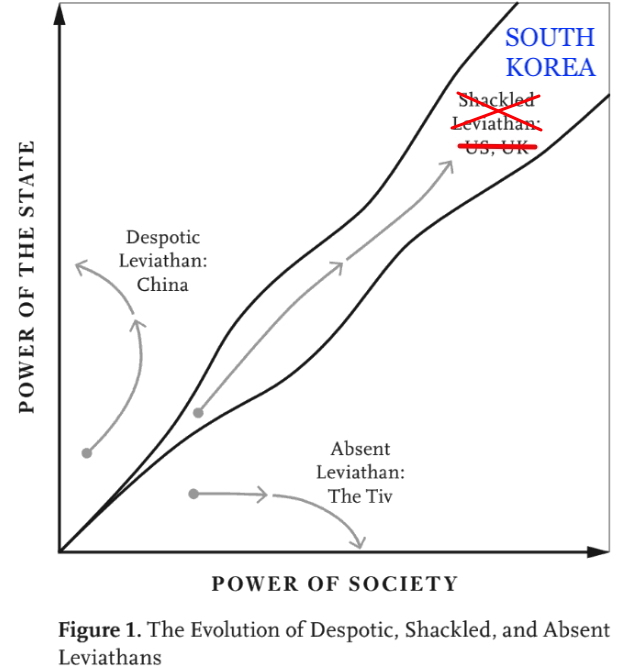
Yesterday, South Korean President Yoon Suk Yeol declared martial law, absurdly accusing the centre-left opposition parties of collaborating with North Korea to justify suspending constitutional protections, including the right of the National Assembly to meet and discuss. This move faced immediate backlash: opposition lawmakers defied military barricades to convene in the National Assembly, where they unanimously voted to overturn the decree. Facing mounting pressure, including dissent from his own centre-right political party, President Yoon rescinded the martial law order within hours.  Pro-democracy norms asserted themselves to ensure that there would be no backsliding into the authoritarianism South Korea suffered from pre-1987. The hapless president now faces calls for his impeachment and expulsion from his own political party. For me, the main takeaway from this episode is the resilience of South Korea’s democratic institutions. South Korea has Western-style political institutions that have been grafted onto its Confucian/East Asian culture in the last few decades. All of this makes me think that inherited culture is less important than social-scientific theories might lead one to suggest.  Social scientists, take note!  In fact, I think that maybe we should stop using the term “Western” as a short-hand for “liberal democratic countries.”

Here is another take away from the recent events in South Korea. Maybe cultural inheritance and long-term history going back centuries matter even less that Acemoglu and Robinson have suggested.  Daron Acemoglu and James A. Robinson, the authors of The Narrow Corridor, were big names even before their recent Nobel Prize. Acemoglu is an economics professor at MIT, known for his work on political economy and development economics. Robinson is a political scientist and economist at the University of Chicago, focusing on political and economic development in Latin America and sub-Saharan Africa. They’ve teamed up before on the bestseller Why Nations Fail, exploring why some countries prosper while others don’t. In The Narrow Corridor, they dive into the delicate balance between state power and societal influence that’s crucial for liberty to flourish. They focus a lot in this book on the Western cultural tradition and, in particular, the Anglo-American/Germanic cultural inheritance. The cover of one version of their book even has images of the ruins of the Parthenon, which communicates that idea that ancient Greeks in the family tree helps to explain why part of the world is democratic while other parts aren’t.

The Narrow Corridor argues that freedom and prosperity thrive when a delicate balance exists between the state and society—a “shackled leviathan.” In these countries (think the UK and the US), strong institutions ensure the state is powerful enough to govern effectively but also constrained by an engaged, organized society that can hold it accountable. In contrast, despotic leviathans have powerful states but weak societies (think China for most of the last thousand years), leading to oppression and authoritarian rule, while absent leviathans suffer from weak states and weak societies, leaving them mired in chaos and lawlessness (think Somalia or most tribal societies). The authors also emphasize that culture plays a huge role—societies don’t just randomly fall into one category or another. Historical events and cultural norms shape their trajectories, creating a kind of “path dependence” that makes it hard to break free from established patterns. That’s sort of true, but that theory makes it harder to explain what recently happened in South Korea. Having lots of Anglo-Saxon “cultural DNA” in a given country seems to matter less to its political institutions than the Narrow Corridor might lead you to believe.

I’m sharing an amusing/thought-provoking image that Pseudoerasmus shared on Twitter/X.  The image is a famous figure from the Narrow Corridor that someone hacked yesterday!


Brendan Greeley on AJR

23 10 2024

Brendan Greeley’s opinion piece in the Financial Times, “The Nobel for Econsplaining,” has sparked quite a bit of debate. Greeley’s writing is witty and engaging, and he clearly knows his stuff when it comes to econometric research methods, which makes his critique of economists’ work all the more credible.  Here is an example of his prose


Acemoglu and Robinson read a book called American Slavery, American Freedom, used the bits about American freedom and tossed the bits about American slavery. The new economic institutionalists treat work on institutions by a celebrated historian not as a coherent argument, but as a source of anecdotes. If they did this with data, you’d call it p-hacking.

However, I’m not totally convinced by his main argument. He suggests that understanding the history of slavery and race relations within the present-day United States and culturally proximate countries is key to seeing why Daron Acemoglu, Simon Johnson, and James Robinson (AJR) have produced an inaccurate theory about the relationship between political institutions and economic growth. The stakes in the debate about the accuracy of the AJR theory are high because it has massive normative implications: if their theory is true, then the case for Western countries promoting Western-style political style institutions around the world and for sending, say, more weapons to Ukraine, will be stronger than it would otherwise be.

Most of Greeley’s piece focuses on events in the British colonies in the New World and the historiographic debates around them. In trying to show what’s wrong with the AJR paradigm, he spends more time discussing a book by an American historian from 1975 than the incredible rise of the Chinese economy since 1978!!!  Greeley, being a US citizen who just happens to live in a region that once had African slavery (New Jersey), might be overestimating the importance of historical phenomena that are geographically close to him when evaluating AJR’s overall theory. I find that Greeley’s piece displays evidence of too many cognitive biases. In particular, the proximity bias is strong here. Maybe I’m guilty of recency bias in wanting us to focus our attention on China since 1978. I suppose we need to proper methodology to counteracting all of these biases so that we don’t end up cherry picking data.

Here is some background. As many readers of this blog will know, Daron Acemoglu, Simon Johnson, and James Robinson were awarded the 2024 Nobel Memorial Prize in Economic Sciences for their research on how political and economic institutions shape national prosperity. Their work, especially their theory of inclusive vs. extractive institutions, helps explain why some nations experience sustained economic growth while others remain poor. The award has been mostly well-received particularly by people in the centre of the Anglo-American political spectrum, highlighting the impact of their research on understanding global inequality, though some critics argue their theories overlook other factors like culture and geography. The critics come from various groups: academics in authoritarian yet economically successful regimes who don’t like the AJR insinuation that you need inclusive political institutions for prosperity, hard core left-wing critics who believe that it has already been proved that the West’s wealth is due to slavery and genocide, and then libertarians who think that AJR’s account is unduly celebratory of the mixed-economy arrangement that centrist academics tend to like.

AJR have faced heavy criticism from scholars who believe their work oversimplifies complex historical and economic processes, particularly in East Asia’s development and historical exploitation, such as slavery and colonialism. Austrian economists, people Pete Boettke and his colleagues at GMU, are also sceptical of their focus on state capacity, preferring more purely market-based explanations for economic development. The economists who were really vigorous critics of Covid lockdowns, US membership of NATO, and state intervention more generally tend to be the most sceptical of the AJR claim that England industrialized because it has the optimum blend of state and market. Seen from a sort of an-cap perspective, AJR sound like quasi-socialists.

In China, scholars have pointed out the tension between AJR’s emphasis on democratic governance and China’s authoritarian-led growth model. While their contributions are influential, the debate around their theories is shaped by ideological and geopolitical considerations.

AJR’s theory of inclusive political institutions, as detailed in works like Why Nations Fail (2012) and then their more recent book The Narrow Corridor argues that inclusive institutions—those allowing broad participation in political and economic processes—are key drivers of economic development. They contrast these with extractive institutions, where political power and economic benefits are concentrated in the hands of a few (think of Stalinism, feudalism, or the antebellum American South), which they argue stifle growth and innovation. They present historical evidence from various contexts to support this theory, emphasizing how colonial legacies, institutional arrangements, and power structures shaped different nations’ development trajectories.

Image from The Narrow Corridor

Critics argue that the rapid economic development of East Asian economies, such as South Korea, Taiwan, and above all mainland China, disproves AJR’s claim that you need inclusive institutions (basically democracy) for economic growth. These countries didn’t have fully inclusive political systems during their early development stages. Instead, they relied on strong, centralized, and often authoritarian governments to implement land reforms, industrial policies, and export-oriented strategies. In South Korea, this is more of an academic question, since the country transitioned to democracy around 1988 and has continued to develop since then. Everyone in South Korea now regards democracy there as normative.  In mainland China, however, the claim that you need inclusive political institutions for economic growth is provocative and highly threatening to the existing political system.  I find it strange that Greely says so little about China in his piece, as that’s the real Achilles heel of the AJR theory, not something that happened in Virginia in the 1600s.

Some scholars who fall into the camp of domestic British and American progressives argue that AJR downplay the role of slavery and other forms of coercive labour and land theft in the rise of Western economies. According to these people, we already know that the transatlantic slave trade, colonial resource exploitation, and forced labour were absolutely essential to Western Europe’s wealth accumulation, which fuelled industrialization. (Somehow these critics don’t explain why England and the Netherlands developed at a much faster rate that Portugal and Spain). Anyway, these critics suggest that economic growth can occur in contexts where extractive institutions play a significant role, contradicting the idea that inclusive institutions are always necessary for development.

The debate over AJR’s theory is deeply influenced by political ideology and geopolitics. I wish Brendan had said more about that factor and then about his own ideological commitments.

Here is Brendan’s brief biography:

Brendan comes to Princeton after 20 years as a journalist, covering economic and monetary policy. He was the US economics editor at the Financial Times, and continues to write a regular column there. Before that, he was a staff writer for Bloomberg Businessweek and The Economist, as well as an anchor and correspondent for Bloomberg TV. He has also written for the New York Times, the New York Times Magazine and the Wall Street Journal Europe, and received a New York Press Club Award for special event reporting in 2012. Brendan graduated from Tulane University with honors in German in 1997. 

I would note here that Tulane, where Brendan did his undergrad, is in a part of the US where the legacy of slavery is visible all around you. That fact and other autobiographical should perhaps have been disclosed here.

References

Acemoglu, D., Johnson, S., & Robinson, J. (2002). Reversal of Fortune: Geography and Institutions in the Making of the Modern World Income Distribution. The Quarterly Journal of Economics, 117(4), 1231-1294.

Acemoglu, D., & Robinson, J. A. (2012). Why Nations Fail: The Origins of Power, Prosperity, and Poverty. Crown Business.

Boettke, P. J., Coyne, C. J., & Leeson, P. T. (2008). Institutional Stickiness and the New Development Economics. The American Journal of Economics and Sociology, 67(2), 331-358.

Chang, H.-J. (2002). Kicking Away the Ladder: Development Strategy in Historical Perspective. Anthem Press.

 Inikori, J. E. (2002). Africans and the Industrial Revolution in England: A Study in International Trade and Economic Development. Cambridge University Press.

Wolfe, P. (2006). Settler Colonialism and the Elimination of the Native. Journal of Genocide Research, 8(4), 387-409.

Yao, Y. (2011). The End of the Beijing Consensus. Foreign Affairs, 90(6), 13-18.