Child Labour Laws

31 01 2012

Boys work at a coal-processing plant in South Pittston, Pennsylvania, in January 1911. Source: Library of Congress, Prints & Photographs Division, National Child Labor Committee Collection.

I’ve been enjoying Echoes, the new business history blog published by Bloomberg. The point of this blog is to allow business historians to show how their research is relevant to understanding present-day economic developments.

Newt Gingrich, the Republican presidential hopeful, recently expressed his view that child labour laws are  “stupid“.  Michael Burgan puts Mr. Gingrich’s views into context in a great blog post that is informed by up-to-date historiography.


Canadian Business History Speaker Series @ Rotman

24 01 2012

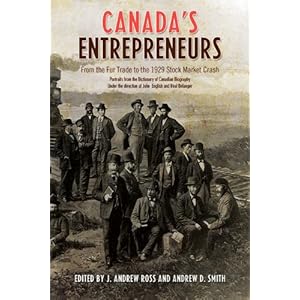
DISCUSSION TOPIC: Canada`s Entrepreneurs From the Fur Trade to the 1929 Stock Market Crash

Thursday, January 26, 2012
4:30-5:00 registration/book sale;
5:00 sharp to 6:15 discussion:
6:15-6:30 book sale/signing

Rotman School of Management
105 St. George Street, Toronto, CIBC Room (third ground)

DISCUSSANTS:
J. Andrew Ross, Postdoctoral Fellow – History, University of Guelph; Co-Editor, Canada’s Entrepreneurs
John English, General Editor , Dictionary of Canadian Biography; Distinguished Senior Fellow, Massey College, U of Toronto
Marc Vallieres, Business Historian, Laval University
David Roberts, Editor Emeritus, Dictionary of Canadian Biography

MODERATOR:Joseph Martin, Director of Canadian Business History, Adjunct Professor of Business Strategy and Executive in Residence, Rotman School of Management, U of Toronto

BOOKSALE:additional copies of Canada’s Entrepreneurs will be available for sale at the event


Sir John A. Macdonald and the Bank of Montreal

23 01 2012

Sir John A. Macdonald

11 January 2012 marked the 197th birthday of Sir John A. Macdonald,  the Dominion of Canada’s first Prime Minister. To celebrate the anniversary, the federal government named a former Bank of Montreal branch in downtown Ottawa the “Sir John A. Macdonald Building.” For the story, see here. For an image of the building, see below.

I understand the desire to honour the Dominion of Canada’s first Prime Minister. I also think that it is appropriate for Macdonald’s name to be associated with banking, since legislation passed by his government played an absolutely crucial role in the evolution of Canada’s financial sector. The system of trans-continental branch banking that had emerged by the time of Macdonald’s death in 1891 paralleled the political union that Macdonald had constructed between 1864 and 1873.  However, it is singularly inappropriate to name a former BMO branch after Macdonald, as the Bank of Montreal helped to bring down the Kingston-based  Commercial Bank, as this was the bank with which Macdonald was most closely connected.

The financial crisis of 2008 took out banks around the world, but Canada’s financial institutions weathered the storm. In a scholarly article that was published just a few days ago, I show that the foundation of Canada’s distinctive (and famously stable) banking system lies in a series of banking laws passed in 1870-1.

Former Toronto branch of the Commercial Bank. This branch is now within the atrium of BCE Place in downtown Toronto.

Photo of plaque taken by Alan L. Brown

A close examination of the rather murky politics of banking in the Confederation era shows that the policies of the Bank of Montreal, which involved a relatively restricted approached towards credit and the expansion of the money supply, helped to cause the October 1867 collapse of the Commercial Bank.  In the 1860s, Montreal and Toronto were engaged in a struggle to see which city would emerge as Canada’s financial capital. The Dominion was in its infancy and the stakes were high to see who would be dominant in the new nation.  This struggle pitted banks in the two cities against each other– and it also badly divided Macdonald’s own cabinet, since some of his supporters were from Montreal, others from Toronto. One victim of this struggle was the Commercial Bank, which was headquartered in Kingston, Macdonald’s own riding.

It is today generally forgotten that Confederation on 1 July 1867 was followed by an awful financial crisis that brought down the Commercial Bank a few months later. The new federal government could have used its resources to prop up this bank. Indeed, Macdonald probably would have done so had he  had a free hand in the matter. After all, he had reasons to feel grateful to the Commercial Bank, which had extended many soft loans to him. However, the supporters of the Bank of Montreal in Macdonald’s cabinet effectively vetoed the idea of a bailout for the Commercial Bank.

Similarly, Canada’s first Finance Minister, A.T. Galt, pressured the Bank of Montreal to contribute to a private-sector bailout package for the Commercial Bank, something that the Bank of Montreal refused to help out with.

The failure of the Commercial Bank forced Galt to resign his position as Minister of Finance because he had lost much of his personal fortune with it. (Galt was later able to rebuild his fortune).  It also devastated the city of Kingston, which henceforth was  a financial satellite of the major cities.  Macdonald managed to get through this crisis with his personal finances more or less intact. Most of Macdonald’s personal debts were owed to the Commercial Bank, which had long displayed a rather generous attitude when it came to their repayment, largely because of Macdonald’s political clout. When the Commercial Bank failed, Macdonald’s obligations to it were assigned to the Merchants’ Bank, a Montreal-based institution controlled by Sir Hugh Allan. This bank continued the Commercial Bank’s practice of allowing the loans to go unpaid.  It should be noted that  Macdonald’s government later awarded the lucrative contract to build Canada’s transcontinental railway to a syndicate that included Sir Hugh. Indeed, this contract was at the centre of the Pacific Scandal, the affair that brought down Macdonald’s first government.

There is a saying that laws are like sausages– those who like them shouldn’t watch them being made. The backroom political deals that resulted in the post-Confederation banking laws were sleazy by today’s standards. However, I would argue that these statutes were actually quite beneficial and paved the way for present-day Canada’s impressively stable financial sector. Thanks in part to the laws passed by the first post-Confederation parliament, Canada went on to develop a banking sector that was, in many ways, superior to that of the United States.

You can read more about this is my article “Continental Divide: The Canadian Banking and Currency Laws of 1871 in the Mirror of the United States” in Enterprise and Society: The International Journal of Business History. See here.


State Capitalism

22 01 2012

This week’s Economist contains a special section on the rise of state capitalism, as exemplified by the great state-owned companies in the BRICS nations. Adrian Wooldridge, the editor of the Schumpeter Blog, discusses the strengths and weaknesses of state capitalism here. The special section contains a lot of historical material, which means that it will likely be suitable for business history courses. Wooldridge argues the state capitalism of the BRICS is hardly unprecedented –indeed, as recently as the 1970s there were plenty of nationalised industries in the West, even in Anglo-Saxon countries. Borrowing Alexander Gerschenkron’s ideas, Wooldridge argues that state capitalism might be suitable for a country trying to catch up by imitating the technologies of the advanced nations. However, state capitalism is unsuitable for the next stage of development, which involves innovation, not imitation. For that, you need genuine Steve-Jobs style capitalism.

Wooldridge’s historical perspective is welcome and not terribly surprising, given that he earlier co-authored an admirable short little history of the rise of the corporation. Scholars likely won’t learn much by reading The Company: a Short History of a Revolutionary Idea, but I’ve found that it is a great textbook for undergraduates.


The Death of the Printed Textbook

21 01 2012

Campus Bookstore, Queen's University. The colour of the leaves tells you that this photo was taken in September, price-gouging season at university book stores.

Professors and university students throughout the world are searching for ways to cope with the ever escalating costs of textbooks. One strategy is to dispense with the old-fashioned paper textbook and go all digital. Although most of the price of a book represents IP rights, part of the cost reflects the inputs of paper, ink, and glue. There are also distribution costs—diesel for trucks, plus the university bookstore’s cut of the action. In other words, if students purchase Kindle or equivalent versions of their textbooks they will be able to save the price of more than a few pints! There are also big ecological benefits to going all digital.

I’m pretty supportive of the general concept of dispensing with hard copy textbooks. But which e-reader should we go with?

Some universities have experimented with using Amazon’s Kindle, which is the most popular e-book reader on the market. Kindle has a number of advantages. Students can read both Jstor articles and PDFs they have created themselves on Kindle. For students who don’t own Kindle devices, downloaded Kindle books can be read on a PC with a free app. Amazon’s collection of digitised books is vast and includes many specialised scholarly works from around the world.

Kindle

The rival Kobo reader is broader similar to the Kindle, but its manufacturer has partnered with retailers (Chapters in Canada, W.H. Smith in the UK) with much smaller numbers of digitised titles. Moreover, the books available on Kobo tend to be novels, not serious works of non-fiction.  I know of at least one academic who uses Kobo for pleasure reading and Kindle for serious academic stuff.

The disadvantage of Kindle is that it is really difficult for students to take notes. There is a way you can insert a note, but it is awkward. Most readers will remember how their own university textbooks were filled with underlining, highlighting, and scribbled comments.

Given Kindle’s limitations, it not surprising that there was  enthusiasm among some educators when Apple announced on Thursday that it was launching iBook2, a tablet designed for educational purposes. Textbooks downloaded to the iBook2 will be cost just $14.99 and will feature full colour, animation, etc. One could imagine that animated images would be extremely useful in subjects like chemistry and physics. The CEO of McGraw-Hill, the textbook giant that has published with Apple in this initiative, said that this product was the brainchild of the late Steve Jobs.

According to the Guardian, digital textbooks will account for just 6% of education-textbook sales this year, up from 3% in 2011. This figure is expected to rise to more than 50% by 2020.

Reactions to the iBooks2 initiative have been very mixed. One American commentator borrowed some terminology from Occupy Wall Street and called it a textbook for the “One Percenters”.  Glyn Moody, a columnist at the British website ComputerWorld, has called it an “attack on educational freedom”. He notes that the textbooks on iBook2 are in a proprietary format, when rather than the standard EPUB format, which is used by many publishers. In effect, owners of an iBooks2 are locked into buying content from McGraw-Hill and Apple’s other partners.  He also notes that there won’t be a resale market for used textbooks in the same way there is with hard copy textbooks.

Moody makes some good points.  I also suspect that the $500 price tag of the hardware may cause sticker shock, even if the lower price of the digital textbooks saves students money over the course of their educational careers (say a four-year degree with five textbooks per year). Despite its limitations, the Kindle is probably the best option for university students. It is cheap (£99 in the UK), relatively durable, and can handle many different types of documents, including the all important PDF.

In conclusion, I suspect that five years from now, paper textbooks will have disappeared from universities. Students will be able to purchase smaller backpacks. Historians should rarely make predictions. Indeed, anyone who has read Dan Gardner’s Future Babble will be extra cautious when prognosticating. (Gardner catalogues all of the predictions that proved to be incorrect).  However,  as as educator who has worked with textbook suppliers in three countries over a span of years, I can say with some confidence that the death of the paper textbook is pretty much a certain thing, at least at the university level.  However, I’m not convinced that students will be reading their e-text books on devices supplied by Apple.

P.S. The NYT reports that

Five universities are implementing a pilot program in the spring semester of 2012 for electronic textbooks to ease costs and modernize the way students obtain class content. The five schools — the University of California, BerkeleyCornell University; the University of Minnesota; the University of Virginia; and the University of Wisconsin — plan to purchase e-textbooks in bulk directly from publishers so that students can buy them at discounted prices, creating a kind of educational wholesale warehouse.


Monetary History Group Workshop, King’s College, London

19 01 2012

AS: These papers look interesting. I’m particularly intrigued by the first one. 


20 April 2012
2:00 – 5:30 p.m.
Speakers
Anders L Mikkelsen (King’s College London): ‘Red Lists, Syndicates and Underwriting: Issuance Practices for Sovereign Loans in the London Market, 1870-1914.’
Anthony Hotson (Wolfson College, Oxford): ‘Monetary Standards and the Value of Money: Anglo-British Experience from the 12th to the 21st Century’
Venue
History Department 8th Floor Seminar Room,
King’s College London,
London WC2R 2LS


CFP: Canadian Business History

19 01 2012

I’m organizing a panel on Canadian business history for a conference that will take place in Birmingham, UK 6-7 July 2012.  This call for papers is directed at all historians of Canadian business and to environmental historians. 

The Association of Business Historians is an organization of business historians in the United Kingdom. About a hundred academics attend their annual conference. Roughly a third of the presenters are from the discipline of history, another third are economists, and the final third are in other disciplines (strategy, international business, human resource management etc).  The presenters range from really senior scholars to postgraduate students. Most of the presenters are based in Britain, although every year academics from the United States, continental Europe, and elsewhere attend.

Many presenters say that the feedback at this conference is very rigorous precisely because the audience is so interdisciplinary and international. I would tend to agree with this assessment.  Presenting a paper at this conference can help one to deal in advance with the criticisms an article might encounter when it undergoes peer review by people in different disciplines.  

I would like to organize a panel on Canadian business history for the next ABH conference, which will take place at Aston Business School, Friday 6th – Saturday 7th July 2012. (Aston Business School is in Birmingham). If you have research that you would like to present at an international conference, please contact me right away.

The theme of the 2012 ABH is “Decisions Makers and Decision Making”. I suspect that papers on business and the environment and/or the history of Corporate Social Responsibility would be welcomed by the conference organizers. In fact, I would really, really encourage Canadian environmental historians who are looking at corporations and the environment to get in touch with me. Of course, any business historical topic would be acceptable as well.   

The deadline for submissions is 31st January 2012. Unfortunately, the ABH wouldn’t be able to provide travel funding, but if you have other reasons for coming to the UK, you should consider being part of this panel. 

I’m certain that the ABH organizers would also welcome individual paper proposals from Canadians who don’t want to be part of this particular panel. 


Call for Papers: British Academy of Management Conference

19 01 2012
AS: Business historians might be interested in this CFP. 
Theme: ‘Management Research Revisited: Prospects for Theory and Practice’ Cardiff University 2012, Management and Business History Track
In 2012 our track aims to build on the successful experience of BAM 2011.  In 2012 the conference theme gives us as historians an excellent opportunity to emphasise the benefits of longitudinal work to management scholars more generally.  The theorists of the past were bounded by the historical context of the period that they found themselves in, and we must understand that context in order to be able to make comparisons with the present in terms of applicability.  As historians we are in an excellent position to demonstrate the usefulness of knowledge of that context. History also provides some opportunity for reflective practice: approaches and strategies which appeared to work during the crises of the 1930s or 1970s may not work today and vice versa.  As a track we can make an important contribution to the discussion as a whole at BAM 2012, while further encouraging historians to think more clearly about how theory underpins their work and how it can potentially inform practice.
We believe that the current environment both in the world of practice and within the academic sphere offers historians an excellent opportunity to introduce the value of their work to other social scientists. We seek interested historians to submit papers to BAM’s Business and Management History track by 17th February 2012.  BAM is a widely attended conference; last year’s event at Aston University attracted 693 delegates, and offers opportunities to discuss themes as wide raging as Entrepreneurship, Human Resource Management, Knowledge and Learning, Marketing and Retailing, Logistics and Supply Chain Management, and Strategic Management among many others.  We seek to attract papers that have historical relevance to categories such as these.  All full length papers that are submitted will be read by two referees and recommendations made, so BAM offers an excellent opportunity to gain some critique for a working paper before submitting it to a journal.
See http://www.bam.ac.uk/civicrm/event/info?reset=1&id=79 for further conference and submissions information, or contact the Track Chair Kevin D. Tennent at kevin.tennent@york.ac.uk.


M6 Business History Workshop Programme

17 01 2012

M6 Business History Workshop

26 January 2012

Coventry University

JA102

Programme

12.45 -1.30pm    Sandwich lunch

1.30-2.15pm       Stephanie Decker, Aston Business School, “The Silence of the Archives: Business history methodology and postcolonialism”

2.15-3.00pm      Aldwin Roes, University of Sheffield, “North to Katanga: the Robert Williams group and the expansion of the South African mining frontier, c1891-1906

3.00-3.15pm Coffee

3.15-4.00pm    Bernardo Batiz-Lazo and Rasol Eskandari, Bangor University, “Does on-line publishing increase citation success?  Evidence from  Spanish accounting, business and economic history, 1997-2011”

4.00pm-4.45       Duncan Connors, Coventry University, “The Commercial Failure of British MAGNOX Nuclear Reactor Exports: The General Electric Company and the Tokai Nuclear Power Plant in Japan, 1955 to 1970”

.

4.45-5pm             Final comments & end of workshop


Close All The Lecture Theatres?

12 01 2012

The lecture format, which has been a staple of undergraduate education in the West since the Middle Ages, is coming under increasing attack by academics in many disciplines who charge that it is massively inefficient way of transmitting knowledge to students.

I’ve known historians and other social scientists who have been saying this for years. Now some physics professors are coming around to this viewpoint. As National Public Radio reports,  some physicists who were previously fans of this mode of knowledge transfer have concluded that while it may be enjoyable for the lecturer and even the students, it simply doesn’t work very well as a way of imparting knowledge.

Let me quote the NPR report. I’ve put the sentences I consider key in bold.

When Eric Mazur began teaching physics at Harvard, he started out teaching the same way he had been taught.

“I sort of projected my own experience, my own vision of learning and teaching — which is what my instructors had done to me. So I lectured,” he says.

He loved to lecture. Mazur’s students apparently loved it, too. They gave him great evaluations and his classes were full.

“For a long while, I thought I was doing a really, really good job,” he says.

But then in 1990, he came across articles written by David Hestenes, a physicist at Arizona State. Hestenes got the idea for the series when a colleague came to him with a problem. The students in his introductory physics courses were not doing well: Semester after semester, the class average never got above about 40 percent.

“I noted that the reason for that was that his examination questions were mostly qualitative, requiring understanding of the concepts rather than just calculational, using formulas, which is what most of the instructors did,” Hestenes says.

I think that the shifting attitude towards lectures has been driven, in part, by technology. The lecture format dates back to pre-Gutenberg period, when books were so expensive you could only really afford one per class: this precious book would be read aloud to students who would then take notes. Today, when there is so much information available cheaply to students thanks to cheap paperbacks, the internet, etc., the lecture is somewhat obsolete. The problem students face nowadays is navigating the internet and trying to determine which sources of information are reliable, which is sometimes like searching for a needle in a haystack. In this new environment, it makes sense to shift from the Sage on the Stage to the Guide on the Side model of the professor’s role.

Moreover, there is another problem with the lecture format. The average university lecturer is an adequate but not stellar public speaker. Over the years, I’ve gradually improved my ability to give lectures, but I’m still not as good as, say, Harvard’s Steven Pinker. The problem is, students can watch the psychologist Steven Pinker (and his equivalent in other disciplines) online, which may be a better use of their time than listening to a really bad lecture delivered by someone who happens to be employed by the university they attend.

I recently heard some chemistry undergraduates on a train talking about their lecturer. The train was passing through Birmingham, so they were probably at some a nearby university. Anyway,  the students were really worried about the final exam, since their lecturer wasn’t explaining organic chemistry properly, so they had gone to iTunes to download some lectures that were really clear.  The lectures were from an equivalent course at a university in Australia. Given this technology, it might be better for the chemistry lecturer in question to shift to the seminar format, whereby he had can help guide his students to the right resources. Or maybe he should just focus on research. I suspect that the chemistry guy in question is a competent and caring teacher who simply isn’t suited for the lecture format.

So there would be some advantages to ditching lectures altogether.  On the other hand, you can’t ask a question to a YouTube video of Steven Pinker. Moreover, live lectures allow the lecturer to tailor the material to local conditions. You can even refer to current events (so called teachable moments), which date very quickly in a recorded lecture.

I can see that there are still some merits in retaining the lecture format for some types of undergraduate education. However, we do need to give careful consideration to the idea that maybe we would all be better off if we nailed the university lecture theatres shut and then turned them into small seminar rooms.