Dr Suzannah Lipscomb is a historian and broadcaster. She recently asked her legions of Twitter followers “What Makes for a Good or Bad Historian?” Their responses can be found here.
Dr Suzannah Lipscomb is a historian and broadcaster. She recently asked her legions of Twitter followers “What Makes for a Good or Bad Historian?” Their responses can be found here.
A recent decision by the Canadian government to rename a road in Ottawa after Canada’s first post-Confederation Prime Minister has generated considerable controversy, largely because Sir John A. Macdonald’s views on race were both reprehensible by today’s standards and unusually harsh even compared to those of his contemporaries. Professor Tim Stanley of the University of Ottawa critiqued the renaming of the road in a column in the Ottawa Citizen. Stanley, who has extensively published on Chinese-Canadian history, quotes Macdonald’s speech about the need to preserve Canada for the “Aryan race.” Stanley wrote:
Lest it be thought that Macdonald was merely expressing the prejudices of the age, it should be noted that his were among the most extreme views of his era. He was the only politician in the parliamentary debates to refer to Canada as “Aryan”… In contrast, the second prime minister of Canada, Alexander Mackenzie, had earlier refused discriminatory proposals on the grounds that they involved invidious distinctions that were “dangerous and contrary to the law of nations and the policy which controlled Canada.
Richard Gwyn, who is the author of a recent and very positive biography of Macdonald, responded to Stanley with a column praising Macdonald. He said that “to describe Macdonald as “a racist” is pure, and smug, “presentism,” or the judging of the past by the standards of the present, thereby proclaiming our moral superiority to all Canadians who lived earlier. It’s the equivalent of condemning Macdonald for not having implemented same-sex marriages.” Gwyn mentioned that Macdonald welcomed Jewish immigration, supported giving the right to note to Aboriginals, and lived at the time when the Underground Railroad was smuggling fugitive slaves into Canada.
Gwyn’s piece prompted Carleton University historian Stephen Azzi to publish his own column. Azzi wrote: “Macdonald deserves praise for creating and consolidating Canada, but we shouldn’t be blind to his faults and shouldn’t believe that our multiculturalism had its origins in the policy of a man who publicly declared that Chinese immigrants were unwholesome and could not “assimilate with our Arian population.” Azzi mentions Macdonald’s harsh treatment of the Métis and Aboriginals and his policy towards Chinese immigrants. He also points out that the Underground Railroad was supported by the Liberal George Brown, Macdonald’s great rival, not Macdonald.
(Full disclosure: Stephen Azzi is a former colleague. I read a draft of volume one of Richard Gwyn’s biography of Macdonald, which covers the period up to 1867).
My own view is that it was probably a mistake to re-name the road in Ottawa after Macdonald. I wouldn’t advocate renaming something that had already been named after Macdonald (e.g,the Macdonald-Cartier Freeway), but i do think that we need to be sensitive here. I’m also a bit surprised to see a centre-right government do this, especially after it has invested so much energy in demonstrating its anti-racist credentials.
Macdonald’s ideas about race changed over the course of his long life. There is therefore plenty of evidence that critics and admirers of Macdonald can cherry-pick to support their respective positions. Throughout his career, Macdonald was committed to preserving and developing a “British Canada.” What changed was his thinking about whether groups that weren’t of British descent were going to be fully accepted as members of this imagined community. The young Macdonald’s attitudes seem to have been largely “civic nationalist” in nature. Macdonald’s ideas took on an increasingly “ethnic nationalist” overtone as he aged, perhaps because the culture of the Western world was becoming more racist, thanks in part of the perversion of Darwin’s theory of evolution by pseudo-scientific racists. In the late nineteenth century, new racialist theories were popularized and became deeply entrenched in the English-speaking world, not to mention in other areas, such as Germany. Some historians argue, quite persuasively actually, that people in the early twentieth century were, in general, more racist than their predecessors circa 1850.[1] There is lots of evidence to support this theory. For instance, there was relatively little anti-Chinese racism in California until the early 1870s, even though many Chinese people started arriving in the 1850s. Macdonald was a very well-read individual, which meant that he kept up-to-date with the shifting intellectual tides.
In 1861, Macdonald had said that he would welcome any man committed to the project of maintaining British rule in Canada, regardless of who his ancestors might have been. [2] This was civic nationalism. Macdonald was implying that anyone, whether of British, French, or even Black ancestry, could make a good citizen.
Speaking in 1885, Macdonald conceded that unrestricted Chinese immigration might help to achieve the goal of having “our hundred millions in British America.” Macdonald did not dispute that the Chinese had transformed the economy of the British colony of Malaya through their industry almost as soon as the imperial government had opened that territory to Chinese settlement. Nevertheless, the Chinese needed to be excluded from the Dominion because he “has no British instincts or British feelings.” Canada, Macdonald said, was for “the Aryan race and Aryan principles.” Macdonald was willing to make exceptions to this rule and grant the right to vote to Blacks and Aboriginals who met the property qualifications, but for the most part his definitions of who could be a loyal British subject had become predominantly, although not exclusively, racial.[3] Macdonald reinvented himself as an ethnic nationalist. A few people who clung to an older civic nationalist theory protested that many of the Chinese people who wished to enter Canada were actually British subjects by virtue of their birth in the British colonies of Hong Kong or Singapore. They said it was wrong, even un-British to discriminate amongst British subjects based on their race. [4] Macdonald did not draw such fine distinctions among different groups of Asiatics, essentially because he was now an ethnic nationalist. I also think that the increasingly ethnic-nationlist tone of Macdonald’s thinking influenced his decision to allow the execution of Louis Riel to proceed despite his knowledge of how unpopular this decision would be with the French Canadians.
[1] Douglas Lorimer, “From Victorian Values To White Virtues : Assimilation And Exclusion In British Racial Discourse, c.1870-1914” in Rediscovering the British World, edited by Phillip Buckner and R.Douglas Francis. Calgary: University of Calgary Press, 2005.
[2] Macdonald, ‘Remarks on the Composition and Policy of the Brown-Dorion Government’, 95.
[3] 4 May 1885 Official report of the debates of the House of Commons of the Dominion of Canada : third session, fifth Parliament … comprising the period from the twenty-seventh day of March to the eighth day of May, 1885 (Ottawa: MacLean, Roger,, 1885), 1582, 1589.
[4] Charles Dilke, Problems of Greater Britain (London: Macmillan, 1890), vol. 2, p. 304.

Coin Minted During the Reign of King Herod
That’s the title of an article in this week’s Economist. The piece looks at the two basic theories of how money emerged. We don’t know exactly when money was invented, so this a topic that has been the subject of a great deal of speculation by economists, anthropologists, and others. One group of scholars, the Cartalists, argues that money was invented by governments so as to strengthen their coercive power over their subjects. The other school of thought objects to the theory that it takes a state to create money. They point out that various currencies have emerged spontaneously and without the involvement of the state. (The use of drugs as a currency in prisons is a classic example of a form of money that emerged despite the state). There is archaeological evidence that can support both sides in this debate. As the Economist pointed out, debate over money’s origins is of interest to far more than collectors of ancient coins, for if the Cartalist view of money’s origins and function is correct, the prospect of the Euro project succeeding without the creation of a European superstate are slimmer than if the opposite theory is correct. The Cartalist theory says that for a currency to survive for long, it needs to be backed by a state (i.e., an entity with the power to tax) which the EU most certainly is not.
The Economist article has generated a lively online debate about the history and functions of money. George Selgin, who wrote an excellent history of private coinage in England, has contributed to this debate on his blog (see here).
In 1993, Peter Cain and Tony Hopkins published a really important pair of books on the political economy of the British Empire. In British Imperialism: Innovation and Expansion, 1688-1914 (London: Longman, 1993 and British Imperialism: Crisis and Deconstruction, 1914-1990 (London: Longman, 1993), Cain and Hopkins advanced a new framework for understanding how the British Empire was run. Which interest groups had the most influence over British policy? Was it Britian’s manufacturers or farmers? According to Cain and Hopkins, the “gentlemanly capitalist” financiers of the City of London were the ones with their hands on the steering wheel.
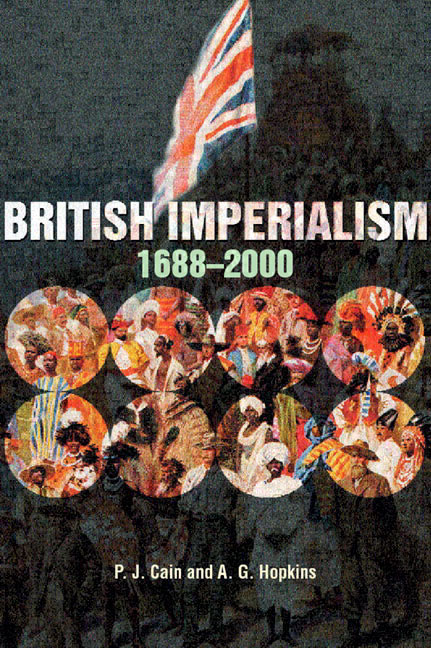
The Cain-Hopkins “gentlemanly capitalist theory” of Empire initiated a lively debate about structural power that engaged scholars around the globe. See Raymond E. Dumett, Gentlemanly Capitalism and British Imperialism: The New Debate on Empire(London: Longman, 1999) and Shigeru Akita, Gentlemanly Capitalism, Imperialism, and Global History (Houndmills, Basingstoke, Hampshire: Palgrave Macmillan, 2002). It also inspired a whole body of historical research by younger scholars. Speaking personaly, I can say that their theory was absolutely fundamental to my 2005 PhD thesis, which was on the role of British gentlemanly capitalists in Canadian Confederation in the 1860s. There are scholars around the globe who owe similar debts to Cain and Hopkins.
A few months ago, I was honoured when I was asked to be on a panel called “Cain and Hopkins 20 years on.” The panel will be taking place on Saturday, 9 November at the North American Conference on British Studies in Montreal. The other participants are:
Chair/Comment:Michael Collins, University College, London.
Tony Hopkins, University of Texas at Austin,”Expanding the Horizons of ‘Gentlemanly Capitalism'”
Peter Cain, Sheffield Hallam University, “Situating ‘Gentlemanly Capitalism’ Then and Now”
Margo Finn, University College London “Gentlemanly Capitalism and the Colonial Family: Sexing up the Economics of Empire”
Andrew Smith, Coventry University, “Gentlemanly Capitalism, Business Culture, and Comparative Business History”
I’m really looking forward to this panel.
On Monday, Tom Peace posted a piece called “Colonialism and the Words We Choose” on the ActiveHistory.ca blog. Peace is a postdoc at Darmouth College in New Hampshire. Peace’s blog post began with a description of his recent visit to an unnamed local museum where the guide used antiquated language to describe the Natives who lived in the region before it was colonized by whites.
About two months ago I was in a local museum with my family learning about the eighteenth century history of the community in which the museum was located. In many ways we had a typical country museum experience. We were met by costumed interpreters and told the stories of the building and the people who lived there. Then we learned about some of the broader historical context. For our guide, the story this museum told hinged on the European settlement of the “savage wilderness inhabited only by Indians.”
Peace appears to have been deeply offended by the guide’s use of this language.
Within a few hours, Christopher Dummitt, a historian at Trent University, has replied to Peace’s post on his Everyday History blog.
I’m not a public historian. I know that people who work in the field of public history read my blog. They are doubtless more qualified to speak about the words used by the interpreter at the museum. However, I will offer my thoughts. Many moons ago I worked at a historic site where I wore period costume. When showing visitors around the property, I always spoke about the people who had lived there in the third person. The more experienced staff did “first-person interpreting” in which they pretended to be a historical figure brought back to life. For instance, they would profess to be mystified if a visitor’s phone rang.
Anyway, I strongly suspect that when the museum employee who referred to the local Indians as “savages,” he or she was speaking in character. Whether or not first-person interpreters should speak in character, especially about issues related to race, is a debatable point. There is always the danger of a visitor misinterpreting what is being said. However, I feel that there is value in first-person interpretation, as it’s more entertaining for the visitors, provided the staff have the skill to pull it off.
NPR’s PlanetMoney show recently published a graph that shows how the countries supplying the US with immigrants have changed over the last century.

Obviously, the changing composition of the foreign-born population of the US is due to a combination of factors: legislative changes, improved transportation technology, and convergence in living standards between the US and some of the countries that used to send lots of immigrants. Notice how Europeans and Canadians now represent a much smaller proportion of the foreign-born population of the US than they did a century ago? That’s largely because these countries now have attained GDP per capita levels similar to that of the US. There are far more Asian immigrants living in the US- thanks to the 1965 immigration act (thank you President Johnson) and the advent of the cheap air travel (thank you Boeing).

Johnson signs the 1965 immigration law at Ellis Island

The striking thing about this graph is the vast increase in the proportion of immigrants from Mexico. I’m not certain what explains this.
Travel between the US and Mexico isn’t that much easier today than it was a century ago– in the early 20th century there was cross-border train service, so it was pretty easy to ride to the US. In other words, improved transportation technology doesn’t explain why Mexico has become a more important supplier of immigrants. Prior to 1924, there were no legal restrictions of Mexican immigration to the US and basically no border patrol. Now there are many restrictions and a semi-effective border patrol. There is still a big gap between US and Mexico living standards, yet I believe it has narrowed since 1960, so Mexicans would have less of an incentive to move to the US.
So what explains the upsurge in Mexican immigration to the US in recent decades?

Canary Wharf at Night
British banks have been the subject of a wave of criticism by U.S. politicians in recent months. The Libor Scandal and the money laundering charges against HSBC’s Mexican operations grabbed headlines earlier this summer. Last week, the New York Department of Financial Services accused Standard Chartered, a London-based bank, of violating the U.S. sanctions on Iran. Some British observers have argued that these accusations are motivated by simple protectionism and a desire to ruin London’s reputation as a financial centre and thus drive business back to New York. Many Britons remember that in the aftermath of the 2010 Deep Water Horizon oil spill in the Gulf of Mexico, American politicians stressed that “British Petroleum” was a foreign entity.
The attacks on British corporations in the United States appear to have involved a certain amount of grandstanding by Congressmen and ambitious prosecutors. However, the frequency and virulence of these attacks may also be a sign of decreasing American self-confidence in an age of perceived relative decline. We have seen the revival of the sort of anti-British sentiment that was last popular in the United States in the nineteenth century, when Britain was still the world’s most powerful nation.

Pulling Down the Statue of King George III, N.Y.C. A romanticized depiction of the Sons of Liberty destroying the statue after the Declaration was read by George Washington to citizens and his troops in New York City on July 9, 1776.
Prior to the First World War, Britain was the primary target of U.S. economic nationalism. Most Americans welcomed British investment in the American economy but they also feared it might undermine their political independence. Memories of the American Revolution and the War of 1812 were still fresh. During Andrew Jackson’s war with the Second Bank of the United States in the 1830s, critics of the bank noted that some of its shareholders were British. Britain’s perceived support for the cotton-producing South in the Civil War intensified Anglophobia in the northern states.
After 1865, both of the major political parties engaged in selective Brit-bashing. The Republicans, the protectionist party, focused on the need to keep the tariff high so as to include foreign manufactured goods, a policy that clearly harmed Britain, which was then the workshop of the world. Somewhat ironically, most Republicans were ardent supporters of the gold standard, which was essentially a British invention: in the nineteenth century, countries from Portugal to Japan adopted the gold standard so as to link their currencies to those of the world’s foremost power. Democrats typically favoured lower tariffs, a policy that was popular in the western and southern states and which would have helped British manufacturers. However, many Democrats were hostile to the gold standard. The 1896 Presidential election, which pitted Democrat William Jennings Bryan against Republican William McKinley, became a de facto referendum on whether the United States should remain on the gold standard. Republicans charged that departing from the gold standard would destroy the confidence of European, largely British investors and would, in effect, be an act of confiscation. Gold, they declared, was the currency of Western civilization, since only backward nations such as China still based their currencies on silver. The Republicans, along with their friends on Wall Street and in the City of London, predicted apocalyptic consequences should Bryan be elected.

McKinley stands on a gold coin, a very subtle reminder to voter that he supported the gold standard
For his part, Bryan replied that his Republican opponents were the henchmen of the great financial interests of New York and, above all, London. Bryan invoked the Declaration of Independence in his famous “Cross of Gold Speech” to the Democratic National Convention in Chicago. Taking issue with the Republican argument that the United States needed to be on the gold standard as long as Britain was on it, Bryan declared that “it is the issue of 1776 over again. Our ancestors, when but three million in number, had the courage to declare their political independence of every other nation; shall we, their descendants, when we have grown to seventy millions, declare that we are less independent than our forefathers?”[1]
To twenty-first century ears, Bryan’s rhetoric is remarkably similar to that sometimes used by leftist leaders in the Third World whenever they seize the assets of a Western company. In the 1890s, they were as American as apple pie.
The 1880 and 1890s also witnessed a political campaign in the United States against foreign, especially British investment. As historian Mira Wilkins has shown, the flood of British capital into the United States after 1865 contributed enormously to U.S. economic development: British investors financed everything from transcontinental railroads to ranches to factories. She also shows that there was a political reaction against British control. British investors were demonized in some newspapers and laws limiting foreign investment were passed by some western states.[2]
In 1887, Congress prohibited land ownership by foreign citizens in the western territories in response to complaints from small ranchers that rich British cattle companies were engrossing grazing land. This statute influenced state politicians: laws banning land ownership by non-citizens were passed in Illinois, Kansas, and Texas.[3] The Glasgow Herald dubbed this trend the “Monroe Doctrine” applied to capital.[4] The attacks in the American press on William Scully, an Irish landlord who had acquired vast numbers of tenanted farms in the mid-west, intensified so much so that he decided to take the precaution of acquiring American citizenship in 1895.
Hostility towards British investment dissipated largely because of the growing power and self-confidence of the United States after 1914. The First World War dramatically changed the position of the United States in the world economy. Within the space of a few short years, it replaced Britain as the world’s largest creditor nation. In this new context, it was anachronistic to worry that British investment as somehow going to undermine American sovereignty. By 1945, the transition from British to American global hegemony was essentially complete: the City of London was just a shadow of its former self: Wall Street was now the undisputed financial capital of the world and the British economy was dependent on Marshall Plan aid. Few if any American politicians in the 1940s or 1950s worried about the extent of British economic power in the United States. In fact, they were more likely to complain about Britain being a charity case.
In recent years, we have heard much about America’s relative decline. Books with titles such as “The Post-American World” have become best-sellers. Those who speak about American relative decline usually focus on the rising fortunes of the BRIC countries, not Britain, which is itself suffering from the problems in the Eurozone. However, the fact a great deal of business migrated from Wall Street to London after the passage of SarbOx is a datapoint that has been used to support the overall narrative of American decline.
The sapping of American self-confidence and the resurgence of U.S. economic nationalism has serious implications for European companies, especially British ones. Britons may like to think that their close cultural ties and military alliance with the United States will protect their companies from U.S. economic nationalism. It may be that the social memory of the American Revolution will be a greater influence on U.S. thinking about British companies. A certain degree of anti-British sentiment is still present in U.S. culture. Every U.S. schoolchild learns about the revolutionary struggle against British rule. Even seemingly apolitical films have a whiff of Anglophobia: in the 1977 film Star Wars, the soldiers on the nefarious Death Star were played by actors with British accents.
All of this means that grandstanding U.S. politicians have a rich cultural legacy to tap into when targeting British firms.
[1] Speech by William Jennings Bryan in Official Proceedings of the Democratic National Convention Held in Chicago, Illinois, July 7, 8, 9, 10, and 11, 1896, (Logansport, Indiana, 1896), 226–234.
[2] Mira Wilkins, The History of Foreign Investment in the United States to 1914 (Cambridge, Mass: Harvard University Press, 1989), 566.
[3] New York Times, “Alien Land Law” 24 December 1891, New York Times, “Irish Landlords in America” 20 March 1886.
[4] Glasgow Herald, leading article, 26 September 1891, 6.
[ADS1]Citation needed
Most academics are content with pretty basic course guides. At the start of the term, we distribute a document with the weekly readings, a description of the assignments, and maybe few pictures thrown in for good measure. In terms of visual appeal and production values, the standards for this sort of document are pretty low. For that reason, I’m really impressed by the syllabus that Prof. Shawn Graham of Carleton University is planning to give to the students taking his introduction to historical methods class. The syllabus is in comic book form.


In the last few days, Bloomberg’s Echoes blog has posted two excellent pieces on the legacy of the Scottish-American industrialist and philanthropist Andrew Carnegie. See here and here.
I recently came across an individual, John Chester Eno, who deserves to be studied. He would be a suitable topic for an MA student at a Canadian university. Someone could also write a good article about him.
There are no secondary works on Eno, who was the President of the Second National Bank in New York City. In 1884, he fled to Canada with about $100,000 he had stolen from the banks vaults. Canada’s extradition treaty did not require Eno’s return to the US. He settled in Quebec.
Then the story gets really interesting. Eno was made the treasurer of the South Laurentian Railway. He also appears to have invested the stolen money in various other companies. It’s amazing that businessmen in Canada regarded Eno as a legitimate person they could hire as their treasurer! Their reasons for trusting Eno, a known embezzler, deserve to be investigated.
In 1893, Eno decided to return to the US and face the criminal charges. There were various attempts to bring him to justice but all of these charges were either quashed by judges on technicalities or were dropped by prosecutors for mysterious reasons. He died in 1914.
It would be really interesting to know more about how Canadians reacted to the arrival of this fugitive from justice.
 The Past Speaks