Review of Prime Movers of Globalization: The History and Impact of Diesel Engines and Gas Turbines

6 08 2012

AS: This review just appeared on EH.Net. I agree that Smil’s book is very important. I also agree with William Sjostrom’s assertion that Smil sometimes assumes far too much prior knowledge about engines on the part of the reader. 


Title: Prime Movers of Globalization: The History and Impact of Diesel Engines and Gas Turbines

Published by EH.Net (August 2012)

Vaclav Smil, Prime Movers of Globalization: The History and Impact of Diesel Engines and Gas Turbines.  Cambridge: MIT Press, 2010.  v + 261 pp.  $30 (hardcover), ISBN: 978-0-262-01443-4.

Reviewed for EH.Net by William Sjostrom, Centre for Policy Studies, National University of Ireland, Cork.

A book that begins with scornful dismissals of both Thomas “Flat Earth” Friedman and of the concept of “sustainable development” is a book that I admit I very much want to like.  And in many ways I did.  The core chapters tell the story of the development of the diesel engine and the gas turbine, discussing both the personalities and technology.  Smil’s big goal is to persuade his readers that engines, in particular diesels and gas turbines, are ignored relative to the vastly more fashionable microchip, but are at least, if not more, important to the development of the modern world.

This is an enormously fun book to read.  Smil clearly knows and loves engines, and his book conveys that enthusiasm.  Although there are a number of entertaining diversions, Smil has two primary interests.  The first is the turbojet (and later the much smoother turbofan) engine and its role in expanding passenger travel by air.  The second is the huge marine diesel engines that power large cargo ships.  (And I mean huge: Smil has a picture of an engine that is bigger and taller than my three-story house.)

The best part, and the core, of Smil’s book is chapters 2 through 5.  Chapter 2 sets the stage by telling the history of the gasoline powered Otto-cycle engine (the standard four-stroke gasoline engine).  The history is the context for his argument that although the Otto-cycle engine is important for the automobile, it is inadequate for long distance air travel and for large scale movements of freight (by truck and by sea) and passengers (by train).  Smil emphasizes the much higher ratio of weight to energy in the Otto-cycle engine compared to the diesel and the jet engine as well as the higher energy content of diesel and jet fuel compared to regular gasoline, both problems imposing severe limits on travel distance.

Chapters 3 and 4 review the history and development of, respectively, the diesel engine and the gas turbine engine, and are replete with useful information.  Smil shows the challenges of developing new technology.  Rudolf Diesel committed suicide, beleaguered by critics of his engine.  Frank Whittle, who developed the gas turbine, retired from the Royal Air Force at age 41 in frustration and exhaustion.  Smil does a good job of explaining many of the problems that had to be overcome in engine development.  For example, marine diesels operate at a low rpm so that the engine can be connected directly to the screw, bypassing any need for a transmission.  This is of substantial benefit at sea, because transmissions are delicate things, and you do not want to have a broken transmission and be consequently powerless in the middle of the ocean.  The early diesel engines, however, were not reversible so a ship could not back up without tugboats.    (It is routine with modern marine diesels to simply stop the engines and start them up in reverse direction to back up a ship.)

Chapter 5 brings the reader up to date on more recent developments in diesel and jet engines, including the shifts in the location of engine manufacturing.  There are fascinating diversions into train diesels and into stationary jet turbines used for power generation.

Chapter 6 is Smil’s foray into economic analysis, wholly devoted to an economic analysis purporting to show the importance of the diesel and jet engines.  The results are not pretty.  The short version of the problem is that Smil thinks big means important.  Lot of stuff gets transported on diesel powered ships, and lots of people travel on jets, so they must be important.  The reader is subjected to summaries of the sorts of economic impact studies regularly released by trade groups.

But ignore the failed economics.  This is a good business history, and the book is valuable as a source of research questions.  The biggest is the question Smil fails to answer: how much of a difference have the diesel engine and the gas turbine made to incomes or to the growth in trade.  Smil does not answer the question, but he lays a good groundwork in the technological issues

Here is a second research topic.  Jet engines were originally developed in Britain and America, and those countries remain dominant.  Jet engine design and manufacture is still dominated by General Electric, Rolls-Royce, and Pratt & Whitney, the companies that pioneered these engines.  Diesels were developed in Europe, and the original European firms continue to dominate the design of marine diesels.  Rudolf Diesel’s first contracts were with Maschinenfabrik Augsberg, and, now known as MAN Diesel, it is the world’s largest designer of marine diesels.  Diesel sold the Swiss patent rights to Sulzer Bros. of Winterthur.  Now a subsidiary of Wärtsilä of Finland, it is the second largest.  Unlike the jet engine, however, marine diesel manufacture has left its original home, and is now dominated by South Korea and Japan.  Why does one industry move and not the other?

There are irritations, notably Smil’s habit of changing how much background technological knowledge the reader has.  He will occasionally jump from tediously overdone explanations in one paragraph, to barely explaining a complex diagram in the next.  But these are few, and Smil is mostly a clear writer.  And did you know that both Rudolf Diesel and Gottlieb Daimler hated to drive, and they were both unusually bad drivers?  I bet Bill Gates isn’t this interesting.

William Sjostrom is Senior Lecturer in Economics at the Centre for Policy Studies, National University of Ireland, Cork.  He is the author of “Competition and Cooperation in Liner Shipping” in C. Grammenos (editor), Handbook of Maritime Economics and Business, second edition, Informa 2010.  Email:w.sjostrom@ucc.ie

Copyright (c) 2012 by EH.Net. All rights reserved. This work may be copied for non-profit educational uses if proper credit is given to the author and the list. For other permission, please contact the EH.Net Administrator (administrator@eh.net). Published by EH.Net (August 2012). All EH.Net reviews are archived at http://www.eh.net/BookReview.

Geographic Location: General, International, or Comparative
Subject: International and Domestic Trade and Relations, Transport and Distribution, Energy, and Other Services
Time: 20th Century: Pre WWII, 20th Century: WWII and post-WWII


Alex Tabarrok on Infrastructure vs. the Warfare-Welfare State

5 08 2012

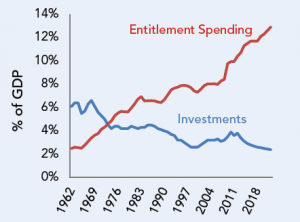
Economist and blogger Alex Tabarrok has published an article in The Atlantic in which he alleges that excessive U.S. government spending on the military and social services has crowded out spending on infrastructure. In other words, the U.S. government no longer has the money to spend on the sorts of great projects it funded in the past, such as the Hoover Dam and the Interstate Highway System. Tabarrok is suggesting the unwillingness of U.S. politicians to spend on infrastructure has contributed to the innovation slowdown in that country.

Created by A. Tabarrok

Tabarrok’s piece is interesting. However, I am astonished by the lack of comparative international data in it. Tabarrok clearly doesn’t like the priorities revealed by U.S. government spending. However, he doesn’t say which country has achieved the right balance between social, R&D, defence, and infrastructure spending!!!

I think that many economists would say that Japan goes too far in prioritizing infrastructure spending: some of the money spent on bullet trains to nowhere probably would should have been invested in measures designed to encourage Japanese people to have more children. I think that the Japanese data point could be used to support the thesis that too much infrastructure spending is bad for growth. I would also be interested to learn Tabarrok’s thoughts about Germany’s approach. I might add here that German visitors to the U.S. are frequently appalled by the state of the country’s infrastructure.

In this day and age, a parochial article of this sort is unacceptable. I’m particularly disappointed by Tabarrok’s Atlantic piece because a) Tabarrok is a citizen of one than more country, so you would expect him to be a bit more internationally minded b) he contributes to a blog that frequently contains excellent material about non-U.S. developments c) Tabarrok writes about innovation systems, which are increasingly international (e.g., Apple of California’s products contain components and intellectual property from dozens of countries).


Terry Hurlbut on the Great Stagnation

30 07 2012

Terry Hurlbut, a conservative blogger in the United States, has responded to my earlier post about the “who invented the internet” controversy. Hurlbut appears to disagree with my assertion that the rate of technological advancement appears to be slowing. He wrote:

Smith also says that technology is stagnating. Well, if TV and movie producer Irwin Allen’s Grand Missed Deadlines are all you have to look at, you might think that. (Time travel in 1968, suborbital commercial flight in 1983, and trans-galactic pioneering in 1997 are Allen’s prize examples. Nor was Allen the only one with a grandiose vision of where technology would lead, or how fast.) But users of smart phones and smart tablets (iPad, etc.) might beg to differ. So, too, might those who have high-speed Internet connections, that have left Plain Old Telephone Service behind completely when connecting to it. Government, you didn’t build that, either. In fact, the government wishes that nobody built the dizzying variety of channels where people can get their news without a de jure or de facto government filter.

The technologies we have today, make us free. Government helped, if at all, only as part of its proper function: to provide for the common defense. That is right and proper, but not necessary. Watt’s steam engine, Edison’s electric light, Morse’s telegraph, and Bell’s telephone all came to be without government help. So the right answer still is: Government, you didn’t build that, or else you didn’t have to.

In asserting that technology isn’t advancing as quickly as it was before the 1970s, I was drawing on Tyler Cowen’s important book the Great Stagnation not TVs and movies. I recommend that Hurlbut read it. In this book, which was published in Kindle last year, Cowen argued that there have been relatively few big, daily-life changing technological advances since the 1970s. The immediate response from critics was —“Hey wait, you’re making this argument in an e-book. That disproves your own argument!!!” I must admit that this was my _initial_ reaction when I heard Cowen’s thesis. Then I read the book and was converted to his view. When Cowen’s book was published last year, there was a huge debate about the extent to which the internet had really contributed all that much to human welfare when compared to say, the earlier advent of air conditioning. See here.  Cowen pointed out that the type of people who likely participate in a debate about the social value of the internet are precisely the sort of unrepresentative humans who derive a great deal of utility from it (academics and journalists) and thus inclined to over-estimate the importance of the internet. For the average person, the internet is probably less important than air conditioning.

Anyway, let me address Hurlbut’s core argument. Hurlbut does not appear to believe that the funding of basic and applied science is a core function of the State. I believe that funding science is a public good: the private sector has no interest in funding scientific discovery that might possibly result in a commercial technology in a generation or a century, so it is necessary for the government to get involved. There are certainly many things that government do today that could be left to the private sector, but funding science isn’t one of them. The same might be said about funding education, which is another core function of government. It is no coincidence that the world’s high-tech companies tend to be clustered around leading universities. These universities, whether public or nominally private, are all supported by the taxpayer. I would suggest that this funding is money well spent. Technological progress at the time of James Watt was largely unconnected to academic science. The same was still true, albeit just barely, during the early stages of the career of Thomas Edison. The situation is radically different today, which means that today’s technology entrepreneurs are indeed beneficiaries of past public investments in academic science.

Some of my readers may be interested in the online debate that The Economist magazine recently held on this issue.


Gordon Crovitz, Government, and the Internet

30 07 2012

In the past week, the blogosphere has witnessed an ideologically-charged debate about the role of the State in the creation of the Internet. The debate was prompted by President Obama’s recent statement that “Internet didn’t get invented on its own. Government research created the Internet so that all companies could make money off the Internet.” Obama’s point was that successful entrepreneurs, including those who make their money online, owe the State a portion of their profits because they function in an environment created by the State.
The historical accuracy of Obama’s statement about the creation of the Internet was then challenged in a piece in the Wall Street Journal by Gordon Crovitz. Crovitz argued that the idea that the internet had been created by government employees was myth and that many of the real technological breakthroughs were achieved by employees of Xerox’s PARC research lab in Silicon Valley. Crovitz also credits Vinton Cerf with developing the TCP/IP protocol and Sir Tim Berners-Lee for inventing hyperlinks. Crovitz cited “Dealers of Lightning” by Michael Hiltzik as his source. Crovitz concluded:

It’s important to understand the history of the Internet because it’s too often wrongly cited to justify big government. It’s also important to recognize that building great technology businesses requires both innovation and the skills to bring innovations to market. As the contrast between Xerox and Apple shows, few business leaders succeed in this challenge. Those who do—not the government—deserve the credit for making it happen.

Crovitz’s piece has been mercilessly attacked by a number of commentators (see here and here), as well as by Vinton Cerf himself. Vint Cerf, who now works for Google, was asked to comment on Crovitz’s argument.
Q: In his Wall Street Journal column, Gordon Crovitz writes that the federal government’s involvement in the creation of the Internet was modest. Does that jibe with your recollection?
Vint Cerf: No. The United States government via ARPA started the project. (Bob Kahn initiated the Internetting project when he joined ARPA in late 1972. He had been principal architect of the ARPANET IMP (packet switch) while at BBN. Bob invited me to work with him on open networking in the spring of 1973. We also both worked on the ARPANET project starting in 1968. ARPANET was funded through 1990 by ARPA and other USG agencies. The Internet work was funded from 1973 to about 1995 (and beyond) by ARPA, NSF, DOE, NASA among others. It took 10 years of work to get from the original paper published in May 1974 to the rollout of the Internet operationally on January 1, 1983. It combined the ARPANET, MILNET, some number of Ethernets, two Packet Radio networks, the Packet Satellite network, and other local networks in England and Norway. Note that University College London and the Norwegian Defense Research Establishment were involved in the implementation and testing of TCP/IP as was Stanford and BBN.
Michael Hiltzik, who was cited by Crovitz as an authority on the history of the Internet, had this to say about Crovitz’s opinion piece in the WSJ:
And while I’m gratified in a sense that he cites my book about Xerox PARC, “Dealers of Lightning,” to support his case, it’s my duty to point out that he’s wrong. My book bolsters, not contradicts, the argument that the Internet had its roots in the ARPANet.

Perhaps the best of the many responses to Crovitz’s piece was by Slate’s Farhad Manjoo, who wrote:

Crovitz’s entire yarn is almost hysterically false. He gets basic history wrong, he gets the Internet’s defining technologies wrong, and, most importantly, he misses the important interplay between public and private funds that has been necessary for all great modern technological advances.

In my eyes, this is the key issue—the interplay between government and the private sector in advancing technology. You are more likely to get rapid technological growth in a mixed economy. A society without a private sector would likely be technologically stagnant—consider the old eastern bloc countries, which generated vanishingly view genuine technological advances, notwithstanding a publicity stunts involving captured German rocket scientists. I also believe that there would be problems with the opposite socio-economic model, a pure free-market economy in which all economic activity took place in the private sector. It is true that many of the technological advances that drove the First and Second Industrial Revolutions were made without the active involvement of the State (e.g., Watt’s steam engine), but some of the other key technologies of those eras were indeed funded by the government, such as the precise chronometers that allowed us to determine longitude. Many of the technologies we have today came about because of the advent of Big Science in the United States during and after the Second World War: the Internet, nuclear power, jet aviation, all of these exist because of cooperation between researchers in the private sector and researchers in the public sector.

There is a growing body of evidence to suggest that we are living in an age in which the rate of technological progress is slowing in many fields: by many statistical measures, progress was faster in the forty years before 1970 than in the forty years after. The pre-1970 period saw the advent of products ranging from dishwashers to antibiotics to intercontinental jet aviation that transformed everyday life. Since then, there have been relatively few breakthroughs, a state of affairs Tyler Cowen calls the Great Stagnation. The economic, political, and social impact of the Great Stagnation has been massive. For instance, the standard of living of the median American family hasn’t changed much since the 1970s, even though it increased dramatically in the generation before that. It is therefore very important that we think clearly about how technological progress comes about. Perhaps this is the greatest intellectual challenge facing the social scientists of our generation. I certainly don’t have the answers to this question, which lies well outside my research, as opposed to teaching area. However, I do know that simplistic ideological narratives such as that of Crovitz are untrue and thus cannot aid us in designing national innovation systems.

It is disturbing that the Wall Street Journal, which is read by many people who invest in technology companies, would allow such a low-quality piece to appear in its pages. The investing public deserve better.


The Historiography on the Canadian Oil Industry

23 07 2012

Some topics are over-studied by historians relative to their overall importance. Others are understudied.

A few days ago, I got into a discussion in Twitter with Seak Kheraj and Tina Loo about the historical literature on the Canadian oil industry. Actually, the discussion was about how little has been written about the history of this increasingly important industry. It is increasingly common to refer to Canada as a “petrostate”. I think that this is an exaggeration, but there is an element of truth in this characterization. If Canada is a semi-petrostate, then historians ought to research the origins of this industry.

 Mining, oil, and natural gas currently account for just under 5% of Canada’s GDP, but I think that this figure masks the sheer importance of the oil industry in terms of its political importance, ecological impact, and impact on Canada’s exchange rate (i.e., the Dutch disease). The high Canadian dollar caused by the post-2008 surge in the price of oil has had a major impact on the manufacturing sectors. For all of these reasons, Canadian historians ought to study this industry. In fact, there should be shelves of books on the history of oil in Canada. There are a few such books, but the historiography on Canada’s oil industry is rather sparse, especially when you consider how much has been written about the history oil industry in the United States. There are vast numbers of books on the history of the oil industry in the United States, including biographies of some of the leading personalities, including John D. Rockefeller, histories of specific firms, and accounts of the environmental disasters caused by the oil industry. There are also great studies by academic historians of some of the ancillary industries, such as oil consulting. See Paul Lucier’s Scientists and Swindlers: Consulting on Coal and Oil in America, 1820-1890 (Baltimore, Md: Johns Hopkins Univ. Press, 2008). Many of the books on the global history of the oil industry, such as the epic tomes by Pullitzer winner Daniel Yergin, also contain extensive information about the U.S. oil industry.

I think that it is safe to say that there is far, far less about the history of the oil industry in Canada. Most of the existing literature on the history of oil production in Canada has been written by antiquarians rather than academic historians.  There is one clear exception to this generalization:  Paul A. Chastko’s Developing Alberta’s Oil Sands: From Karl Clark to Kyoto (Calgary: University of Calgary Press, 2004). Another possible exception to my generalization is Christina Ann Burr’s social history Canada’s Victorian Oil Town The Transformation of Petrolia from a Resource Town into a Victorian Community (Montreal: McGill-Queen’s University Press, 2006), which explores themes of class and gender. Burr’s book is a good one, but I get the impression that the actual oil industry is peripheral to the social history story she is trying to tell.

I’m struck by the fact so few academic historians of Canada have bothered to write about the history of this industry.  It seems to me that a history of the Canadian oil industry would be of interest to useful to a wide range of people. If properly executed, it could engage with the scholarly debates in the sub-disciplines of environmental and business history. Chastko’s book is a good starting point, but we need far more works like it.


Some Thoughts on the Finch Report

20 07 2012

I used to support the move to Open Access academic publishing. Now I suspect that the particular form of Open Access that has been selected will be worse than the existing model of scholarly publishing.

As readers of this blog will known, the British government is currently considering whether to shift the regime for academic publishing from pay-to-view to pay-to-publish. The Open Access movement, which launched the so-called Academic Spring earlier this year, has been very critical of the existing model, which involves putting articles based on taxpayer-funded research behind a paywall.

Defenders of the status quo point out that it costs money to run a quality academic journal and someone needs to pay for it.  In June, a report by Janet Finch, a sociologist at Manchester University, advocated something called the “gold Open Access” model: academics, or rather their employers, would pay academic journals a fee to publish their articles, which would then be freely available online. Four days ago, the relevant minister in the British government announced that he supported the Finch Report proposal and that academic publishing in the UK would switch to the gold Open Access model within two years.

The Finch Report has been controversial, particularly with so-called Early Career Researchers (i.e., PhD students and newly minted PhDs who may not have an employer willing to pay for their papers to be published). Right now, it doesn’t cost a researcher anything to publish a paper they have written. Changing to pay-to-publish model will likely disadvantage younger researchers, not to mention researchers at universities where the research budgets are small. Three days ago, Mark Carrigan, a PhD student and blogger at LSE wrote:

I fear that academic publishing could come to resemble the perilous landscape that PhDs and ECRs are only too familiar with at present. The competition for postdoctoral funding is ever increasing, leading to continual inflation of the things you need on your CV to stand a chance, yet without funding it’s very difficult to actually achieve these prerequisites. Or in other words: the best way to get postdoctoral funding is to already have it. Could we see something similar happening with publications? If authors are dependent on their institutions and/or funding bodies to pay the substantial fees required under gold open access then those who already have a job and funding will find it easier to publish and thereby increase their chances of getting another job and more funding. Much as the post doctoral funding climate creates virtuous cycles, so too will the publishing climate, as a whole swathe of early career academics will find themselves untroubled by article processing charges. From their perspective, open access of this form will be great: it doesn’t pose problems and it means their research is freely available. On the other hand, what of those who find themselves excluded? If your funding is patchy or non-existent how can you compete? Is it even going to be possible to be an independent researcher in any meaningful sense?   

Carrigan raises an important issue. One of the goals of the Open Access movement is to increase the diffusion of academic knowledge. That’s great and bring us closer to the Enlightenment ideal of a republic of letters. However, I feel that the gold Open Access model of publishing will favour academic incumbents (i.e., older, well-established full professors) over new entrants. That’s totally anti-competitive. It’s bad for young researchers and even worse for consumers of knowledge.

We wouldn’t accept a regulation that was designed to prevent, say, a new supermarket chain from opening stores in the UK because we believe that competition benefits the consumer. We also need to encourage competition in the marketplace of ideas. Any policy that may prevent young researchers from publishing research is a terrible idea, especially if it prevents the publication of ideas that challenge the orthodoxies of older academics. I remember reading somewhere that most innovation in the field of mathematics is done by researchers under the age of thirty.  Of course, there are instances of older academics who develop radical and innovative ideas, but  it seems plausible to think that most of the radical, breakthrough innovations will be done by younger scholars, especially in academic disciplines that involve radical as opposed to incremental innovation. (History is an incremental innovation field). As Carrigan points out, academics under the age of thirty are those most likely to be disadvantaged by the proposed Gold Open Access scheme.

Here is something else that hasn’t been discussed enough: how can one country shift the regime for the global academic publishing industry? Is the UK coordinating the shift in its policy with the other major academic research countries?   The problem is that many academic journals are a bit like BP, Shell, and Unilever, companies of uncertain. For instance, many English-language journals are published by Kluwer, the Dutch-incorporated company whose practices helped to trigger the academic spring. Cambridge Journals and Oxford Journals publish many journals that are edited by scholars based in universities in the United States.

Consider two journals from my own fields of research. I’ve selected these two journals more or less at random to illustrate a broader phenomenon.

Enterprise and Society, a business history journal, is published by a division of Oxford University Press. Its editor is based at Rutgers University in Pennsylvania.   The three associate editors are based at universities in the United States, Britain, and Italy. The editorial board is very multinational.  The postal address for book reviews is in Illinois, but the website appears to be hosted in the United Kingdom. The nationality of the Journal of Global History, which is published by Cambridge University Press, is equally hard to ascertain. Two of the three editors are based at US universities, although the journal is formally associated with the London School of Economics.

My point is that the shift to Open Access needs to be coordinated among the major research-producing nations. If it isn’t, there will be major problems. Any move to force research-active academics in the UK to pay to publish articles from their personal funds constitutes a tax on academic salaries. As such, it will likely accelerate the brain drain from British to US universities.


New Editorial Board: Essays in Economic & Business History (EEBH)

20 07 2012

Essays in Economic & Business History (EEBH), which is in its 31st year of publication, has made some major changes in the last few months. The most of important of these is the journal’s decision to shift to the Open Access model of publishing. There is also a new Editorial Board, which includes 28 well respected economic and business historians. Some the heavy-hitters in these disciplines are now on the board, including Joel Mokyr, Stephen Broadberry,  Youssef Cassis, and Doug Irwin, among others. 

Essays in Economic & Business History Editorial Board

Jeremy Atack, Vanderbilt University

Martha Bailey, University of Michigan

Gerben Bakker, London School of Economics

Bernardo Batiz-Lazo, Bangor University

Dan Bogart, University of California, Irvine

Stephen Broadberry, London School of Economics

Ann Carlos, University of Colorado-Boulder

Youssef Cassis, European University Institute

Colleen A. Dunlavy, University of Wisconsin-Madison

Robert B. Ekelund, Auburn University

Jeffrey Fear, University of Redlands

Price Fishback, University of Arizona

Robert K. Fleck, Clemson University

Juan Flores, University of Geneva

Sheryllynne Haggerty, University of Nottingham

William J. Hausman, William and Mary

Douglas Irwin, Dartmouth College

Naomi Lamoreaux, Yale University

Manuel Llorca-Jaña, University of Chile & Universitat Pompeu Fabra

Joel Mokyr, Northwestern University

Aldo Musacchio, Harvard Business School

Jari Ojala, University of Jyväskylä

Jared Rubin, Chapman University

Peter Scott, University of Reading

Raymond Stokes, University of Glasgow

Janice Traflet, Bucknell University

Patrick Vanhorn, New College of Florida

John Wallis, University of Maryland

Mark Wilson, University of North Carolina-Charlotte


Business History and Environmental History

10 07 2012

I recently presented at the Association of Business Historians conference in Birmingham. It was a brilliant success, which attests to the organizational skills of Stephanie Decker, the chief planner. I always find business history conferences to be immensely stimulating because of their interdisciplinary nature and the commitment of the presenters to research that is both archive-based and theoretically informed.
There were many great papers at this year’s conference. However, there was one in particular that got me thinking about some of the fundamental issues that face business history as a discipline. That paper was by someone who wouldn’t describe herself as a business historian. I’m speaking of Jessica van Horssen’s piece, Medical Risk vs. Financial Reward: Corporate Social Responsibility in the Global Asbestos Trade, 1930-1977, which focused on the history of the Canadian asbestos industry, which she argued was basically the antithesis of ethical capitalism. The paper is based on her PhD research, which is described here.

Driving home after the conference, I got thinking about the relationship between the sub-disciplines of business history and environmental history. I would say that these two sub-disciplines are currently thriving: more and more people want to be associated with them, attend their conferences, publish in their journals, etc.

These two sub-disciplines are thriving, in part, because they are interdisciplinary in a way that, say, diplomatic or gender history are not. Business and environmental history conferences attract scholars based in a range of disciplinary departments. At a typical business history conference, one will find people from such departments as public policy, political science, marketing, strategy, accounting, economics, as well as history. These scholars are drawing on a wide range of theoretical frameworks, ranging from Foucault to hardcore statistical analysis. Environment history conferences are equally inter-disciplinary, as they attract a range of scholars from the social and physical sciences.

Environmental and business history are quite similar in a lot of respects. It is sad, therefore, that there are isn’t more overlap between these two sub-disciplines. Logically, these two sub-disciplines should be engaged in an extensive dialogue, since for-profit entities have had a major impact on the environment over the last few hundred years.

In an article that appeared in the Business History Review in 2000, Christine Meisner Rosen and Christopher C. Sellers called for more engagement between the two sub-disciplines. They told business historians to do more research into the impact of companies on the environment and they told environmental historians to pay more attention to business and familiarise themselves with the secondary literature on business history. They wrote:

Oddly enough, however, despite this broad conception of their field, our colleagues in environmental history have shown almost as much reluctance to tackle business’s environmental relations as business historians have. Both fields have sorely neglected the borderlands between them. Pathbreaking environmental historians have launched a harsh critique of capitalism that has entailed surprisingly little scrutiny of managers or corporations.  Early on, most environmental historians concentrated on the history of wilderness, agriculture, the conservation movement, or modern environmentalism, where they believed nature and its defense were most obviously found.  Preoccupied with setting out a distinctive field of historical endeavor in relation to frontier and Western history as well as environmentalism itself, most assumed that they knew the history of the large corporation all too well—its inner workings as well as its outwardly impacts. They envisioned a monolithic nineteenth¬ and twentieth¬century economic system that offered little entry point or incentive for closer study of individual companies, businessmen, or even industries as a whole. A 1990 Journal of American History roundtable presenting the views and agendas of major environmental historians offered virtually no discussion of the shift to corporate capitalism that had become the central preoccupation of business history.

Obviously there has been some improvement in the last twelve years. Christine Meisner Rosen and Christopher C. Sellers have continued to publish work that lies on the interface between environmental and business history. Richard White springs to mind as an example of a historian whose research speaks to both environmental and business history. In 2007, Enterprise and Society, a leading business history journal, published Pierre Desrochers’s fascinating article “How Did the Invisible Hand Handle Industrial Waste? By-Product Development Before the Modern Environmental Era”. However, I think that it is still safe to say that the amount of cross-over research on business and environmental history is very limited, especially in view of the enormous importance of the topics involved. In their 2009 piece in the Jahrbuch für Wirtschaftsgeschichte, Hartmut Berghoff and Mathias Mutz showed that the situation hadn’t changed that much since 2000.

I might be wrong, but I don’t think there has been much improvement in the last three years either.


Canadian History at the ABH

3 07 2012

The Association of Business Historians conference will be held in Birmingham on Friday and Saturday. Two papers on Canadian business history are on the programme. 

“The Significance of Imported Technology for Economic Development: The Canadian Case”
Bruce Smardon, York University

“Medical Risk vs. Financial Reward: Corporate Social Responsibility in the Global Asbestos Trade, 1930-1977”
Jessica van Horssen, McGill University


CFP: “Muck and Brass: Money and Finance in Victorian Britain,”

3 07 2012

“Muck and Brass: Money and Finance in Victorian Britain,” a collaborative event sponsored by the British Association for Victorian Studies, the Economic History Society, and the Social History Society, will be hosted by the Leeds Centre for Victorian Studies on November 10, 2012.

   Papers from social, cultural, and economic historians and literary scholars on most aspects of Victorian finance, commercialism, economic activity, materialism, and money will be welcome. For a complete list of suggested themes, please see the full call for papers.

   Keynote speakers will be Ranald Michie and Jannette Rutterford.

  Those interesting in presenting papers should send an abstract of 250-300 words to Donna Loftus (d.loftus@open.ac.uk) and Rosemary Mitchell (r.mitchell@leedstrinity.ac.uk) by July 13, 2012.