History of North America Module

22 03 2011

Next year, I shall deliver a second-year module on United States North American history here at Coventry University.

The intended learning outcomes are that on completion of this module the student should be able to:

1. Identify the events and ideas which have shaped the political, economic, and cultural history of the United States.

2. Explain the processes by which the United States went from a small agrarian republic to a global superpower.

3. Assess the nature of the political system and the ideas and issues which dominated American politics between 1776 and 2000.

4. Understand the relations between the United States and its two neighbouring countries, Canada and Mexico.

5. Understand the complex and multicultural nature of the American population.
Indicative Content

The aim of this module is to provide an outline history of the United States since the Revolution.  Whilst the module will be organised along broadly chronological lines, emphasis will be placed on addressing those general themes that have been important in the shaping of modern North America. The major themes of this module are: political change and institutions; key leaders; war and diplomacy; economic and social development. The primary focus of the module is the history of the United States. However, consideration will also be given to the histories of the other two nations of North America, Canada and Mexico. Understanding the history of the United States requires some awareness of the histories of the two nations that lie along its frontiers.

The overarching theme of this module is the rise of the United States from a small confederation of agrarian republics into a centralized nation-state capable of projecting military, economic, and cultural power into all corners of the globe. All of the lectures and most of the seminar readings will be connected to this theme in some way or the other.

List of Likely Lectures
 
–        Introduction; The American Republic

–        Manifest Destiny

–        The Road to Disunion

–       The Civil War and Reconstruction

–       The Gilded Age: America Becomes an Industrial Superpower

–       The nation and its minorities: Blacks in the South, Native American Indians, immigrants

–        Populism and Progressivism

–        Prosperity and Depression, 1919-1939: the age of ‘normalcy’ during the 1920s and Roosevelt’s New Deal of the 1930s

–        The Cold War: McCarthyism and the Garrison State

–        Politics and Society 1945-1968: the Era of Liberal Supremacy

–        The Rise of the American Right Since 1968

–        The Age of Reagan

–        Mexico’s Relations With the United States and the Rise of Hispanic America

–        Canada’s Relations With the United States: Towards Continental Union?


How Many Historians Does It Take to Change a Light Bulb?

21 03 2011

David Leeson

According to Prof. David Leeson, my former colleague at Laurentian University, the answer is:

There is a great deal of debate on this issue. Up until the mid-20th century, the accepted answer was ‘one’: and this Whiggish narrative underpinned a number of works that celebrated electrification and the march of progress in light-bulb changing. Beginning in the 1960s, however, social historians increasingly rejected the ‘Great Man’ school and produced revisionist narratives that stressed the contributions of research assistants and custodial staff. This new consensus was challenged, in turn, by women’s historians, who criticized the social interpretation for marginalizing women, and who argued that light bulbs are actually changed by department secretaries. Since the 1980s, however, postmodernist scholars have deconstructed what they characterize as a repressive hegemonic discourse of light-bulb changing, with its implicit binary opposition between ‘light’ and ‘darkness,’ and its phallogocentric privileging of the bulb over the socket, which they see as colonialist, sexist, and racist. Finally, a new generation of neo-conservative historians have concluded that the light never needed changing in the first place, and have praised political leaders like Ronald Reagan and Margaret Thatcher for bringing back the old bulb. Clearly, much additional research remains to be done.

This is a parody of the literature survey that appears at the start of most books and articles in the field of history. Dave put this on Facebook over a week ago. I’m certain that Dave won’t mind my reposting it here.

Dave doesn’t spend all of his time on Facebook, however. He recently published The Black and Tans: British Police and Auxiliaries in the Irish War of Independence, 1920-1 (Oxford University Press, 2011).


Churchill’s Other Lives

21 03 2011


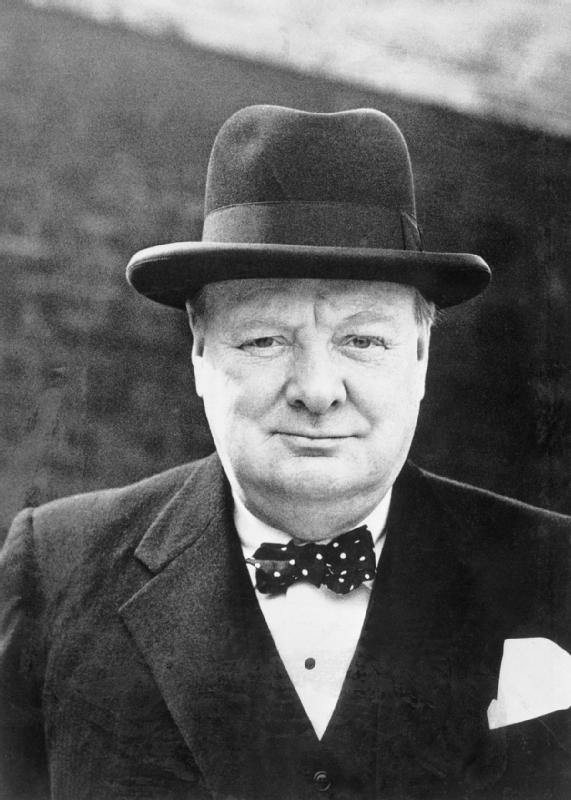
For the last week, historian David Cannadine has been presenting a series of documentaries on Winston Churchill on BBC Radio 4 (which is the high-brow talk service of the BBC). The focus of the series is on Churchill’s personal life and personal quirks, such as his fondness for bricklaying.

People worldwide can listen to all of the documentaries here. Keep in mind, however, that there is a 7-day moving wall for downloads and if you want to listen to the first documentary of the series, you will need to do so within the next few hours.


Who Speaks for History? Who Speaks for Physics? Lessons from the Battles of Experts over AV in the UK and the Nuclear Crisis in Japan

20 03 2011

The UK is currently in the middle of a debate over electoral reform: a referendum on whether to switch from First Past the Post to the Alternative Vote in Westminster election will take place on 5 May.  The Alternative Vote, which has been used in Australia since 1918, involves voters ranking candidates in order of preference (e.g., Labour 1, Liberal Democrat 2, Conservative 3). Under the current FPTP system, only first preference votes are recorded and the other data about voter preferences is discarded. I would imagine that if the UK votes to shift to this new system, it would increase the impetus for electoral reform in Canada.

The Canadian province of British Columbia used AV for its provincial general elections in the 1950s. It was introduced by a legislature dominated by  centre-right parties as a tactic to prevent a socialist political party from winning a forthcoming general election. Once this threat had passed, the legislature re-introduced the old FPTP system. A coalition of right-wing parties in Australia was also responsible for the introduction of AV in that country, but for various reasons AV became a permanent feature of Australian politics.

Recently, a group of British and British-born historians sent a letter to the Times to condemn the AV proposal as ahistorical, out of keeping with British traditions, and a slap in the face to the generations of men and women who fought for democracy.

Our nation‟s history is deeply rooted in our parliamentary democracy, a democracy in which, over centuries, men and women have fought for the right to vote. That long fight for suffrage established the principle of one man or woman, one vote. The principle that each person‟s vote is equal, regardless of wealth, gender, race, or creed, is a principle to which generations of reformers have dedicated their lives. It is a principle upon which reform of our parliamentary democracy still stands. The referendum on 5th May which threatens to introduce a system of „Alternative Voting‟ – a voting system which will allow MPs to be elected to Parliament even if they do not win the majority of constituents‟ first preference votes – also threatens to break this principle…. For the first time since 1928 and the granting of universal suffrage, we face the possibility that one person‟s casting ballot will be given greater weight than another. For the first time in centuries, we face the unfair idea that one citizen‟s vote might be worth six times that of another…Twice in our past, the nation has rejected any threat to the principle of one citizen, one vote. The last time, in 1931, Winston Churchill stood against the introduction of an Alternative Vote system. As he argued, AV would mean that elections would be determined by “the most worthless votes given for the most worthless candidates”. He understood that it was simply too great a risk to take.

The signatories to this letter included: Professor Antony Beevor,  Professor Jeremy Black, Professor Michael Burleigh
Professor John Charmley, Professor Jonathan Clark, Dr Robert Crowcroft, Professor Richard J Evans, David Faber, Professor Niall Ferguson, Orlando Figes,  Robert Lacey, Lord Lexden, Simon Sebag Montefiore, Professor Lord Norton of Louth, Dr. Andrew Roberts, Professor Richard Shannon, Chris Skidmore MP, Dr David Starkey, Professor Norman Stone.

Some of these historians are known to have conservative political views (e.g., Niall Ferguson), although this certainly isn’t true of all of the signatories.

You can read the entire letter here.

The anti-AV letter generated a response from historians who are sympathetic to AV. The pro-AV letter reads:

Twenty-five historians, coordinated by Conservative MP Chris Skidmore, have written to the Times, claiming that AV would be a betrayal of the sacrifice of past generations of democracy campaigners. But claiming to speak for the dead on a referendum they never contemplated seems to us a betrayal of academic standards that we as historians hold dear.

They claim to speak for historians, indeed for history, in defending FPTP. But as on any such serious political question, historians are as divided as the population at large. The notion that “History teaches us to vote ‘No to AV’”, as the Times headline put it, or that it gives any such clear lesson on the rightful configuration of the voting system again leads us to question the signatories’ scholarly acumen in supporting this petition.

The signatories to this letter included a number of historians, some of whom are associated with the political left:

1.     Dr Joan Allen
2.     Philip Begley
3.     Jane Berney
4.     Professor Stefan Berger
5.     Dr Lawrence Black
6.     Professor Huw Bowe
7.     Dr Kate Bradley
8.     Professor Christine Carpenter
9.     Professor David Cesarani
10.  Dr Elaine Chalus
11.  Professor Peter Clarke
12.  Dr Tim Cooper
13.  Dr Surekha Davies
14.  Dr Lucy Delap
15.  Professor Richard Drayton
16.  Dr Amy Erickson
17.  Dr Martin Farr
18.  Professor Steven Fielding
19.  Matthew Francis
20.  Dr. Francis Graham-Dixon
21.  Dr Matthew Grant
22.  Dr Simon Griffiths
23.  Dr Joanna de Groot
24.  Dr David Hall-Matthews
25.  Professor Edward Higgs
26.  Professor Matthew Hilton
27.  Dr Katherine Holden
28.  Professor Geoffrey Hosking
29.  Dr Michael Jennings
30.  Dr Martin Johnes
31.  Dr Jenny Keating
32.  Dr Charles Littleton
33.  Dr Peter Lyth
34.  Daniel-Joseph MacArthur-Seal
35.  Dr James Mark
36.  Clare Mulley
37.  Dr Scott Newton
38.  Dr Lucy Noakes
39.  Dr Nicola Phillips
40.  Professor Geoffrey Plank
41.  Dr Martin Polley
42.  Professor Bernard Porter
43.  Dr Virginia Preston
44.  Dr Alejandro Quiroga
45.  Dr Pedro Ramos Pinto
46.  Dr Tim Rees
47.  Dr Alastair Reid
48.  Dr James Renton
49.  Dr Sarah Richardson
50.  Dr Mark Roodhouse
51.  Dr Dominic Sandbrook
52.  Dr John Seed
53.  Dr Peter Shapel
54.  Dr Sally Sheard
55.  Dr Virginia Smith
56.  Dr Naomi Standen
57.  Professor Simon Szreter
58.  Professor Pat Thane
59.  Professor Jim Tomlinson
60.  Professor Richard Toye
61.  Professor Frank Trentmann
62.  Professor Jeffrey Weeks
63.  Professor Noel Whiteside
64.  Dr Troy Whitford
65.  Dr Chris A Williams
66.  Dr Angus J L Winchester
67.  Professor Ina Zweiniger-Bargielowska

Please check out the blog post on this issue by Daniel-Joseph MacArthur-Seal, who is the editor of openSecurity, openDemocracy’s security coverage section.

This battle of experts on AV raises a broader issue, namely, the role of experts in public debate. During the recent nuclear crisis in Japan, experts flooded the 24-hour news channels, bombarding us with contradictory assessments of the seriousness of the crisis. Was it worse than Chernobyl or merely a Three Mile Island? Is now the time to flee Tokyo?

For those of us without expertise in nuclear physics, we must rely on experts to answer such questions. It is therefore distressing when we find that some of the experts being quoted in the media actually don’t know that much about the subject at hand. For instance, very early in the nuclear crisis, Josef Oehmen, an academic at MIT issued a public declaration that there was no risk to human health. Because he was identified as an “MIT research scientist” in the media, Oehmen’s statements were regarded as authoritative and were reported all over the world, including in Japan.   MIT, after all, has a global reputation for excellence in science and technology.

Fukushima Power Plant in 1975

Oehmen, alas,  has no special expertise in nuclear power, although he is a mechanical engineer with expertise in drinking water.  A few days after Oehmen’s public statement, MIT held an open forum on the crisis in Japan. Several faculty members with relevant expertise were invited to present, but Oehmen was not one of them, perhaps because he has already been roundly criticized in the media for speaking out of turn.

Oehmen is a mechanical engineer, not a nuclear engineer. I will admit that he probably knows more about nuclear power than someone with a doctorate in history, but he still isn’t an expert in the field of nuclear power. The problem is that the average newspaper reader may not be aware of how specialised the division of labour  and the resulting division of knowledge within academe is. Pretty much anyone with the title professor in a remotely relevant field may be regarded as an expert.

I think that there is a lesson here for historians who participated in the debate over AV. The vast majority of historians work on topics that are essentially unconnected to issues of institutional design. Antony Beevor, one of the signatories of the anti-AV letter, is a first class military historian. He knows Russian and German. His book on the downfall of Berlin in 1945 is great. However, I’m not convinced that he is especially qualified to speak about electoral reform. The same might be said for some of the signatories of the pro-AV list.

The historians most qualified to speak about AV are probably Australian, since Australia is the only country to use this system for the lower house of its national legislature. Sadly, I think that neither of the petitions has any signatories who are Australian citizens or residents, which means that both sides are probably speaking from a position of great ignorance about how a system of AV has actually operated.

For some historical background on AV in Australia, see here.


“Everything in Japan Pretty Much Worked”

15 03 2011


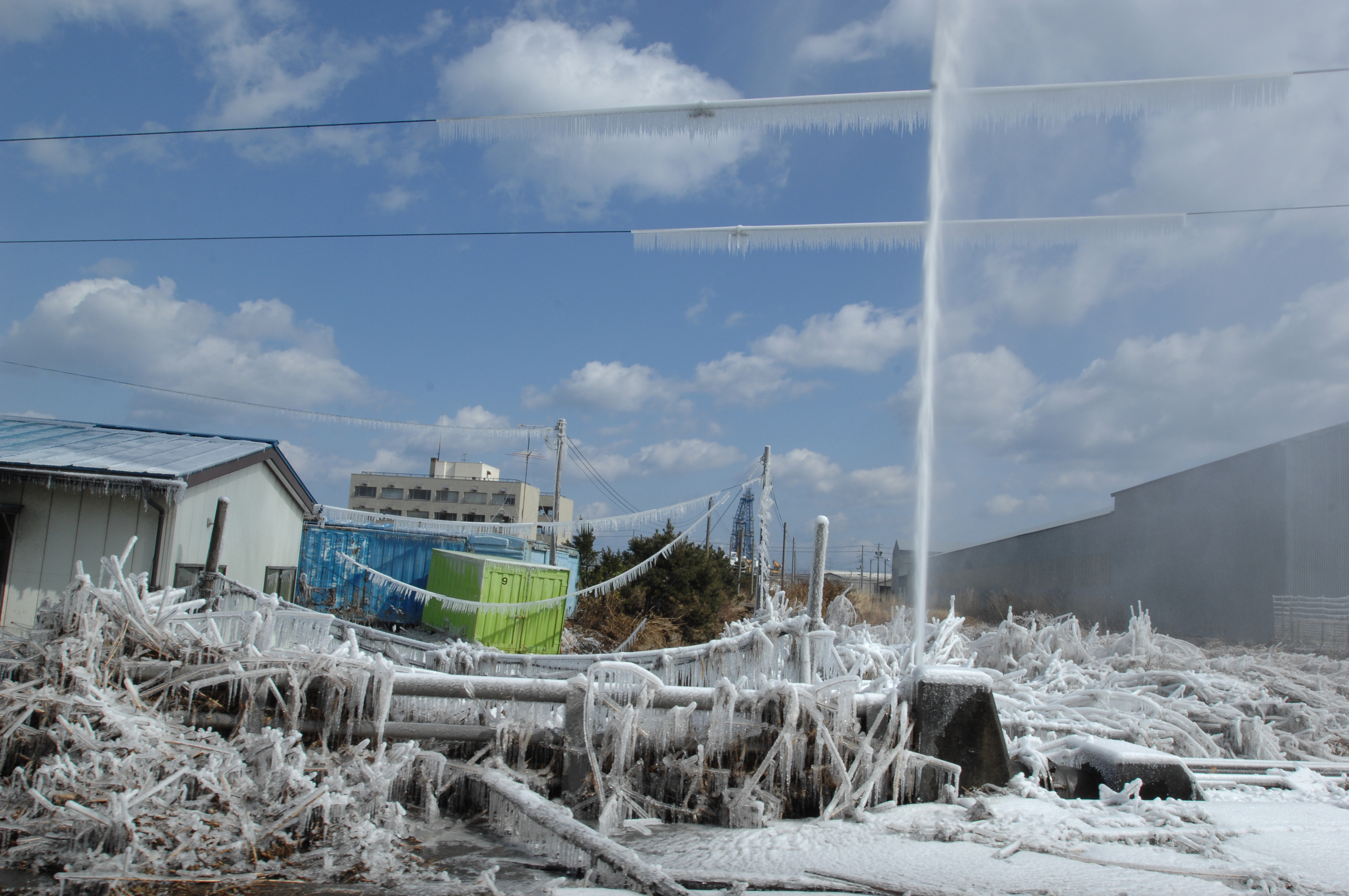
Photo taken by US Navy Officer, 12 March 2011. "A damaged water pipe shoots into the air after a tsunami triggered by a 8.9 magnitude earthquake off the Northeastern coast of Japan. The earthquake was the strongest ever recorded in Japan, which caused considerable damage to the country's eastern coastline.

Photo taken by US Navy Officer, 12 March 2011. "A damaged water pipe shoots into the air after a tsunami triggered by a 8.9 magnitude earthquake off the Northeastern coast of Japan. The earthquake was the strongest ever recorded in Japan, which caused considerable damage to the country's eastern coastline".

The disasters in Japan, particularly the nuclear crisis, has shaken public confidence in technology. The earthquake and subsequent tsunami are indeed reminders of the limits to modern man’s ability to master the natural world. I bring this issue up because I am currently putting the finishing touches on a manuscript that, inter alia, considers Canadian attitudes to science and technology in the 1860s. The plethora of inventions associated with the First Industrial Revolution reinforced confidence in the ability of “Western “man” (to use the term of contemporaries) to dominate both nature and non-Western cultures, particularly Canada’s First Nations. In the book I explore how the ideology of industrialism influenced Canadian politics in the 1860s, particular Confederation. I draw on and expand upon ideas in historian R. Douglas Francis’s recent book The Technological Imperative in Canada: an Intellectual History.

For Canadians in the 1860s, the technology that symbolized their new power over nature was the massive Victoria Bridge at Montreal, which was the first bridge ever over the St Lawrence.

Confidence in technology, which was strong in the Victorian era and which remains fairly strong today (notwithstanding a series of industrial disasters) has been shaken, if you will pardon the metaphor, by the recent events in Japan. We can look at the glass and say that it is half empty by focusing on the damage, which is particularly acute in several coastal town in NE Japan. What is perhaps more striking, however, is the sheer resilience of Japan’s complex infrastructure system.

Thanks to tough building codes and first-class engineering technology, the damage from this earthquake was actually quite light, at least according to some observers. I would like to bring your attention to a interesting blog post by an American in engineer who lives west of Tokyo. He wrote this post in response to concerns from friends in the US who seemed to be under the impression that the entire country had been ruined.

Let me quote him at length.

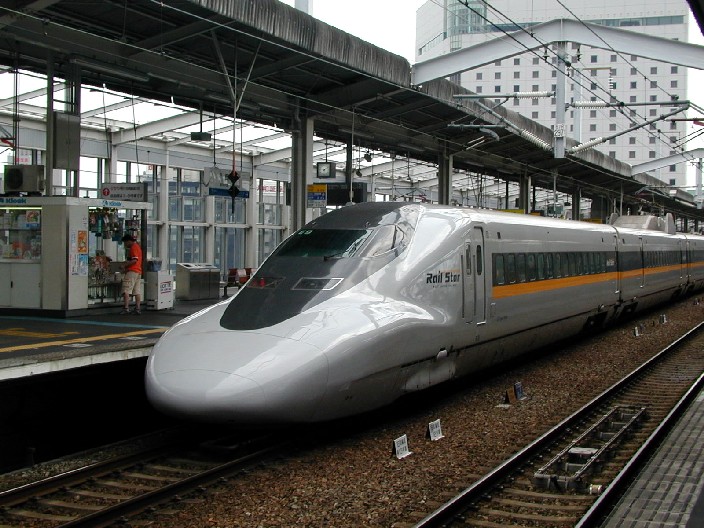
Let’s talk about trains for a second.  Four One of them were washed away by the tsunami.  [Edited to add: Initial reports were incorrect — four were accounted as missing and presumed lost, but it just reflected communication issues — three were safe, they were just not known to be safe.]  All of the rest — including ones travelling in excess of 150 miles per hour — made immediate emergency stops and no one died.  There were no derailments.  There were no collisions.  There was no loss of control.  The story of Japanese railways during the earthquake and tsunami is the story of an unceasing drumbeat of everything going right.

This was largely the story up and down Honshu.  Planes stayed in the sky.  Buildings stayed standing.  Civil order continued uninterrupted.

On the train line between Ogaki and Nagoya, one passes dozens of factories, including notably a beer distillery which holds beer in pressure tanks painted to look like gigantic beer bottles.  Many of these factories have large amounts of extraordinarily dangerous chemicals maintained, at all times, in conditions which would resemble fuel-air bombs if they had a trigger attached to them.  None of them blew up.  There was a handful of very photogenic failures out east, which is an occupational hazard of dealing with large quantities of things that have a strongly adversarial response to materials like oxygen, water, and chemists.  We’re not going to stop doing that because modern civilization and it’s luxuries like cars, medicine, and food are dependent on industry.

The overwhelming response of Japanese engineering to the challenge posed by an earthquake larger than any in the last century was to function exactly as designed.  Millions of people are alive right now because the system worked and the system worked and the system worked.

That this happened was, I say with no hint of exaggeration, one of the triumphs of human civilization. Every engineer in this country should be walking a little taller this week.  We can’t say that too loudly, because it would be inappropriate with folks still missing and many families in mourning, but it doesn’t make it any less true.

So is the glass half full, as the blogging engineer quoted above suggests? Or is it half empty, as many environmentalists and other skeptics of modern technology would say? The next few hours at the Japanese nuclear plant may help to answer that question.

Tokyo TV Tower Right After the Earthquake


Doing Business With the Nazi Regime

13 03 2011

That is the subject of a recent lecture by Professor Neil Forbes of Coventry University. His talk should interest people in IR history, business history, and folks concerned with historical dimensions of Corporate Social Responsibility.


Interesting New Book: Retail Nation: Department Stores and the Making of Modern Canada

12 03 2011

I’ve discovered an interesting new book in the field of Canadian business history, broadly defined. Donica Belisle’s Retail Nation: Department Stores and the Making of Modern Canada was published by UBC Press last month.

The book blurb is as follows:
The experience of walking down a store aisle – replete with displays, sales people, and infinite choice – is so common we often forget retail has a short history. Retail Nation traces Canada’s transformation into a modern consumer society back to an era – 1890 to 1940 – when department stores such as Eaton’s ruled the shopping scene and promised to strengthen the nation. Department stores emerge as agents of modern nationalism, but the nation they helped to define – white, consumerist, middle-class – was morelimited, and contested, than nostalgic portraits of the early department store suggest.

More info here.

It will be very interesting to see what Dr. Belisle has to say about the French language and national chain department stores, which is obviously the issue that dominates the social memory of Canadian department stores (and mail order catalogues) in this period.  In the famous Roch Carrier story The Hockey Sweater, the francophone narrator’s mother sends a letter to the Eaton’s Catalogue warehouse in the Anglo-Protestant bastion of Toronto ordering a Montreal Canadiens hockey jersey for her son. Due to a linguistic mix-up, the sweater that arrives carries the logo of the Toronto Maple Leafs, the team that is the arch-rival of the Canadiens.


Call for Website Reviewers ActiveHistory.ca

12 03 2011

I am relaying this message from ActiveHistory.ca
As a growing number of historical resources become available online, the internet is increasingly becoming a site of serious historical research, enquiry and education. Yet it is important to approach information on the internet with caution, assessing its value with a critical eye.

ActiveHistory.ca is expanding its review section to include scholarly analyses of websites. It is imperiative in this “digital age” to develop the tools necessary to critically engage with this expanding resource base.

If you are interested in reviewing a website that features historical content, please send an expression of interest to info@activehistory.ca.


Open Source Tools for History

10 03 2011

Heritage organizations are continuously working to establish a digital presence and make better use of IT to communicate with the public.  However, budgetary limitations are increasingly frequent in the heritage field and heritage organizations are forced to balance the benefits of using great new technologies with costs. Some of the software they use to edit photos, create websites, etc., is expensive.  The solution, according to blogger Krista McCracken, may be to use open source software rather than the more expensive proprietary software. In this blog post, Krista outlines a number of programs ideal for people in the public history field. (This post will probably interest a fair number of academic historians as well).


The Great Stagnation

9 03 2011

I’ve previously blogged about Tyler Cowen’s book The Great Stagnation.

The Economist recently published a review of this book in which it sided with Cowen’s opponents, who have argued that the stagnation in median incomes in the US since the 1970s is due to (politically driven) changes in the distribution of wealth as opposed to a slow-down in the rate of technological progress.  The online version of that magazine contains a symposium in which economists debate Cowen’s thesis.