International Women’s Day

7 03 2011

In honour of the 100th International Women’s Day, I thought that I would share some links related to women’s history.

The first is to a podcast by Alice Kessler-Harris, who is the R. Gordon Hoxie Professor of American History at Columbia University, in New York City. She specializes in the history of American labour and the comparative and interdisciplinary exploration of women and gender. The title of this talk is “The Quest for Equality: Women 1865 to the Present”.

The second is to a section of the UN website with information on the history of IWD, which was first observed by German Social Democrats in 1911.

The third is a story in the Vancouver Sun on the gains women have made in the last century.


New Hagley Library Grants

3 03 2011

The Center for the History of Business, Technology, and Society has created a new research grant opportunity for use of Hagley Library resources and revised its grant application procedures.  In addition to its existing research and dissertation grant programs, the Center now invites applications for one-week exploratory research grants that are intended to determine if Hagley library collections are useful for a particular project. Applications for all grants now must take place through our web-based system that can be accessed through our grants and fellowship page, http://www.hagley.org/library/center/grants.html. More information on our grants programs is included below. Questions about our grant procedures may be directed to Carol Lockman, clockman@Hagley.org.

Hagley Exploratory Research Grants

These grants support one-week visits by scholars who believe that their project will benefit from Hagley research collections, but need the opportunity to explore them on-site to determine if a Henry Belin du Pont research grant application is warranted. Priority will be given to junior scholars with innovative projects that seek to expand on existing scholarship. Applicants should reside more than 50 miles from Hagley, and the stipend is $400. Application deadlines: March 31, June 30 and October 31

Henry Belin du Pont Fellowships

These research grants enable scholars to pursue advanced research and study in the collections of the Hagley Library. They are awarded for the length of time needed to make use of Hagley collections for a specific project. The stipends are for a maximum of eight weeks and are pro-rated at $400/week for recipients who reside further than 50 miles from Hagley, and $200/week for those within 50 miles. Application deadlines: March 31, June 30 and October 31

Henry Belin du Pont Dissertation Fellowships

This fellowship is designed for graduate students who have completed all course work for the doctoral degree and are conducting research on their dissertation. Applications should demonstrate superior intellectual quality, present a persuasive methodology for the project, and show that there are significant research materials at Hagley pertinent to the dissertation. This is a residential fellowship with a term of four months. The fellowship provides $6,500, free housing on Hagley’s grounds, use of a computer, mail and internet access, and an office. Application deadline: November 15

Carol Ressler Lockman
Hagley Center
PO Box 3630
Wilmington DE  19807
Email:  clockman@hagley.org


Oil Sands and the Canada-EU Trade Deal

3 03 2011

Is the proposed Canada-EU trade agreement in danger? Friction over Canada’s oilsands came to a head last week, after the publication of previously secret EU documents which suggest that Canada had threatened to suspend the talks if the EU insisted on introducing an environmental clause for oil imports.

It also appears that the proposed text of the deal, which is still secret, contains a clause that would allow firms to sue a government if it imposed a climate change regulation or carbon tax that inhibited their ability to produce fossil fuels under their current business model.

See more here.


Chinese Interpretation of World History

1 03 2011

This video was developed by the Chinese government for use in African and other developing countries. The basic message is that while Western nations have a long track record of aggression towards the Third World, China has always been non-expansionist and non-imperialist. (I’m not certain how the Tibetans, Koreans, etc would feel about this).  China can, therefore, be trusted to exercise its new global clout wisely.

Note how the early modern European sailing vessel is sporting the flag of the modern European Union. The video also criticizes Japan for joining the European powers in trying to colonize China in the early 20th century. The animation shows that after Japan was A-bombed by the USA, is became the land of Hello Kitty and Toyota cars. I must say that it is rare to see Hello Kitty and the name of a Harvard academic (Joseph Nye) in the same animated video.


Historical Backstory Podcasts

28 02 2011

I thought I would bring your attention to a US history podcast series I discovered recently.

In each episode of “Backstory”, U.S. historians Ed Ayers, Peter Onuf, and Brian Balogh speak to other historians about a current topic and its history.  Onuf, who is a specialist in the revolutionary and early national periods, interviews historians who have researched 18th century topics. Ayers handles the 19th century historians and Balogh deals with 20th century history. See here.


Past podcasts have examined the history of the U.S. Census, past financial crises, the history of Thanksgiving, and the history of courtship.

That’s right, courtship. In the most recent podcast, Temple University historian Beth Bailey is interviewed about her research into the history of courtship. Here is  the, er, teaser for her interview.

Considering the stereotypes about Puritan New England, you might be surprised to learn that sweethearts in the 18th century were not only allowed to sleep together before marriage – they were encouraged to! The catch? They had to do it within the parents’ home. It was known as “bundling,” and although sex was theoretically not involved, the practice coincided with a huge increase in premarital pregnancy… In this episode, the History Guys explore three centuries of pre-marital intimacy. Did economic considerations used to play a greater role in coupling? In what ways have dating practices challenged class & racial boundaries? Has the idea of “romance” itself morphed over time?


Nature’s Past Podcast

28 02 2011


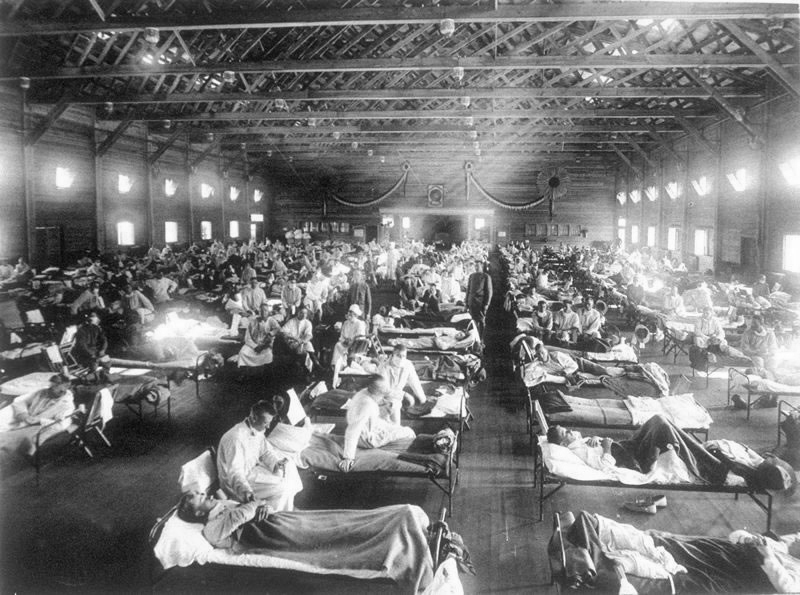
Influenza patients in Kansas, 1918

The latest podcast of the Nature’s Past series is now available online. Nature’s Past is produced by the Canadian Network in History and the Environment. This week’s podcast deals with the 1918-1919 influenza epidemic in Winnipeg. This epidemic, which is now largely forgotten, killed almost as many Canadians as the First World War.


Electoral reform dilemmas: are single-member constituencies out of date?

24 02 2011

That is the title of a recent piece on the History and Policy website by Matthew Roberts, a historian at Sheffield Hallam University. Although his discussion is focused on the UK, which will soon have a referendum on electoral reform, his discussion of two-member constituencies might be of interest to Canadian political historians.


Zotero Explained

23 02 2011

Over on activehistory.ca, Ian Milligan has a great post outlining how to use Zotero. Zotero is similar to EndNote and other software that helps you write footnotes but has manyadvantages, not least the fact that it is free.


Canada in a Unipolar World

23 02 2011

Please note the the upcoming conference “Canada in a Unipolar World: New Directions for Canadian Foreign Policy?”, convened by the Center for the Study of Canada at State University of New York College at Plattsburgh, in partnership with Fulbright Canada and Canadian Foreign Policy Journal (CFPJ).  

The conference will be held at the High Peaks Resort in Lake Placid, New York, from October 13 to 15, 2011. The deadline for proposals is April 15, 2011.

 If you have any questions, please don’t hesitate to contact Michael K. Hawes, PhD (mhawes@fulbright.ca / 613-688-5509) or
Jennifer Regan (jregan@fulbright.ca / 613-688-5517).  For further details,
including the terms of reference and submission process, please visit the
following websites: www.fulbrightcanada.com,
www.plattsburgh.edu/offices/academic/cesca/, or www.carleton.ca/cfpj.


The Global Lincoln

21 02 2011

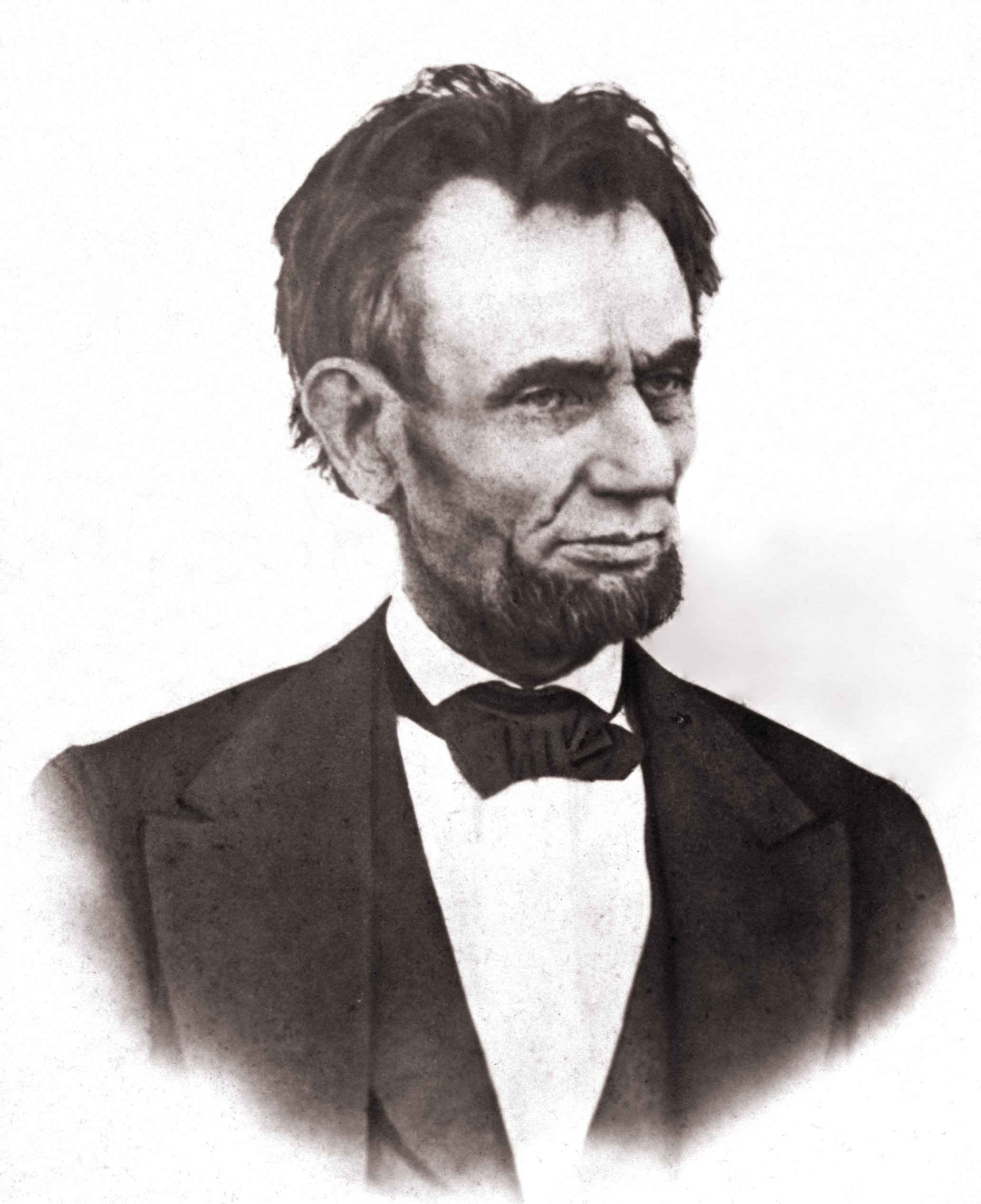
After his martyrdom Abraham Lincoln became a global figure. As David Lloyd George put it, Lincoln “lost his nationality in death.”

The Last Photograph of Lincoln Taken While He Was Alive

To mark the 200th anniversary of the birth of Lincoln, a conference on Lincoln’s global impact was held in Oxford. The Global Lincoln contains the best papers presented there. It is now available for pre-order on Amazon and will be published later this year.

Here is the book summary:

More than any other American historical figure, Abraham Lincoln towers over the global landscape, a leader who spoke–and continues to speak–to people around the world. The Global Lincoln tells the unknown and remarkable story of this great president’s worldwide legacy. Edited by acclaimed Lincoln biographer Richard Carwardine and Jay Sexton, this fascinating volume brings together leading historians from around the globe–including such writers as Harold Holzer, Kenneth O. Morgan, and David W. Blight–to explore the image and influence of Lincoln in places ranging from Germany to Japan, India to Ireland, Africa and Argentina to the American South. The contributors show that the heart of Lincoln’s global celebrity lies in his status as the archetypal self-made man, his record of successful leadership in wartime, his role as the “Great Emancipator,” and his resolute defense of popular government. Yet “Lincoln” has also been a malleable and protean figure, one who is forever being redefined to meet the needs of those who invoke him, from Marx and Tolstoy to soldiers fighting in the “Lincoln Brigades.”


Here is the programme of the 2009 conference, which gives a sense of the sort of papers we can expect to see in the book.


Friday 3rd July
15:30-17:00 Conference registration
17:00-17:15 Welcome
17:00-18:00 Richard Carwardine: Lincoln’s Horizons

Chair: Douglas Wilson

18:15-19:00 Reception
19:00-20:00 Dinner
20:30-21:15 Harold Holzer: The European Image of Lincoln

Chair: Russell Lewis


Saturday 4th July
9:00-10:30 Lincoln, America and the World

Chair: Rosemary Foot

David Blight, U.S. South

Jay Sexton, Projecting Lincoln

Comments: Patricia Clavin

11:00-13:00 Lincoln the Nationalist Unifier and Modernizer
Chair: Frank Williams
Eugenio Biagini, Germany and Italy
Carolyn Boyd, Spain
De-min Tao, East Asia
Vinay Lal, South Asia
Comments: Jorg Nagler

Saturday Afternoon Free

14:00-17:00 Special Events at the Rothermere American Institute (RAI)
14:00 Presenting Race and Emancipation to the Public:

President Lincoln’s Cottage at the Soldiers’ Home

Frank Milligan

14:00-17:00 Vere Harmsworth Library Special Exhibition

Please note the below events resume at St. Catherine’s College

17:30 Keynote Address

Roger Wilkins

Gavin Esler

19:00 Reception and Banquet Dinner


Sunday 5th July
9:00-10:30 Lincoln the Emancipator and Liberator
Chair: Catherine Clinton

Norman Saul, Russia

Nicola Miller, Latin America

Kevin Gaines, Africa

Comments: TBC

11:00-13:00 Lincoln the Progressive and Democrat

Chair: Marc Mulholland

Lawrence Goldman, Britain in the 1860s

Adam Smith, England and Scotland

Kenneth Morgan, Wales

Kevin Kenny, Ireland

Comments: Richard Blackett

14:00-15:30 Roundtable

Richard Blackett, Jorg Nagler, Peter Onuf, Tom Schwartz, Mary Vincent

16:00 (TBC) Close of conference