The Inside Story on the Discover Canada Citizenship Guide

2 03 2010

In December, the federal government introduced Discover Canada, a new study guide for immigrants wishing to become Canadian citizens. At the time, I used this blog to point out some of the flaw of the historical sections of the guide. These flaws included factual errors and serious omissions. The guide says very little about the political history of Canada in the twentieth century and fails to mention such important Prime Ministers as Mackenzie King, Lester Pearson, Pierre Trudeau, and Brian Mulroney! How you can pretend to talk about Canadian history without mentioning these figures is beyond me.  Moreover, the guide says almost nothing about the social history of Canada, which is even more distressing because many immigrants come from countries with radically different social histories. Last December, people noticed that there was almost no information about the history of divorce, abortion, and homosexuality in Canada. I think that it is important that an immigrant from say India, which decriminalized homosexuality in 2009, should know that Canada made the same move back in the 1960s.

Thanks to a story in today’s Globe, we know that material on these controversial topics were included in the original version of the guide and were edited out by the immigration minister, Jason Kenney.

Le Devoir has also carried this story. I’m curious to know what the reaction in Quebec to this story is, since Quebec’s classes for immigrants do indeed stress the rights of women and gays.

One hopes that John Baird, Mr. Kenney’s cabinet colleague, will speak up on this important issue. Baird arguably represents the mainstream in Canadian society far more than Mr. Kenney.

It is clear that the guide will have to be revised so that it reflects the values of Canadian society rather than a small clique of people who do not represent the values of ordinary Canadians. However, we should give some thought as the best process for writing a guide of this nature. It would be wrong for the guide to reflect the values of either the far right (monarchists or some Airborne Regiment veteran) or the extreme left (Quebec Solidaire types) or any other small group be they snow-mobile drivers, ice fishers, or pipe fitters . The guide should reflect the values of the mainstream, the majority.  Obviously we can’t put this guide to the people of Canada in a referendum for approval, but by using Wikipedia-style technology the federal government empower ordinary Canadians to have a voice in the making of this guide. The government should cap the length of the guide and then let ordinary Canadians debate what sort of values should be fitted into the available space.

Let me just say that I find it very curious that the Canadian Historical Association, which is supposed to speak for the historical profession in this country, has had absolutely nothing to say about the atrociously bad historical sections in the Discover Canada guide. The only reasonable explanation for the appalling silence of the Canadian Historical Association is that the organization’s offices are located in a building owned by the federal government and they do not wish to antagonize their landlord.



Abstract of my Paper for the BHC 2010

1 03 2010

I am going to be presenting at the upcoming Business History Conference in Athens, Georgia. I’m going to be on a very exciting panel called “Rhetoric of Liberalism”. My co-panellists include some high calibre scholars, so I’m honoured to be presenting along with them.

G.1 Rhetoric of Liberalism
Meeting Room F/G

Chair: Ben Waterhouse, University of North Carolina
Discussant: The Audience

Andrew Smith, Laurentian University
Accepting Financial Globalization: The Canadian Debate on British Investment, 1836-1875

Thomas Finger, University of Virginia
Natural Theology of Free Trade in the Nineteenth Century

Stephen Gross, University of California, Berkeley
Information, Uncertainty, and Trust in German-Balkan Trade: A Case Study of the Leipzig Trade Fair, 1920-1930

Colin F. Wilder, University of Chicago
Before Law and Economics: What the Modern Natural Law Tradition Had to Say about Commercial Affairs

Here is the abstract of my paper:

Accepting Financial Globalization: The Canadian Debate on British Investment, 1836-1875

Prior to the creation of the Canadian federation in 1867, British North America was a collection of separate British colonies with their own currencies, laws, and banking systems. The integration of the financial systems of the different colonies was a crucial part of the building of the Canadian nation-state. The “Bank Act of 1871” is widely regarded as having laid the legal foundations of the modern Canadian banking sector.  By 1900, Canada’s banking sector was dominated by a few large corporations, each of which had a branch network extending from the Atlantic to the Pacific. In contrast, the United States was served by a plethora of small banks.

Today, business historians often contrast Canada’s banking sector with that of the United States. This paper will examine the making of the 1871 banking law. It will show that banking legislation in Canada was shaped by the following forces: the powerful examples that had been set by the 1844 Bank Act in England and the 1863 National Bank Act in the United States; the rivalry between Toronto and Montreal for financial supremacy; and the hostility of a large section of the Canadian electorate to financiers. Attitudes to British investment also informed the debate about banking law.   This paper aims to refine our understanding of the development of financial systems in North America. It will also explore the role of classical liberalism in Canadian politics after 1867.

This paper is based on a mixture of printed primary sources and archival materials. The individuals mentioned most frequently in the paper are: Sir John A. Macdonald; Alexander Galt; Sir Francis Hincks; Edwin King; John Rose. The companies mentioned are: the Bank of Montreal; the Commercial Bank; the Bank of Upper Canada; the House of Baring.


Canada’s Accomplishments At the Olympics: Even Greater Than the Numbers Would Suggest at First Glance

28 02 2010

Canada’s Accomplishments At the Olympics Are Even Greater Than the Numbers Would Suggest at First Glance

Earlier this week, there was a lot of hand-wringing in the media about Canada’s alleged underperformance in the Olympics. I would imagine that the two gold medals in hockey will have dissipated this negativity, so perhaps posting these stats is now a moot point. However, one thing that bugged me about the complaints that Canada was third or fourth in the medal rankings is that so many of the complainers have overlooked an incredibly obvious fact, namely, that Canada’s population is rather small. In terms of medals per capita, Canada’s performance has been quite respectable. I was left wondering whether the give gold medals out to countries for having statistically illiterate populations.

Here are the medal ranking at 18:00 ET Sunday, 28 February.

Country Gold Silver Bronze Total
United States 9 15 13 37
Germany 10 13 7 30
Canada 14 7 5 26
Norway 9 8 6 23
Austria 4 6 6 16
Russia 3 5 7 15
South Korea 6 6 2 14
China 5 2 4 11
France 5 2 4 11

Here are the populations of these countries, courtesy of the CIA Factbook.

Country Population
United States 308,772,000
Germany 81,757,600
Canada 34,017,000
Norway 4,860,500
Austria 8,372,930
Russia 141,927,297
South Korea 49,773,145
China 1,336,090,000
France 65,447,374

It seems to me that the following are the stats we should really be paying attention to:

Country Medals Per Million Inhabitants
Norway 4.732023454
Austria 1.910920072
Canada 0.76432372
Germany 0.366938364
South Korea 0.281276178
France 0.16807397
United States 0.119829518
Russia 0.105687914
China 0.008232978

Or, if you prefer to focus on gold medals

Country Gold Medals Per Million Inhabitants
Norway 1.851661352
Austria 0.477730018
Canada 0.411558926
Germany 0.122312788
South Korea 0.120546933
France 0.076397259
United States 0.029147721
Russia 0.021137583
China 0.003742263

What does doing well in the Winter Olympics say about a country aside from suggesting that it has lots of snow? Canadians now need to have a debate about how what the most successful Winter Olympic countries have in common and what Canadians can do better in the future. My concern is that the excellent performance of a few dozen Canadian athletes at the Olympics will cause Canada to rest on its laurels. We really need to address the problem of our sedentary population.In 1973, Canadian TV stations carried a very controversial ad showing that the average 30-year old Canadian was about as fit as the average 60-year old Swede. The ad was soon pulled because it was deemed to be offensive to Canada. Since 1973, the problem of couch potatoism in Canada has only become worse. So what are the Norwegians doing right? What are the Americans, who have 300 million people, doing so wrong?


My Teaching This Week

26 02 2010

Undergraduate Teaching

HIST 1407.

I delivered two lectures this week in my Canadian history survey course for first-year students. On Monday, I spoke about Canadian history from 1945 to 1963.  The major personalities discussed in my lecture were Louis St-Laurent, C.D. Howe, Maurice Duplessis, and John Diefenbaker. The lecture ended with Lester Pearson becoming Prime Minister in April 1963. I attempted to present a fair and balanced picture of Diefenbaker by stressing his good points, including his opposition to apartheid in South Africa. I felt that it was useful to provide a corrective to all of the Diefenbaker-bashing the students may encounter in secondary sources later in their academic careers. In writing my lecture, I strove to achieve the right balance between Canada’s internal affairs (post-war prosperity, suburbanization, federal-provincial relations, the development of the welfare state, legislation related to race and ethnicity) and external affairs (the Middle Power Project, the golden age of Canadian diplomacy, Korea, Canadian reactions to the Cuban Missile Crisis, Suez, and, of course, Lester Pearson’s Nobel Peace Prize).   I poked fun at Barack Obama’s recent Nobel Peace Prize, contrasting it with Pearson’s award, which was given for actual rather than potential accomplishments.

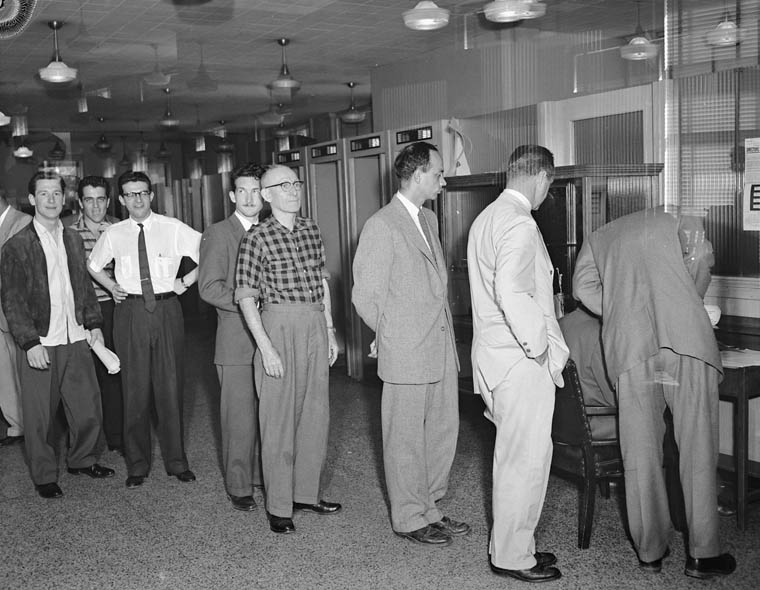
Canadians Wait to Vote, 1957 Federal General Election

Louis St-Laurent and Mackenzie King in San Fransisco, 1945

Diefenbaker with the Canadian Bill of Rights

Recently Enfranchised Natives Vote in Federal By-Election, 1960

My lecture on Wednesday dealt with Newfoundland’s history from the 1850s to its Confederation with Canada.  The most important figure discussed in this lecture was Joseph Smallwood, the man who brought Newfoundland into Confederation. I did not, however, neglect earlier periods of Newfoundland history, including the rejection of Confederation in the 1860s, Canada’s renewed offer of union, the French shore question and other fisheries issues, the devastating impact of First World War, the growth of mining and pulp and paper development, and railway construction. I also spoke about Commission Government.

I use Facebook to communicate with students in this course in between lectures. I sent the following FB message to my students.

“As you know, a major theme of the course is Canada’s relationship with two great Empires, the British Empire and the empire of the United States, which is, in many ways, the successor of the British Empire, even though few Americans will admit it. In my lectures, I have shown how Canada has struggled to assert its national autonomy in the shadow of these big empires. Canadian history can be seen as story of “colony to nation”. A more pessimistic interpretation is “colony to nation to colony”, the idea that Canada has merely exchanged one imperial master for another. You will have to decide for yourself which viewpoint is most accurate. Exams in HIST 1407 often have a question on this theme.

Although it certainly wouldn’t be on the exam, I thought that you might be interested in an article that recently appeared in the New York Times, “Like Rome Before the Fall? Not Yet” by Piers Brendon. The author discusses the predictions that the Empire of the United States is about to collapse. Anyway, I thought you might find it interesting.”

In my fourth-year seminar on British North America in the time of Confederation, this week’s focus was on Manitoba’s entry into Confederation. Our readings were: Gerry Friesen, “The Métis and the fur trade, and the Red River settlement, 1844-70” in The Canadian Prairies: A History, pp.91-128; Nicole St-Onge, “Saint-Laurent, Manitoba: Evolving Métis Identities,1850-1914”. The students enjoyed discussing the political implications of the decline of the buffalo population in western Canada.

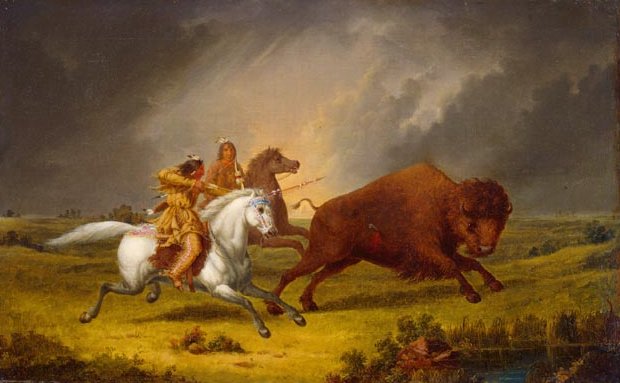
Paul Kane, "Assiniboine Hunting Buffalo" 1851-6

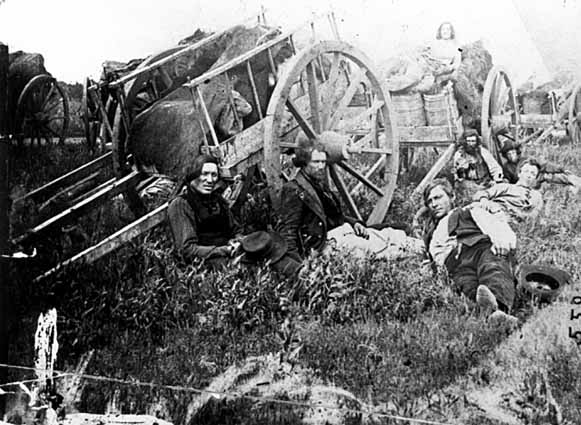
Métis with Red River Carts, 1860

We also listened to a student presentation on the life and times of Donald Alexander Smith, Lord Strathcona.

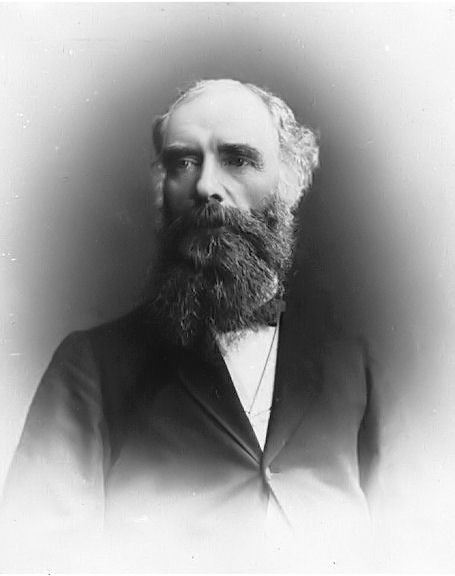
D.A. Smith, 1820-1915, the Richest Man in the British Empire at the Time of His Death

We also did an in-class document study: I distributed an article on affairs at Red River that appeared in the Toronto Globe on 12 March 1870, which generated a lively discussion.

Graduate Teaching

In my graduate seminar this week, we discussed The Company : a Short History of a Revolutionary Idea by John Micklethwait and Adrian Wooldridge. The students also announced that their group project is well underway: their website on the history of the Montreal Telegraph Company is now under construction and should be complete by the end of March.


Alex Usher on University Departments

26 02 2010

I found a great article in Globe Campus on university departments. The author, Alex Usher, quotes a university president who once said “a university is a collection of departments tied together by a common steam plant”.


AbitibiBowater, Danny Williams, NAFTA, and the Future of Canadian Federalism

25 02 2010

The Grand Falls Pulp and Paper Mill as it Appeared in the 1950s

The inside of the mill

AbitibiBowater has filed a $500-million free trade complaint over the expropriation of some of its resource assets by the Newfoundland and Labrador government. In 2008, the company announced it was shutting down a pulp and paper mill in Grand Falls. Newfoundland’s Premier, Danny Williams then announced that it was going to nationalize the mill. Danny Williams was then dubbed Danny Chavez by the media, a somewhat inaccurate comparison with the leftwing and anti-American leader of Venezuela, Hugo Chavez.

Danny Williams

The company, which was incorporated in Delaware, announced that it was going to sue the provincial government under a provision of NAFTA that protects the property rights of American and Mexican firms in Canada. For the benefit of US readers, I should point out that Canada’s constitution does not protect property rights. In Canada, the theory is that all property is the gift of the Crown (i.e., the government) and can be taken back if needs be.

To make the politics of this case even more complex, the government of Quebec is now considering buying a stake in AbitibiBowater, which is now bankrupt and in court protection. The governments of Newfoundland and Quebec have never been able to get along. There is bad blood going back to a border dispute in Labrador.

I don’t think that Williams was right to expropriate AbitibiBowater’s assets without fair compensation. Seizing the asset in this way may discourage future foreign investment in the province. However, one thing about this story really disturbs me as a constitutional historian. The federal government, which had nothing to do with the provincial government’s seizure of the mill, yet it is Ottawa rather than the provincial government is being sued by the company.

The apparent thinking is that the federal government has a responsibility to foreign nations to control sub-national units. The problem with this is that management of Crown land and property and civil rights are clearly a matter of provincial jurisdiction. If the federal government can gain control over matters of provincial jurisdiction simply by signing a treaty with a foreign power, the authority of the province’s will be eroded. This is a case with momentous implications for Canadian federalism.

In the late 1930s, the JCPC, which was then Canada’s highest court of appeal was called upon to rule on the constitutionality of the Bennett New Deal, a package of federal legislation that dealt with matters previously considered to be provincial. Louis St-Laurent (see left), the future Prime Minister who was the federal government’s lawyer in this case argued that the federal government had acquired the right to legislate in this field by virtue of Canada being a member of the League of Nations, an organization that had set standards regarding working conditions. St-Laurent concocted an argument based on section 132 of the British North America Act, which gives the federal parliament authority to implement imperial treaties, in this case the labour aspects of the 1919 Treaty of Versailles.

In 1937, this argument was, essentially laughed out of court by the law lords of the Privy Council. Actually, what Lord Atkin said was that the mere assumption by Ottawa of an international obligation under a treaty did not alter the distribution of powers in the Constitution. Atkin said : “While the ship of state now sails on larger ventures and into foreign waters she still retains the watertight compartments which are an essential part of her original structure.” For the ruling see here.

One wonders how the Supreme Court of Canada would rule on a case in which the federal government claimed authority over a provincial matter by virtue of the NAFTA treaty.

As far as I can tell, no observer in the media has commented on the possible implications of this case for the constitutionality of federal policy under a future climate-change treaty. However, the connection between s. 132 of the constitution and the Kyoto Accord has been discussed by Chris Kukucha, a political science professor in Alberta.  Many in Alberta have argued that Canada’s decision to sign the Kyoto Protocol was unconstitutional because only the provinces have the power to limit greenhouse gas emissions and to sign agreements related to them.


British Government Says Sorry to Child Migrants

25 02 2010

The British government has apologized to the children who were sent to live in the Dominions before 1967. The lion’s share of these children were sent to Canada, where they were known as “Home Children.” Some of these children were adopted into loving homes, while others suffered terrible abuse.

Canada’s government has announced that it will not be giving an apology to the Home Children. I agree with this decision. In many ways, the Home Children were the beneficiaries of the racism of the erstwhile Dominion of Canada. In the Dominion’s racial pecking order, Britons were at the top and were given privileged access. Would-be Chinese migrants, on the other hand, were discouraged. Canada recently apologized to the Chinese for the head tax and the subsequent policy of total exclusion. Surely it would be inconsistent to apologies to the whites who were the beneficiaries of the racist policies.

The Ottawa Citizen recently carried a story of uncharacteristically good quality on the Home Children. Even though the CanWest newspaper chain is bankrupt, this story was lengthy and based on extensive research.

The BBC’s Today Programme, the morning drive-time show on Radio 4, carried this story about the child migrants.


Robert Gates, Afghanistan, and Your Laugh For the Day

24 02 2010

Robert Gates With Friend

Robert Gates, the US defence secretary, has criticized the unwillingness of most European countries to get involved in the Afghanistan war, claiming that the new-found aversion of Europeans to war threatens world peace. Gates’s claim is astonishing and laughable on many levels. I literally burst out laughing when I read his comments.

First, the cowboy attitude of the last US administration was itself a major threat to world peace. Second, anyone familiar with twentieth-century history should rejoice if Europeans are inclining towards a more pacific, post-nationalist frame of mind. Third, the death of European militarism has been greatly exaggerated: France continues to intervene militarily in its former colonies. The UK refused to participate in the Vietnam War, but then fought its own war over the Falklands, a conflict in which the US ambassador to the UN sided with Argentina. Moreover, most European countries have mandatory military service for young males, a policy that involves a tax in time that doesn’t necessarily show up in the stats on military spending as a percentage of GDP. Fourth, do we really think the world would be better off if Greece spent more on its military, or indeed any other branch of its bloated public sector? Fifth, can the US still afford the luxury of fighting these essentially recreational wars overseas? In the Bill Clinton era, the US was on track to discharge its national debt. The US budget deficit is now huge. Perhaps Angela Merkel should be put in charge of US public finances. Either that or the US has subscribe to the EU growth and stability pact.

What Gates’s statement amounts to is a plea for European taxpayers to bail out the US military. What the US needs to do is to let its military downsize and restructure in the same way General Motors is doing. When Gates opens his mouth, we hear the mating call of the spendthrift. One hopes that this is one mating call that echoes through the woods and goes unrequited.

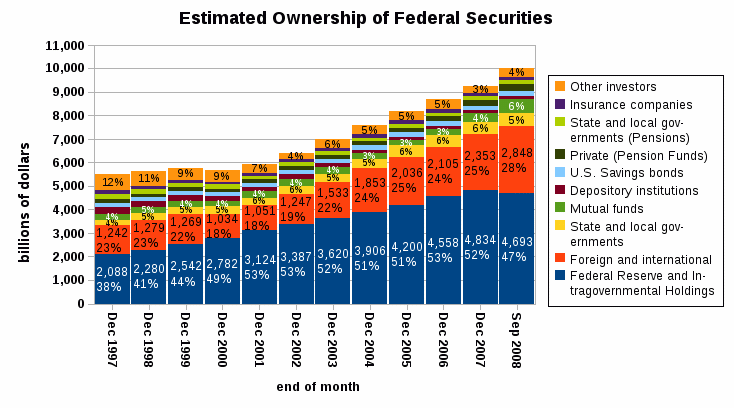
Holdings of US Govt Debt By non-Americans are indicated in red, which is coincidentally the primary colour of the Chinese flag.

The basic problem with the imperial posturing of the US is that it wants to play at being an Empire, but it has a tax-averse population that objects to its current level of taxation, even though it is one of the lowest in the western world. Britain was able to defeat Napoleon because its wealthy classes were more patriotic than those of France and more willing to pay income tax. That willingness contributed to Britain’s ability to become a superpower while maintaining a low debt-to-GDP ratio. The United States of Glenn Beck, Sarah Palin, and Tea Parties can only be a superpower by using its credit card. That can’t last for long, and arguably that’s a good thing in the sense it would restore the US to the principles of laid out in Washington’s Farewell address, which was delivered at a time when the Americans were even more anti-tax than they are today. In any event, fighting little wars overseas is a distraction from the things the Americans are really good at, like integrating lots of immigrants and making nifty consumer products

A Symbol of the True Source of America's Greatness

:

I’m not saying that European countries are blameless. They do endanger world peace in a number of ways.  Preventing second- and third-generation Muslim immigrants from becoming citizens is a recipe for social disaster. Having established churches (as in England and, until 2000, Sweden) and crucifixes in government offices (as in Bavaria) is a formula for social exclusion. Voting for neo-Nazi and anti-immigrant parties is also a threat to world peace. Nominating the Danish politician associated with the Mohammed cartoon controversy to head NATO (!!!) is also a measure likely to exacerbate tensions between Christendom and the Muslim world. What the European need to do, however, is to imitate the multiculturalism of Canada and Australia, not America’s neo-Disraelian imperialism.

The US is obviously bullying its allies into sending more young men and/or money to Afghanistan. Canada has made it clear that its troops are coming home, its government having recently developed vertebrate tendencies in its relations to the Pentagon. Let’s hope that Canada’s government stays strong and tells the US to bugger off when it asks for more of our money!


Two Great Interviews From CBC

22 02 2010

Sunday Edition, a CBC Radio 1 program hosted by Michael Enright, had two interviews yesterday that I found really interesting.

The first interview was with University of Toronto philosopher Joseph Heath, the author of Filthy Lucre: Economics for People Who Hate Capitalism. Heath’s book is quite enjoyable to read because he expertly demolishes many of the economic myths dear to the political right as well as the economic myths of the left. This book will convince you that there is plenty of economic illiteracy at both ends of the political spectrum.  Another positive feature of this book is that it is written by a non-economist who understand what the economists are saying and can translate it into plain English.

The second interview that caught my attention was with Jennifer Burns, a historian at the University of Virginia. Jennifer recently published Goddess of the Market, a new study of the influence of Ayn Rand on American conservativism.  The interview reveals that Burns is a fair-minded scholar who is willing to point out both Rand’s good points and her many flaws.

You can download the program here. I also found some neat interviews with Heath and Burns on YouTube. I’m sharing them here:

Heath

Burns


Tory MP denounces Louis Riel

20 02 2010

A Conservative MP had denounced Louis Riel, the leader of the 1885 rising in western Canada, as a villain. I don’t that this MP will sway how any serious historian regards Riel, but it’s kinda interesting that the Reformers Conservatives no longer regard Riel as the first of a long series of western protest leaders. Preston Manning once tried to depict Riel as sort of an ancestor of the Reform party and all the other Prairie populist movements upset with Ottawa. I guess that since the conservatives are now in power in Ottawa, they no longer identify with the opposition and regional discontent. I guess they identify more with Macdonald.

Peter Goldring MP compares the efforts of rehabilitate Riel to the right-wing nationalists in Japan who have succesful lobbied to remove/tone down all references to Japan’s Second World War atrocities from that country’s school textbooks. This is a bizarre comparison: one of the things that separates Western countries from Japan is a willingness to acknowledge historical injustices perpetrated by the national government. Nowadays, American schoolkids hear a lot about slavery, Australians hear about the stolen generation, and German kids hear about the Holocaust. Canadian students ought to learn about the suffering of First Nations people.

You can read Mr Goldring’s anti-Riel diatribe here.