Empty City

15 11 2009

This video isn’t really related to Canadian history, but I feel compelled to share it nevertheless because the visuals are so stunning. Those who believe that the twentieth century will belong to Canada that the twenty-first century will belong to China would do well to watch this video:


There is a great deal of Laurieresque style exuberance about China’s economy right now. All I can say is that I hope they don’t build too many transcontinental railways!


Discover Canada Errors

13 11 2009

I’m posting some quick thoughts about the Discover Canada handbook.

I was struck by the fact the authors of this pamphlet decided to focus on abstract rather than practical knowledge about life in Canada. The citizenship test and pamphlet in the UK assesses knowledge of historical facts and political institutions, but it also tests practical knowledge, such as the emergency number or how to pay a gas bill.  In contrast, the Discover Canada document betrays the ivory tower origins of the people who worked on it.

I respect the academics who worked on this document, including Jack Granatstein, Margaret MacMillan of St Antony’s College Oxford, and fellow WordPress blogger Janet Ajzenstat. I like the life of the mind, but I’m also down to earth.I pride myself on my ability to socialize with people in a wide variety of occupations and do an ever-growing number of practical things with my hands. I’d like to think I’m a better academic for stepping outside the ivory tower every now and then.

I say this to explain why I am so appalled by certain parts of this document. This document suggests that it was written by people who are totally out of touch with modern-day Canadian popular and political culture. It’s a document for people who meet Prince Charles more frequently than they pump their own gas.

I listed the consultants on this document in an earlier post. They include a variety of academics, a former governor-general, a retired army officer, the spouse of a former governor-general, civil servants who work for Rideau Hall and other individuals drawn from the elite of various branches of the public sector. I don’t think any people who have had careers in the private sector (net taxpayers) were consulted. The consultants are mostly people who live and work in Ottawa or who have lived there in the past.

This document’s version of Canada is distorted by the Ottawa-centric and anglophile biases of its creators. Among other things, Discover Canada is dripping with the colonial cringe and monarchism so typically of upper-middle class “intellectual” Canadians. The document is replete with references to the Queen and Canada’s British heritage, etc. One feels tempted to pronounce the word tomato tomAHto just reading it. The ghost of Vincent Massey stalks the land.

It would have been nice had the document been vetted by a randomly-selected group of Canadian adults. The result would probably have been a much greater emphasis on practical knowledge. The document would have been less politically correct. In fact, maybe we should investigate using a Wikipedia-type process to write a real guide for new citizens. A more widely distributed process would be best way of coming up with a statement of consensus values in modern-day Canada.

Section 1. Inaccuracies in the History Section (Non-Exhaustive List):

“Cartier heard two captured guides speak the Iroquoian word kanata, meaning “village.” By the 1550s, the name of Canada began appearing on maps.”

This is misleading because it presents a disputed theory as fact.

“At the time of Confederation, the vote was limited to property-owning adult white males.”

Simply not true at all. Newfoundland had manhood suffrage—there was no property qualification. Moreover, the last provincial election in Nova Scotia before Confederation was also on the basis of manhood suffrage: all male British subjects over 21 were allowed to vote, regardless of their wealth or property.  No statute in British North America prohibited Blacks from voting provided they fulfilled the other criteria. Natives near Brantford Ontario voted in federal elections until the 1890s.  The Chinese were disenfranchised well after Confederation.

“The “Roaring Twenties” were boom times, with prosperity for businesses and low unemployment.”

True in the US, not really true in Canada. Sadly Canada experienced in the prosperity of the United States in the 1920s to a very limited extent.  The 1920s were tough for Canada because of the many barriers to cross-border trade, even before Smoot-Hawley kicked in.

Important Omissions from the History Section (Elephant in the Room Department):

There is no mention of the two conscription crises, or the fact the Great War set Quebec at odds with English-speaking Canada.

There is nothing here about gay history and the dramatic transformation of Canadian attitudes to homosexuality over the course of the 20th century. This is something I talk a bit about in the first-year Cdn history survey course. This is an important bit of our history for immigrants to know, especially those who come from non-Western countries (the vast majority nowadays).

Section 2. Questionable historical interpretations in the document.
“Canadian television has had a popular following.”

That’s not what the ratings say. Maybe this was true in 1955, when CBC was the only channel available in most of Canada. Maybe the guy who wrote Discover Canada doesn’t have cable.

“Canadian society today stems largely from the English-speaking and French-speaking Christian civilizations that were brought here from Europe by settlers.”

This is really debatable. Canada is more of a Western country than a Christian one. (Serbia and Ethiopia are parts of Christendom, but they aren’t part of Western civilization). It is more accurate to say that our civilization, based as it on railways and jet aircraft and so forth, is an outgrowth of the Enlightenment.
“The great majority of Canadians identify as Christians. The largest religious affiliation is Roman Catholic, followed by various Protestant churches.”

Yeah, for census purposes. But immigrants should be informed that this is now a predominantly secular country. They need this fact to understand the society in which they are living. The authors of the document have ignored our history, or at least a major theme in Canada’s 20th century history (secularization).

“Most Canadians were proud to be part of the British Empire.”

Debatable, since Gallup polls didn’t start in Canada until 1940. It would be more accurate to say that the political class, including MPs and newspaper writers, were strongly pro-British. The generally low enlistment rates in the First World War in small-town English-speaking Canada suggests that the average Canadian farmer was a North American who didn’t give a crap about the British Empire except insofar as it influenced the price of wheat.

Section 4. Comments on the Non-Historical Sections of the Discover Canada document.

1) Sports

“Canadian football is the second most popular sport. Curling, an ice game introduced by Scottish pioneers, is popular. Lacrosse, an ancient sport first played by Aboriginals, is the official summer sport. Soccer has the most registered players of any game in Canada.”
By which statistical measure is “Canadian football” the second most popular sport in Canada? No way! The authors of this section must have been on crack appear to have grown out of touch with Canadian culture in the decades since the advent of cable TV. Most young Canadians are unaware of the existence of the CFL. If they watch football at all, they watch the NFL or U.S. college football—or Toronto FC. Few of my students would be able to name three CFL teams, but they could all name a dozen NFL or professional baseball teams based in the US.

2) One of the defining things about Canada is that it is automobile-based society. This fundamental fact about Canada goes unmentioned here. Outside of the CBDs of the largest cities, one must have a car and driver’s licence to be a fully functioning member of society. The centrality of the car to Canadian life should have been stressed in Discover Canada, perhaps with a sentence reading “In Canada, it is expected that all able-bodied men and women will know how to drive a car”. Too many immigrant women are trapped in their homes because they don’t drive.
3) My major disappointment with this document is that the authors chickened out and refused to deal with the issues of arranged marriage and inter-ethnic marriage, a big issue for 2nd generation immigrants.  To be fair to its creators, the document did contain the following statement regarding gender equality:

“In Canada, men and women are equal under the law. Canada’s openness and generosity do not extend to barbaric cultural practices that tolerate spousal abuse, “honour killings,” female genital mutilation, or other gender-based violence. Those guilty of these crimes are severely punished under Canada’s criminal laws.”

Criticizing spousal abuse is relatively uncontroversial. As someone who has heard immigrants from backward cultures say truly appalling things, I would have liked the document to have gone further. Perhaps it should have included a statement about contemporary Canadian sexual mores:

“In Canada, most people meet their life partners through a process called ‘dating’.  Parents are expected to respect the romantic choices of their adult children. Because you are now living in a modern society, it is probable that your children will marry someone of a different ethnicity and religion. Intermarriage had been an important theme in Canadian history for centuries, which is why many Canadians are of some sort of mixed ancestry. Modern Canadian society does not attach a positive value to female virginity or having an intact hymen. Virginity at marriage is nowadays regarded as, at best, neutral. It is normal for both men and women to have had a variety of sexual partners before marriage. In Canadian society, homosexual children are increasingly accepted by their parents. If this makes your uncomfortable, you may wish to leave Canada. P.S., if your daughter doesn’t want to wear a headscarf, you shouldn’t make her.”

Now that would be a “muscular” citizenship guide. This guide is anaemic and, in its own way, far too politically correct.

Christopher Moore has more on this. Historian Jerry Bannister also has some thoughts. For press commentary, see here, here, and here.




New Canadian Citizenship Guide

13 11 2009

The government has unveiled its new guide to Canadian citizenship, known in English as Discover Canada. The contributors who helped to write the guide include a number of academics, including several historians:

Dr. Janet Ajzenstat

Mr. Curtis Barlow

Dr. Randy Boyagoda

Mr. Marc Chalifoux

General John de Chastelain

The Rt. Hon. Adrienne Clarkson

Mr. Andrew Cohen

Mr. Alex Colville

Ms. Ann Dadson

Dr. Xavier Gélinas

Dr. Jack Granatstein

Mr. Rudyard Griffiths

Dr. Lynda Haverstock

Dr. Peter Henshaw

Dr. D. Michael Jackson

Senator Serge Joyal

Dr. Margaret MacMillan

Dr. Christopher McCreery

Mr. James Marsh

Fr. Jacques Monet, SJ

Dr. Jim Miller

Ms. Deborah Morrison

Dr. Desmond Morton

Mr. Bernard Pothier

Mr. Colin Robertson

Dr. John Ralston Saul

Organizations that assisted with the prepartion of the guide include: Canada’s National History Society; Fédération des communautés francophones et acadienne du Canada (FCFA); Historica — Dominion * Institute for Canadian Citizenship.
I will post some thought about the historical section of the guide later today. These thoughts will include a list of the historical inaccuracies and serious ommissions I discovered.


My Teaching This Week

12 11 2009

In my first-year course, the focus was on the 1840s and 1850s. On Monday, I spoke about the achievement of Responsible Government. I showed part of this clip:

On Wednesday, I talked about the advent of the railway in British North America. I stressed the revolutionary impact of the technology on society, the economy, and, above all, politics.I showed the following clip at the end of my lecture:

In my honours seminar on British North America in the period of Confederation, we focused on the colonies of Vancouver Island and British Columbia. We discussed the following readings: Jean Barman, The West Beyond the West: a History of British Columbia (Toronto, Ont. : University of Toronto Press, 1991), 52-98; Chris Clarkson, “Property law and family regulation in Pacific British North America, 1862-1873” Histoire Sociale / Social History 30 (1997): 386-416. Charles C. Irby, “The Black Settlers on Saltspring Island in the Nineteenth Century” Phylon 35  (1974): 368-374

One student gave an excellent presentation on the life of Sir James Douglas. I am including a video about Douglas here:

I’m also including this video about Black settlers in British Columbia.

I also met my graduate student to discuss two readings related to her research project. Edward S. Roger, “Northern Algonquians and the Hudson’s Bay Company, 1821-1890” in Aboriginal Ontario : Historical Perspectives on the First Nations edited by Edward S. Rogers and Donald B. Smith (Toronto : Dundurn Press, 1994), 307-344; J.R. Millers, Skyscrapers Hide The Heavens (Toronto : University of Toronto Press, 1989).


Debate on the Conquest of New France

10 11 2009

Toronto’s Royal Ontario Museum will be hosting a debate tomorrow, 11 November, on the consequences of Battle on the Plains of Abraham. In an earlier post, I proposed inviting the descendants of Wolfe and Montcalm to this year’s Remembrance Day ceremony in Ottawa. The federal government, alas, did not act on my blog post, and invited Prince Charles instead! But I am glad that at least some people in Canada will be thinking and talking about the Plains of Abraham on Remembrace Day 2009, the 250th anniversary of the battle.

I have posted the ROM’s press release below.

“Bernard Landry versus Jack Granatstein

The impact of one of Canada’s most significant battles will be debated at the Royal Ontario Museum (ROM) as part of its Director’s Signature Series. The debate, between Bernard Landry and Jack Granatstein, examines whether Britain’s victory over France on the Plains of Abraham in 1759 was ultimately good for New France, its inhabitants and their descendants. The two-hour debate, moderated by ROM Director and CEO William Thorsell, will be held in the Samuel Hall Currelly Gallery on level 1 of the Museum’s Historic Wing on Wednesday November 11, 2009 beginning at 6:30 pm.

800px-Benjamin_West_005

Benjamin West's Death of General Wolfe

“The topic of this debate is inspired by the ROM’s painting The Death of General Wolfe by Benjamin West. This year also marks the 250th anniversary of the Battle on the Plains of Abraham. It seems fitting to discuss the impact of these events, not only on the nation’s history, but also on current relations between French and English-Canada. It promises to be a lively debate,” says Thorsell.

In addition to the debate, General James Wolfe’s copy of Thomas Gray’s poem An Elegy Written in a Country Churchyard will be on display in the Hyacinth Gloria Chen Crystal Court on level 1 of the Michael Lee-Chin Crystal. On loan from the Thomas Fisher Rare Book Library, this copy of Gray’s famous poem traveled with Wolfe on his voyage from England to Canada. Wolfe is said to have referenced the poem frequently while preparing for the Battle on the Plains of Abraham. For many, Gray’s Elegy represents a direct link with a critical point in Canada’s history.

The Director’s Signature Series features renowned thinkers and intellectuals discussing topics of historical and cultural importance. In June, the series featured three provocative presentations analyzing the Ten Commandments and offering suggestions for new commandments. In this edition of the series, visitors are invited to witness what is sure to be a lively discussion about the significance of the Battle on the Plains of Abraham on French and English Canada. Desmond Morton will introduce the evening and give a historical overview and context of the battle. Admission for the debate is $22 for the general public, $20 for ROM members and $10 for students.

Landry

Bernard Landry

Bernard Landry is a Quebec lawyer, teacher and politician. He served as Premier of Quebec (2001-2003), leader of the Opposition (2003-2005) and leader of the Parti Québécois (2001-2005). In 2008 he was appointed Grand Officer of the National Order of Quebec, the highest civilian honor in Quebec.

Jack_Granatstein

J.L. Granatstein

Jack Granatstein is a Canadian historian who specializes in political and military history. He is the Distinguished Research Professor of History Emeritus at York University and the author of more than 60 books. In 1992 the Royal Society of Canada awarded him the J.B. Tyrrell Historical Medal and in 1997 he was made an Officer of the Order of Canada.

Desmond Morton is a historian who specializes in Canadian military history. Morton is a fellow of the Royal Society of Canada and in 1996 was made an Officer of the Order of Canada. He is also the Hiram Mills professor of History at McGill University.” He published an article on the Plains of Abraham in the National Post on 10 November 2009.


Review of Peter E. Austin, _Baring Brothers and the Birth of Modern Finance_.

10 11 2009

EH.Net published this review today. I was very excited to see it since Baring Brothers & Company played a crucial role in Canadian Confederation. (See my book British Businessmen and Canadian Confederation).

Peter E. Austin, _Baring Brothers and the Birth of Modern Finance_. London: Pickering and Chatto, 2007. xiii + 265 pp. $99 (hardcover), ISBN: 978-1-85196-922-7.

Reviewed for EH.NET by Peter L. Rousseau, Department of Economics, Vanderbilt University.

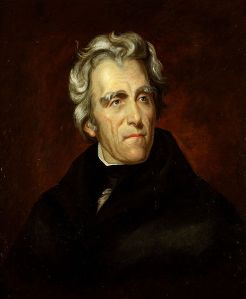
The complexity of the confluence of events that led up to the U.S. financial panic in the spring of 1837 has long been appreciated by economic and financial historians. The traditional story advanced by McGrane (1924) and expanded upon by Hammond (1953) points to failed policies of the Jackson administration as the primary cause. And it is certainly plausible that President Jackson’s refusal to renew the charter of the Second Bank of the United States and a removal of the deposits therein to “pet” banks scattered throughout the country led to a sharp increase in bank liabilities that in turn prompted a disruptive executive order (i.e., the “Specie Circular”) aimed at slowing the rapid advance of public land prices, and that all of this together led to panic. But if the traditional story is not adequately convincing, one could always turn to Temin (1969) for an international account in which increases in the Bank of England’s discount rate short-circuited trade and led to declines in cotton prices, failures of cotton factors in the United States, and ultimately a loss of public confidence in bank notes.

495px-Andrew_Jackson

Andrew Jackson

My own account (Rousseau, 2002) finds merit in both views but, like the traditional one, sees domestic events as central. In particular, I find that Jackson’s policies in 1836 dislocated the nation’s monetary base and left the banks in New York City short of reserves, and that with the stage thus set, any additional small shock, domestic or international, could have caused the runs that forced banks to suspend specie payments on May 10.

In his recent book, Peter E. Austin fills in many supporting details that the international story has heretofore lacked, albeit through an analysis of one British merchant bank. But an important one it was! Baring Brothers & Company was the premier “American House” in the 1820s and early 1830s. It achieved this status by exploiting an international reputation and first-mover advantage in the American market, and for many years its operations were able to reap substantial profits without taking excessive risks.

Bishopsgate

Bishopsgate Street, Former Home of the House of Baring

Austin’s engaging narrative makes it quite apparent that Barings saw early on that price inflation, deposit dislocations, and speculations in cotton would lead to a spectacular conclusion. In anticipation of this, a gradual withdrawal of Barings from discounting in the U.S. market commenced in 1834-35. In hindsight this was early given the profits taken at the height of the boom by competitors such as Brown Brothers, yet a conservative stance allowed Barings to avoid the fate of the infamous three “W”s (Wilson, Wildes, and Wiggin) that play such an important role in Ralph Hidy’s (1949) account of the panic and its international roots.

It is exactly on this point, however, that Austin’s monograph seems to take on two somewhat independent objectives. The first is to shed light on the personalities and policies that shaped decision-making at Barings over its early history, and how these policies helped the firm to survive the tumultuous 1830s. The other is an attempt to re-tell the classic tale of 1837 from a British perspective. In my view, the book succeeds in meeting the first objective but is less convincing on the second.

The early history of Barings is certainly impressive if not a bit monochromatic. As the first English merchant house to make strong headway in the young United States, it was well-known in the merchant community and trusted by its patrons. Austin describes vividly how Barings provided credit to only the most upstanding of commercial interests, always placing safety above expected return in deciding whether to begin or continue customer relationships. Joshua Bates, who led the company from the London office in the 1820s and 1830s, apparently placed great confidence in his American colleague Thomas Ward, who in turn evaluated potential accounts very effectively to ensure that Barings was not exposed to extraordinary risks. A wide and impressive range of primary sources, including voluminous correspondence between Ward and Bates, are brought to bear in making this case.

One company policy was to insist that those with trade accounts do business exclusively with Barings, thereby avoiding conflicts of interest or commitment with major competitors. Barings also acted conservatively in deciding how much credit would be extended even to its most desirable accounts. These precautions were not taken as seriously at Brown Brothers, which was more likely to extend credit to customers with multiple accounts or upon only tenuous security.  As a result, Barings began to lose business to competitors, suggesting that its withdrawal from the American trade may have had as much to do with a shift in the competitive landscape than with a well-reasoned decision to back away.  To this reader it seemed likely that both factors were at play.

With respect to the Panic of 1837, it is not always clear where Austin stands on the causes. At times the book seems to embrace the traditional story, seeing the withdrawal of Barings from the U.S. market as a symptom of the domestic problems that were about to take the U.S. economy over the brink. At other times the narrative seems more reminiscent of Hidy in describing the disruption in the American trade caused by changes in discounting policies at the Bank of England in the autumn of 1836 that we now know to have been short-lived.

800px-Promissory_note_-_2nd_Bank_of_US_$1000

Note Issued by the Second Bank of the United States

These inconsistencies lead me to view Austin’s story of Barings in the 1830s as better suited for explaining the second suspension of specie payments in 1839 and the ensuing recession than for explaining the events of 1837. And though Wallis (2001) makes a strong case that domestic factors also stood front and center in 1839, the supply of foreign capital did indeed dry up as Temin suggests. If this drying up was a response to the inherent weakness of the U.S. economy, Barings’ move away from the market was perhaps a leading indicator of what was to come. To the extent that its actions changed public expectations about how the inflation of the 1830s would come to a conclusion, it may have also played a causal role in the events of 1837. But more likely the new Barings policy provided a model that other foreign investors would follow as public projects and the state bonds issued to finance them began to go bust at the end of the decade and into the 1840s.

To sum up, Peter Austin makes a strong and lasting contribution to our understanding of Baring Brothers and its operations, especially in the 1830s. I believe that his strong scholarship will help to keep alive the recently renewed interest in this most fascinating period of U.S. economic history and encourage its continued reexamination.

Copyright (c) 2009 by EH.Net. All rights reserved. This work may be copied for non-profit educational uses if proper credit is given to the author and the list.


Merger of the Dominion Institute and Historica

9 11 2009

The National Post recently carried a story on the merger of the Dominion Institute and Historica, two rival charities devoted to increasing public knowledge of Canadian history. Historica is well-know for its Canadian history TV PSAs. Here is an example:

The NP story explains why the organizations were separate for so long and how they were recently able to overcome their differences. The article recounts how Historica’s establishment was sparked by the publication in 1999 of historian Jack Granatstein’s book Who Killed Canadian HistoryLynton “Red” Wilson, a prominent business leader, read Professor Granastein’s book and decided to fund an organization to promote awareness of Canada’s past, Within six months of Historica’s foundation, however,  Granatstein had left its board of directors. He had come to the conclusion that the organization had been taken over by social historians. Granastein: “Historica had been taken over by the people I thought were the killers of Canadian history”. Granastein then joined the Dominion Institute, which promoted a more conservative interpretation of Canadian history. The future direction of the merged organization remains to be seen.


Modernity vs. Western Civilization?

8 11 2009

The Cato Institute in Washington maintains a website called “Cato Unbound”. Each month, three or four leading thinkers debate “big questions” in public policy and the social sciences. The format involves a lead essay and several reaction essays. This is month’s issue is on an unusually big subject, the rise of the West to global dominance. The participants were: Stephen Davies, a retired professor in the Department of Economic and Social History at the University of Manchester; Jack Goldstone, a professor of public policy at George Mason University; and Anthony Padgen, a historian at UCLA.

The issue of why Europe and its offshoots became the dominant civilisation on the planet has been debated by countless scholars (the lead essay by Stephen Davies contains a brief but comprehensive literature survey). Some scholars have argued that Western dominance was because Europe had the right political institutions. Others think that it was because we had Greeks in our intellectual family tree. Yet other historians have attributed Western dominance to the fortuitous presence of so much coal in western Europe.

400px-LosAngeles04

LA Freeway- Symbol of Modernity or Western Civilization or Both?

Davies’s piece is interesting because it suggests that the whole debate about the rise of the West may be based on a faulty premise, namely, that “Western civilization” exists in any meaningful sense. Davies argues that the decades around c. 1800 saw a radical discontinuity in human history. Around 1800, westerners began to escape from the Malthusian trap, in which living standards had remained more or less constant for millennia. A period of rapid technological progress, sustained economic growth, urbanization, and political and cultural fermentation began.

Davies argues that the Industrial Revolution and the political revolutions known collectively as the “Atlantic Revolution” marked the rejection of much of traditional Western civilization by people in Western Europe and North America. In abandoning their traditional culture, so-called Westerners embraced free markets, democracy, science, and industries based on advanced engineering. East Asian countries such as Japan subsequently abandoned their traditional cultures in favour of this radical new civilization.

Davies remarks that the cultural shifts associated with modernity were so profound that the countries around the North Atlantic can no longer be viewed as part of “Western civilization”. They have escaped from Western civilization and have moved to the next stage of history, which is, according to him, modernity.

Davies writes that we should debate whether “it makes any sense at all to see ourselves as still living in Western civilization, given the radical discontinuity between the world after roughly 1800 and what has gone before. It makes more sense to think of Western civilization as having passed away and been transformed into a new and different civilization, in the same way that the civilizations of classical antiquity were transformed into and replaced by the Western, Byzantine and Islamic ones.”

In his reaction essay, historian Jack Goldstone praised Davies, writing that “What I believe is most critical to insist upon is the degree to which Europe itself had to repudiate central elements of its own history and culture — the absolute authority of hereditary rulers, the prohibition of diverse religious beliefs in any one society, the elevation of the rights and needs of political and social status elites above those of ordinary inhabitants — in order to develop and implement the idea of society as a community of free individuals sovereign over a limited state. Yet this was necessary if the marriage of engineering culture and entrepreneurship was to survive and flourish, and produce the economic and technological miracles of the last two centuries.”

In contrast, Anthony Pagden’s reaction essay was critical of Davies’s celebration of modernity at the expense of traditional western culture. This is to be expected because Professor Pagden is a proponent of the “clash of civilizations” thesis who recently published a book arguing that “the West”/Christendom has been at war with the Islamic civilization for over a millennia.

Although I don’t buy everything he says, I must say that Stephen Davies has written a very interesting essay. His general argument that “Western civilization” and “modernity” are distinct phenomena sounds very plausible to me. Western civilization has never been a terribly convincing concept to me, especially when the concept is essentialized by people like Samuel Huntington, the author of the famous “clash of civilizations” thesis. It seems to me that the real struggle in the world today is between modern and pre-modern, not Western vs. non-Western.  I have far more in common with someone living in a high-rise apartment in Japan today than I would with Aristotle or a seminarian in Latin America today.

Davies’s argument has implications that range from historical periodisation to university curricula (this still features many “intro to western civ. courses”) to immigration policy. I strongly recommend that people read this article. Perhaps another way of defining our terms is to distinguish post-1800 “Western civilization” from the earlier entity called Christendom. Some parts of Christendom, most notably the Balkans, have made a woefully incomplete transition to modernity. Indeed, one could argue that that the countries around the North Atlantic, long considered the heartland of modernity, still have a way to go in making the transition from traditional Western civilization to full  modernity.

Kudos to Will Wilkinson, the editor of Cato Unbound, for publishing such stimulating essays.


Remembrance Day 2009 Resources

8 11 2009
War_Memorial_Guards_Ottawa

War Memorial in Ottawa

The first Remembrance Day-related resource I am showcasing is Library and Archives Canada’s excellent website on the First World War. This website contains links to a host of online resources, including the database of Canadian Expeditionary Force enlistment records. This database allows people to look at the actual attestation papers signed by men at recruiting papers. (The surname search box makes it easy to look for ancestors). Each attestation paper gives the birthdate, address, next of kin, etc., of the man.

In my course on Canadian history since 1867, I ask the students to look at this attestation paper before coming to the lecture on the Great War. The paper is for a young guy from Winnipeg named Alexander Henderson Cuthbert who singed up 9 Nov 1917. I selected this paper from the database because Mr Cuthbert was pretty representative of the type of man who enlisted. He was a young, unmarried, city-dwelling, working-class immigrant from the British Isles.  I point out that farmers, francophones, married men, and people whose families had lived in Canada for many generations were massively under-represented in the Canadian military in WWI.

Many students bring their laptops to class, so I ask the students to plug Cuthbert’s address into Google Maps to get a sense of the type of neighbourhood he was from. (The Google Maps satellite view shows that his house was next to a railway, which drives home my point about social class and military recruiting).  The map also allows me to talk a little bit out the multicultural make-up of Winnipeg circa 1914 and the impact of the war on (non-British) immigrants.

The Cuthbert attestation paper usually generates a good discussion in class about why men join the military and the ways in which Old World national hatreds are imported into the western hemisphere. I usually share a personal anecdote about  going to high school in the Toronto area in the early 1990s, when the break-up of Yugoslavia set kids from different ethnic groups at odds.  I mention how some Anglo-Saxon Canadians at the time condemned the second-generation immigrants from the former Yugoslavia for bringing “Old World squabbles” into Canada.  I also point out that during the First World War, it was British immigrants who were having difficulty in severing their emotional connection to the homelands. The irony of this is not lost on my students!   As I remind my students,  in the First World War, the group most truly loyal to Canada were the French Canadians.


Remembrance Day

7 11 2009

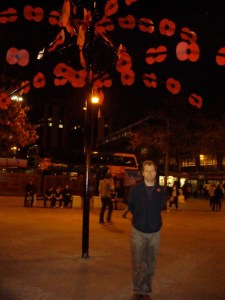
Tree of Poppies, 2009 As 11 November approaches, I shall be posting  links to media stories related to the commemoration of war.

To start things off, I am posting a link to podcasts of interviews with Canadian WWI veterans.

This photo shows me standing near a “poppy tree” last week. The tree is designed to remind people to wear poppies.