Behiels on the Monarchy Debate

6 11 2009
behiels

Prof. Michael Behiels, University of Ottawa

Prof. Michael Behiels, a historian at the University of Ottawa has been interviewed by the Ottawa Citizen about the monarchy debate. I agree with most of what he had to say, but I thought he was on shaky ground when he answered one of the reporter’s questions about the monarchy’s role in Canadian politics.

The reporter mentioned that there had been speculation during December’s constitutional crisis that if Michaëlle Jean had denied Stephen Harper’s request to prorogue Parliament, Harper would have asked Queen Elizabeth to fire her.  The reporter wanted to know whether the Queen would have agreed to such a request. Behiels said the Queen would have turned down such a request from Harper, “I’m sure she [Jean] was speaking with the Queen throughout the crisis. She would have been on the blower all the time, and they would have been on the same page.”

As a young assistant professor, I don’t know if I should dissent from the opinion of such an accomplished historian as Behiels! However, I’m not certain that Behiels is right about this particular point. In 1975, there was  constitutional crisis in Australia when Governor-General suddenly announced that he was dismissing Gough Whitlam, the left-of-centre Prime Minister. The GG appointed the leader of the conservative opposition as Prime Minister. The new Prime Minister quickly called an election, which he won. In the days immediately prior to Whitlam’s dismissal, the Governor-General kept his plan to fire the Prime Minister secret for fear that if Whitlam found out what was being planned, he would telephone the Queen and have the GG  replaced before he could act. In this case, it seems to be have been assumed by all parties that the Queen would have removed the Governor-General had the incumbent Prime Minister asked for it (in time). As it happened, the Prime Minister was fired before he had the chance to learn about the GG’s plans and telephone London. If it was assumed in 1975 that the Queen would automatically defer to the advice a Commonwealth Prime Minister, I think it is safe to say that in 2008 she also would have deferred to Harper’s request.

Aside from this quibble, it was a very good interview.


My Teaching This Week

5 11 2009

In my first-year Canadian history survey course, I spoke about the Rebellions of 1837-8 in Upper and Lower Canada. I showed this clip from the Canada: A People’s History documentary.

I spoke about Lord Durham’s Report in my lecture, mentioning Durham’s desire to anglicize the French Canadians and quoting his famous remark that the French Canadian were a people ” a people with no history, and no literature “. I also pointed out that the French-language bookstore in Sudbury is located on rue Durham. Many students appreciated the irony of this. I also told my students about an interesting article in one of the free newspapers distributed on campus. The current issue of the paper contains an article on the decline of the French language in Canada titled “le spectre de Lord Durham”. I used this newspaper, which appeared on campus the day before my lecture, to show the students that Lord Durham is still remembered by some non-historians in French Canada.

In my honours seminar on Canada in the Confederation period, we began the class by talking about the various collections of digitized primary sources for the study of 19th century Canada. Many of my students enjoyed being introduced to Early Canadiana Online. We then discussed two articles on Blacks and the Underground Railroad in Canada: Kristin McLaren, “ ‘We had no desire to be set apart’: Forced Segregation of Black Students in Canada West Public Schools and Myths of British Egalitarianism” Histoire Sociale/Social History 38 (2005): 27-50 and Howard Law,  “ ‘Self-Reliance is the True Road to Independence’: Ideology and the Ex-Slaves in Buxton and Chatham”  Ontario History 74 (1985): 107-2.

I also met my excellent graduate student to discuss some secondary sources related to her research on the fur trade. We discussed the following readings: Carolyn Podruchny, Making the Voyageur World : Travellers and Traders in the North American Fur Trade (Lincoln : University of Nebraska Press, 2006); John S. Galbraith, The Little Emperor : Governor Simpson of the Hudson’s Bay Company (Toronto: Macmillan, 1976); Toby Morantz, “ ‘So Evil a Practice’ : A Look at the Debt System in the James Bay Fur Trade” in R. Omer, ed., Merchant Credit and Labour Strategies in Historical Perspectives (Acadiensis Press, 1990), 203-222; John Lutz,  “After the Fur Trade: The Aboriginal Labouring Class of British Columbia, 1864-1890” Journal of the Canadian Historical Association 3 (1992): 69-93.

A fair number of students were missing from my classes. This may have have been due to the H1N1 swine flu or its closely-related variant, whine flu.


Ignatieff on the Monarchy

4 11 2009

An opinion piece on the monarchy that Michael Ignatieff published in The Observer in 1992 has surfaced.  Some people are interpreting this article as evidence that Ignatieff supported the idea that Britain should become a republic.  (See here). The article, in true Ignatieff fashion, avoids making a clear statement on whether the monarchy should be abolished, although it does criticizes aspects of the British monarchy as it then existed. As far as we can tell, Ignatieff appears to have been calling for a more Scandinavian-style monarchy. Either way, I don’t think Canadians will care about what Ignatieff said in a British debate nearly twenty years ago.

The sad thing is that Michael Ignatieff is unwilling to take a stand on this issue as it relates to Canada in 2009. If he championed the cause of republicanism, he might boost his popularity, since most Canadians favoured getting rid of the monarchy. The silence of the NDP on the issue of the monarchy is also deafening. Even though the majority of Canadians want us to become a republic, the leaders of the three federalist parties are too cowardly to broach this issue.

The royal visit has generated some discussion in the media about the future of the monarchy in Canada. See:

Lawrence Martin in the Globe and Mail

Heather Mallick in the Guardian

Claire Hoy in the Orangeville Citizen

Andrew Duffy in the National Post (see also here)

(I will add new links as they appear)


Survey of Canadian Attitudes to the United States

4 11 2009

I used to make fun of Dominion Institute polls. The new Historica-Dominion Institute is, however, doing some useful polling work. The Historica-Dominion Institute, a Canadian non-profit also commissioned a poll about Canadian attitudes to the United States on the first anniversary of Obama’s election. The poll finds that while Obama is very popular in Canada, anti-Americanism is still widespread.


Why Prince Charles Should Be Chucked Out of the Country

2 11 2009

Prince Charles and his wife arrived in Newfoundland a few hours ago to begin their tour of Canada. Their arrival has re-started the debate about the future of the monarchy in Canada, with many columnists using the tour as an occasion to pontificate about what should be done. See here, here, and here. Lord Black of Crossharbour has published a lengthy article in the National Post on this issue.

Acting with impeccable timing, the CanWest newspapers have published the results of an Ipsos-Reid survey of Canadian attitudes to the monarchy. They show that a small majority Canadians want Canada to become republic.

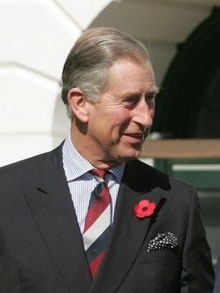
Charles,_Prince_of_Wales in 2005

Prince Charles in 2005, in White House Rose Garden

The tour of Canada has been billed as Charles’s last chance to convince Canadians that he should be allowed to become their king. I’m not certain whether he will win Canadians over. In fact, he appears to have already made a serious error, for his first speech of the tour loudly praised Canada for sending troops to fight in the Anglo-American War in Afghanistan. Unfortunately for the Prince, most Canadians oppose the presence of Canadian troops in that country. The Prince has given the appearance of trying to interfere in Canada’s internal politics— Canada has announced that it is pulling out of Afghanistan, whereas Britain and the United States are ramping up their efforts there. Most Canadians probably think that a sufficient number of Canadians died for King and Empire in the twentieth century and that we need no sequels.

The Prince, who is the honorary colonel of no less than eight Canadian regiments, will visit several military bases in Canada. By associating himself with a very unpopular cause, Charles is doing himself no favours. The Canadian military and its traditions are a reflection of Canada’s colonial past and the political culture of Atlantic Canada, the most ethnically British part of the country. The problem for the Prince is that Atlantic Canada and the military represent Canada’s past, not its future. Canadians of British ancestry are a dying breed, with a birthrate even lower than that of francophone Quebeckers. The traditions of the Canadian military, such as playing “Rule Britannia” whenever a ship enters port, are literally laughable to Canadians descended from the post-1945 waves of immigration and indeed anyone familiar with the course of world history since, say, 1897.

If Charles wishes to ingratiate himself to the multicultural Canada of the present, he needs to do a walkabout in the shopping centres of Toronto and Vancouver. While in Vancouver, he might apologize for the racist anti-Asian remarks made by his father. The Prince might also talk to the workforce of Calgary’s office towers or the scientists in Waterloo who are working on genetically modifying crops.  This would allow him to see the future being made. Unfortunately, the Prince doesn’t believe in shopping centres and office towers, preferring organic farmer markets and traditional cottage architecture to consumerism, freeways, GM foods, Blackberries, and modern buildings.

Poundbury, the experimental pseudo-medieval town recently built by Prince Charles in Dorset, represents his vision of the future: white people in Tudorbethan homes eating organic food. It has little resemblance to the world inhabited by most modern Britons. It is even more alien to the values of most Canadians.

Opposed as he is to so much of capitalist modernity, Prince Charles is reactionary in the deepest sense of the word. He is also represents the most pathetic last vestiges of British militarism. He would be a singularly inappropriate head of state for Canada, a country that values technology, consumerism, multiculturalism, and peace. His values are antithetical to our most fundamental values.


Simpson on the Monarchy

2 11 2009
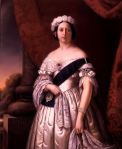
Melville_-_Queen_Victoria

Queen Victoria, 1845


Jeffrey Simpson has published a good piece in the Globe and Mail calling for Canada to end its connection to the British monarchy.


New Nature’s Past Podcast

1 11 2009
naturespast

Logo of the Nature's Past Podcast

Episode 10 of Nature’s Past, the podcast of the Network in Canadian History and Environment, is now online.

“How have online digital technologies changed environmental history research, communication, and teaching? This episode of the podcast explores this question in the context of the recent NiCHE Digital Infrastructure API Workshop held in Mississauga, Ontario. Online-based Application Programming Interfaces or APIs are just one digital technology that holds the potential to change the way environmental historians access resources, analyze historical data, and communicate research findings. Within the past decade alone, the development of online digital technologies has offered the potential to transform historical scholarship.
This episode includes a round-table conversation with some leading figures in the realm of digital history as well as an interview with Jan Oosthoek, the producer and host of the Exploring Environmental History podcast.”

Check it out here.


Trudeaumania in 2009

29 10 2009

Trudeau 1980

Trudeau Speaking in Montreal, 1980

Just Watch Me: The Life of Pierre Elliott Trudeau, 1968-2000, the second volume of Professor John English’s authoritative biography of the great Prime Minister, has been published. The book’s revelations about Trudeau’s personal life have gotten a great deal of attention in the Canadian media. See here, here, here, and here.

The Quebec newspapers have had little to say about this book. Perhaps this will change next month, when the French translation appears. For a rare newspaper article in French about the book see here.

Paul Wells of Maclean’s Magazine thinks that Canadian historians pay too much attention to Trudeau.


Joe Martin Interviewed on BNN

28 10 2009

Joe Martin was recently interviewed on BNN about his new book on Canadian business history, Relentless Change. You can watch the interview here.


Historians Discuss the Development of the American Healthcare System

27 10 2009

I thought I would share these two links related to the history of healthcare in the United States.

This podcast explores “the origins of the health care debate, and try to explain how we wound up with a system so different from the European model.”

James Mohr, history professor at the University of Oregon, places the current healthcare debate in a historical context. He explains, “We have to find ways to combine what is positive and unique about our system while eliminating the historical anomalies that make it unsustainable.”

TorontoGeneralHospitalTorontoOntario

Toronto General Hospital

I will add that the history of Medicare in Canada is one of the great under-researched topics in 20th century Canadian history. Medicare is clearly an important institution for the Canadian identity. Tommy Douglas was voted the greatest Canadian because of his role in creating our current system. More importantly, Medicare has a big impact on the level of health in Canada. Health spending represents a big share of GDP. Health care is consistently one of the most important issues for Canadians, according to pollsters. But while the general public is very interested in Medicare, academic historians, it appears, are not. There are few books on the history of Medicare. Steps on the Road to Medicare: Why Saskatchewan Led the Way by Sylvia O. Fedoruk and Stuart Houston is one of the few good books on this topic. Moreover, it deals with only one province and was written by two people who are not professional historians. Stuart Houston is a medical doctor. I base my annual lecture on the evolution of Medicare on research by non-historians: Eugene Vayda, Raisa B. Deber, “The Canadian Health-Care System: A Developmental Overview” in Canadian health care and the state : a century of evolution,  edited by C. David Naylor (Montreal : McGill-Queen’s University Press, 1992).

There is an active community of historians of medicine in Canada. For instance, Michael Bliss has published a biography of Sir Frederic Banting, the inventor of insulin, and Jaclyn Duffin at Queen’s has published an interesting history of medicine in the Western world. Shelley McKellar at UWO has published a biography of Canadian surgeon Gordon Murray. However, there are few works on the history of the Canadian healthcare system.

Many of the students in my post-1867 Canadian history course want to write their essays on Medicare. Along with Vimy Ridge, it is the most popular topic. Unfortunately, there are few secondary sources to which I can direct them. (I have done a diligent search). What is a needed is a good book that gives the history of our health care system from say 1900 to the present. The book would talk about the Marsh Report, the developments of the 1950s, the Saskatchewan Doctors’ Strike, Diefenbaker, the Royal Commission on Health Care, Medicare, the Canada Health Act of 1984, the impact of the Charter of Rights, etc. Unfortunately, this book doesn’t exist.

This situation is absurd and represents a big systemic failure on the part of the Canadian historical profession. For some reason, research on the history of health care is not valued.