Hugh Segal on Sir John A. Macdonald

26 10 2009
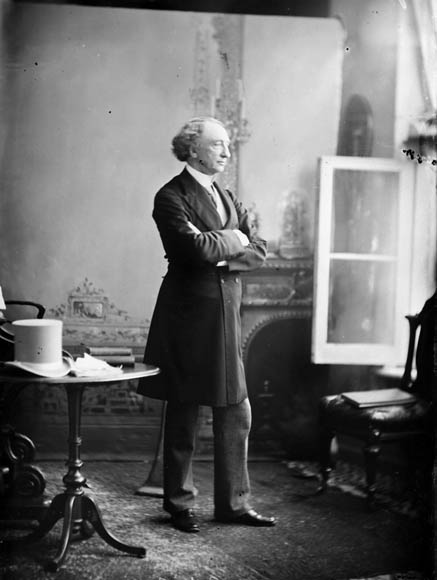
John A. Macdonald, 1875. Image from Library and Archives Canada

John A. Macdonald, 1875. Image from Library and Archives Canada

Senator Hugh Segal has published a piece in the Toronto Star arguing that Canadians should pay more attention to Sir John A. Macdonald. Segal notes that the bicentennial of Macdonald’s birth (2015) is rapidly approaching and that we should begin planning celebrations similar to the Lincoln bicentennial in the United States (2009).

I couldn’t agree more. In fact, I have recently become involved in a project that will involve the creation of a first-class website devoted to the life, times, and digitized correspondence of Macdonald. (details to follow). I am also in the process of designing a course for undergraduate entitled “The Life and Times of Sir John A. Macdonald”.  This course will use Macdonald’s life as a vehicle for teaching Canadian history, 1815-1891.


North American Currency Union

26 10 2009

The Globe and Mail has published a lengthy essay by Konrad Yakabuski on North American currency union. This piece, like of all of Mr Yakabuski‘s articles, is distinguished by clear writing, careful analysis, and very thorough research.

Yakabuski outlines a very compelling economic case for currency union. However, I suspect that any concrete proposal for a currency union would be derailed by nationalist opposition in Canada, Mexico, and the United States. Nationalist sentiment would trump economic logic. In fact, I think that we Canadian forget just how much anti-NAFTA sentiment there is in the USA. Consider Lou Dobbs:


H. Sanford Riley Centre for Canadian History

25 10 2009

The H. Sanford Riley Centre for Canadian History at the University of Winnipeg opened on Monday with a lecture by Ramsay Cook, a distinguished Canadian historian. The title of his talk was “Who Broadened Canadian History?” The title of his talk alludes to Who Killed Canadian History, a book by J.L. Granastein.

Here is a summary of Professor Cook’s lecture: “Over the past thirty years or so, the content of Canadian history has broadened out in several significant directions. In my years at United College and later when I began teaching university courses, the main, indeed almost the only, Canadian history menu listed political, diplomatic, military and constitutional dishes. In these fields the prominent Anglophone and Francophone men who dominated the “national stage” were featured But in the 1970s and 80s, as universities admitted increasing numbers of students from regional, class, ethnic and genders formerly under represented, students began to wonder why their ancestors were so often absent from the history that they were taught. Soon graduate students, often from these new groups, began research into these neglected areas with the result that a new past, or rather an expanded past, was discovered and made part of what is now accepted a more accurate and more diverse Canadian past. The success of this expansion, this enrichment of our past, now raises some new questions about Canadian history, questions which may suggest another broadening dimension based on comparative historical studies.”

I will put a link to a video of Cook’s talk online soon.


My Teaching This Week

23 10 2009

In my first-year Canadian history survey course, I gave two lectures this week. The first lecture was on the Atlantic Colonies before 1850. The second lecture was on the history of Upper Canada between the War of 1812 and the 1850s. In my honours seminar on Confederation, we discussed the government’s increasingly important role in the economy in the Province of Canada in the 1840s and 1850s. The readings we discussed were:  Duncan McArthur, “History of Public Finance, 1849-1867” in Canada and Its Provinces vol 5, page 165-184; Frank Lewis and Ann Carlos, “Creative Financing of an Unprofitable Enterprise: The Grand Trunk Railway of Canada” Explorations in Economic History 31 (1995): 273-301; and my article “Toryism, Classical Liberalism, and Capitalism: The Politics of Taxation and the Struggle for Canadian Confederation”  Canadian Historical Review 89:1 (2008): 1-25. We also listened to student presentations on the lives of Egerton Ryerson and Sir Francis Hincks. Our excellent discussion of 19th century corporate welfare dovetailed nicely with our conversation in the previous week about the rise of classical liberalism in British North America. I also spoke to the students about the book review assignment, which concerns Jeff McNairn’s The Capacity to Judge: Public Opinion and Deliberative Democracy in Upper Canada, 1791-1854 (Toronto : University of Toronto Press, 2000).


Andrew Cohen on the Canadian Monarchy and the Head of State Controversy

22 10 2009
Canadian Postage Stamp, 1954

Canadian Postage Stamp, 1954

Andrew Cohen, the author of the Unfinished Canadian, has published a piece in the Ottawa Citizen calling on the federal government to begin a national debate on the future of Canada’s head of state. Cohen thinks that it would be wrong to continue sharing a head of state with Britain, as do most Canadians.


A British Diplomat Comments on Canada

22 10 2009

The British government has recently declassified a large volume of correspondence from British diplomats stationed abroad. Some of these diplomats had very unflattering things to say about their host countries. One of the documents released was a memorandum on Canada written in 1984 by the British High Commissioner in Ottawa. Lord Moran spoke about the mixed legacy of Pierre Trudeau, Quebec nationalism, and the First Nations. Moran’s comments about Canada were largely neutral or even positive, but he described individual Canadians as rather “boring” and said that the lack of the fierce competitive spirit found in other countries has promoted a culture of mediocrity in Canada. He observed that, in Canada, the calibre of the people who go into politics is inferior to those who make careers in private industry. I think that this observation is absolutely correct- the calibre of people in public life in Canada has always been quite low and result is that the typical Canadian politician is poorly educated, a poor public speaker, physically unattractive, and devoid of accomplishments outside of politics.

The document also mentions Canadians’ destructive attitude to the environment, making special mention of my city, Sudbury (see paragraph 12).  You can read it online.


Black Like Me

21 10 2009

This radio interview discusses racial impersonation and John Howard Griffin, the author of Black Like Me.


The 150!Canada Conference

19 10 2009

Older readers will remember the 1967 celebrations of the centennial of Confederation. Indeed, some of you may have gone to Expo 67 in Montreal. The planning for the 150th anniversary of Confederation is already underway.

“On March 11-12, 2010, IPAC and MASS LBP will convene a major conference at the National Arts Centre in Ottawa that will bring together senior public servants from all levels of government, business leaders and representatives of leading NGOs to discuss preparations for Canada’s sesquicentennial year.

The conference will review the success and lessons of the 1967 and 1992 celebrations, learn from recent national celebrations in other countries. Presentations by Canadian luminaries and leaders will help spark our imagination as the delegates work to establish a national framework for sesquicentennial preparations and design.

The program will combine keynotes, presentations and panels with a second full day of creative and planning workshops.”

More details here. I hope that the organizers include professional historians and historical societies such as the Canadian Historical Association and the Institut d’histoire de l’Amérique française, in the planning process. In particulary, I hope that they invite historian Christopher Moore, who has recently been blogging about the Quebec Conference, to take a leading role.


Head of State Controversy II

19 10 2009

I have posted earlier on the “head of state” controversy and the future of the monarchy in Canada. Political analyst Randall White has published a piece in the Toronto Star on this subject. White has some interesting comments about Canada’s unwritten constitution, an issue I have discussed with blogger Janet Ajzenstat.

I have earlier posted links to polling data that shows that most Canadians want the country to become a republic. I would also like to draw your attention to a poll about Canadian attitudes to the monarchytaken by Angus Reid in September 2007. The poll’s designers sought to find out whether there was a connection between people’s partisan leanings and their attitudes on the monarchy question. The poll found that while virtually all BQ voters are republicans, the other parties’ supporters are divided on the issue.

However, while the monarchy is not an issue that divides English-speaking Canadians on straightforward, left-right lines, there is a statistically significant connection between voting intentions and republicanism. People who vote Conservative in federal elections are the most likely to be the strongest republicans, while NDP voters are most likely to be strong monarchists. Anti-Americanism and monarchism in Canada, which were once the hobby horses of the political right (the Conservatives from Macdonald to Diefenbaker) are now the pet issues of the left. Most Conservatives are now continentalists who want Canada to be more like the United States.

Statue of United Empire Loyalists in Hamilton, Ontario

Statue of United Empire Loyalists in Hamilton, Ontario

In contrast, leftist Canadians are the more likely to be sensitive about differences between Canada and the United States, and thus most likely to defend institutions, such as the monarchy, that illustrate those differences. The picture above is of the monument to the United Empire Loyalists in Hamilton, Ontario, a city with a very left-wing political culture.  Polls like this show just how different the modern Conservative Party of Canada is from historical Canadian conservativism.

The poll also found that men (60%) were more likely than women (45%) to be republicans. I’m not certain what this means.


A National Securities Regulator for Canada

16 10 2009
There was a story in the news today that reminded me of the need to update Canada’s antiquated, steam-engine age constitution. The story concerned the regulation of securities.
Toronto Stock Exchange in 1856. Image from Library and Archives Canada

Toronto Stock Exchange in 1856. Image from Library and Archives Canada

Toronto's Financial District Today

Toronto's Financial District Today

Canada has always been something of an anomaly in the sense that it is the only industrialized country without a national securities regulator. In Canada, securities and securities markets are regulated by the provinces, which is widely regarded as an arrangement that makes the country less competitive internationally.

For years, the possibility of creating a national securities regulator has been discussed, but without anything being done: Ottawa was scared that such a move would be denounced in Alberta and, of course, Quebec, as an unconstitutional assault on provincial autonomy. The federal government is now taking steps to regulate securities. It announced today that it will ask the Supreme Court to rule on the constitutionality of creating a national securities regulator. (See here, here, here, and here).

I strongly support the idea of a national securities regulator and commend the Harper government for moving on this issue. (For the record, I tend to think that unitary states are more efficient than federations. There would probably be many benefits if the provincial governments were abolished).  However, I’m a bit disturbed by the fact some commentators appear to think that the creation of a national securities regulator is a done deal. There is already lots of talk about the transition team.

Supreme Court of Canada

Supreme Court of Canada

We don’t know yet how the Supreme Court will rule on this issue or how the current SCC justices feel about the issue of centralization vs. provincial rights. If the courts say yes, Canada may have a national securities regulator within a few years, but the whole thing may be derailed by an election. Moreover, even if the courts give the green light and Ottawa passes the required legislation, Quebec, which is now recognized as a nation within Canada, will probably retain its own regulator.

Predicting how power will be distributed between the federal and provincial governments is a

John A. Macdonald, 1875. Image from Library and Archives Canada

John A. Macdonald, 1875. Image from Library and Archives Canada

tricky business. Some of our greatest statesmen have had a poor track when it came to making predictions in this field. In December 1864, when Canadians were debated whether to proceed with Confederation, John A. Macdonald that the federal constitution outlined by the Quebec Conference would soon become a unitary state.  In a letter to a conservative politician in Toronto who wanted to create a unitary state right away, Macdonald said that proposed provincial governments would not last for long. He wrote:

“If the Confederation goes on, you, if spared the ordinary age of man, will see both Local Parliaments & Governments absorbed in the General power. This is as plain to me as if I saw it accomplished but of course it does not do to adopt that point of view in discussing the subject in Lower Canada.”

Sir John A. Macdonald Papers, vol. 510 Macdonald to M.C. Cameron, 19 December 1864.

For better or worse, Macdonald’s prediction did not come to pass. Instead, the provincials governments grew so powerful that some of them began to act as if they were sovereign states. Lower Canada Quebec maintains quasi-diplomatic offices abroad, seeks representation in international bodies such as Unesco, and considers itself to be a nation, not just a province.