CFP: Entrepreneurship and Philanthropy

26 05 2016

Business History Review Call for Papers for Special Issue  on Entrepreneurship and Philanthropy

Theme of the Special Issue Inequality is a deeply embedded feature of the contemporary world order. In this Special Issue, we focus on the related historical processes underpinning the amassing of entrepreneurial fortunes and large scale philanthropy (Baumol & Strom, 2014). Despite rising interest in charitable giving, philanthropy and the relationship of philanthropy to entrepreneurship remain under-researched and under-theorized. Business history research has much to offer in this regard. The engagement in philanthropy by enterprising individuals and families is a feature of many historical epochs in many countries, perhaps most famously associated with the Gilded Age in the United States and names such as Andrew Carnegie and John D. Rockefeller Sr., whose philanthropic foundations remain vital social institutions today (Hall, 1992; Zunz, 2012). The opportunity exists for historical research to inform current debates through research that offers long run perspectives and critical understandings of the relationships between entrepreneurship, wealth and philanthropy, each bound up with the economic, social, political and ideological forces that have shaped the new age of inequality (Boltanski & Chiapello, 2007; Piketty, 2014). First, we observe that the making of entrepreneurial fortunes, often within the space of a few decades, is one factor driving the rise of inequalities within and between countries (Atkinson, 2015; Atkinson, Piketty & Saez, 2012; Bourguignon, 2015; Stiglitz, 2015).


We are interested in how such fortunes have been made historically and the enabling conditions that gave rise to their creation, nationally and internationally. Second, we observe that the preservation and growth of large entrepreneurial fortunes has become an economic field in its own right, populated by allied accounting, taxation, wealth management and legal professional organizations that take advantage of enabling regulatory and legal frameworks across the world (Beaverstock & Hall, 2016; Palan & Mangravati, 2016). We are interested to learn more about how dedicated organizations such as family offices (Glucksberg & Burrows, 2016) have helped the super-rich to avoid contributing more to the societies in which they were nurtured. Third, we observe that significant numbers of entrepreneurs with large fortunes have become involved in large scale philanthropic ventures, seeking social improvement by combatting widespread economic and social disadvantages (Schervish, 2016). We are interested in why some entrepreneurs became entrepreneurial philanthropists and not others, how they selected and promoted their causes, and how they institutionalized their endeavours through the creation and endowment of philanthropic foundations. The existing literature on the making and preservation of entrepreneurial fortunes and the investment of some part of these fortunes philanthropically is sparse relative to the 2 importance of the topic (Taylor, Strom & Renz, 2014; Hay & Beaverstock, 2016). Harvey, Maclean, Gordon and Shaw (2011) and Shaw, Gordon, Harvey and Maclean (2013) have defined the intersection of entrepreneurship and philanthropy as entrepreneurial philanthropy: the active deployment of various forms of capital by super-rich individuals and the companies and foundations they control in pursuit of ambitious social projects on a nonprofit basis. The ideology and practices of entrepreneurial philanthropy are seen to have deep roots, originating in the second half of the nineteenth century and encapsulated in Carnegie’s famous essay The Gospel of Wealth (2014 [1889]). Conceived in one age of inequality, the entrepreneurial philanthropy construct remains a vital one today. It led to the first great wave of philanthropic foundations (Carnegie, Rockefeller, Kellogg, and Ford) and underpins the thinking behind the current wave of large scale philanthropic interventions of Gates and others (Bishop & Green, 2008). Entrepreneurial philanthropists bring to their interventions not only money but also their name, networks and business expertise, becoming activists and agents for change (Schervish, 2014). They are characterized by their drive to accumulate personal fortunes, together with a concomitant impulse to employ a share of their wealth in pursuit of philanthropic ventures which they control. Hence, their focus is directed towards the (entrepreneurial) creation of wealth and the (philanthropic) redistribution of that wealth to serve specified social objectives (Acs & Phillips, 2002; Audretsch & Hinger, 2014). Yet despite growing attention paid to philanthropic giving (Bishop & Green, 2008) and the global reach of the phenomenon, entrepreneurial philanthropy remains under examined (Nicholls, 2010; Taylor, Strom & Renz, 2014), recent exceptions notwithstanding. Harvey, Maclean, Gordon and Shaw (2011), using capital theory to interpret the behavior of Andrew Carnegie, propose a transactional model of entrepreneurial philanthropy, moving the agenda to more critical terrain beyond the realms of altruism and disinterested social behaviour (Boulding, 1962), consonant with the work of Bekkers and Wiepking (2011), Bosworth (2011), Ostrower (1995), Schervish (2005, 2014) and Villadsen (2007). Maclean, Harvey, Gordon and Shaw (2015) take a further theoretical stride in showing how entrepreneurs who have become philanthropists deploy the metaphorical framework of the journey to navigate different social landscapes, and how philanthropic identities have unfolded through a process of wayfinding in response to events, transitions and turning points. Philanthropic identity narratives serve as ‘generativity scripts’ that empower wealthy entrepreneurs to generate a legacy that is both self and socially oriented. This finding is consistent with those of Feldman and Graddy-Reed (2014) who envision the emergence of community minded philanthropists as moving from a concern with business success to social success, as highlighted by social entrepreneurship scholars (Dees & Anderson, 2006; Maclean, Harvey & Gordon, 2013). Other research takes a more critical, pessimistic view of the social processes at work, identifying entrepreneurial philanthropy with the subjugation of democracy and the preservation of privilege on the part of super-rich entrepreneurs as a plutocratic class (Hay, 2016; Kapoor, 2016; Maclean & Harvey, 2016). Business history, we propose, have much to offer to research on the interrelated topics of entrepreneurship and philanthropy. Friedman and Jones (2011), the current editors of the Business History Review, have argued persuasively that business historians should engage more fully with the defining issues of the moment. In this way, they might speak truth to power by establishing the historical contexts and forces, nationally and internationally, that have informed and continue to inform the present. History affords the opportunity to stand back and identify what has changed and what remains the same in structures and situations, establishing the perspectives necessary for sound policy making. Events that may once have seemed of little consequence often turn out to be decisive, especially those that work subtly to 3 effect far-reaching institutional change (North, 1990; Suddaby, Foster & Mills, 2014). The full effects of the prosecution of the neo-liberal agenda are salient in this regard (Harvey, 2005). Economic historians have already done much to inform the global debate on inequality and its consequences, to which the works of Piketty (2014) and Atkinson (2016) in particular bear elegant testimony. Within the domain of business history, the research of Hall (1992, 2006) and Zunz (2012) are exemplary in demonstrating the linkages between entrepreneurship and philanthropy. Both authors trace the development of philanthropy in the United States in the context of institutional and ideological change, particularly with respect to the formation of large private foundations, laying the groundwork for future work on more specific themes and issues. From a European standpoint, Roza, Vermuelen, Liket and Meijs (2014) point to the need for cross-nationally comparative historical research in highlighting the impact on philanthropic endeavours of different models of civil society and ideologies within different countries. An essential quality of all papers selected for publication in the Special Issue is deep historical scholarship, exhibiting variously sensitivity to specific historical contexts, historiographical exactitude and skilled analysis of archival and other primary sources. As guest editors, we also urge potential contributors to the Special Issue to demonstrate engagement with appropriate theory and models in addition to excellence in historical research and analysis (Maclean, Harvey & Clegg, 2016a; 2016b; Suddaby, Hardy & Huy, 2011). In this way, we intend that articles selected for publication should speak to as wide an audience as possible inside and outside academia, bringing a real historical perspective to current debates on entrepreneurship and philanthropy and their role, actual and prospective, in the generation and mitigation of the inequalities that have become so entrenched within the world in which we live. Potential Topics The following list is indicative of the range of topics contributors might wish to develop, but it is not exhaustive and authors should feel free to put forward research on any topic consistent with the broad theme of the Call for Papers. We particularly welcome historical research that is relevant to contemporary debates, including articles that are comparative across nations. We are looking for historical contributions that make connections between entrepreneurial and philanthropic practices and processes.

The deadline for the submission of papers for consideration for inclusion in the Special Issue is 31st December 2017. Potential contributors should alert one of the guest editors of their intention to submit an article and seek advice as necessary at the earliest opportunity: Charles Harvey: charles.harvey@ncl.ac.uk Mairi Maclean: kmm57@bath.ac.uk Roy Suddaby: rsuddaby@uvic.ca

A related conference on Entrepreneur-Philanthropists in Theory and History will take place in late spring of 2017 at the University of Victoria in Canada hosted by Professor Roy Suddaby. This will include a paper development session and there will be opportunities to meet personally with the guest editors. All articles should be prepared following Business History Review conventions and should not exceed 10,000 words inclusive of footnote references, tables and charts. Submission is by the normal process for the journal clearly signalling that the article is intended for consideration for the Special Issue. The normal Business History Review blind reviewing process will apply


CFP: The History of Business and War

26 05 2016

The History of Business and War
Scandinavian Economic History Review – Special Issue Call For Papers
Deadline: 30 November 2016
Since the beginning of time, business has been involved in warfare and in preparation for war. This includes manufacturing or trade in armaments and munitions, foodstuffs, clothing or other provisions, logistical services, or the financing of warfare.

In the 20th century, the role of business in war – including the Cold War – expanded to new fields not usually associated with the defence industry. This included participation in various planning and information committees, preparations for evacuations and relocation, or the organisation of refugee camps.

This Special Issue of the Scandinavian Economic History Review is designed to cover topics in any time or region related to the participation of companies in war/defence efforts or in preparation for war and to the dimensions of war economics.

Among others, possible topics to be addressed in this special issue might be:

· Armaments manufacturing
· Arms trade
· Financing the armaments industry
· Direct and indirect effects of war (and the Cold War) on business opportunities and trading systems
· The emergence and growth of military industrial complexes
· Effects of neutrality on business
· The role of business in preparations for blockades (storage of raw materials, dual use factories etc.)
· Preparations by civilian industries for war production
· Corporate participation in government planning and war administration
· Corporate involvement in intelligence

Contributions may also aim to bridge the gap between military history, political history and business and economic history. Contributions are welcome on any industry or country.

Submissions

Articles should be based on original research and/or innovative analysis and should not be under consideration for publication by any other journal. Submissions should clearly indicate that they are intended for this Special Issue of the Scandinavian Economic History Review on The History of Business and War. The responsibility for English copy-editing rests with the individual article contributors. Submissions with maximum 9,000 words should be sent through the journal’s online submission system.
Submissions to this special issue should arrive not later than 30 November 2016.
All articles will be peer reviewed and therefore some may not be accepted. Authors should ensure that their manuscripts comply fully with the formatting standards of the Scandinavian Economic History Review.
Editorial information

· Guest Editor: Erik Lakomaa, Stockholm School of Economics
http://explore.tandfonline.com/cfp/bes/scandinavian-economic-history-review-business-war-cfp


Canadian Entrepreneurs and the Preservation of the Capitalist Peace in the North Atlantic Triangle in the Civil War Era, 1861–1871

22 05 2016


AS: I am happy to announce that the journal Enterprise and Society has published the paper I co-authored with Laurence Mussio. The paper should be of interest to a wide variety of readers including business historians, history-oriented entrepreneurship scholars, IR professors, and management academics who research Business and Peace. It should also interest non-academics who want to know more about the relations of Canada, the US, and the UK in the Civil War era.

Laurence B. Mussio is the official historian of BMO Financial Group and Adjunct Professor of Communications Management at Syracuse University, Syracuse, New York. E-mail: laurence.mussio@sympatico.ca

You can read the paper here.

Abstract

In their 2013 book Reimagining Business History, Philip Scranton and Patrick Fridenson called on business historians to reassess militarization and the “two-way exchanges” between the military and the private sector. The call is timely. The extensive business-historical scholarship on the relationship between companies and war sensibly focuses on companies that profited from their involvement in the military-industrial complex. 1 The business-historical literature is virtually silent, however, on the role of business in preventing wars from starting in the first place. In other words, business historians have missed a productive opportunity to engage with capitalist peace theory (CPT), an increasingly important theory in the discipline of international relations (IR). Many IR scholars now argue that the mutual economic interdependence characteristic of global capitalism reduces the likelihood of war. Their research suggests that while extensive cross-border economic linkages do not preclude the possibility of war, the creation of a transnational community of economic interests tends, ceteris paribus, to reduce the frequency, duration, and intensity of warfare


ESRC seminar on “Nostalgia & History”

21 05 2016

AS: I would like to draw your attention to the next installment in the ESRC seminar series of the Organizational History Network.

Nostalgia, Emotions & Organizational History Wednesday 15 June 2016 The fifth seminar in our series will take place in Birmingham, hosted by Aston Business School at the Bond in Digbeth. Digbet…

Source: ESRC seminar on “Nostalgia & History”


Business Historians at the AIB

12 05 2016

I was pleased to see that business historians are presenting some great research at the forthcoming meeting of the Academy of International Business in New Orleans. Here are the business historians I found on the programme:

Why Governments Expropriate Foreign Property: A View from Business History
Marcelo Bucheli, University of Illinois at Urbana-Champaign
Stephanie Decker, Aston Business School

Innovative Organizational Forms in Multinational Business: Are They the Future of the MNE?
Chair: Geoffrey Jones, Harvard Business School


“The Impact of Foreign Direct Investment in the Host Country: Trademark and British Expatriate Entrepreneurs in Brazil”
Teresa da Silva Lopes, University of York
Carlos Gabriel Guimaraes, Universidade Federal Fluminense
Alexandre Saes, Universidade de Sao Paulo
Luiz Fernando Saraiva, Universidade Federal Fluminense


Update About the Canadian Business History Association/l’association canadienne pour l’histoire des affaires

10 05 2016

I’m posting this information about an important institutional development in the field of business history.

Canadian Business History Association/l’association canadienne pour l’histoire des affaires

Dedicated to the pursuit of Canadian business history and its role both domestically and in world business history. Our specific aims include encouraging more studies of enterprise by Canadians and in Canada, helping build and maintain well-structured and open business archives, providing those who study business history a forum for discussing their research with those who practice business, encouraging research projects on relevant subjects and providing funding for such research, and in general encouraging the study of business history in Canada. Membership in the association is now open to individuals, firms, and groups.

The historic first Annual General Meeting of the CBHA/ACHA was held on Tuesday May 3rd, 2016. At this meeting, members elected its first slate of Directors of the organization, were presented with a financial update, and heard short talks from three speakers.

The newly-elected Board of Directors is:

Professor Dimitry Anastakis, Trent University
Mr. Mark S. Bonham, Senior Fellow, Massey College
Professor Christopher Kobrak, University of Toronto
Dr. Amy Korczynski, Archivist, TD Financial Group
Professor Joe Martin, University of Toronto
Dr. J. Andrew Ross, Library & Archives Canada
M. Stephen Salmon, Library & Archives Canada (retired)
Professor Janis Thiessen, University of Winnipeg


Anne McCants on Using History

4 05 2016

In a way, all humans are historians. Every decision we make is framed on the basis of what we believe to be true about the past. The key, of course, is for us to be good historians, knowing true and useful things about the past, or at the very least having a method that explicitly seeks that as its goal. All of the disciplines benefit then by working alongside history, to increase their stock of evidence on which to draw, and to ensure the validity and reliability of that evidence.


That’s from a great interview with MIT historian Anne McCants.  Anyone who is interested in how people use history for sensemaking should read the entire interview.


Applied Business History

30 04 2016

As readers of this blog will know, last August I was an expert witness at a constitutional court case in Canada that dealt with the issue of free trade between the provinces. Drawing on my business-historical research into the economic motivation for  Confederation, I argued that the creators of the Canadian constitution wanted unfettered free trade between the provinces. At the time of the trial, I blogged about my experiences.

On Friday morning, local time, the judge in the case issued his ruling. He supported the view that the creators of the Canadian constitution wanted free trade between the provinces. This ruling, which applies to the case of one man and his beer, has considerable implications for the many interprovincial trade barriers that still fetter the Canadian economy. For press coverage of the judge’s ruling, see here, here, and here.

I don’t normally read the comments in newspaper stories, but I made an exception to this rule and looked at the readers’ comments on the Globe and Mail‘s article about the ruling. I’ve reposted a few of the comments here. Virtually all of the comments I saw supported the decision, but people were arguing in favour of it on very different  political, economic, and historical grounds. Some readers noted that the persistence of internal trade barriers in Canada is incongruous given that the country has free trade agreements with the US, Mexico, the EU, etc. As someone who does research on how people use the past to make sense of the present, I was particularly interested to see how readers were linking Confederation to the court case and the economic issues it raised.
r408 wrote

Interprovincial trade barriers (to incude our fragmented securities regulators) cost the national economy billions per year.

Hopefully this will also start to reduce the nanny state, monopolistic and prohibition era style provincial liquor system.

monkey121 wrote

Good to hear, finally bringing Canada into the 20th century (yes I know it’s the 21st century but our liquor laws are more 19th century). The idea of any type of barriers within a country makes zero sense. Barriers between countries are debatable, but there is absolutely zero reason to have them within. The fact there are fewer restrictions on bringing in booze from the US than across provincial lines is scandalous.

Byron Mcquay wrote
It took us 150 years to realize we have free trade within Canada? Its about bloody time the marketing boards (dairy in particular) gets some competition from across the country. As for alcohol, – well if pot is going to be legal across the country, it made no sense in why we couldn’t buy each others alcohol. Lets start challenging all these archaic pieces of legislation.

Rocheda wrote
We enjoy free trade with mexico, the states, soon europe, tpp soon, etc. frankly as ONE country how have we become so small minded and protectionist ? A good quality product will make its way.
Time for change.


Smith and Pettigrew on Using History to Make Sense of Financial Technology Innovation

21 04 2016

As someone who researches how firms use history, I was fascinated to read the post by historians Edmond Smith and Will Pettigrew (both of University of Kent) on the Insurance Times blog.  The post discusses how financial services can use history to think about the challenges they are facing. I see that the authors use the concept of “the fourth industrial revolution”. I’m not crazy about the widespread use of this term, as I remain to be convinced that the concept of a Fourth Industrial Revolution is helpful to either academics or to business people struggling to make sense of current economic trends. I’ve suggested in a previous blog post the concept is basically a marketing gimmick developed by the WEF to give coherence to the hodgepodge of interesting topics discussed at the last Davos meeting.  Perhaps I was being a bit too harsh there. Anyway, I think that Smith and Pettigrew do make effective use of the concept in their excellent post.


Some Thoughts on the CETA Talks

20 04 2016

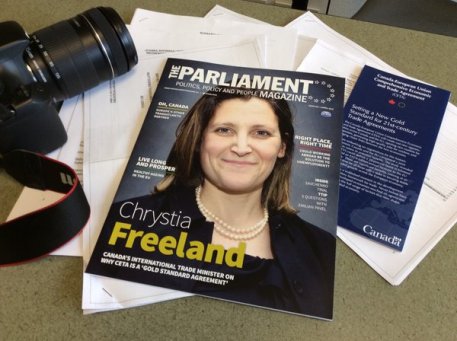
Canada’s trade minister, Chrystia Freeland, is currently in Brussels for talks aimed at getting the Canada-EU trade deal finalized and ratified by the EU parliament and all of the EU member states. (Belgium’s ratification of the agreement is dependent on support from both of the country’s linguistic blocs and unfortunately the government of the French-speaking region has refused to approve the agreement). Ms. Freeland graces the cover of the current issue of the magazine for members of the EU parliament. At the margin, this publicity, plus the fact Ms. Freeland speaks French, might help to get the deal past skeptical left-wing MEPs and the government of Wallonia.


cgeiiarxiaabt-l

As long-time readers of this blog know, I’ve been following the CETA talks with considerable and sympathetic interest for some time.  With exquisite timing, The Conversation has just today published a short piece in which I provide some important context for understanding CETA and why CETA is relevant to the Brexit debate here in the UK.

The image above is from Twitter feed of the media officer of the Canadian mission to the EU.