The December 2013 newsletter for the Association of Business Historians can be accessed here.
Peace on Earth and Goodwill to All Mankind
23 12 2013
At the risk of sounding trite, I will point out that Christmas is when we think about “goodwill towards all men.”
At the risk of stating the obvious, I’ll point out that postal services play a big role in the lead up to Christmas, especially in the Age of Amazon.
At the risk of killing the festive mood with an ideologically-charged political statement, I’m going to say something about the history of globalization in this blog post.

As readers of this blog will know, I’m currently organizing a conference on the impact of the First World War on international business. (See details here). The conference will feature papers dealing with a wide range of industries and countries. The presenters are from a wide range of countries and disciplinary backgrounds. What they have in common is an interest in what happened to the world economy, which was highly globalized and interconnected in 1914, when politicians suddenly took decisions that prevented people of different nationalities from engaging in economic exchange.
The complex set of theoretical and historical questions related to the capitalist theory of peace has long fascinated me. Since the time of Montesquieu, social theorists have thought about the relationship between commerce and war. Montesquieu famously argued that commerce made people peaceful and more moral in other areas of their lives as well. Although there are clearly some problems with the simplistic idea that free-market capitalism will, by itself, ensure perpetual world peace, there is also abundant evidence to support that international trade and other forms of cross-border economic exchange help to “soften” people, make them less warlike, and reduce the frequency, duration, and severity of warfare. (For a gateway into the social-scientific literature on this topic, see here, here, and here).
We are blessed to live to live at a time when the levels of globalization approach those last seen on the eve of the First World War. The descent of Europe into madness in 1914 makes once cautious about predicting future peace, especially when one reads about recent sabre-rattling by the nations of East Asia. However, I feel that we in the West have put in place institutions designed to ensure that the capitalist peace will continue in our part of the world.
My optimism was recently reinforced by something I saw in my neighbourhood. Over the last few days, the streets around here have been filled with vans from courier companies and our (recently privatised) Post Office rushing to deliver parcels for Christmas.
Traditionally, nationalised post offices such as Britain’s Royal Mail were closely identified with the state. By their very nature, nationalized post offices help to entrench nationalism, to make the nation-state and its associated identities (and national antipathies) seem natural. Nationalized post offices are part of what scholars of nationalism call “banal nationalism.” In wartime, post offices were used by the state to distribute propaganda: one read the state’s propaganda on the walls while one waited in line at the counter. In 1916, visitors to post offices in the UK saw the following notice.

The fact that national post offices in European Union are now allowed to compete for business in other EU member states is a healthy development, as it blurs national identities. I would also say that privatization and the introduction of competition in the postal business has had the same effect.
In the UK, firms that supply particular goods to the royal family are given royal warrants, which allows the manufacturer to slap the royal coat of arms on the labels of their products. For instance, Colman’s Mustard is the official supplier of mustard to Buckingham Palace. I suppose the royal warrant on their mustard jars makes the product seem more desirable to consumers. It’s a celebrity endorsement, essentially.

Anyway, to return to my point about post office, commerce, and nationalism, I noticed that the German-owned courier company DHL is now the official supplier of courier services to Queen Elizabeth. (See picture of a DHL van above). That’s right. The head of state of the United Kingdom no longer uses the Royal Mail for courier services and instead entrusts her packages to a German-owned company!
As we approach the centenary of the First World War, the complex historical developments represented by the DHL van I saw a few days ago are something worth celebrating.
Merry Christmas Everybody!
Comments : Leave a Comment »
Tags: Capitalist Peace, Commercial Peace, Liberal Peace, Merry Christmas
Categories : Uncategorized
Bob Diamond and Africa
19 12 2013Bob Diamond, the former CEO of British bank Barclays, is launching a new company that will provide financial services in Africa. Diamond was forced to resigned from Barclays in July 2012 after it was fined a £290m for its role in rigging key Libor interest rates. (The fines were levied by regulators on both sides of the Atlantic).
For a while, Bob Diamond kept a low profile but he is now back and ready to expand into Africa. Africa is an attractive region for a banker for any number of reasons. Many economies there are booming. Less than 1% of Africa’s billion inhabitants have bank accounts, but this figure will surely rise as the region becomes more affluent. Financial regulation in some African countries is essentially non-existent, whereas regulation of banks in Western countries is becoming increasingly onerous.
Rather than create a bank from scratch, Diamond plans to buy an existing financial services business in Africa, “with all or a substantial portion of its operations” in the continent. You can read more here.
You can read the prospectus for the venture here. However, before you click, I should point out the version of the prospectus on the London Stock Exchange website says that “NOT FOR RELEASE, PUBLICATION OR DISTRIBUTION, DIRECTLY OR INDIRECTLY, IN WHOLE OR IN PART IN OR INTO THE UNITED STATES, AUSTRALIA, CANADA OR JAPAN.”
Anyway, according to the prospectus, the Company’s geographical focus will be on jurisdictions with (i) strong underlying fundamentals and clear broad-based growth drivers, (ii) a meaningful population and an identifiable market, (iii) established financial services regulatory systems, (iv) stable political structures and (v) strong or improving governance and anti-corruption ratings.
Mr. Diamond’s African business partner is Ashish J. Thakkar, who is one of the richest men in Africa and who has an amazing personal back-story. According to the prospectus, Mr. Thakkar started his first IT company in 1996 at the age of 15 in Uganda. He has successfully driven the growth of Mara Group to become a globally recognised multi-sector conglomerate with investments in IT services, manufacturing, agriculture and real estate operations in 21 countries (of which 19 are African) that employ over 8,000 people.
Interestingly, Barclays, Mr. Diamond’s former employer, has long had a presence in Africa. Readers interested in the bank’s history in Africa may be interested in the following article by Stephanie Decker of Aston Business School.
Decker, Stephanie. “Decolonising Barclays Bank DCO? Corporate Africanisation in Nigeria, 1945-69,” Journal of Imperial and Commonwealth History 33 (2005): 419-440.
Comments : Leave a Comment »
Categories : Uncategorized
Paul Buckland “The university professor who stood up against dumbing down of degrees”
18 12 2013The academic blogosphere in the UK has electrified in the last 24 hours by a newspaper report about the legal victory of an academic who fought “marks inflation” at his institution. For the original story, see here.
Personally, I’ve never seen any evidence of the problem described in the article. However, I’ll accept the article’s contention that marks inflation is so widespread as to be problematic. (As most economists will tell you, a bit of monetary inflation can be a good thing).
From my imperialist North American point of view, the depressing/hilarious thing about this article is that many UK academics and policymakers think that the solution to the dumbing down of higher education is to add yet another layer of bureaucracy or more rigorous regulations.
A damning select committee report published last summer said the system for checking university standards was “out of date, inconsistent and should be replaced”. It also accused vice-chancellors of “defensive complacency” over the system and said that whistleblowers, like Professor Buckland, needed more protection.
MPs recommended that the Quality Assurance Agency (QAA), which checks that university procedures protect quality, be abolished or transformed to give it powers to police teaching and degree standards. Not everyone agreed with them, including Peter Williams, former head of the agency. He said that a “Spanish inquisition” of the university sector, one of the most successful in the world, was unwarranted.
The proposal by the MPs is statism run amok. I understand that the British fixation with inspection/monitory/Factory Inspectors is deeply rooted and goes back the social legislation of the Victorian Era (see below). At times, this approach works. I’ll concede that as I am no libertarian ideologue.

However, you can’t regulate your way out of this particular problem. Allow the spontaneous order of the market to solve it: if a university is stupid enough to burn up its reputational capital by issuing lots of worthless degrees, doing so will harm the institution in the long run.
Now there are, of course, short-termist managers who might wish to pursue this course of action. A university manager who is two years from pension age might not care that much about the university’s long-term viability, especially since they know that their pension isn’t tied to the financial health of any particular university. However, if such managers are allowed to get away with pursuing policies that devalue the institution in the longer term, there is an institutional governance problem that needs to be solved, fast. Part of the solution would be to re-write university charters to give alumni greater power over how the university is run, since the alumni understand that university policy influences the value of their degrees, which is typically a degree-holders second-most valuable asset, right after one’s house.
According more power to faculty via the university senate might also help, since faculty have lots of hostage capital tied up in the university and they don’t want its reputation to be ruined. Academics don’t want the reputations of their employers to be ruined for entirely self-interested reasons: if it becomes known that they work for a degree mill, it will be much harder for them to land big grants or maintain the respect of their buddies from grad school days.
I’m convinced that the one of the reasons US universities became great was that they accorded considerable power to alumni and faculty. Sometimes giving too much power to alumni is problematic, especially when the alumni devote too many resources to spectator sports, but overall the system works.
Comments : Leave a Comment »
Categories : Uncategorized
Historians and Corporate Governance Reform in Canada
17 12 2013
The Canadian government has announced plans to reform the country’s system of corporate governance. A 90-day consultation period has begun: written submissions will be accepted until 11 March 2014.
Issues that have been identified for review as part of the consultation process include:
- greater transparency of the ownership of corporations to help ensure that they are not used for tax evasion, money laundering or terrorist financing
- the adequacy of corporate governance legislation in preventing bribery and corruption
- the diversity of corporate board members and management teams
- the rules for takeover bids
- the use of the CBCA’s arrangement provisions to restructure insolvent businesses
- the role of corporate social responsibility
So far, most the proposals for specific corporate governance reforms have been made by self-interested parties (i.e., current players in the investment sector rather than academics). For instance, the Canadian Coalition for Good Governance, which represents many of the country’s big pensions, has been urged the government to reform corporate law by introduction of a mandatory majority voting rule. Canada and the United States are the only major countries that do not require majority votes for directors to be elected to boards.
Corporate governance clearly matters. Indeed, reforming the relationships between shareholders, board members, and managers may matter more to Canada’s future than reforming the Canadian parliament. Vast numbers of Canadian academics have offered their opinions on the future of the unelected upper chamber or the proposed Reform Act. We’ve heard far less from academics about corporate governance reform. In particular, Canada’s historians have been silent on this issue, which is odd because corporate governance systems are deeply rooted in national histories. I’m very aware of this issue as I’m currently doing some work on the comparative history of corporate governance with Kevin Tennent of the University of York Management School.
The question right now is: will Canada’s historians step up to the plate?
Comments : Leave a Comment »
Categories : Uncategorized
_American Railroads Decline and Renaissance in the Twentieth Century_ by Robert E. Gallamore John R. Meyer
17 12 2013Forthcoming book alert (June 2014)

Abstract:
Once an icon of American industry, railroads fell into a long decline beginning around the turn of the twentieth century. Overburdened with regulation and often displaced by barge traffic on government-maintained waterways, trucking on interstate highways, and jet aviation, railroads measured their misfortune in lost market share, abandoned track, bankruptcies, and unemployment. Today, however, as Robert Gallamore and John Meyer demonstrate, rail transportation is reviving, rescued by new sources of traffic and advanced technology, as well as less onerous bureaucracy.
In 1970, Congress responded to the industry’s plight by consolidating most passenger rail service nationwide into Amtrak. But private-sector freight service was left to succeed or fail on its own. The renaissance in freight traffic began in 1980 with the Staggers Rail Act, which allowed railroad companies to contract with customers for services and granted freedom to set most rates based on market supply and demand. Railroads found new business hauling low-sulfur coal and grain long distances in redesigned freight cars, while double-stacked container cars moved a growing volume of both international and domestic goods. Today, trains have smaller crews, operate over better track, and are longer and heavier than ever before.
Near the end of the twentieth century, after several difficult but important mergers, privately owned railroads increased their investments in safe, energy-efficient, environmentally friendly freight transportation. American Railroads tells a riveting story about how this crucial U.S. industry managed to turn itself around.
Authors:
Robert E. Gallamore is Adjunct Professor in Rail Management at Michigan State University and Principal at the transportation consulting firm The Gallamore Group.
John R. Meyer was James W. Harpel Professor of Capital Formation, Emeritus, at the John F. Kennedy School of Government at Harvard University.
More details here.
Comments : Leave a Comment »
Categories : Uncategorized
Business Historian William Lazonick on the Financialization, Corporate Governance, and Innovation
16 12 2013AS: A fascinating conference took place in London in late November. The workshop on Financial Governance for Innovation and Social Inclusion dealt with some of the most pressing politico-economic issues of our time. In recent years, people have begun to debate whether we have experienced a slow-down in technological and economic progress. Many of those who do believe that such a slow-down is indeed taking place attribute it to the misallocation of capital away from R&D and towards to financial services of dubious social utility. Some authors have attributed rising income inequality of financialization. The point of the workshop was to discuss whether reforming the financial system might allow us to achieve more rapid growth and greater equality. The workshop was funded by the Reforming Global Financial Governance  initiative of the Ford Foundation.
One of the speakers at this conference was Bill Lazonick University of Massachussets-Lowell, who is well-known to people in the business history community. His talk, which brought a historical perspective to this topic, criticized economists and policy-makers for a failure to distinguish between value creation and value extraction in the operation of the economy. He argued that the relation between the two phenomena – one that generates output and the other that distributes income – is increasingly being determined by powerful business executives who use the ideology of the market to extract value for themselves that taxpayers and workers helped to create.
You can watch his talk below:
Comments : Leave a Comment »
Tags: Bill Lazonick, Financial Governance for Innovation and Social Inclusion
Categories : Uncategorized
BL Image Dump to Flickr
15 12 2013The British Library has released over a million images, into the public domain, via their Flickr feed. This image dump should be very useful for a number people, including lecturers looking for images to insert into their PowerPoint files.
Comments : Leave a Comment »
Categories : Uncategorized
Business History Society of Japan 50th Anniversary
15 12 2013
AS: I’m sharing this information for the benefit of my business historian readers. I’m going to be in Kyoto for part of January 2014 as a visiting research fellow. I plan to meet a number of Japanese business historians when I am there and will doubtless have more information about the BHSJ’s exciting English-language conference.
The Business History Society of Japan will celebrate its 50th anniversary in 2014. To commemorate this milestone, the organization will hold a special Congress on the theme of “Competition and Cooperation.” There will be special English-language sessions at the Congress, which will take place at Bunkyo Gakuin University, Tokyo, on September 11-13, 2014.
The BHSJ invites submissions of not only individual, independent papers but also session-specific reports as well. The BHSJ also welcomes any papers that, while not focused specifically on the theme of “competition and cooperation,” deal in some capacity with the pursuit of new horizons in business history research.
For paper proposals, please submit a title, an abstract of no more than 400 words along with a one-page CV to a-terada@bgu.ac.jp by February 28, 2014. Session proposals should include a brief abstract of the session along with a one-page abstract and one-page CV for each participant.
H/T to BHC Exchange Blog.
Comments : Leave a Comment »
Categories : Uncategorized
Debating Mandela’s Legacy
13 12 2013Professor John Turner runs one of the most interesting financial history blogs around. He posted some interesting thoughts on the press coverage of Mandela’s funeral that I am going to share here.
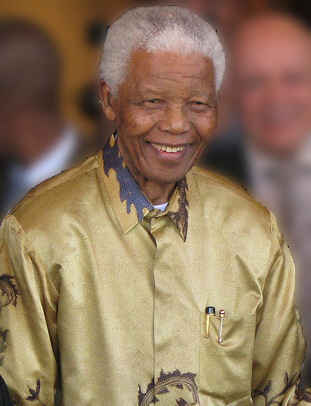
The beatification of Nelson Mandela by the world’s press and politicians sits uneasily with me as with some others (see the piece by Simon Jenkins at the Guardian). All statesmen and leaders have their weaknesses, and sometimes it takes the distance of time to truly assess the greatness of someone like Nelson Mandela. South Africa today is riven by inequality, unemployment, social deprivation, corruption and crime. Mandela’s new South Africa has economic apartheid, with large chunks of the nation’s wealth in the hands of a few (mainly white) elites. The new South Africa has all the trappings of democracy, but, in effect, it is a one-party state with all the problems that this brings. The big challenge for South Africa is how it becomes a competitive democracy which spreads wealth around without destroying the businesses and corporations which produce, and will continue to produce, that wealth. Click here to read an op-ed at the New Yorker on Mandela’s economic legacy.
In my view, Turner’s piece nicely complement’s Slavoj Žižek’s recent and very controversial op-ed on Mandela.
P.S. Economic historian Johan Fourie has published a nice smack-down of Žižek’s analysis of Mandela on his blog.
Update: Žižek attacked Mandela for being insufficiently left-wing and a gradualist. If you want a chuckle, you can watch this video in which a hard-right U.S. Republican politician named Rick Santorum compares his struggles against Obamacare to Mandela’s fight against apartheid.
Comments : Leave a Comment »
Tags: Nelson Mandela
Categories : Uncategorized
 The Past Speaks