Ideas in Exile: Canada and Quantum Computing

21 11 2013

In the last few days, we’ve seen a number of stories in the media about recent breakthroughs in quantum computing. See here, here, and here. The commercialization of quantum computing is important because computers are the General Purpose Technology that have done the most of generate economic growth in advanced economies in recent decades. Moreover, economists have recently worried that Moore’s Law will soon cease to be true, as computer engineers hit hard limits imposed by the laws of physics. (Stupid economic policies may also hasten the end of Moore’s Law). The end of Moore’s Law could reduce the rate of  productivity growth in advanced countries to plateau and would help to prove the Tyler Cowen thesis that we are entering the a period of technological stagnation.  So quantum computing is important for overall social welfare. It’s also important as countries and companies stand to make a lot of money out of the commercialization of this technology.

As Jeff Beer of Canadian Business reported last month, a lot of the basic research into quantum computing has taken place in and around the University of Waterloo, which is at the heart of Canada’s high tech cluster. Some of the funding has been provided by the founders of RIM, who have bankrolled a project called Quantum Valley.

According to Beer, Mike Lazaridis is determined that Canada should take a leadership role in quantum technology. The Research In Motion founder has emerged as one of quantum’s most enthusiastic evangelists, and he’s wagered a considerable chunk of his personal fortune on its future. In March, just a few weeks before this appearance in Waterloo, he and his BlackBerry co-founder Doug Fregin launched the $100-million Quantum Valley Investment Fund to commercialize spinoff technologies in quantum science.

This all sounds very promising. But then Jeff Beer reminds us that

Canada has long had success building prototypes and early-stage businesses, only to lose them to foreign acquisition or investment. As the country struggles to find its innovation mojo outside the resource-based economy, there needs to be a strategy among all levels of government and investors to help leaders like Lazaridis and Rose, and the entrepreneurs who grow as a result of their efforts.

Bingo!

For those of us who care about research intensive industries and Canada’s national innovation system, this is the crucial issue. Beer is right. Canada has a long track-record in doing the basic R&D or coming up with a cool idea and then having companies in another country, typically the US, do the commercialisation and collect the profits. I recommend that policymakers take a look at J.J. Brown’s classic work Ideas in Exile: a History of Canadian Invention. See more here.

Of course, that would probably require having a political class in Canada that a) knows what Moore’s Law is b) isn’t on drugs c) reads books.  Don’t hold your breath.


Women And Central Banks: Symbolic Politics Versus Real Policies

20 11 2013

Earlier this year, there was a controversy in the UK about the number of women represented on the paper money in circulation in England and Wales. The controversy was sparked by a decision of the Bank of England to remove Elizabeth Fry from the £5 note and to replace her with an image of Winston Churchill.

Feminists took to Twitter and the blogosphere to protest the move, complaining that with the exception of Queen Elizabeth, whose face is on every coin, no women were represented by the UK money supply. A legal fund was established to cover the costs of a lawsuit against the Bank of England. Mark Carney, the recently appointed Governor of the Bank of England and former Governor of the Bank of Canada, decided that this purely symbolic issue wasn’t a battle he wished to fight. To shut the campaigners up, he took a few hours out of his day on 24 July to announce that novelist Jane Austen would be featured on new £10 notes. Carney actually travelled to Jane Austen’s house to make the announcement and do a photo-op. The announcement and the photo-op appears to have satisfied the campaigners.

It appears that the campaign in the UK has inspired a similar online campaign in Canada, where the new series of polymer banknotes has been criticized for its failure to include images of non-royal women. (Queen Elizabeth is on all Canadian coins).  The Bank of Canada recently retired a controversial banknote design that had featured images of some early twentieth century women who were suffragists (and also racists).

The replacement note features an icebreaker with no known racial biases.

You can see an online petition about the issue of women on Canadian currency here.  The preamble to the online petition compares the number of women on Canadian and British banknotes with the currency in Australia.

An all-male line-up on bank notes is not acceptable in Canada, anymore than it was in the United Kingdom. Australia provides an excellent example of including nation builders of both genders on its bank notes. Most of the current notes feature a notable woman as well as a man, and a website that provides biographies of each of the people depicted. 

Somewhat curiously, the petition doesn’t refer to US currency. On one level this is odd, as US money would be the foreign currency most familiar to Canadians. However, Canadian political debates often involve making comparisons to developments in other Commonwealth countries while studiously avoiding references to policies in the United States.

I have mixed feelings about the campaign to have more women on currencies. I suppose that if I had a daughter, I would want her to be exposed to positive images of successful women.  However, I think that this fixation on actual banknotes obscures more important gender-related issues related to  central banks.

As critics have noted, none of the members of the Bank of England’s Monetary Policy Committee are women.  (See image below). A recent study found that of the 175 decision-makers responsible for monetary policy in the nine OECD central banks surveyed, only 20 are women (11.4%). Moreover, neither Canada nor the United Kingdom have ever had a female central bank governor.  Perhaps this is a more important issue for feminists to discuss than the pictures on banknotes.

I would argue that an even more important question is the differential impact of monetary policy on women and men. Changes in monetary policy affect different groups in society differently.  Social class, region, and generation, are the most important categories here, but gender also influences how one experiences monetary policy. [1]

Deflationary policies tend to benefit retired people on fixed incomes at the expense of young people just starting careers. Japanese monetary policy, which is not coincidentally set by a gerontocracy, has been deflationary for over two decades.[2] This is a rare example of a Japanese government policy benefiting Japan’s women, who are, of course, famously long-lived.

In the UK,  where monetary policy is set by middle-aged men, the artificially low interest rates of recent years have hurt holders of annuities. In British society, annuitants are typically elderly.  Since women live longer than men, on average, the current monetary policy might be said to undermine the interests of women. Gender has certainly not yet been mainstreamed into monetary policy analysis.

No images of women appear on US currency, with the exception of the allegorical woman on the Liberty Dollar.  Some of the men on US currency were pretty despicable by today’s standards. Luckily, no slaveholders have ever graced the banknotes of either Canada or the UK! However, the politically incorrect nature of US Federal Reserve Notes hasn’t prevented a woman, Janet Yellen, from being nominated as the new chair of the Federal Reserve.  On a more practical level, the US is ahead of Canada and the UK. Of course, there is no evidence to suggest that Yellen’s monetary policies will differ from those of her male predecessor or that gender will influence her thinking about interest rates.


[1] Takhtamanova, Yelena, and Eva Sierminska. “Gender, monetary policy, and employment: The case of nine OECD countries.” Feminist Economics 15, no. 3 (2009): 323-353.;

[2] Paul Johnson Christoph Conrad, and David Thomson. Workers Versus Pensioners: Intergenerational Justice in an Ageing World. Manchester: Manchester University Press, 1989.

The MPC: White Male Central


Mihm on Bitcoin and the History of Money Laundering

18 11 2013

A U.S. Senate Committee is today holding a hearing into whether Bitcoin represents a threat to national security. According to the BBC, the value of Bitcoin surged to over $600 (£372) today in advance of the committee’s hearings.

Business historian Stephen Mihm provides some useful historical context in a Bloomberg article.


_Interesting New Book Alert: _Fortune Tellers: The Story of America’s First Economic Forecasters_

18 11 2013

Walter Friedman of HBS has published an interesting new book on the history of economic forecasting. 

The period leading up to the Great Depression witnessed the rise of the economic forecasters, pioneers who sought to use the tools of science to predict the future, with the aim of profiting from their forecasts. This book chronicles the lives and careers of the men who defined this first wave of economic fortune tellers, men such as Roger Babson, Irving Fisher, John Moody, C. J. Bullock, and Warren Persons. They competed to sell their distinctive methods of prediction to investors and businesses, and thrived in the boom years that followed World War I. Yet, almost to a man, they failed to predict the devastating crash of 1929.

Walter Friedman paints vivid portraits of entrepreneurs who shared a belief that the rational world of numbers and reason could tame–or at least foresee–the irrational gyrations of the market. Despite their failures, this first generation of economic forecasters helped to make the prediction of economic trends a central economic activity, and shed light on the mechanics of financial markets by providing a range of statistics and information about individual firms. They also raised questions that are still relevant today. What is science and what is merely guesswork in forecasting? What motivates people to buy forecasts? Does the act of forecasting set in motion unforeseen events that can counteract the forecast made?

Masterful and compelling, Fortune Tellers highlights the risk and uncertainty that are inherent to capitalism itself.


The Implications of the Rob Ford Scandal for Canadian Business

17 11 2013

Cities trade on their images, as do countries and companies. The Rob Ford scandal has tarnished Toronto’s brand and has put the city on the world’s radar for all of the wrong reasons. It is worthwhile giving some thought as to what the possible consequences of the scandal for Toronto’s place in the world economy.  I don’t normally comment on contemporary politics. However, ass someone who studies international business, is originally from Toronto, and who has seen how the media in the UK has covered this amusing (to them) scandal, I think that I am qualified to say something about this issue.

Toronto used to have a wonderful brand. To a certain extent, it still does. Along with Vancouver and Calgary and some cities in Australia, Toronto consistently ranks near the top of the Economist’s rankings of cities for liveability. In the 1980s, Sir Peter Ustinov quipped that Toronto was like “New York run by the Swiss” (i.e., a cleaner, more efficient, safer version of a big American city).

It may be that the scandal surrounding Mr. Ford’s personal life has zero impact on levels of foreign investment and tourism and the city’s ability to attract high-quality immigrants. People in other countries may simply dismiss the personal problems of one individual as irrelevant to the prospects of the entire city.  The best-informed investors will known that Canadian municipal governments have far fewer powers than their American counterparts. The danger, however, is if Mr. Ford’s antics, and the inability of the Canadian political system to remove him from office, are incorporated into a wide narrative of ungovernable North American rust belt cities. Detroit, another Great Lakes city, recently declared bankruptcy.

Here are some things to keep in mind.

First, people outside of Canada know little about Canada. I’ll use the example of the UK, a country that is geographically and culturally close to Canada. Although many British people are aware that Canada is a separate country from the US and has its own currency, their knowledge base doesn’t extend much past those facts and perhaps a few stock mental images of natural landscapes, beavers, trees, etc. I would suggest that less than two percent of the population of the UK could name Canada’s Prime Minister and less than 20% could name Canada’s capital city. Canada’s national elections get page seven coverage in British newspapers. The Rob Ford scandal has been covered in the British media because of its undeniable human interest element. Sky News, a 24-hours news channel, appears to really like this story. See here. (I suppose it helps that the 5-hour time difference allows 24-hour news channels in the UK to fill slow airtime in the late evening with news about Toronto’s scandal).

All of this means that Rob Ford is probably the best-known Canadian politician in the world right now. He may be the best-known Canadian politician in recent memory. Radio hosts in the UK seems to find it amusing to play clips of Mr. Ford’s statements, particularly his recent comments about sex.  The scandal has also been covered by newspapers in China and Japan, but I would suspect that the full impact of Mr. Ford’s crude remarks will be felt most acutely in English-speaking countries where people would understand some of the more colourful idioms used by Mr. Ford.

House in Detroit

Here are some possible consequences of this scandal.

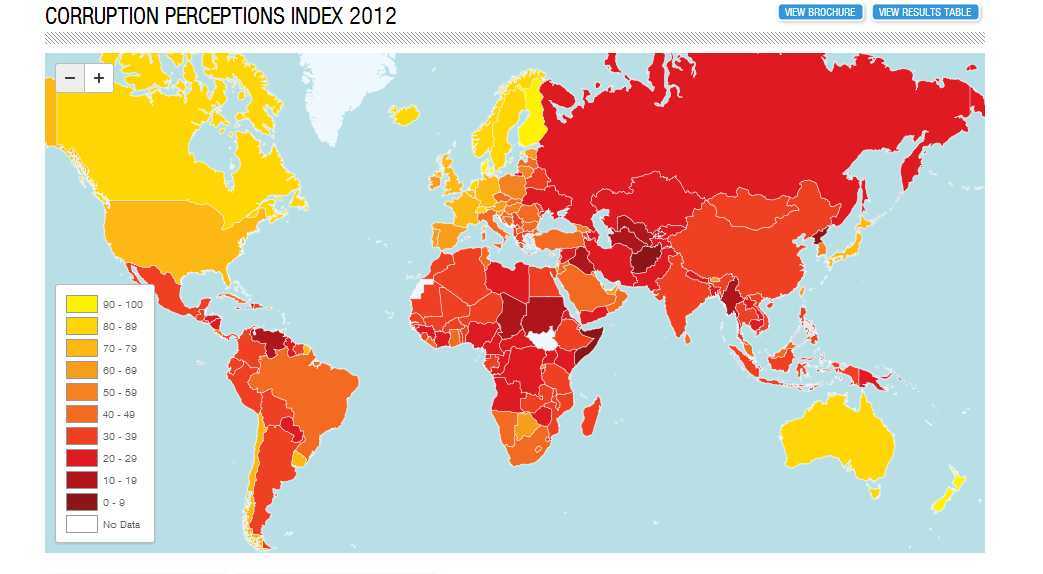
1)      Canada’s position in the Transparency International rankings of corruption may decline. These rankings are based on the subjective impressions of executives.
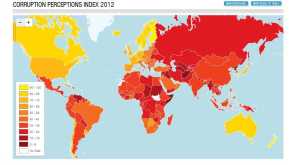
2012 Corruption Perceptions Index -- Results

2)      Foreign companies may hesitate to sign contracts with a municipality with a dysfunctional chief executive.

3)       The international media have repeatedly referred to the use of crack cocaine. These references may create the impression that Toronto is suffering from a crack cocaine epidemic similar that experienced by many American cities in the 1980s. Nobody wants to invest money in the middle of the city that resembles 1984 Los Angeles as depicted in the motion picture Boyz in the Hood.   An inaccurate image of Toronto as a city of crime-ridden, crack-ridden ghettos may discourage tourism, investment, and immigration by entrepreneurs and skilled workers. I’m not suggesting that Toronto is actually like that, but perception is almost as important as reality. Tourists and potential immigrants, as opposed to investors, are most likely to be put off by this image.

I suggest that in selecting their next mayor, Torontonians should ask: “Will the candidate I’m considering supporting make this city a more attractive place for, say, an immigrant investor whose wife is a tiger mother?” If the answer is no, please reconsider your choice.

The curious thing about this scandal is that the Toronto’s business elite has been largely silent about the scandal. It may be that Toronto’s financial elite is reticent about intervening too publicly in the political process for fear of being seen to dictate policy. In the post-Occupy Wall Street era, big business is reluctant to be seen as wielding too much political power.

A couple of years ago, I happened to be chatting at a social event with a couple who worked in very demanding occupations in the City of London. Both of these people were originally from East Asia but had been educated at elite institutions in the United States and other Western countries. Both are employed by huge, “household name” financial institutions. In short, they are type of people whose skills Toronto would need if it ever to realise its potential of becoming a global financial centre. Neither of these people have ever visited Canada or knows anything about Canadian politics.

Anyway, when I mentioned that I was from Toronto, the woman said, “I heard that the Governor of Toronto said that Orientals were like dogs and were taking over the city.” Clearly, this individual had heard a garbled account of a rant Mr. Ford  had delivered in 2008 on the subject of the work ethic of East Asians. Mr. Ford’s actual words were:

“Those Oriental people work like dogs. They work their hearts out. They are workers non-stop. They sleep beside their machines. That’s why they’re successful in life. I went to Seoul, South Korea, I went to Taipei, Taiwan. I went to Tokyo, Japan. That’s why these people are so hard workers (sic). I’m telling you, the Oriental people, they’re slowly taking over.”

Please note that Toronto doesn’t have a Governor, which is a US term. Please note that Mr. Ford was apparently attempting to compliment East Asians. It was clear the woman I met was not impressed by this comment, which indicated to her that Toronto and/or Canada was hostile to Asian immigrants. (We had previously been discussing anti-immigrant sentiment in Switzerland, another country that tries to attract immigrants under a points-based system).  The woman very diplomatically changed the subject of the conversation to Toronto’s redeeming features, which included, according to her, Stanley Park and the proximity to the Pacific Ocean. (Clearly she was confusing Toronto with Vancouver, the actual location of Stanley Park). Anyway, this little incident suggests to why Mr. Ford’s behaviour is indeed damaging Toronto’s image.


Green Capitalism? Exploring the Crossroads of Environmental and Business History

15 11 2013

AS: Readers of this blog may be interested in a conference on business/environmental history that will be taking place in Delaware next year. I am helping to organize a somewhat similar workshop on the intersection of Canadian business and environmental history that will take place next May at the Rotman School of Management in Toronto. Anyway, here is the CFP for the US conference. 


Green Capitalism? Exploring the Crossroads of Environmental and Business History A conference October 30 and 31, 2014, at the Hagley Museum and Library in Wilmington, Delaware sponsored by the Center for the History of Business, Technology and Society and the German Historical Institute ­ DC.

This conference hopes to point to fresh opportunities for joining the insights of environmental and business history.  We are especially interested in providing historical perspectives on a question of obvious relevance today: Can capitalism be green ­ or at least greener?  Our title ­ ³Green Capitalism?² is admittedly drawn from contemporary discourse.
But we are convinced that history can provide invaluable insights into the complex and changing relationship between business and the environment.

We invite papers that consider in specific historical contexts the extent to which the business enterprises that are central to capitalism operated in an environmentally sound or detrimental manner by the way they dealt with their refuse, by managing their use of resources, and mitigating or ignoring any harmful impact on those who handled their products or are affected by their waste. Though business activities have had many deleterious environmental consequences, businesses sometimes have acted to protect the environment, reduce their direct and indirect environmental impact, and promote environmental reform in society.  That is true now, but it also was sometimes the case long before the rise of modern environmentalism.

Papers can take many forms.  We expect that many papers will focus on the history of particular firms.  Others may analyze historical controversies about the use of resources or the cultural, political, and environmental factors that have shaped how business treats the environment. Given the global nature of business activity and environmental concerns, we encourage papers that take a transnational perspective on these issues.
The papers may address any area of the world in the industrial era, roughly after 1800.

Papers might consider, among others, the following questions:

In what instances, and in what ways, has business mitigated pollution and other harmful environmental impacts, for what reasons and objectives, and in what political, economic, and social contexts?

What were the intended and unintended consequences of the innovations instituted by businesses to mitigate their impact on the environment?

Why and in what context has business or business organizations advocated for government regulation of environmental conditions?

When, and in what specific episodes, have there been conflicts among businesses and business sectors over environmental and energy issues?

When and why have businesses sought to encourage changes in consumer behavior that have environmental implications?

In what ways have business interests drawn on or adapted environmental concerns to their business strategies?

How has privatization of resource allocation functions once reserved for public agencies (e.g. energy distribution, water procurement) influenced engagement with environmental issues by business?

How has the globalization of business activity affected the terrain of environmental concerns: where products are made, used, regulated, and discarded or recycled?

How has the location of environmental and resource concerns in local, regional, national, or international contexts influenced business initiatives?

How have business initiatives around the environment been shaped by local and national conditions, regulatory regimes, legal institutions, and/or political culture?

The program committee includes: Adam Rome (University of Delaware), Yda Schreuder (University of Delaware), Hartmut Berghoff (German Historical Institute), Erik Rau (Hagley Museum and Library), and Roger Horowitz (Hagley Museum and Library).

Proposals may be up to 500 words in length, and should include a summary of the paper¹s argument, the sources on which it draws, and the larger historiographic context or contemporary debates with which it engages. A short c.v. or resume should accompany the proposal. The deadline for receipt of proposals is May 1, 2014 and should be sent via email to Carol Lockman, clockman@Hagley.org. Presenters will receive travel support to cover most costs to attend the conference.


Cheryl Schonhardt-Bailey, Alceste, and Research Opportunities for Business Historians

13 11 2013

Cheryl Schonhardt-Bailey has published an important new book in which she uses quantitative methods to measure the differences in the discourses of two groups of economic policymakers in the United States (the Fed’s Federal Open Market Committee and the congressional committees that oversee the Fed). She has found that these two groups of people use radically different terminology to describe the same phenomena.

bailey

This is from the book’s blurb:

Her innovative account employs automated textual analysis software to study the verbatim transcripts of FOMC meetings and congressional hearings; these empirical data are supplemented and supported by in-depth interviews with participants in these deliberations. The automated textual analysis measures the characteristic words, phrases, and arguments of committee members; the interviews offer a way to gauge the extent to which the empirical findings accord with the participants’ personal experiences.

This book obviously deals with a pretty important substantive issue. Moreover, I feel that the book is important because the author’s approach could adapted by business historians to look at historical sources. For instance, it would be very interesting to compare transcripts of corporate board meetings with transcripts of the annual meetings of shareholders.   There are many full-text digital resources that business historians could use for textual analysis.

In an appendix to her book, the author discusses the strengths and weakness of the Alceste textual analysis software she used to research this book.

More information about Alceste can be found here. Here is a description of the program:

Alceste is a qualitative data analysis program that incorporates sophisticated  statistical processing to help you make sense of large amounts of text very  quickly. The School’s other qualitative packages, NVIVO and Atlast-ti, help you  code and retrieve text according to your own analytic framework. Alceste is,  however, completely different. It works by applying a set of statistical  clustering techniques to your text . Different forms of language related to  your research topic are identified by the program, and the text categorized  into clusters according to the distribution of the vocabulary found.


HSBC CEO Says the Banking World is “Too Pale and Male”

12 11 2013

AS:  I’m doing research on the history of HSBC. I was, therefore, intrigued by the recent story about diversity in the banking sector.

Stuart Gulliver, the boss of HSBC, has spoken out against the lack of women at the top of what he called the “pale, male, stale” banking industry.

In a speech in Hong Kong, Gulliver said: “To discriminate against women is to discriminate against talent. It’s unfair. It’s wrong. And it’s a really poor business decision.” He explained: “This is not about being cuddly, it’s about competitive advantage.”

Read more here, here, and here.

Peter Thal Larsen, who is a Reuters columnist, published a thoughtful column about Gulliver’s remarks. I agree with much of what Larsen said, however, I feel that he conflated colonialism with gender discrimination in the following paragraph.

When Gulliver joined HSBC, the bank’s colonial past was still so entrenched that it did not accept women into its training programme for managers. Moreover, there was an unspoken assumption that, in order to be successful, employees had to commit their lives to the institution. For women who did manage to break into the top ranks, that often meant choosing between having a career and having children.

I think we are talking about two separate issues here, colonialism and gender discrimination. Many of the multinational founded in the heyday of the British Empire were pretty colonialist in their Human Resource Management practices until the 1960s: all of the senior executives were white Britons. Then the senior management team became more diverse, thanks to the winds of change sweeping away the last vestiges of the British Empire. That transition was separate from the question of gender discrimination. After all, it is possible to think of women working in purely domestic companies in ethnically homogeneous societies also facing a glass ceiling. Indeed, in countries such as Japan, they frequently do.  Career-minded Japanese women actually prefer to work for multinationals because they are seen as generally less discriminatory. In fact, some multinationals have been able to attract talented Japanese women because of this perception.

In some cases, it may be that efforts to promote cultural diversity actually make life harder for women looking to climb the corporate ladder in a multinational, particularly if the promotion of cultural diversity means respecting to the social norms of a host country that is culturally and politically dissimilar from the home country.


Writing an Entrepreneur out of the Historical Record

11 11 2013

Today is Remembrance Day, also known as Armistice Day. There is a lot to think about on Remembrance Day, especially for those of us who have grandfathers who served in the Second World War.

For business historians, it’s a good day to consider the impact of warfare on the international economy that helps to keep us alive and make life worth living. Imagine a world in which the dwellers of temperate climes had to make do without oranges, coffee, and tea. When politicians pursue their chosen policies, as in 1914-1918, it is often left to the private sector to pick up the pieces. The consequences of any breakdown of the capitalist peace are usually horrific.

One of my current research projects relates to the impact of the First World War on international business. Unrelated to this project, I recently did some reading into the curious case of Alfred Baumgarten, a German-Canadian entrepreneur who was largely redacted from the social memory of Montreal during and after the First World War. Baumgarten was a German-born chemistry PhD who helped to establish Canada’s sugar refining industry. He was persecuted during the First World War, died in 1919, and was essentially redacted from the historical consciousness of Montreal, a city he helped to develop. Today, he even lacks an entry in the Dictionary of Canadian Biography/Dictionnaire biographique du Canada  There is, however, a short article about him in Wikipedia. His house is now the Faculty Club of McGill University. I believe there is a historical plaque or some reference to Baumgarten in that building.

Lest we forget.


List of Contributors to Smart Globalization

9 11 2013

Smart Globalization Cover Art

As readers of this blog know, University of Toronto Press will soon release an edited collection on Canadian business history, Smart Globalization.

Here is a list of the contributors in alphabetical order.

Andrew Dilley is a Senior Lecturer in History at the University of Aberdeen.

Andrew Smith is a Lecturer in International Business at the University of Liverpool.

Daryl White is an Assistant Professor of History at Grande Prairie Regional College.

Dimitry Anastakis is an Associate Professor of History at Trent University.

Graham D. Taylor is Professor of History at Trent University.

Greig Mordue ‎is General Manager at Toyota Motor Manufacturing Canada. He completed a PhD in Business History at the University of Strathclyde.

J.C. Herbert Emery is Professor of Economics at the University of Calgary.

Livio Di Matteo is Professor of Economics at Lakehead University.

Mark Kuhlberg is an Associate Professor of History at Laurentian University/Université Laurentienne.

Martin P. Shanahan is Dean of Research  at the University of South Australia Business School.

Matthew J. Bellamy is an Associate Professor of History at Carleton University.

Michael N.A. Hinton is a Partner in Hinton and Co., Montreal and teaches in the Executive MBA program of Concordia University’s John Molson School of Business.