This neat chart from The Economist has been brought to my attention. The graph generated a lively little online discussion that ranged from the health benefits of picked soybeans to the merits of President Obama`s health care proposal.

This neat chart from The Economist has been brought to my attention. The graph generated a lively little online discussion that ranged from the health benefits of picked soybeans to the merits of President Obama`s health care proposal.
A number of young historians have created individual websites to help promote their research. I have made a list of some of the more interesting websites of this sort.

Rob MacDougall
Rob MacDougall is an Assistant Professor of History, University of Western Ontario, where he teaches post-1877 U.S. history, business history, and the history of technology. He has an awesome website. His publications include: “Long Lines: AT&T’s Long-Distance Network as an Organizational and Political Strategy,” Business History Review 80:2 (Summer 2006), 297-327; “The All-Red Dream: Technological Nationalism and the Trans-Canada Telephone System,” chapter in Canadas of the Mind: The Making and Unmaking of Canadian Nationalisms in the Twentieth Century, Adam Chapnick and Norman Hillmer, eds., Montreal: McGill-Queen’s University Press, 2007, 46-62; “The People’s Telephone: The Politics of Telephony in the United States and Canada,” Enterprise and Society, 6:4 (December 2005), 581-587.
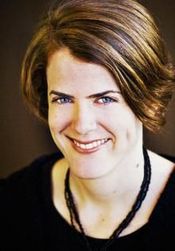
Jennifer Burns is an assistant professor of history at the University of Virginia, where she teaches 20th century U.S. history. She used to teach a US history survey course at UC Berkeley (you can listen to the lectures on iTunes U). Dr Burns recently published a work on the influence of Ayn Rand on American life. She was interviewed about this book on the Daily Show and Reason.com. She has a great website.

Maki Umemura
Maki Umemura is a lecturer (in US parlance, an assistant professor) at Cardiff University. Her research is on the history of the Japanese pharmaceutical industry, a topic that combines business history and the history of medicine. Her publications include “The Interplay between Entrepreneurial Initiative and Government Policy: The Shaping of the Japanese Pharmaceutical Industry since 1945” Business and Economic History Online (2007). Dr Umemura is currently working on a history of the Japanese pharmaceutical industry since 1945, which will be published by Routledge. Her website includes one of the most visually-appealing academic blogs.

Sean Kheraj
Sean Kheraj is a postdoctoral research fellow at the University of British Columbia. He is an environmental historian and the host of the Nature`s Past podcasts. His publications include:“Improving Nature: Remaking Stanley Park’s Forest, 1888-1931” BC Studies (158) 2008: 63-90; “Restoring Nature: Ecology, Memory, and the Storm History of Vancouver’s Stanley Park” Canadian Historical Review 88 (4) 2007: 577-612;“Plaque Build-up: Commemorating the Buxton Settlement, 1950-2000” Problématique: Journal of Political Studies (9) 2003: 5-2. He is an active blogger.
The Winnipeg Free Press recently carried a review of Immigrants in Prairie Cities: Ethnic Diversity in Twentieth-Century Canada by Royden Loewen and Gerald Friesen.

Prof. Claire Campbell
Environmental historian Claire Campbell shares some thoughts on the failure of the Copenhagen talks.
The Chronicle of Higher Education has an interesting story about American academics who are attempting to rehabilitate the reputation of the Southern secessionists. A group of “neo-Confederate” academics who believe that the South’s cause in the Civil War was justified have established an organization called the Abbeville Institute.
The Abbeville Institute claims that its members study the attempted secession of the slave states so as to better understand secessionist movements in the modern world. However, a quick glance at the titles of papers delivered at its conferences suggests that it is actually a very parochial body concerned only with the American Civil War. There are very few papers of a seriously comparative nature and little discussion of secessionist movements in other countries (e.g., Canada). Moreover, the organization appears to ignore the more recent secessionist movements in Alaska and Hawaii.
Boxes of Books Inside the Texas Book Depository
A number of photos taken by the Dallas police department during the investigation of John F. Kennedy’s assassination are now available online.
Prof. Claire Campbell
Canadian historian Claire Campbell continues to live blog from the Copenhagen climate conference:
“So initially I actually felt guilty for being at Bright Green, which is essentially an industrial trade show, because it felt – well, opportunistic. A case in point: one speaker pointed out that for the global South, sustainability is not a luxury; sustainable practices are “the path to affluence.” Great, I thought. Then he added, “And there’s a lot of money to be made there.” And I winced.”
To read more, click here.

Canadian Museum of Human Rights, Artist's Conception
The Globe has an excellent story about the Canadian Museum of Human Rights.The story mentions that Stuart Murray, the current head of the museum, is the former head of the Manitoba PC Party. In 2001, Murray voted against extending adoption rights to gays and lesbians. The decision of the Harper government to appoint Murray to head the museum caused an outcry from gay organizations when it was announced in September 2009.
The website of the museum carries the following statement by Mr. Murray dated 27 September 2009. I have italicized the most interesting parts.
I have two thoughts.
First, should a human rights museum seek the participation of people of “all beliefs”? Is this statement literally true? I would ask Mr. Murray to think carefully about what he has said. I think that it would better to say that his museum should encourage the participation of a wide spectrum of belief systems but not all belief systems.
Second, while it is clear that conceptions of human rights have indeed changed over time, pointing this out does not tell us the extent to which we should judge the actions of previous generations and different societies according to our own values. Stressing that human rights are not “a static concept” could place one on the slippery slope to moral relativism. To use an extreme example, many whites in the Confederate States of America thought that the abolition of slavery would be an assault on their fundamental rights, including the right to own property they have acquired lawfully. To what extent should a museum curator respect their viewpoint, which was doubtless held with great sincerity?
As Peter Novick points out in his book, That Noble Dream: The ‘Objectivity Question’ and the American Historical Profession, page. 291 many American historians moved decisively away from moral relativism after the Holocaust. Many intellectuals in this period came to the view that Western liberal democracies should indeed impose their values, their conceptions of human rights on other non-liberal cultures, be it the US South or the Soviet Union or apartheid South Africa. An important corollary of this view was that historians should be more judgemental of human rights abuses perpetrated in the past rather than simply describing what happened in neutral language.
The curators of the museum will have to think about these thorny issues as they move forward in generating content for this museum.
The home page of the museum is here.
In a recent blog post, historian Sean Kheraj shows that the Canadian media paid very little attention to the signing of the Kyoto Protocol in 1997. The Globe and Mail mentioned it on the front page, but in a little story at the bottom of the page. Apparently, the paper’s editors regarded the Kyoto Protocol as roughly as important as the health of Boris Yeltsin.

Globe and Mail, 11 December 1997
A Connecticut Yankee in King Arthur’s Court Canadian historian at the Copenhagen Climate Change Conference. Claire Campbell, an associate professor of history at Dalhousie University, is part of the Nova Scotia delegation in Copenhagen. She is live blogging about her experiences at the Conference.
Her most recent blog post reads: “It’s an odd feeling to be going to my beloved Denmark more as a Nova Scotian, or a representative of Dalhousie, than as a Canadian. I really don’t know what kind of reception Canadians – not of all of whom support the federal position on the COP – will have. As the man sitting across from me in the airport just said, ‘We should be [setting] the standards of good citizenry around the world. We should be model citizens’….” Read the rest here.
Dr Campbell is one of Canada’s foremost environmental historians. Her first book, Shaped by the West Wind: Nature and History in Georgian Bay, was published by University of British Columbia Press in 2004. She is currently working on a book about the history of Canada’s national parks. Her other publications include: “‘To Free Itself, and Find Itself’: Writing a History for the Prairie West,” in National Plots: Interrogation, Revision, and Re-Inscription in Canadian Historical Fiction, 1832-2005, eds. Andrea Cabajsky and Brett Josef Grubisic (Wilfrid Laurier Press, 2009); ‘It was Canadian, then, typically Canadian’: Revisiting Wilderness at Historic Sites,” British Journal of Canadian Studies 21:1 (2008), pp. 5-34; “Global Expectations, Local Pressures: Some Dilemmas of a World Heritage Site,” Journal of the Royal Nova Scotia Historical Society 11:1 (2008), pp. 1-18; “On Fertile Ground: Locating Historic Sites in the Landscapes of Fundy and the Foothills“, Journal of the Canadian Historical Association/Revue de la Société Historique du Canada 17 :1 (2006) pp. 235-265.
 The Past Speaks