Canadian Business History Syllabi

10 06 2012

The Business History Conference has posted a fantastic directory of syllabi of business history courses online.  I’ve cut and pasted the section devoted to Canadian business history courses below.


Doctoral Fellowship in International Business History

8 06 2012

The German Historical Institute, Washington, DC, is now accepting applications for a 6-month fellowship in International Business History. The recipient should begin the term February 1, 2013.

Preference will be given to fellows whose projects fit into the GHI’s research foci on transatlantic relations and the history of consumption. Comparative work is also strongly encouraged.

The fellow will be expected to be in residence at the GHI and participate in GHI activities and events. The fellow will have the opportunity to make use of the resources in the Washington, DC, area, including the Library of Congress and the National Archives, while pursuing his or her own research agenda. Travel within the US to work in archives and libraries will also be possible.

The monthly stipend is €1,700 for doctoral students from European institutions; students based at North American institutions will receive a stipend of $1,900. In addition, fellowship recipients based in Europe will receive reimbursement for their round-trip airfare to the US.

While applications may be written in either English or German, we recommend that applicants use the language in which they are most proficient. They will be notified approximately six weeks after the deadline.

To apply, please send a cover letter, CV, a copy of your last diploma, two letters of reference, and a 5-page research project proposal by September 1, 2012. Submission of documents by email is strongly preferred. Please send an email with your application to Bryan Hart.

For more information, please contact:

PD Dr. Uwe Spiekermann ( e-mail)
– International Business History Fellowship –
German Historical Institute Washington DC
1607 New Hampshire Ave NW
Washington DC 20009
U.S.A.


Reflections on Teaching US History in a British University

1 06 2012

I have enjoyed teaching these students who are extremely interested in American history. For the vast majority of these students, this module was their first exposure to the academic study of the history of the United States. Many students have a well developed, if somewhat inaccurate, knowledge of particular aspects of US history, such as the Civil Rights Movement and the Vietnam War, two topics that are taught at A-levels.

The students appeared to enjoy the seminars, which were based on a mixture of traditional seminar readings (i.e., scholarly articles and books) and podcasts. They also appear to have liked my lecture style. Although attendance did decline after I began placing videos of the lectures on Moodle in week 3, I intend to use Echo360 lecture capture next year because many of the students who have impeccable attendance records said that they found it useful to be able to watch videos of the lectures when revising for the exam.

I think that students got a great deal from the essay coursework. Almost all students said that this was the first time they were required to base their coursework on primary sources.

In October, I asked the students to follow the New York Times Disunion blog, which is about the 150th anniversary of the Civil War. (There are references to the blog in the Module Guide). My intention was that we would discuss recent blog posts each week. However, it became clear to me after a few weeks that the blog was assuming too much prior knowledge about the Civil War for us to have a profitable discussion.

Andrew Smith


Reflections on Teaching a Class on the History of Globalisation

1 06 2012

AS: At this university,  as in most British universities, the lecturers are required to write up a statement at the end of the academic year assessing how well each class went. Here is the statement I wrote about my History of Globalisation module. 


It has been a tremendous pleasure to deliver this module to our first-year history students. After the final exam, several students told me that they regarded this module as “superb” and a radically different form of historical education than what they had experienced at A-level.

One student said that she now follows business and political news very closely and that her entire perspective on politics, economy, and the media had been changed by this module. Previously, she hadn’t known what a Chancellor of the Exchequer was. I was extremely happy to hear this remark, especially as it came from one of the stronger students.

In a sense, I was very lucky in that there were many “teachable moments” in the news this year that I could reference in my lectures. (This is the silver lining of the current economic crisis, I suppose). These references allowed me to point out parallels between contemporary developments and the economic-historical phenomena that are the core themes of this module. I certainly believe that the crisis in the Eurozone made my students more interested in the history of the gold standard than otherwise would have been the case. Students also seemed very interested in learning about the Great Depression of the  the 1930s and the lost generation they produced.

In our weekly seminars, I always tried to keep the discussion focused on the assigned readings, rather than tangential issues related to present-day politics. However, I noticed that there were vigorous discussions on the module Facebook page about contemporary issues (such as the future of Greece in the Eurozone) in which students were citing and applying concepts taken from the seminar readings.  Students will be able to apply the knowledge gained from this module in their future modules. These discussions were typically on Monday evening. I required the students to watch a documentary on the lives and times of the economists Keynes and Hayek. I was very happy to see from Facebook that a student shared a link to the online version of this documentary with friends who are not students at this university. In the last few months of the module, I enjoyed watching the students’ passionate debates about the merits of such things as the welfare state and the WTO. I was also happy to see that the students could discuss emotionally charged topics such as the legacies of Empire or the economic history of the slave trade in a respectful and scholarly manner. That’s excellent.

My experience is that most of the seminar readings I set at the start of the year were appropriate. They generated good debates.  A few were perhaps over the heads of these first-year students, so I plan to modify the reading list next year.

This module embodies the principle of research-led teaching. Several of my past and forthcoming publications deal with globalisation. I didn’t assign any of my existing publications as seminar readings this year because they aren’t directly relevant to the core themes of this module. However, by January 2013, when I offer this module again, I should have publications in print that are directly relevant to the core themes of the module and thus suitable for inclusion in the reading list for the seminars.


Phil Scranton on the Bonus Army

1 06 2012

Professor Phil Scranton has been publishing a series of posts on Bloomberg’s Echoes blog, which is devoted to exploring the parallels between the early 1930s and the economic crisis we face today. His most recent post is on the Bonus Army, WWI veterans who marched on Washington in 1932 to demand payment for their prior services and who were brutally beaten by the Army.  The photo above shows a confrontation between veterans who had erected a Hooverville near the White House and the police officers who were trying to tear it down.

I’ve really enjoyed the Echoes blog. The posts by historians there are applied history at its finest. They have been read and discussed by vast numbers of non-historians. However, I’m a bit concerned that Bloomberg may end the blog once the recovery gets fully into gear. I hope that this doesn’t happen.


Canada, China, and the Asia-Pacific

28 05 2012

INSTITUTE FOR THE STUDY OF THE AMERICAS
SENATE ROOM, 1st FLOOR, SENATE HOUSE, UNIVERSITY OF LONDON
FRIDAY 29 JUNE 2012
The conference organisers wish to acknowledge the support of the Canadian High Commission and the Canada-UK Colloquium. Attendance is free of charge. To register please email Dr Tony McCulloch (tony.mcculloch@londoncanadianstudies.org) by 25 June 2012.
9.30 am Registration and refreshments

10.00 am Welcome by Professor Iwan Morgan, Institute for the Study of the Americas

10.15 am Keynote address
His Excellency Gordon Campbell, the High Commissioner for Canada to the UK
“Canada, China and the Asia-Pacific region – Opportunities and Challenges”

11.15 am Refreshments

11.30 am Session 2
Joseph Caron, Former Canadian ambassador to China, Japan and India & Asia consultant, Vancouver

“Canada in the Asia-Pacific – how did we get there, and where are we going?”
Discussant: James Brazier, IHS Jane’s intelligence group, London

12.45 pm Lunch

1.30 pm Session 3
Jennifer Welsh, Professor in International Relations, Somerville College, University of Oxford
“Canada’s international policy – the Asia-Pacific region in its global context”
Discussant: Tony McCulloch, Associate Fellow, Institute for the Study of the Americas, London

2.45 pm Refreshments

3.15pm Session 4
Nicolas Maclean CMG, Chief Executive, MWM (Asia) and former Senior Fellow for International Affairs at the International Institute for Strategic Studies (IISS), London

“Canada and the Asia-Pacific – the business perspective”
Discussant: Andrew Halper, Head of CMS UK China Group, CMS Cameron McKenna LLP

4.30pm – End of conference


Business History at the CHA

24 05 2012

AS: There will be some business history related papers/meetings the forthcoming conference of the Canadian Historical Association in Waterloo.

Business History Committee Meeting Canadian Historical Association
– Monday May 28, 2012 12-1:15 MC2038

[le francais suit]

Colleagues,

I would like to invite you all to the business meeting of the Business History Committee of the Canadian Historical Association. Please bring
your ideas and we will discuss the future directions, activities, and governance of the committee.

The time and location of the meeting is from 12:00-1:15 on Monday May 28 in the Waterloo Math and Computer Science Building Room MC2308.
http://uwaterloo.ca/map/#).

Though it takes place at lunch hour there is no provision for lunch, so brown bagging will be the order of the day.

Also, please see below for two panels of particular interest to business historians.

The meeting will be chaired by  J. Andrew Ross,  Lecturer, Department of History and Department of Economics
University of Guelph, http://www.uoguelph.ca/~jaross/

Panels of Interest

Monday
8:30-10:00/ 8 h 30-10 h 00 Waterloo  MC 2038

Business and Government Control of Media – Historical Questions, Connections and Reflections / Contrôle des médias par les entreprises
et le gouvernement : questions historiques, connexions et réflexions

4.1 Kristin Hall, University of Waterloo
“I give you these particulars to let you know something of the system which we have”: The Maclean Publishing Company of Canada and the Establishment of a British Subsidiary, 1913-1918

4.2 Colin McCullough, York University
“You can’t say anything that contradicts the pictures”: The National Film Board of Canada’s representations of peacekeeping, 1957-1964

4.3 Michael Stamm, Michigan State University
“The Local Newspaper as Multinational Corporation: The Chicago Tribune across the United States-Canada Border”

Facilitator / Animatrice : Barbara Freeman, Carleton University

TUESDAY
10:30-12:00 / 10 h 30-12 h 00 Waterloo MC 2017

45. The Visible Hand: Government Regulation and Business / La main visible : la règlementation gouvernementale et les entreprises

45.1 Braden Hutchinson, Queen’s University
Manufacturing an Industry? Marginal Children, the Craft Toy Movement and the Consuming Child, 1914-1919

45.2 John Hillhouse, McMaster University
State Protectionism and Regulation in the Canadian Life Insurance Industry, 1950-1965

45.3 Dimitry Anastakis, Trent University
Foreign Investment Scare, or Fair Share? The Rhetoric and Realities of Canadian Economic Nationalism, 1968-1984

Facilitator / Animateur : Steven Hewitt, University of Birmingham


Johan Fourie on Afrikaner Entrepreneurship After Apartheid

23 05 2012

Johan Fourie

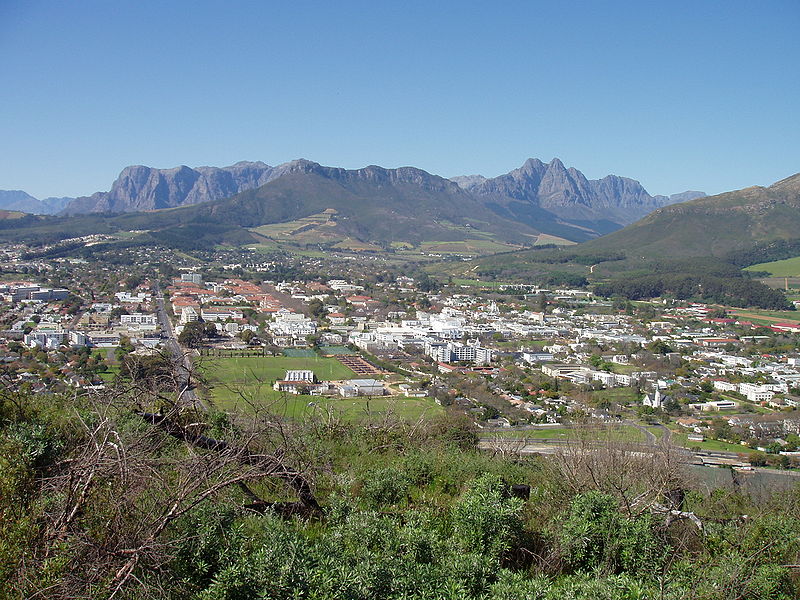
I know that some readers of this blog will be attending the World Economic History Congress in Stellenbosch in July. You and other readers may be interested in a recent post by Johan Fourie, a South African economic historian. (Fourie is a Senior lecturer at Stellenbosch University and the owner of Gabbema Books).

Fourie notes that nearly two decades after the end of apartheid and Afrikaner-dominance in South African, the Afrikaner bastion of Stellenbosch remains an important economic centre. Fourie shows that Afrikaans-speakers have done very well economically in post-apartheid South Africa and have established vast numbers of thriving new enterprises. He suggests that the prosperity of the Afrikaners is due to rather than despite the end of apartheid, a regime that clearly favoured them with various subsidies. Before 1994, Afrikaner-run companies profited from various crony-capitalist sweetheart deals with the state.

Stellenbosch

He writes:

1994 liberated not only black South Africans. Instead, I would argue, white South Africans were liberated from an incentive structure that guaranteed a ‘safe’ job in the public sector, or in white-owned, state-supported business. Whites were forced to create jobs for themselves, not simply fill jobs; entrepreneurship, not political (or Broederbond) contacts, became a way to gain power. This is true of many cultural minorities across the world that has little political power: why is it that Somalians thrive in South Africa while their own country falls apart? It is because they know that here they are on their own. There’s an attitude of “if we fail, there is no one to blame but themselves”.

Ironically, the 1994 transition may have had exactly the opposite effect for black South Africans. While a democratically elected government brought political freedom, it also created an incentive structure of entitlement. The attitude was that “we had suffered enough during those dark days and should now share in the economic spoils”. Government policy made this easier: black economic empowerment, for all its good intentions, did not create entrepreneurs, it created a class of connectors, networkers, tenderpreneurs or whatever you would like to label those with the skills not in creating something new, but in redistributing.

Read more here.

Fourie’s post reminds me of some of the arguments about the nature of crony capitalism made in Haber, Stephen H. 2002. Crony capitalism and economic growth in Latin America: theory and evidence. Stanford, Calif: Hoover Institution Press.

It also got me thinking about

Baumol, William J., Robert E. Litan, and Carl J. Schramm. 2007. Good capitalism, bad capitalism, and the economics of growth and prosperity. New Haven: Yale University Press.

It seems to me that historians of North American business have not done enough to engage with the literature on typologies of capitalism and entrepreneurship. In particular, they ought to pay more attention to Baumol’s distinction between productive, unproductive, and destructive entrepreneurship. There is a bit about this in the introduction of Canada’s entrepreneurs: from the fur trade to the 1929 stock market crash. However, vastly more work needs to be done on this subject between historians of Canadian and US business.


Rethinking Inequality in Historical Perspective

22 05 2012

23 May 2012
This one-day workshop will take place at the University of Manchester and bring together historians, social scientists and practitioners concerned with the study and understanding of inequality broadly understood.

Places are limited, but if you would like to attend the workshop,
please email inequality@manchester.ac.uk
10am – Welcome and Introduction

Pedro Ramos Pinto, Patrick Joyce and William O’Reilly

10.15 – 11.45 – Panel 1: New Histories of Inequality

Ben Jackson (Oxford) Ideologies of equality and inequality in historical
perspective

Emily Robinson (Nottingham) History and Inequality: It’s the Way You
Tell It

Phillip Reick (Freie, Berlin) The Logic of Inequality in Working Class
Berlin in the Mid-1870s

11.45 – 12.00 – Coffee Break

12.00 – 13.00 – Panel 2: Interdisciplinary Perspectives

Manoela Boatca (Freie, Berlin) The Mark of the Non-Modern? Ascribed
Inequalities in the Global Age

Salvatore Morelli (Oxford) Economic Inequality and Macroeconomic
Shocks in Historical Perspective, 1911-2010

13.00 – 14.00 – Lunch Break14.00 – 15.30 – Panel 3: State, Society and Inequality in Britain

Pat Thane (KCL) Age and Inequality in Modern Britain

Kate Bradley (Kent) Anti-social behaviour before the ASBO

Simon Szreter (Cambridge) Educational Provision and Inequality 1922-
2012

15.30 – 15.45 – Coffee Break

15.45 – 16.45 – Panel 4: What do we want from a History of
Inequality? Non-academic perspectives.

David Price, The Equalities Trust – Inequality in Britain Today

Alex Dunedin, The Ragged University – The Ragged Project
16.45 – 17.30 – Roundtable Discussion: mapping new questions for
research in inequality in Historical Perspective


Victoria Day/Journée nationale des patriotes

21 05 2012

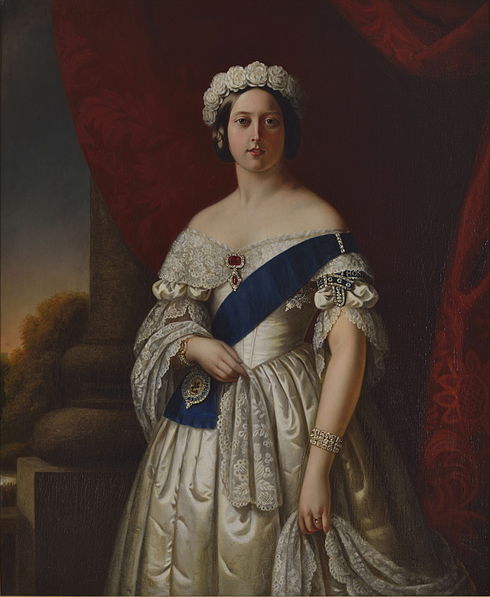
AS: Today, people in Ontario and several other Canadian provinces celebrate Queen Victoria’s birthday. In Quebec, the holidday is known as Journée nationale des patriotes and it honours the nationalists who rose against British rule in 1837-8, at the very start of Victoria’s reign.

 I originally posted the material below in 2010. I’m now reposting this material, precisely two years later. 

——-

Yesterday was Victoria Day in English-speaking Canada, the annual holiday that commerorates Queen Victoria’s birthday. Nowadays, Victoria Day is essentially a bank holidy, just an excuse for a long weekend in May. In Quebec, the Monday before 24 May is know as the Journée nationale des Patriotes. It commemorate the rebellion against British rule that took place in Lower Canada in 1837, which was the year Victoria ascended to the throne. Check out this video of patriots day celebrations in Quebec. I really like the part where a speaker’s statement “Victoria ascended to the throne in 1837” is greeted with jeers from the audience. In 2010, Canada is probably the only place in the world where a factual statement about Queen Victoria would elicit an emotional response from a drunken crowd of political activists.

Vodpod videos no longer available.
more about “Victoria Day vs Journée nationale des…“, posted with vodpod