Current PhD Theses/Dissertations on Topics in Canadian History, 1815-1891

19 04 2010

Last Friday, I sent out the following message on H-Canada.

To whom it may concern:

I am putting together a database of PhD and other graduate students who
are working on topics that deal with British North America/Canada 1815
to 1891. If you are interested in being included in this database,
please send me your name, thesis title, university, and the name of your
supervisor.

Je suis en train de créer une base de données des étudiants au
doctorat qui travaillent sur l’Amérique du Nord Britannique/Canada
durant la période 1815 À 1891. Si vous souhaitez être inclus dans ma
base de données, veuillez m’envoyer votre nom, le titre de votre thèse, votre
affiliation institutionnelle, et le nom de votre directeur.

Merci/Thanks,

Andrew Smith
————————–

These are my responses to date:

Paul John Reale
“Creating a ‘British Country’: Empire and Education in Upper Canada, 1791-1871”
The University of Chicago
Dissertation Chair: John E. Craig

Patrick J. Connor
Department of History, York University, Toronto
“‘The Purest of Gifts’: Royal Clemency, Patronage, and the Politics of Pardon in
Upper Canada, 1791-1841”
Supervisor: Doug Hay.

Jacob Ginger, Queen’s University
‘The Political Economy of Faith:  Shaping God, Mammon and the State in Nineteenth-Century Upper Canada’  (working title)
Supervisor:  Dr. Jeffrey L. McNairn

Daniel Rueck
“Mohawk Land Practices and the Liberal Order: An environmental history of Kahnawake”
McGill University
Supervisor: Elsbeth Heaman

Janine Rizzetti
Thesis title: “A Lamentable Succession of Follies and Consequent Disasters: The Colonial Career of Mr Justice John Walpole Willis”
University: La Trobe University, Bundoora Australia
Supervisors: Prof. Richard Broome; Dr Jennifer Ridden

Christopher Herbert
“White Gold:  Power, Empire, and Identity in the California and British Columbia Gold Rushes”
University of Washington
Supervisor:  John Findlay

name: Katrin Urschel
thesis title: “Surfacing Again: Ethnic Identity in Irish-Canadian Literature”
university: National University of Ireland, Galway
supervisor: Dr. Riana O’Dwyer

Allison O’Mahen Malcom
The University of Illinois at Chicago
Advisor: Prof. Richard R. John (who is now at Columbia)
“Anti-Catholicism and the Rise of Protestant Nationhood in North America,
1830-1871”

Wendi Lindquist
“Death and Dying on the Northwest Coast of North America, 1774-1858”
University of Washington
Supervisor Professor John Findlay.

Bradley Miller
“Emptying the Den of Thieves: International Fugitives in British North
America, 1800-1910”
University of Toronto
Supervisor: Jim Phillips


The History of Western North America (Course Outline)

18 04 2010

I’m posting the outline of one of the course I’m going to be teaching between September and December 2010.

49th Parallel at Waterton Lake, Alberta. Image Courtesy of David Derrick.

Note on picture: Governments have removed vegetation along the border to increase their control over the lives of their citizens. The “border vista” extends for three metres on either side of the border and is maintained by the employees of the IJC.  This picture illustrates the highly artificial nature of the Canada-US border and the two “nations” it separates.

From the course outline: “The official title of this course is the History of the Canadian West. However, my lectures will deal with western North America as a whole. It is impossible to understand the history of western Canada without knowing about events south of the border. The 49th parallel transects biomes, traditional aboriginal territories, and natural economic communities. Despite the best efforts of governments based in the eastern time zone to exercise control over the border, animals, drugs, and illegal migrants continue to flow across it.

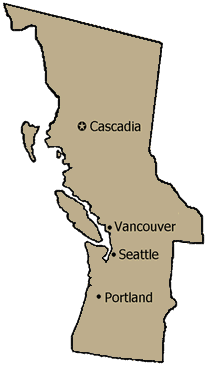
Many westerners dislike the border and the central government power it represents. Some First Nations regard the border as illegitimate. Anti-Ottawa sentiment is common among the whites of western Canada. In Alberta, many right-wing people believe that they have more in common with their American neighbours than with central Canadians. Some ecologists in BC and the Pacific North West have dreamt of establishing a new nation called “Cascadia”. Separation from Canada remains a topic of conversation in Alberta.

Cascadia

Anti-central government sentiment is also pronounced in the American West. In some cases, this sentiment translates into outright secessionism. Alaska has a political party devoted to independence from the United States. The husband of politician Sarah Palin was once a member of this party. In other cases, dislike of Washington takes the form of hostility to specific federal government policies and strong regional or state identities. Arizona Senator Barry Goldwater once said that he would be happy if the whole eastern seaboard of the United States fell into the Atlantic Ocean. During the Presidency of George Bush, it is not unknown for Californians travelling overseas to tell people that they are from “California” rather than “the U.S.”.

The American West has been the birthplace of many protest movements of both the political left and the political right. Some of these protest movements crossed the border and became part of western Canadian political history.

There is a strong libertarian movement in western North America. Western libertarians tend favour policies such as low taxes, unrestricted immigration, the right to carry handguns, and the legalization of divorce, homosexuality, pornography, drugs, gambling, and prostitution.

There are some very right-wing people in western North America. At the same time, the environmental, Native rights, and gay rights movements have also been strong in western North America. The first openly gay municipal politician in North America was elected in San Francisco. Greenpeace was created in Vancouver. Irrigation and other environmental policies are central to politics in the west. Western North America is fascinating to me as a historian because political extremes have clashed there so often. The sheer ethnic diversity of the region is also interesting to study.

Deadwood, Dakota Territory, 1876

Louis Riel after his capture, 1885

Chinese Head Tax Certificate

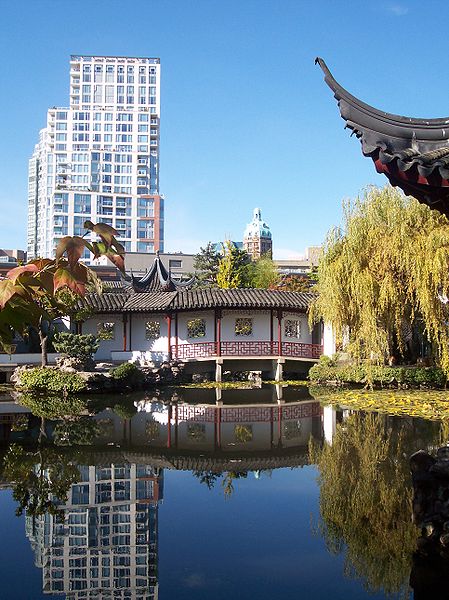
Garden in Vancouver's Chinatown

Vancouver-based Greenpeace Protesters at Oilsands Facility in Alberta

The course explores major topics in the political, social, and economic history of western North America. As a vehicle for teaching these broad themes, I have adopted a “history through biography” approach, so each lecture revolves around the life and times of an individual. The men and women who are the subject of my lectures come from diverse social groups and historical epochs.”

To see the rest of the course outline, click here.


Museum of Afghan Civilization

17 04 2010

Kandahar City in 1881. Looks like it was a craphole even back then.

The Museum of Afghan Civilization is scheduled to debut in 2010. This museum is going to be completely virtual. Online exhibits hosted by brick-and-mortar national museums are nothing new, but the idea of creating a purely online national museum is interesting, especially in light of the security situation in that country. The problem with a bricks- and-mortar museum in Afghanistan is that the bricks might get blown up. I suspect that this bilingual (English and French) website also has a public diplomacy function for Afghanistan’s government, which is widely regarded as corrupt by taxpayers in Western countries. “Hey look at this pottery! See we’ve been civilized for millenia. Continue to send us guns and money!” It’s all about the creation of usable pasts I guess. So Western taxpayers– watch your wallets!

Hat tip to Krista McCracken’s excellent public history/digital humanities blog.


Ghost Writer Trailer

17 04 2010

I recommend going to see this film. It’s great.


Most Influential Scholars in the Humanities

16 04 2010

These are the most cited authors in the humanities, according to Thomson Reuters ISI Web of Science, courtesy of The Times Higher Education Supplement.

I have one question: are historians categorized as social scientists or humanities scholars by Thomson?

Citations to books in 2007
Michel Foucault (1926-1984) Philosophy, sociology, criticism    2,521
Pierre Bourdieu (1930-2002) Sociology    2,465
Jacques Derrida (1930-2004) Philosophy    1,874
Albert Bandura (1925- ) Psychology    1,536
Anthony Giddens (1938- ) Sociology    1,303
Erving Goffman (1922-1982) Sociology    1,066
Jurgen Habermas (1929- ) Philosophy, sociology    1,049
Max Weber (1864-1920) Sociology    971
Judith Butler (1956- ) Philosophy    960
Bruno Latour (1947- ) Sociology, anthropology    944


Two Business History Related Books Have Won Pullitzer Prizes

15 04 2010

The 2010 Pulitzer Prize for History went to Liaquat Ahamed for Lords of Finance: The Bankers Who Broke the World, “a compelling account of how four powerful bankers played crucial roles in triggering the Great Depression and ultimately transforming the United States into the world’s financial leader.”

“Also nominated as finalists in this category were “Fordlandia: The Rise and Fall of Henry Ford’s Forgotten Jungle City,” by Greg Grandin (Metropolitan Books/Henry Holt & Company), an evocative, heavily researched examination of an industrial giant’s grandiose scheme to create a model rubber plantation deep in the Amazon forest; and “Empire of Liberty: A History of the Early Republic, 1789-1815,” by Gordon S. Wood (Oxford University Press), a lucid exploration of a turbulent era when a profoundly changing America, despite the sin of slavery, came to see itself as a beacon to the world, demonstrating human capacity for self-government.”

The Pullitzer prize in Biography went to T. J. Stiles for The First Tycoon: The Epic Life of Cornelius Vanderbilt for  “a penetrating portrait of a complex, self-made titan who revolutionized transportation, amassed vast wealth and shaped the economic world in ways still felt today…. Also nominated as finalists in this category were “Cheever: A Life,” by Blake Bailey (Alfred A. Knopf), an absorbing, impeccably researched exploration of the famed writer John Cheever, illuminating his greatness as well as flaws, told in a compelling voice worthy of the subject; and “Woodrow Wilson: A Biography,” by John Milton Cooper Jr. (Alfred A. Knopf), a magisterial work that corrects erroneous perceptions and casts important new light on one of the most pivotal and enigmatic American presidents, fully placing the man in the context of his times.”

I really admire the writing and career of T.J. Stiles and loved his book on Vanderbilt. I haven’t read the book by Ahamed but have decided to put it on my to-read pile.

Personally, I would have wanted Wood’s Empire of Liberty to have won the prize.

Hat tip to the BHC blog.


Wente on Ontario Universities

14 04 2010

Yesterday, Globe columnist Margaret Wente published a piece in which she denounced Ontario’s academics as overpaid people who devoted too much time to research and not enough time the job taxpayers expect them to do, namely, teaching undergraduates.

Wente’s piece has generated a strong response. This letter appeared in today’s Globe.

“Dear Editor;

Margaret Wente, in her complaints about Canadian university faculty being the highest paid in the world (“Universities are sitting ducks for reform,” April 13, 2010), bases her argument on a 2008 Boston College report that itself cautions readers that, lacking consistent data across countries being available, their study “must be seen as a first attempt rather than a definitive report.”

Regrettably Wente shows no such caution when urging Canadians to adopt a university system where faculty are no longer paid to perform research. Hundreds of years of university experience have shown that faculty research and teaching are intertwined, enriching and enlivening each other, to the benefit of students. To drop this research-based model in favour of “efficiently delivering mass undergraduate education” will reduce the university to being a kind of upper-level high school.

Our students don’t need more high school. They need interaction with faculty who are pushing the frontiers of knowledge. Wente is too swift to abandon quality higher education, especially in view of the enormous challenges we face, such as healthcare and global security. We need the best possible postsecondary system to generate solutions to these urgent issues.

The research model might cost more, but education on the cheap is too expensive a solution.

Mark Langer
President
Ontario Confederation of University Faculty Associations”

Ms. Wente makes some interesting comments in her piece. I don’t disagree that the Ontario university system needs a major overhaul.  However, I think that there are some flawed ideas in her piece that need to be pointed out.

First, Wente seems to dismiss the research that is 40% of the job of the typical academic. She said: “U.S. commentator Walter Russell Mead remarks, taxpayers are not going to subsidize research in critical literary theory much longer”.

Very few professors devote their time to critical literary theory. I would hazard to say that many Canadian universities are without a specialist in the theories of Foucault. Most taxpayers would probably say that a lot of the pomo theory stuff is garbage. But the practitioners of that, er, scholarly tradition represent a miniscule minority of all professors.  [Moreover, the postmodern stuff is far more prevalent in the United States than it is here in Canada. The pomo BS is even less common in Britain and is unknown in universities in many European countries. Obviously there are advantages and disadvantages with different degrees of state control, but to my mind, this pattern suggests why publicly-funded universities that are under state supervision may be a better arrangement than the privately-funded universities of the US, a more laissez-faire environment where much of the truly nonsensical stuff flourishes along with all of the cutting-edge research].

Anyway, what about all of the professors who research terrible diseases or who teach difficult to learn but commercially vital Asian languages or who publish on important topics such as the Holocaust or why financial crises happen?  What about the many academic historians who write books that ordinary people read in the evening after work? In the field of Canadian history there are Professors John English and Jonathan Vance who fall into this category, which is one that I hope to join. Pointing to the tiny minority of people who abuse the system isn’t fair.

Moreover, Ms. Wente cites an academic book in her column. In fact, she praises Academic Transformation: The Forces Reshaping Higher Education in Ontario. This book was published by an academic press (MQUP) and the authors are professors. The fact that Wente read and then cited this book undermines her own argument that academic research is largely useless.

The professor who publishes shoddy research devoid of social utility is, in my view, a trivial problem. The stereotype of the professor who issues a stream of books written in pomo jargon is largely a myth.  There may, however, be a problem with professors who simply don’t publish enough or who are indifferent in their teaching. However, there are systems for dealing with this. Students evaluate the teaching of their professors.  TVOntario rewards Ontario’s best university and college lecturers. Getting tenure in North America often requires the publication of two peer-reviewed books, at least in book-oriented disciplines.

The British government measures the scholarly output of academics and then uses the results to rank university departments (with some surprising results, I might add) and so it will know where to allocate funds. The British do this not because they share Ms. Wente’s apparent disdain for academic research but because they want _more_ academic research to be produced and are willing to incentive academics to produce results. The results of the British system are impressive: in per capita terms British scientific and humanities academics outperform scholars from other countries in terms of both volume and influence (citation counts) of publication. Ontario seems to be inching in the direction of adopting something similar to the British RAE/REF system. The Ontario government’s new Higher Education Quality Council, which seems to have been inspired by Higher Education Funding Council in the UK.



A Response to my Vimy Ridge Day Post

10 04 2010

My response to a reply on my earlier Vimy Ridge Day post.

A reader wrote:

“I’ve seen some balanced commentary in the press that did mention the Conscription crisis as part of the nation-creation of WWI, but as you suggest, there is little talk of the British Empire, or of the fact that the “Canadians” who fought at Vimy contained an awful lot of British-born. These themes are well-known to historians, but public commemorations are not about history, they are about memory, the selective kind.”

Here is my reply:

“These themes are well-known to historians, but public commemorations are not about history, they are about memory, the selective kind.”

True, events like this are about the construction of usable pasts by politicians. It seems to me that one of the jobs of historians is to call BS whenever this happens. Margaret Macmillan’s excellent recent book on the uses and abuses of historical analogy is helpful in this regard, but I expect that relatively few copies were sold.   It makes me sad that more of the academic history doesn’t filter down into the social memory. It suggests a lack of synchronization between universities, secondary schools, the media, and the general public at the bottom. Perhaps the government should appoint an academic historian as it chief historical officer to pre-check all speeches by dignitaries for questionable interpretations of history.  This office would be an extension of the educational functions of the state, much like subsidies for schools, museums, and public television. Our society puts lots of resources into the creation and dissemination of historical knowledge and it is a shame there is so little evidence of this at events like this. One of the problems is that most academic historians in Canada have stopped writing for the general public.


Parks Canada hiring 32 student reporters for the summer

10 04 2010

Current post-secondary students in Canada are eligible to apply to be one of Parks Canada’s 32 student video reporters. The positions are full time and are spread across the country. This is an excellent opportunity for students interested in Canadian history, Canadian geography, parks and outreach – particularly video outreach.

Please pass this information along to students who may be interested in the opportunity. See here.


Vimy Ridge Day

9 04 2010

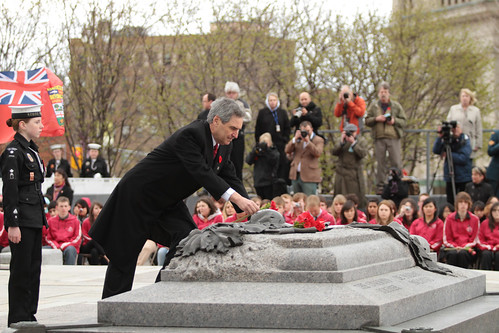
Today was Vimy Ridge Day in Ottawa. See here. Vimy Ridge Day was established in 2003 by the federal government to remember the Canadians who got killed fighting in the First World War. Vimy Ridge Day was the brain child of Brent J. St. Denis, who was then the MP for the Northern Ontario riding of Algoma-Manitoulin. Today’s ceremony got extra attention because the last Canadian veteran of the war died recently.

As someone who researches the history of Anglo-Canadian relations, I’m mildly interested in the social history of the First World War in Canada. I was struck by the fact that none of the speakers at today’s ceremony, not even the Queen’s official representative in Canada(!), could bring themselves to mention the “British Empire.” That’s right, the name of the entity for which the Canadians were fighting went totally unmentioned. This is the elephant in the room nobody can bring him/herself to mention. Instead, there were anachronistic statements to the effect that the Canadians who fought in the war were fighting either for Canada or for the “international community”.

The silence on the British Empire is deafening. I bet nobody mentioned the Conscription Crisis either. Wasted opportunity to educate the public on a bit of history.

For the record, let me state that I’m glad the British Empire no longer exists. It is likely that the British decision to get involved in the First World War accelerated the demise of the British Empire and its break-up into a number of successor states in various part of the world, of which the modern nation of Canada is but one. That being said, I think that the British Empire was an important part of Canada’s history and our public leaders should not be ashamed to mention it. For Canadians, the legacy of the British Empire was pretty mixed. The old Empire was probably not as bad some left-wing historians suggest nor as good as Niall Ferguson argues. But regardless of whether it was good or bad entity, it was an important part of the Canadian story and should not be ignored. As someone with a passionate belief in historical accuracy, it is offends me when the past is distorted through such a bizarre omission. What would we think of a text on Italian history that didn’t mention the Roman Empire. The difference is that the Roman Empire was long ago, whereas the British Empire is still part of living memory (just barely though).

My reading of the situation is this. Canada today likes to think of itself as a tolerant, multicultural nation. We also have large numbers of immigrants from countries where the words “British Empire” evoke a visceral and very negative reaction. Many Canadians admire the other people who helped to overthrow British rule in their part of the world. (My university has a statue of Gandhi). All of  this means that inconvenient truths such as the fact that the First World War was divisive, that Quebeckers and many others hated conscription, that Anglo-Canadians once loved the British Empire, and that British immigrants outnumbered native-born Canadians at Vimy Ridge go totally unmentioned.

Michael Ignatieff, the leader of the Liberal Party and a former historian, was present at today’s ceremony. It is too bad that his current position does not allow him to say something interesting/truthful about Vimy Ridge.

Ignatieff, 9 April 2010