New Nature’s Past Podcast

21 09 2009
Logo of the Nature's Past Podcast

Logo of the Nature's Past Podcast

The ninth episode of  Nature’s Past, the podcast produced by NiCHE, the Network in Canadian History & Environment is now available here. This episode that looks at environmental history graduate studies in Canada.  Previous episodes can be downloaded from the NiCHE website.

The podcaster, Sean Kheraj, is a postdoctoral research fellow in the Department of History at the University of British Columbia. He has previously written about the environmental history of Vancouver’s Stanley Park. Currently, he is researching a new project on the history of urban animals in Canada.

The monthly Nature’s Past podcasts are a way of keeping abreast of the rapidly growing field of Canadian environmental history.  The podcasts are similar in format to a CBC Radio One documentary and feature interviews with scholars in the field talking about their research. They are designed to appeal to both academic historians and ordinary Canadians who are interested in the environmental history of their country.


CNEH Conference

21 09 2009

I won’t be attending the forthcoming conference of the Canadian Network in Economic History due to the issue of timing. (The conference is taking place in Halifax in early October). There are some really interesting papers on the program, so I really wish I could go.   The keynote address will be given by Joel Mokyr (Northwestern University) and is on “Culture, Growth, and Cliometrics”. From the sounds of it, Mokyr will be asking what role culture plays in promoting economic growth, which is  topic historians have been debating since Max Weber published his famous thesis regarding the Protestant ethic and the spirit of capitalism.

I feel very ambivalent about the culturalist approach to studying why some countries do better economically than others. Clearly culture matters somewhat (as Mokyr’s research on the economic impact of the Enlightenment shows), but so do other factors, including institutions and, to be frank, exploitative extraction of wealth. The economic historian Greg Clark had this to say about cultural approaches to understanding the origins of economic growth:  “my reaction… is one of intellectual schizophrenia. I simultaneously want to endorse his promotion of culture, and to run screaming from his lethal embrace. As an economic historian who studies economic growth in the long run, I agree completely that the banishment of culture from much of the consideration of wealth and poverty by modern economists has left us with untenable theories of growth… yet attempts to introduce culture into economic discussions so far have been generally either ad hoc, vacuous, blatantly false, or void of testability.” (For the original context of this quote, see here).

Clark’s feelings on this issue are similar to my own.


BHC Deadline for Paper Proposals

20 09 2009

If you wish to present at the Business History Conference next year, you will need to get working on your paper proposal soon. The deadline is 1 October.

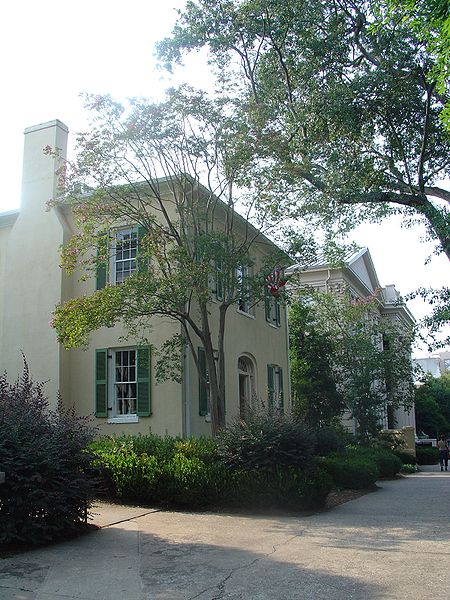
Demosthenic Hall, University of Georgia, Athens.

Demosthenic Hall, University of Georgia, Athens.

The 2010 will be held at the University of Georgia in Athens. Looks like a beautiful campus.

The above image comes from the Wikimedia Commons. It is reproduced under a Creative Commons Share Alike 2.0 Licence.


Wolfe, Montcalm, and Remembrance Day 2009

19 09 2009
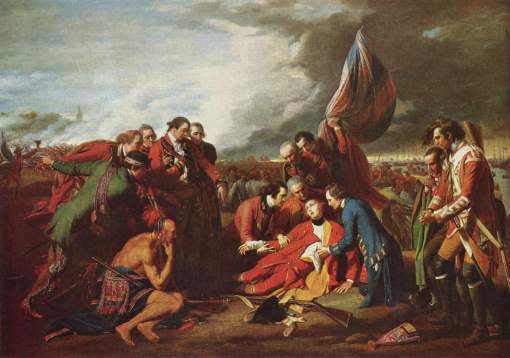
Benjamin West, The Death of General Wolfe, 1771

Benjamin West, The Death of General Wolfe, 1771

2009 marks the 250th anniversary of the Battle of the Plains of Abraham, an event that is still remembered by many Canadians. I believe that we should include a prominent reference to this battle in the Remembrance Day ceremonies held this year at the National War Memorial in Ottawa.

The National War Memorial, originally built to honour the memory of those who died in the First World War, has now come to represent the losses suffered in all of Canada’s wars both here in North America and overseas. Increasingly, the space around the memorial has been used to commemorate those who died in pre-Confederation conflicts rather than only those who fell in the better-known wars of the twentieth century.

War Memorial in Ottawa

War Memorial in Ottawa

In 2006, statues and busts of important figures from Canada’s pre-Confederation military history were installed around the National War Memorial. The individuals represented by these statues include: Louis de Buade, Comte de Frontenac; Mohawk chief Joseph Brant; Laura Secord; and Sir Isaac Brock.

Statue of Joseph Brant, National War Memorial in Ottawa

Statue of Joseph Brant, National War Memorial in Ottawa

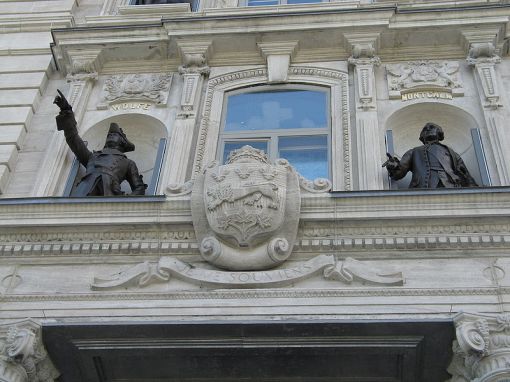
Although these statues, known collectively as the Valiants Memorial/ Monument aux Valeureux, are fine works of art, the decision to omit any representation of the British and French commanders at the Plains of Abraham, Generals Wolfe and Montcalm, was highly unfortunate. (It would be interesting to speculate on why statues of Wolfe and Montcalm were not included. My guess is the National Capital Commission‘s fear of touching a potentially explosive political issue outweighed its interest in promoting an awareness of Canadian history).

Poppy

Poppy

Although it is, of course, too late to include a permanent symbolic tribute to Wolfe and Montcalm in the National War Memorial in time for this year’s Remembrance Day, there is another way we can commemorate the memories of Wolfe, Montcalm, and all those who died on the Plains of Abraham. I believe that the descendants of Generals Wolfe and de Montcalm should be invited to Ottawa to participate in this year’s ceremony as the honoured guests of the Government of Canada. Representatives of the First Nations present at the battle should also be invited to take a prominent place in this year’s ceremonies.

Andrew Wolfe Burroughs, a descendant of General Wolfe and Georges Savarin de Marestan, a descendant of General Montcalm, have participated in events related to the memory of their illustrious ancestors on numerous occasions. As a result of working together on heritage projects, Burroughs and de Marestan are now good friends. Their ability to put aside past hatreds is inspiring to all those who hope for a more peaceful world. It is fitting to highlight the Battle of the Plains of Abraham by inviting Burroughs and de Marestan to this year’s Remembrance Day ceremonies. The friendship of these two men is, in some ways, representative of the friendship that English- and French-speaking Canadians, the descendants of the two armies of 1759, now feel for each other. For 250 years, English- and French-speakers have lived together in Canada with a minimal amount of violence. In a world rent frequent by ethnic violence and civil war, the history of the relationship between Canada’s two largest linguistic groups can act as a beacon of hope in the world. The beginning of this historical relationship deserves to be commemorated on 11 November 2009.

The Government of Canada should invite Andrew Wolfe Burroughs and Georges Savarin de Marestan to participate in the 2009 Remembrance Day ceremonies.

Statues Honouring Both Wolfe and Montcalm, National Assembly Building, Quebec City

Statues Honouring Both Wolfe and Montcalm, National Assembly Building, Quebec City

All images in this post are from the Wikimedia Commons and are used under a Creative Commons Licence.


Historian Peter Cain on European Attitudes to China

18 09 2009

Historian Peter J. Cain has an excellent new paper on the History and Policy website.  The paper is called “China, globalisation and the west: A British debate, 1890 – 1914”.

Other papers on economic-historical themes at History and Policy include:  “The ‘credit crunch’ and the importance of trust” by Geoffrey Hosking; “Equality and incentive: fiscal politics from Gladstone to Brown” by Martin Daunton; and “The real lesson for developing countries from the history of the developed world: ‘freedom to choose'” by Ha-Joon Chang. (I like how Chang’s paper title makes an allusion to this man).

The website, by the way, is designed to bring relevant historical research to the attention of policy-makers. John Tosh outlines the mission of the History and Policy here. The History and Policy website has inspired a group of Canadian scholars to establish a similar project called ActiveHistory. The Canadian project is evidently in its early stages but looks very promising.


New Business History Blog

18 09 2009

Kevin Tennent, a British business historian, has established a blog. The topics covered by his blog included economic history, present-day economic policy, and transport policy. He recently had a fine post on Lehman Brothers and the history of financial regulation in twentieth-century America.


Germany and the Holocaust

17 09 2009

TVOntario’s Agenda recently broadcast an excellent discussion of the social memory of the Holocaust in Germany. Description: “The Holocaust legacy: Can an episode of unparalleled evil now be a comic foil? 70 years after the start of World War Two can we see the past through a different set of eyes? Germans, Jews, and history’s changing narrative”. Click here to view the program.


Review of Buckner, Canada and the British Empire

17 09 2009

My (favourable) review of  Philip Buckner, Canada and the British Empire (Oxford University Press, 2008) has been published in the Canadian Historical Review vol. 90, issue 3 (September 2009): 539-40. See here.


Program of “Globalization and the Making of Canada: Canada’s International Economic Linkages from the Fur Trade to the 21st Century”

17 09 2009
Unknown Artist, Port of Halifax, 1830s

Unknown Artist, Port of Halifax, 1830s

Workshop Theme:

Globalization is transforming Canada and the world. Moreover, it is a process whose roots go back a long time. For many people, the term globalization refers only to developments in the last few decades. The reality is that there have been successive waves of globalization going back centuries.  The papers presented at this workshop will show that globalization has been transforming Canada since the time of the fur trade. The picture above of a ship leaving Halifax harbour in the 1830s is, in a sense, documentary evidence of early globalization. By some measures, the world was more globalized in July 1914 than it is today. The fact that there have been successive waves of globalization and de-globalization helps to falsify the widespread notion that the process of globalization is inevitable or irreversible. The research presented at this workshop will also remind us that globalization is historically contingent and shaped by the decisions by policymakers and other actors. Another aim of the workshop is to connect Canadian historiography with the burgeoning body of literature on the history of globalization and international trade.

Workshop Venue: Woerner House. Woerner House is the conference facility owned by the Centre for International Governance Innovation, which is located in Waterloo, Ontario. It is located in a wooded area roughly thirty minutes from the University of Waterloo campus.

Please note that the papers are protected by passwords. To obtain the passwords, please contact Andrew Smith.

Friday, 29 January 2010

1:00-1:30 Registration

1:30-1:50 Opening Remarks by Andrew Smith, Laurentian University.

2:00-3:00 Session 1: Early Globalization

Professor Mike Dove, Department of History, University of Western Ontario. “Pelts and Profits as Precursors: Antecedents of Globalization in the Canadian Fur Trade”

Professor George Colpitts, Department of History, University of Calgary.  “Early Globalization and the Pricing of Plains Provisions for the Canadian Fur Trade, 1811-1882

3:00-3:15 COFFEE BREAK

3:15-4:35 Session 2: Globalization and the British Empire

Professor Andrew Smith, Department of History, Laurentian University.  “Globalization in British North America in the 1860s: the Economic Foundations of Confederation?

Dr. Andrew Dilley, Department of History, University of Aberdeen, Scotland. “Development Politics and Power in the British World: The City of London and the early years of Ontario-Hydro paper

Commentator: Professor William Coleman, Canada Research Chair on Global Governance and Public Policy, McMaster University.

4:35-4:45 COFFEE BREAK

4:45-5:55 Session 3: Globalization and Canadian Natural Resources

Dr. Daryl White, Grande Prairie Regional College, Alberta. “ Managing a War Metal: the International Nickel Company’s First World War

Professor Mark Kuhlberg, Department of History, Laurentian University. “The Myth of Provincial Protectionism in Ontario’s Forest Industry, 1894-1963

Professor Herb Emery, Department of Economics, University of Calgary. “Natural Resources Exports, Wealth, and Accumulation and Development in Settler Economies: North-western Ontario and South Australia, 1905-1915

6:05-6:35 Keynote Address,”Canada’s Place in Global Business: Past, Present, Future”, Professor Matthias Kipping, Chair in Business History, Schulich School of Business, York University.

6:35-7:15 RECEPTION

7:15-7:45 Travel to Conference Dinner location (Blackshop Restaurant)

8:00 CONFERENCE DINNER

Saturday 30 January 2010

8:30 BREAKFAST

9:00-10:20 Session 4: The Political Economy of International Trade 1867-1914

Professor Eugene Beaulieu, Department of Economics, University of Calgary. “The Political Economy of Canadian Trade Policy from 1881 to 1925

Mr. Jevan Cherniwchan, Department of Economics, University of Calgary. “The Restrictiveness of Canada’s Trade Policy: 1880-1910

Michael Huberman, Département d’Histoire, Université de Montréal, “ Riding the Wave of Trade: Explaining the Rise of Labour Regulation in the Golden Age of Globalization

10:20-10:30 COFFEE BREAK

10:30-11:50 Session 5: Multinational Enterprise and Canada

Dr. Greig Mordue, Toyota Canada. “Public Policy Meets Industrial Strategy: Building Paradigmatic Change in the Canadian Auto Industry, 1945-1960”

Professor Graham Taylor, Department of History, Trent University. “The The Whisky Kings: The International Expansion of Seagram, 1934-2001

Professor Robin Gendron, Department of History, Nipissing University. “Seeds of Decline: Inco and Globalisation in the Nickel Industry 1960s and 1970s

Commentator: Professor Joe Martin, Director of Canadian Business History, Rotman School of Management, University of Toronto.

12:00-1:00 LUNCH

1:00-2:30 Session 6: The Political Economy of International Trade Since 1945

Dr. Michael Stevenson, Schulich School of Business, York University. ” The Limits of Alliance: Cold War Solidarity and Canadian Wheat Exports to China, 1950-1963

Professor Bruce Muirhead, Department of History, University of Waterloo. “Canadian Participation in the International Monetary Fund, 1944 – 1973”

Commentator:  TBA.

2:30-2:45 COFFEE BREAK

2:45-3:15 Roundtable Discussion

3:15 WORKSHOP ENDS

Any questions about this workshop should be sent to adsmith@laurentian.ca . If you wish to attend the workshop, please let us know by 10 January 2010.

Organizing Committee:

Dimitry Anastakis, Trent University
Eugene Beaulieu, University of Calgary
Herb Emery, University of Calgary
Mark Kuhlberg, Laurentian University
Andrew Smith, Laurentian University (Contact Person)

We would like to thank CIGI for its generous support of this workshop.

The image above is in the public domain and is available from the Wikimedia Commons (click here).

Driving Directions:
View Larger Map


Workshop on Writing History for a Mass Audience

14 09 2009

On 19 October 2009, the Network in Canadian History and Environment will be hosting a workshop at the University of Western Ontario for Canadian history graduate students on writing for a popular audience. Graduate students are invited to sign up for this workshop in order enhance their writing skills and develop a proposal for an article to pitch to a newspaper or magazine editor.  There will be a public lecture that evening by MIT’s Harriet Ritvo, president of the American Society of Environmental Historians. Ritvo will be discussing her new book, The Dawn of Green: Manchester, Thirlmere, and Modern Environmentalism (Chicago University Press, 2009).
If you are interested in participating, please contact Adam Crymble.

I think that this is a wonderful initiative! I was recently looking that the history shelves in my local big-box bookstore and was struck by the paucity of books on Canadian history. There were plenty of books on US, British, and other histories, however. I think that fact so few books on Canadian history are consumed by the public has something to do with fact so many Canadian historians don’t know how to write for a mass audience. Historians such as Sean Wilentz, Simon Schama, Sir Martin Gilbert, Alan Taylor, Linda Colley, and Sir David Cannadine have shown that it is possible to write for a mass audience while still maintaining scholarly rigour. Sadly, few Canadian academic historians have been able to bridge the gap between scholarly and popular historical writing. (One of the few honourable exceptions to this generalization in Western’s Jonathan Vance, whose books do indeed grace the shelves of mainstream bookstores).

Hat tip to Sean Kheraj.